California Energy Futures Project Member Wins Fermi Award
 |
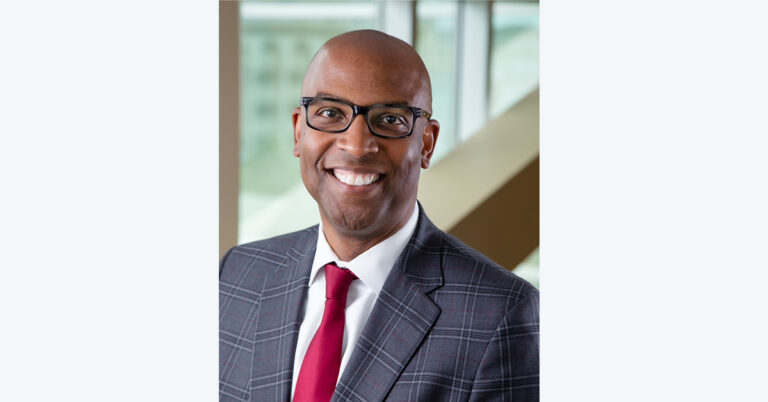
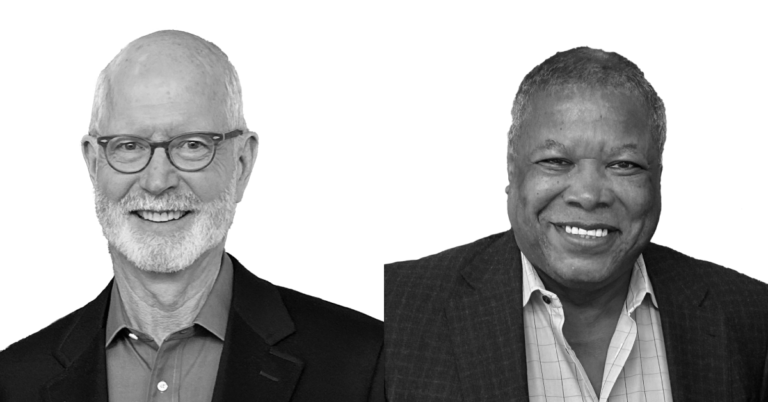
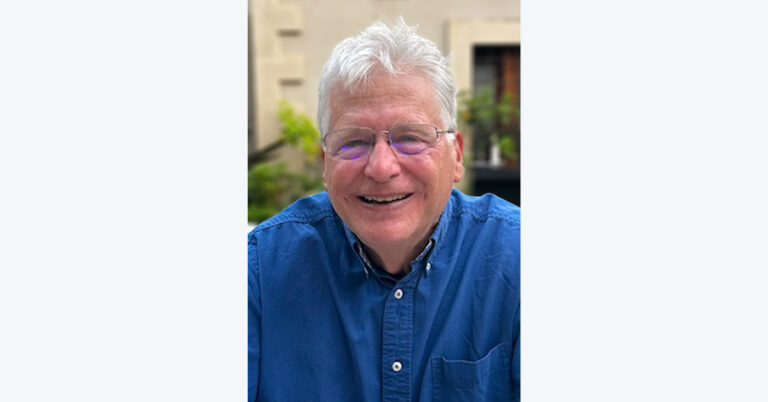
Burton Richter has been awarded the Enrico Fermi Award in recognition of his eminent career in particle
physics and his notable contributions in energy and public
policy. Image courtesy of Stanford University.
|
Nobel laureate Burton Richter, a member of the CCST
California's Energy Future (CEF) team and lead author of the
2011 CEF subreport on nuclear energy, has been awarded the Enrico
Fermi Award, one of the nation's most prestigious science
awards, in recognition of his eminent career in particle
physics and his notable contributions in energy and public
policy. Richter was named along with one other honoree, Mildred
S. Dresselhaus, in an address by Secretary of Energy Steven Chu
last week.
"The scientists being recognized today with the prestigious
Enrico Fermi Award have provided scientific leadership
throughout their careers that has strengthened America's energy
and economic security," said Chu. "I congratulate them for
their achievements as pioneers in innovative research and thank
them for their service."
Richter, a CCST Senior Fellow, is Paul Pigott Professor in
the Physical Sciences Emeritus at Stanford University, and a
former director of the Stanford Linear Accelerator Center. He
has long been engaged in energy policy discussions at the
national level, but the CCST study marks one of his first major
forays into similar discussions at the state level.
"I hope people will pay attention to this work," said
Richter. "It's the first systems analysis exploring the
specifics of what possibilities our current technologies hold
for lowering emissions to meet California's standards by 2050.
We found that, even in a best-case scenario, it just isn't
feasible with existing and near-horizon technologies."
The CCST report Powering California with Nuclear
Energy, one of several subgroup reports that make up the CEF study, looks at a highly charged issue from a range of
perspectives, from realistic to extreme scenarios in terms of
how much the state could rely on nuclear energy. Despite the controversial issues, nuclear power should be be considered a strong contender for part of the energy mix; its zero-emissions
energy can provide constant, or 'baseload,' power that can
complement renewable energy sources such as solar and wind,
which provide power intermittently.
For Richter, the CEF group of studies - which, in addition
to the nuclear energy report, includes reports on
transportation energy use, building efficiency, and carbon
capture - is a valuable step in an ongoing process, but there is additional work to do.
"At this point, two things need to be done: first, we need
to factor cost into the study of California's different energy
strategies - we only focused on technical feasibility. Second,
we need to identify missing pieces of technology to make the
most of the options we have. One thing that struck us is the
lack of any viable grid-scale zero emission power storage
technologies. Currently the only flexible backup we have for
intermittent power sources such as wind is gas-fired turbines -
which have very high emissions. It's only recently that people
have begun to look seriously at how you actually implement
alternative energy sources on a large scale."
While the impetus to address these issues needs to come in
large part from the federal level - the Department of Energy
has in fact begun soliciting proposals on grid-scale energy
storage research - California is in a good position to help
shape the discussion and develop policy strategies that are
right for its own energy needs, according to Richter.
"California is particularly fortunate in its collection of
superb research universities and federal funded laboratories,"
he said. "The state government should make more use of the
expertise that these institutions contain, and ask more of
CCST, which helps to focus this expertise in a way that is
useful to government."
CCST Spotlight is a weekly
newsletter focusing on CCST activities and highlighting innovative science
and technology research, applications, and policy issues in California.
The Spotlight editor is Danny DeCillis.
We welcome information and feedback from our readers about science and
technology at work in the private, public, and education
sectors.
To send us questions or comments, contact us at ccst@ccst.us, or (951) 682-8701.