CCST Welcomes UC Santa Barbara’s Rachel Segalman, PhD, to Board of Directors
CCST in Issues: 15 Years of California’s Science & Technology Policy Fellowship
April 30, 2025 | CCST Newsroom, CCST S&T Policy Fellows, Press Releases | Contact: Keleigh Friedrich

Reflecting on 15 Years
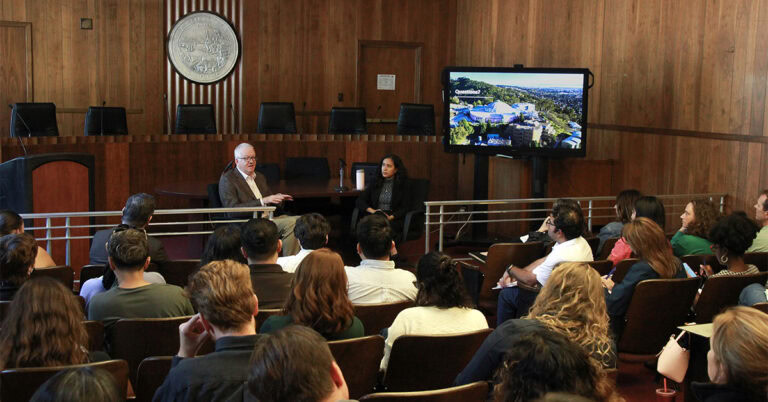
Now in its 16th year, the CCST Science and Technology Policy Fellowship has shaped the careers of 186 scientists—and counting—while strengthening California’s policies and serving as a model for other states. Now, as states are increasingly becoming laboratories for science policy, co-authors Bruce Alberts, Sarah Brady, Keleigh Friedrich, Amber Mace, and Maxine Savitz contribute to a national conversation on science policy in a new era, while revisiting lessons learned from the first 15 years of the program.
Solving the disconnects between science and society will require much more than good ideas and good intentions—it will require the political will to bring the fragmented institutions of science together. Today’s political environment precludes the science community from making its old pitches to Congress; it will need to break old habits, build new bonds at personal, local, and regional levels, and reconsider the way it works.
– “The Strange New Politics of Science,” Issues in Science and Technology Spring 2025

Lessons Learned
In their essay for the Spring ISSUES, Alberts, Brady, Friedrich, Mace, and Savitz share the program’s origin story and lessons learned for providing science advice to state legislatures:
The CCST Science & Technology Policy Fellows program began as an experiment, but after 15 years it has matured and proven its value. As the fellows emphasize, their presence not only helps shape good legislation, but very often prevents bad legislation by uncovering deceptive information produced to support it… And by putting a human face on science, the fellows have dramatically improved how science and scientists are viewed by the California state legislature.
This experiment has brought not only expertise, but productive ongoing partnerships between scientists and decisionmakers to the state of California. It is an experiment that we hope can be replicated in all 50 states—with benefits for citizens, policymakers, and scientists alike.
Read the Full Essay:
Read the full essay at Issues in Science and Technology: https://issues.org/ccst-fellows-alberts-brady-friedrich-mace-savitz/
About the Authors:
Bruce Alberts is Chancellor’s Leadership Chair in Biochemistry and Biophysics for Science and Education and Professor Emeritus at the University of California, San Francisco, and former President of the National Academy of Sciences.
Sarah Brady is Director of the California Energy Commission’s Office of Governmental and International Affairs, former CCST interim CEO and deputy director, and a 2014 CCST Science & Technology Policy Fellow.
Keleigh Friedrich is Director of Communications at CCST.
Amber Mace is Managing Director and Chief of Strategic Partnerships at the California Academy of Sciences and former CEO of CCST.
Maxine Savitz is former vice chair of the President’s Council of Advisors on Science and Technology, former vice president of the National Academy of Engineering, and retired general manager of technology/partnerships at Honeywell, Inc.
###
About CCST
The California Council on Science and Technology is a nonpartisan, nonprofit organization that engages leading experts in science and technology to advise State policymakers — ensuring that California policy is strengthened and informed by scientific knowledge, research, and innovation. Established via a unanimous vote of the California State Legislature, CCST has been making California’s policies stronger with science and technology since 1988.