CCST Annual Report 2023
Meeting the Moment: Bridging Science and Policy for a Stronger California
Annual Report
Published: September 11, 2025 (Last Updated: September 11, 2025)
Big Challenges, Trusted Guidance
CCST’s 2024/25 Annual Report highlights a year of progress in bridging science and policy to help strengthen California’s future. The past year underscored the importance of our mission. As California faced evolving challenges—from year-round wildfire threats to the rapid emergence of artificial intelligence—CCST provided trusted, nonpartisan scientific guidance to inform policy decisions.
Inside the report, you’ll find examples of how we’ve expanded our impact across critical areas:
We are living through a time of extraordinary transformation. From diverse climate impacts to the rapid evolution of artificial intelligence, California is confronting challenges that demand bold leadership and informed decision-making. In 2024, CCST stepped up to meet this moment—bridging science and policy to forge a more resilient, equitable, and innovative future for our state.
Over the past year, CCST expanded its impact across some of California’s most urgent priorities: wildfire resilience, clean energy, disaster preparedness, and responsible AI. Through peer-reviewed reports, expert briefings, cross-sector convenings, and timely, nonpartisan analysis, we continued to deliver the trusted scientific insight that policymakers need to make informed decisions.
Since CCST was first established in 1988, by unanimous vote of the California Legislature, our strength has always come from our partnerships. We connect world-class science and technology experts with policymakers, co-design programs with state agencies and philanthropic organizations, and foster a dynamic network of cross-sector leaders. This collaborative approach has established CCST as a trusted bridge between scientific knowledge and public policy.
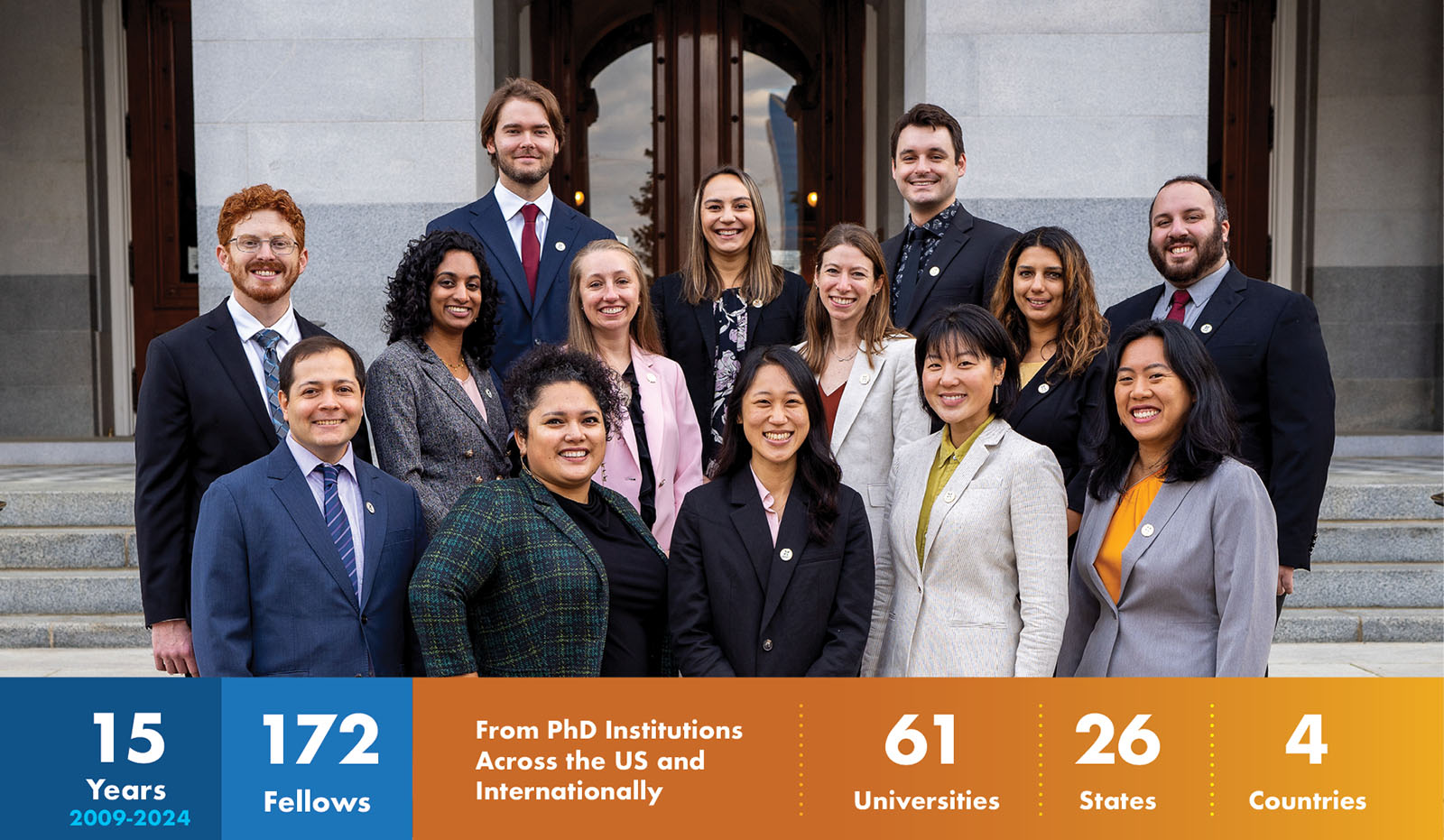
At the heart of this model is our Science & Technology Policy Fellowship, which celebrated its 15th year in 2024. Our Fellows—embedded across the Capitol and Executive Branch—are a driving force supporting evidence-based policymaking in California.
None of this progress would be possible without the people who power CCST: our staff, board, fellows, alumni, advisors, partners, and supporters. Our communities have always risen to the occasion. As you’ll see in the following pages, together we are not just responding to change; we are helping to shape it. And now more than ever, we must come together to see California through the coming year and the challenges we face.
Thank you for being part of this journey.
With determination and partnership,
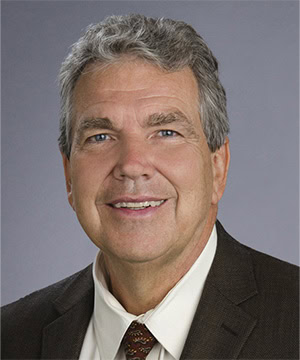
Peter Cowhey, PhD
Chair, Board of Directors
Dean Emeritus and Qualcomm Chair Emeritus of the UC San Diego School of Global Policy and Strategy
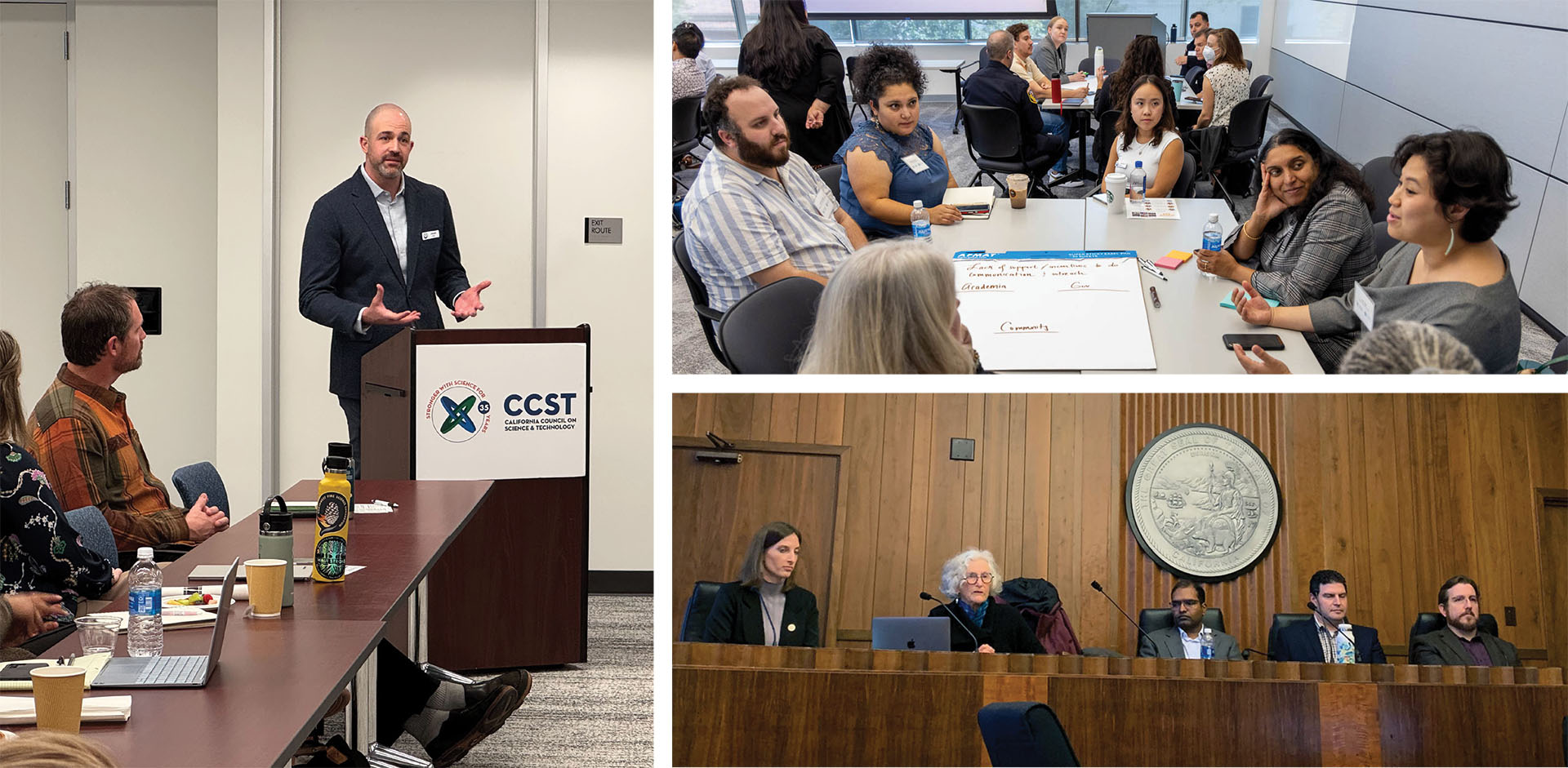
CCST’s Disaster Resilience Initiative emerged from a recognition that California’s disasters don’t occur in isolation. Wildfires affect air quality, energy infrastructure, and public health simultaneously. Droughts cascade through agricultural systems, urban planning, and emergency response protocols. Our approach reflected this reality: instead of siloed responses, we built integrated networks spanning climate science, engineering, public health, technology innovation, and emergency management.
Through key partnerships, leading with our Partner Institutions, we’ve created streamlined pathways for cutting-edge research to reach policymakers when and where it’s needed most. This work exemplifies a new model: agile, scientifically rigorous support that helps policymakers navigate complex trade-offs with confidence. We’ve shown that objective, nonpartisan expertise can accelerate innovation while ensuring solutions are grounded in the best available science.
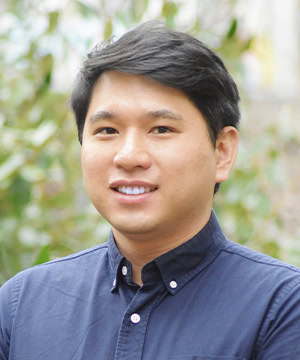
“When we effectively bridge research and policy communities, we build more than disaster response — we strengthen California’s capacity to adapt to a changing world with the best available science.” — Eric Chu
As we face an era of compounding challenges, our ability to rapidly mobilize diverse expertise, foster collaboration across traditional boundaries, and translate complex research into actionable insights is only going to grow more essential. The Disaster Resilience Initiative has strengthened our disaster response capabilities as well as our entire approach to science-informed governance. It demonstrates that when we effectively bridge research and policy communities, we don’t just solve today’s problems—we build the capacity to adapt and meet tomorrow’s challenges.
Read our Resilience Proceedings
Wildfire is no longer a seasonal concern in California—it’s a year-round, deeply complex challenge touching every corner of our state, from rural landscapes to urban corridors. In 2024, CCST doubled down on our efforts to support science-informed solutions addressing both immediate fire risks and long-term resilience for communities, ecosystems, and public health.
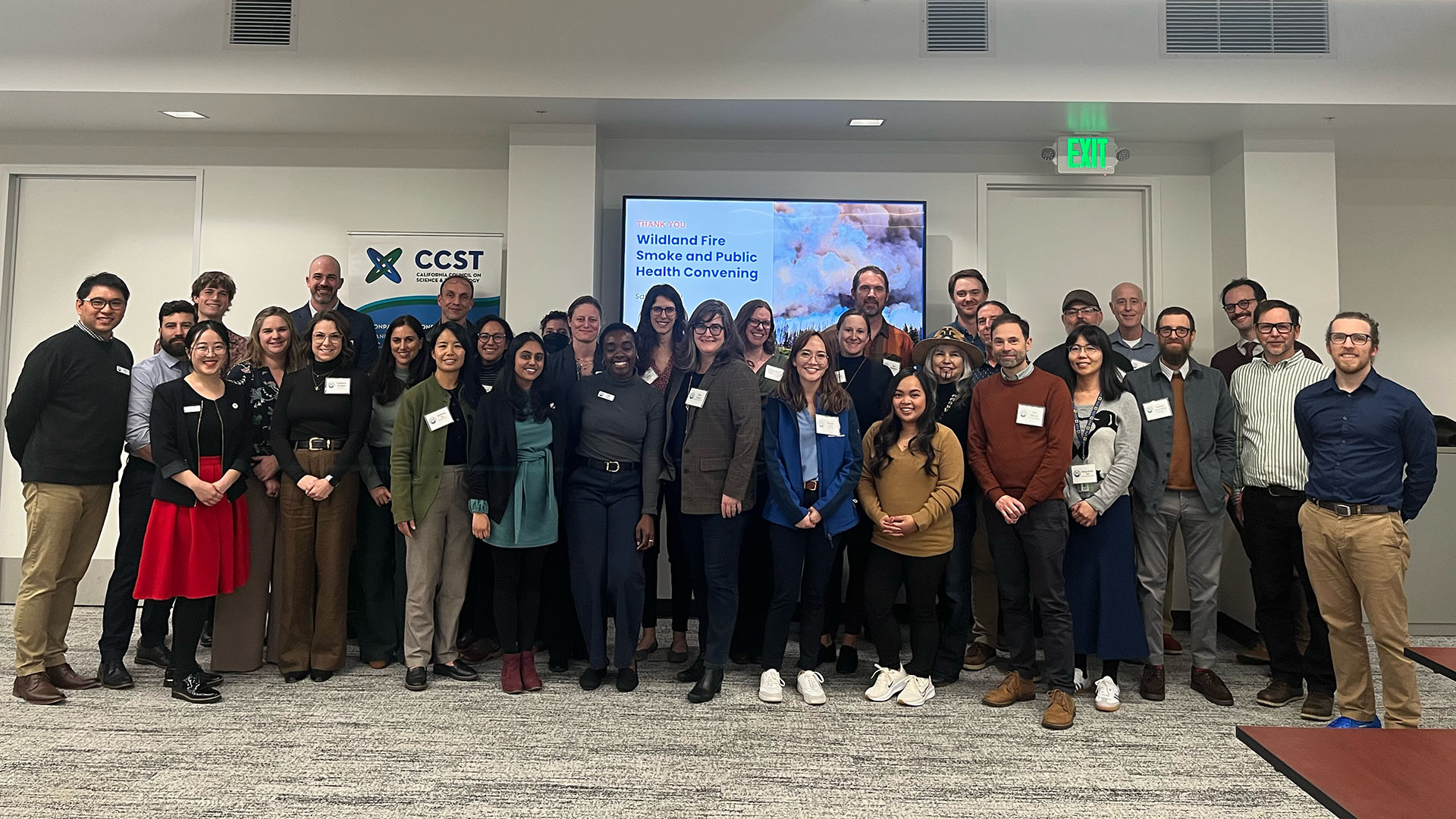
Much of our work built on our September 2023 peer-reviewed report, The Human Health Benefits of Improving Forest Health in California. We partnered with Dr. Alistair Hayden, a 2021 CCST S&T Policy Fellow alum and current Assistant Professor of Practice at Cornell University, and his colleague, Dr. Corinna Noel, to coordinate the Wildland Fire Smoke and Public Health Convening. Held in January 2025 at the UC Student and Policy Center, the gathering brought together a remarkable group of land managers, public health experts, tribal leaders, and policymakers.
Another highlight this year was partnering with Conservation X Labs to support their Fire Grand Challenge. At the launch in Sebastopol, surrounded by innovators from across the western U.S., Canada, and Mexico, it was clear that this isn’t just about addressing disasters—it’s about reshaping our relationship with fire, land, and one another. Our two-year collaboration focuses on scaling stewardship solutions and amplifying the voices of those who have cared for these landscapes for generations.
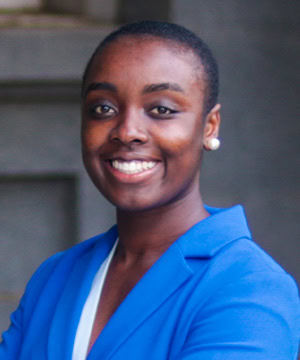
“Whether we’re connecting public health data to fire response strategies or helping new partners navigate the policy landscape, CCST is building the connective tissue that science needs to drive real-world change.” — Ope Oyewole
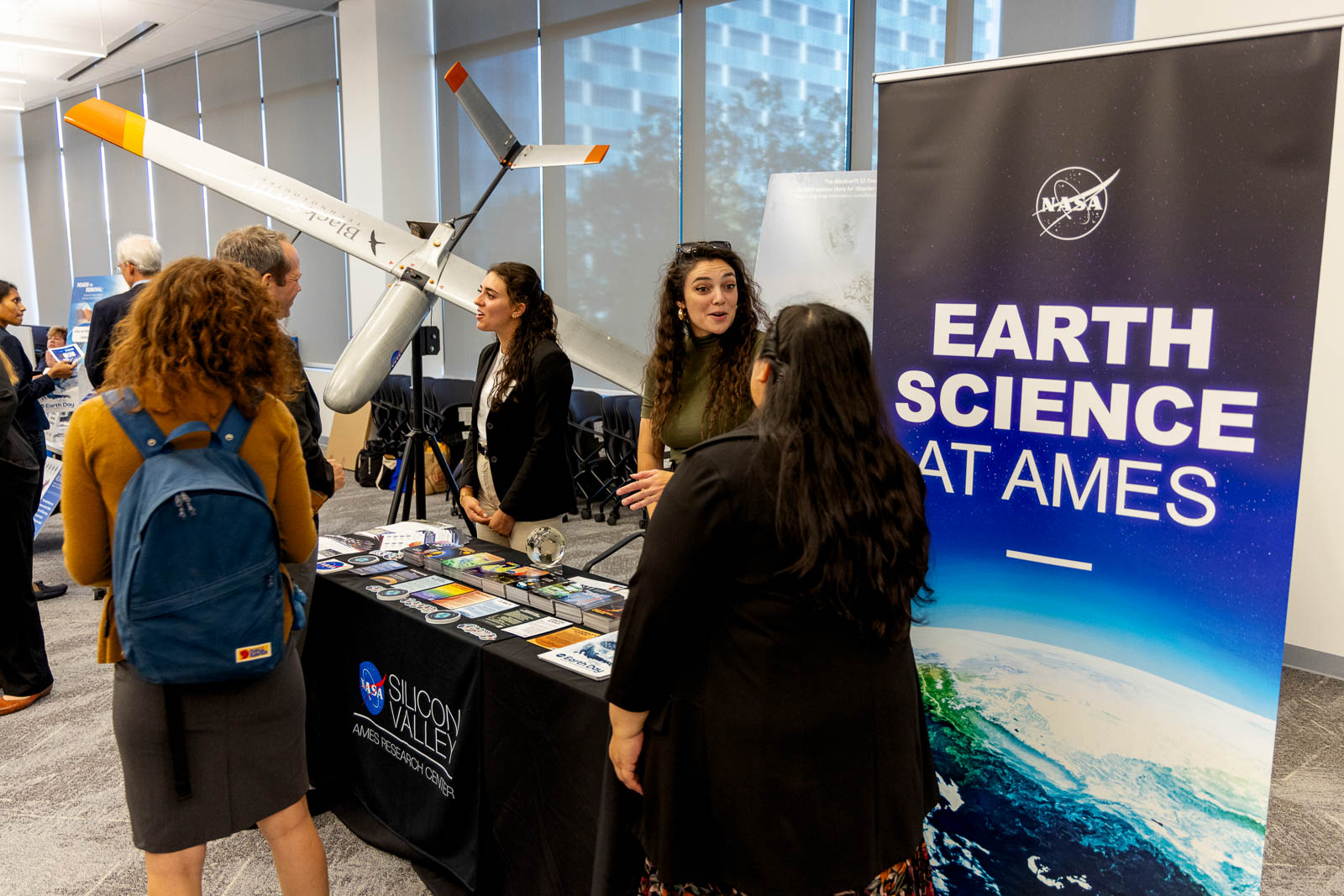
We’re also continuing to serve as a connector between policymakers and scientists. Our Science Day event, held in collaboration with the California Natural Resources Agency (CNRA) in October 2024, supports partnerships like the one between CNRA, the California Air Resources Board, and NASA’s Ames Research Center. The Wildfire, Ecosystem Resilience, & Risk Assessment (WERK) Project aims to use high-resolution data to generate insight into the impact and effectiveness of CNRA’s management actions across California’s fire-adapted ecosystems to enable evaluation of projects and programs.
In December 2024, CCST convened stakeholders to discuss health data sharing and access for policymaking during public health emergencies. This Health Data Access and Sharing workshop, made possible by the Gordon and Betty Moore Foundation, was a follow-up to recommendations from our pandemic work. The proceedings are now online.
What ties this work together is a commitment to breaking down silos—between disciplines, communities, and knowledge systems. Whether connecting public health and land management practitioners or helping new partners navigate the policy landscape, CCST is building the connective tissue that science needs to drive real-world change.

Artificial intelligence and other emerging data technologies are advancing at breakneck speed, presenting both opportunities and challenges for California. In response, CCST launched the AI Policy Initiative in 2024, supported by a generous gift from Irwin Jacobs, co-founder of Qualcomm, that was matched by CCST Board Chair Peter Cowhey. This new initiative helps equip decision-makers with the latest scientific evidence needed to navigate the complexities and harness the potential of these advanced technologies.
Throughout the year, CCST convened research, government, community, and industry leaders to examine AI’s potential and its implications for disaster resilience, natural resource management, biodiversity conservation, workforce development, and beyond. At CCST’s annual events—Science & Technology Week in February and Science Day in October—participants explored not just what AI can do, but how it might be used in ways that are effective, equitable, and aligned with California’s needs.
“California is moving quickly to understand and shape the role of AI in our state’s future. At CCST, we’re focused on helping to ensure that science, evidence, and equity stay at the center of that conversation.” — John Thompson
In May 2024, CCST provided key support for a landmark event: the Joint California Summit on Generative AI. Responding to Governor Newsom’s Executive Order N-12-23, the event brought this conversation to scale, highlighting the importance of collaboration across sectors and the impact of GenAI on California’s workforce, educational institutions, and innovation ecosystem. The Summit was a joint effort between UC Berkeley’s College of Computing, Data Science, and Society (CDSS), the Stanford Institute for Human-Centered Artificial Intelligence (HAI), the California Governor’s Office of Business and Economic Development (GO-Biz), and the California Government Operations Agency (GovOps). As with climate resilience and other complex issues, shaping the future of AI will require inclusive dialogue, clear frameworks, and trusted knowledge.
Following the GenAI Summit, CCST released our AI commitments and partnerships. The Summit also led to the Governor convening the Joint California Policy Working Group on AI Frontier Models, whose report was released in June 2025. As part of the rollout of the report, CCST hosted an in-person panel discussion with the three Co-Leads of the Working Group.
CCST will continue to serve as a bridge between California’s research institutions and policymakers, ensuring science-informed approaches guide the state’s response to emerging technologies and that lawmakers have access to trusted and timely information amidst a rapidly evolving landscape.
Coming Fall 2025
As California continues to lead the way in climate action, the need for clear, science-based guidance on complex energy issues is growing—fast. At CCST, we’ve been honored to serve as a resource and connector, helping policymakers and communities navigate the rapidly-moving energy landscape with confidence and clarity.
In April 2024, we released an updated edition of Key Challenges for California’s Energy Future, our foundational energy primer. With input from our expert Steering Committee, and in response to a request from the Governor’s Office, we expanded our coverage of distributed energy resources and updated key sections to reflect recent legislation and current events. We brought this work to life at a special in-person briefing at the Capitol, co-hosted with three incredible partners: the California Latino Capitol Association Foundation, the California Legislative Black Staff Association, and the Asian Pacific Islander Capitol Association. It was energizing to see this resource spark real conversations about California’s energy future, and I was grateful to present alongside brilliant leaders from across the energy field.
“At CCST, we’ve been honored to serve as a resource and connector, helping policymakers and communities navigate the rapidly-moving energy landscape with confidence and clarity.” — Rhianna Hohbein
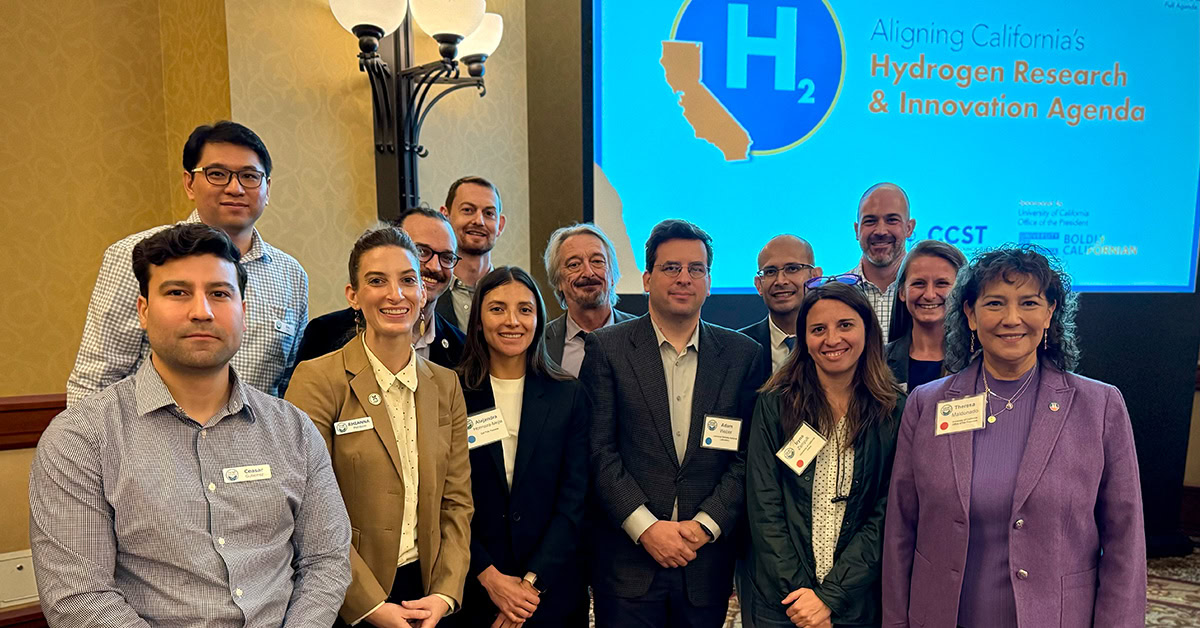
Later in the year, our attention turned to hydrogen—a field brimming with potential and complexity. In November, we hosted a two-day, invitation-only workshop in Sacramento: Aligning California’s Hydrogen Research & Innovation Agenda. With experts from national labs, labor unions, state agencies, academia, and the nonprofit sector, the room buzzed with bold ideas and honest questions. We dove into everything from hydrogen production to public health, workforce development, and equity—knowing that how we build this sector will help shape California’s climate and economic future.
It was deeply rewarding to see such a range of voices around the table, many of whom don’t often get to speak directly to one another. That’s where CCST shines: creating space for science, policy, and lived experience to come together in service of the public good.
I’m excited for what’s next as we turn the insights from this year into action. We’re building something big, and I’m proud to be building it together.
Read the Proceedings

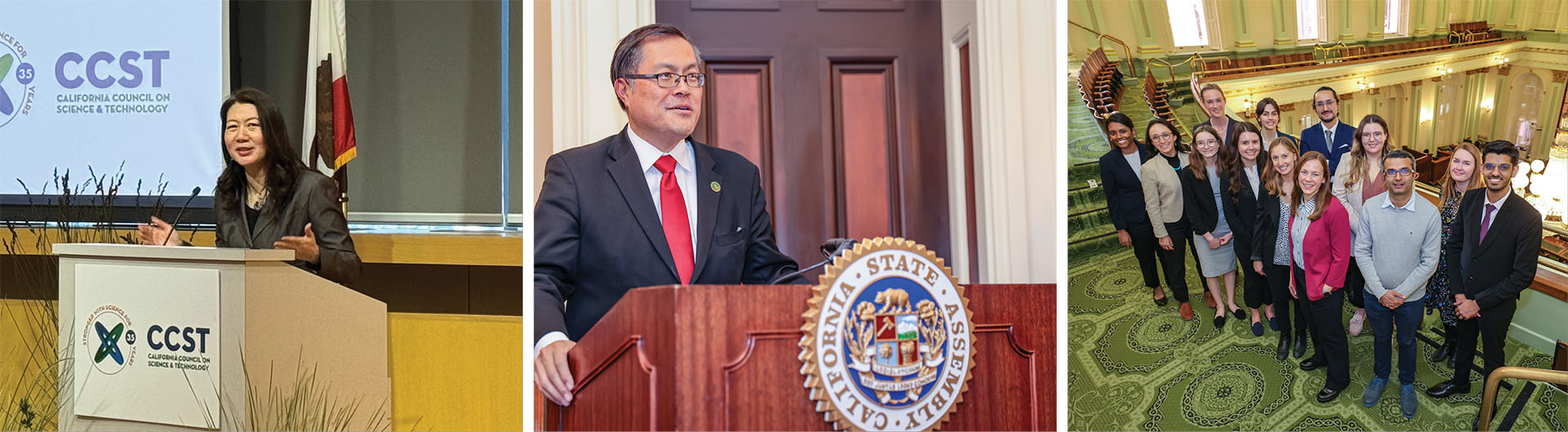
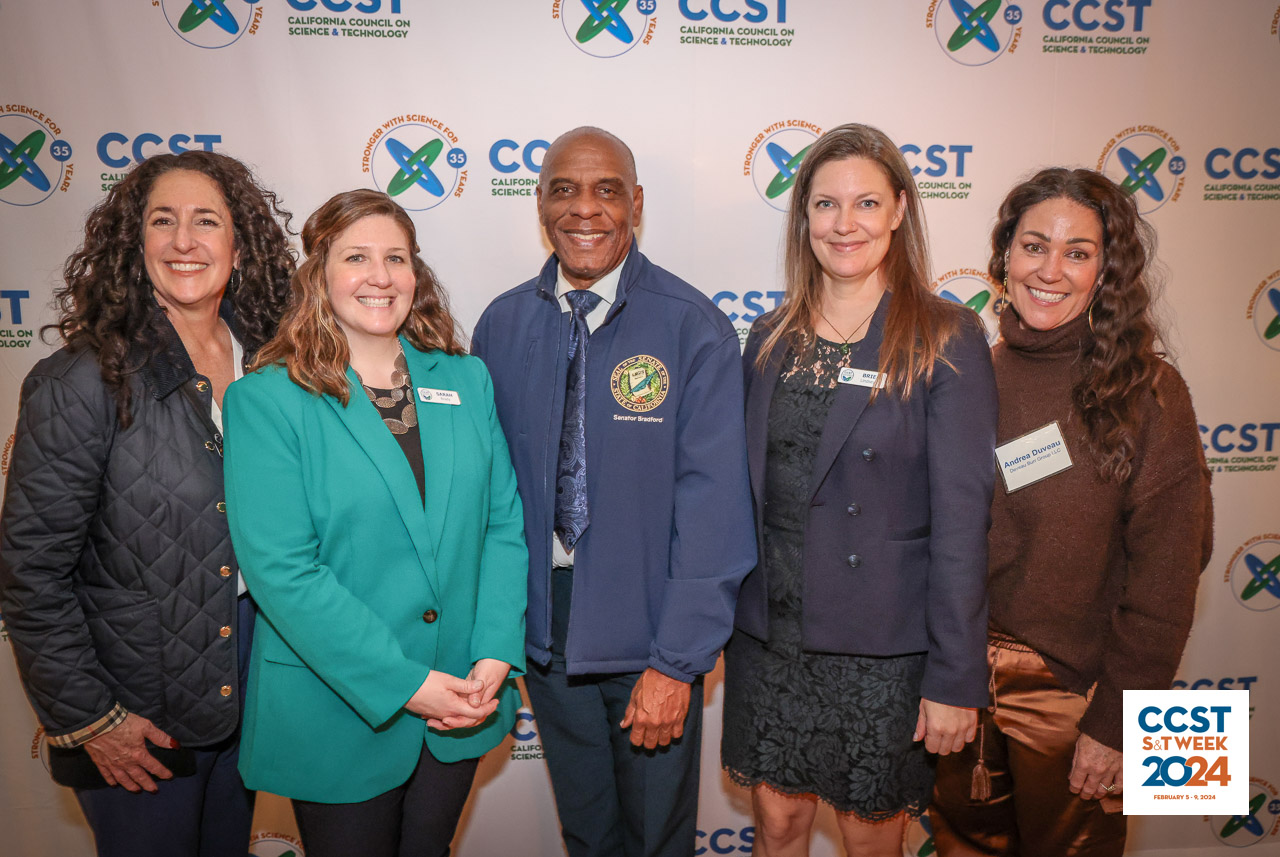
CCST’s 7th annual Science & Technology Week brought together policy leaders, science and technology experts, CCST champions, and our incredible network of Partner Institutions to discuss some of the state’s biggest challenges and opportunities.
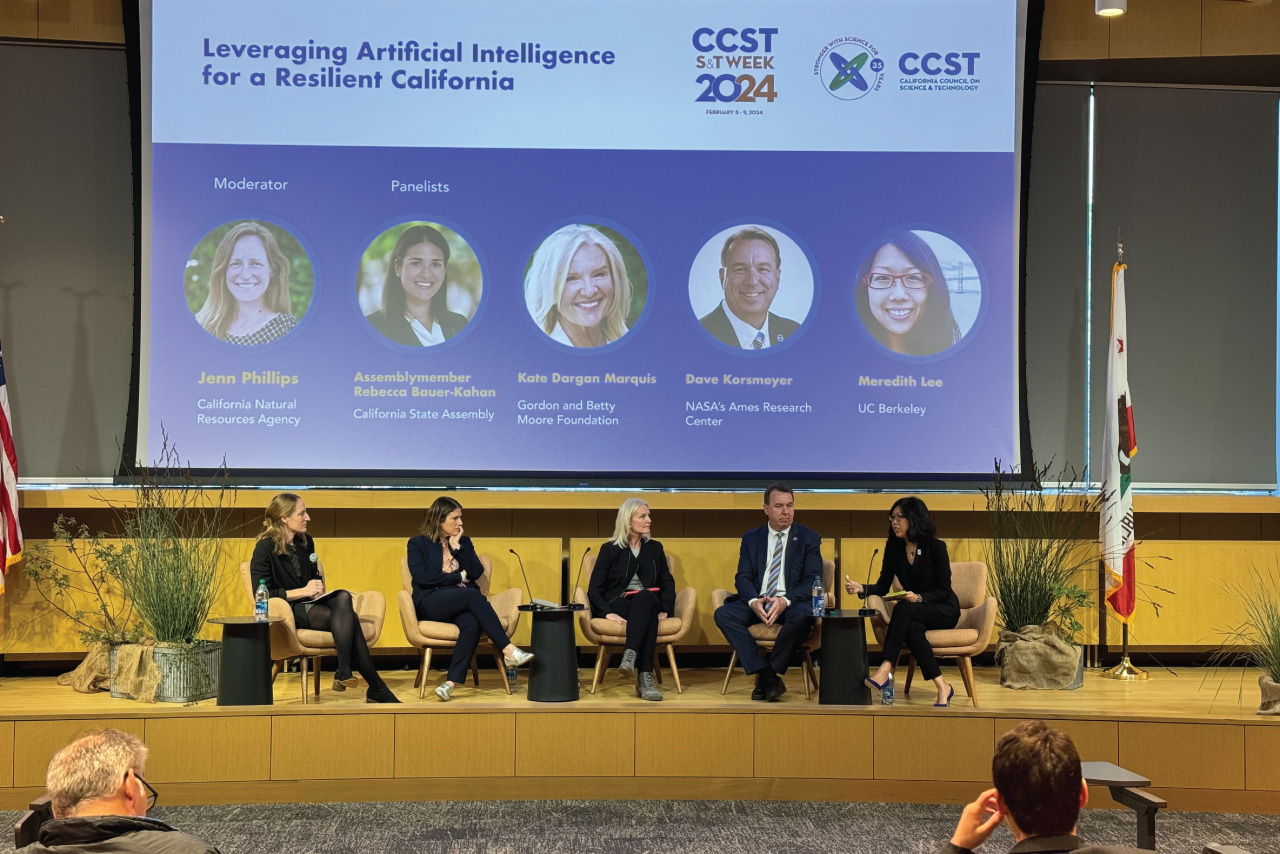
Our kickoff “Blue Sky” panel brought together a diverse group of experts to explore the untapped potential of AI technologies to mitigate the impact of disasters, particularly in the context of California’s unique challenges and the escalating impacts of climate change.
Learn More and Watch the Discussion
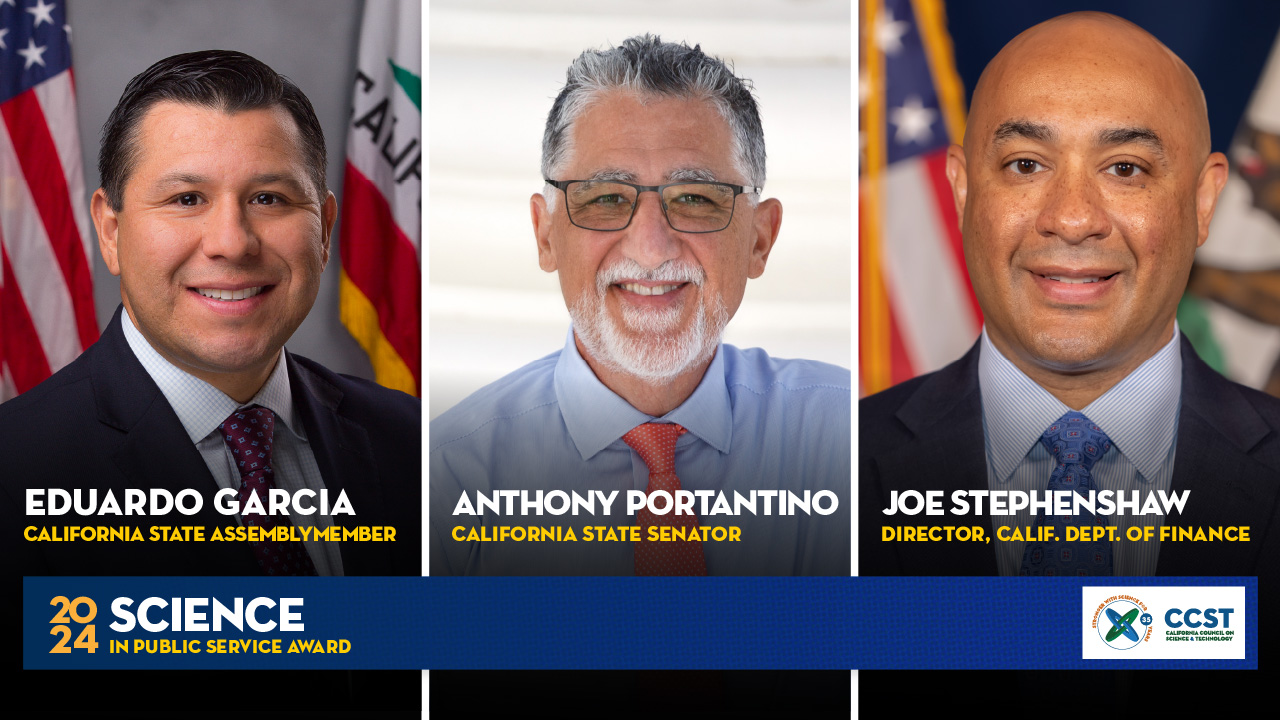
CCST’s Science in Public Service Award acknowledges public servants with clear track records of advancing science and technology issues. The 2024 recipients were acknowledged at CCST’s S&T Week Reception and Leadership Awards Ceremony:
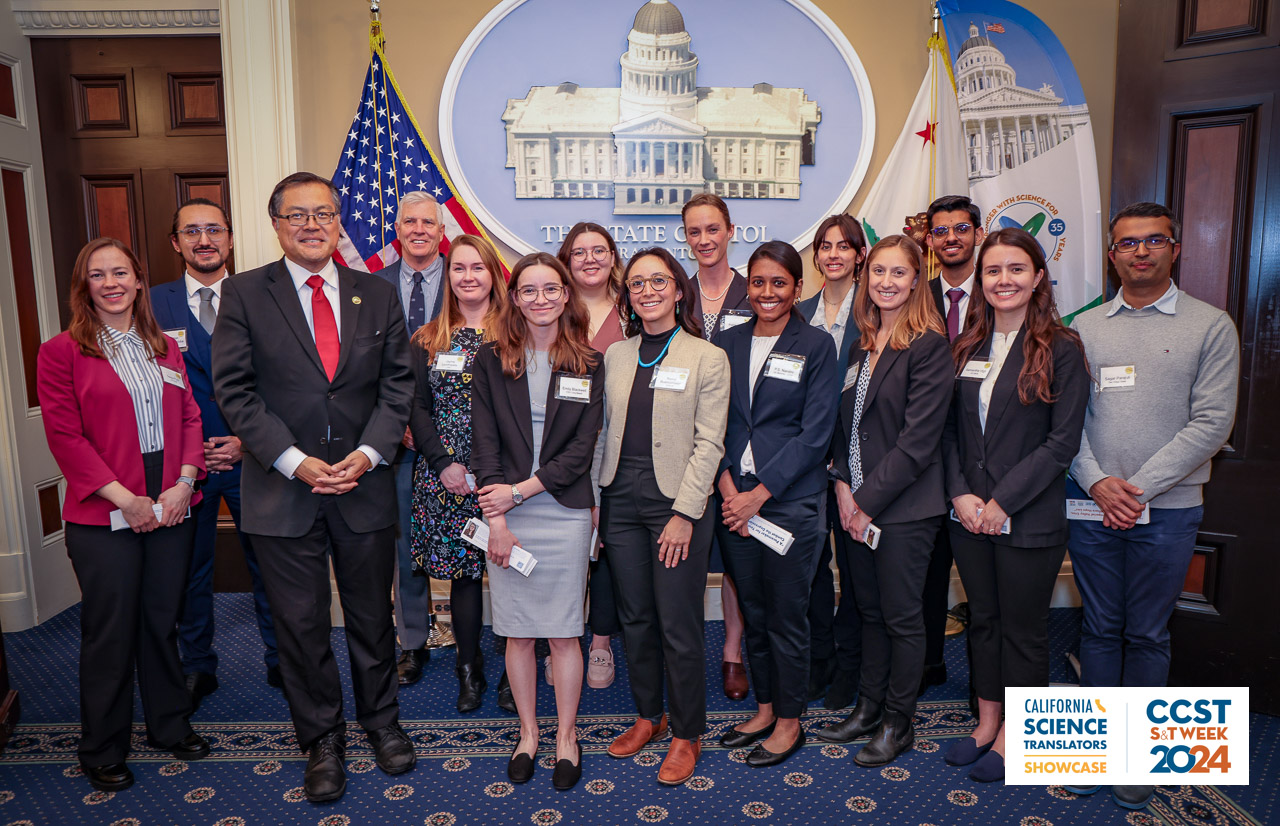
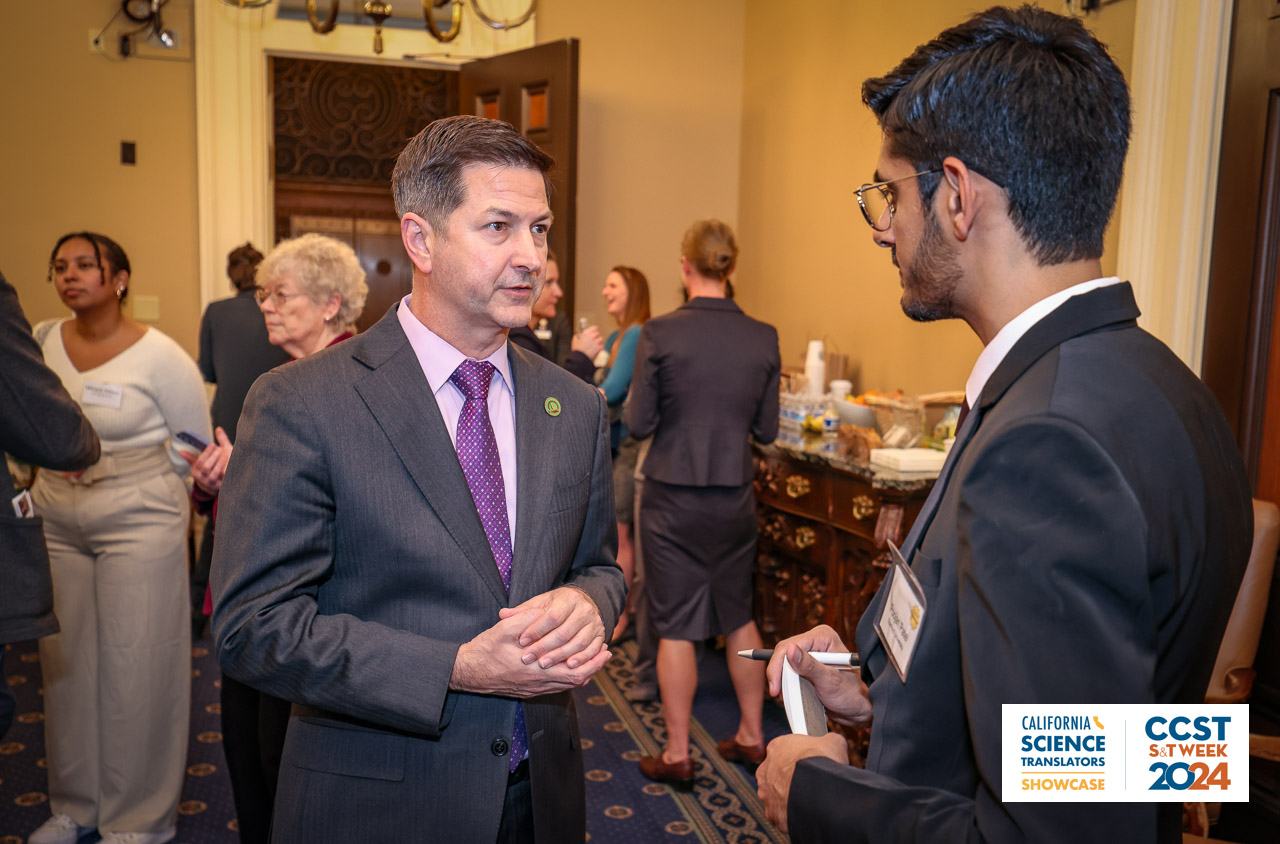
During this networking event, trained graduate students and postdoctoral researchers had a chance to discuss their research with legislative staffers, agency managers, and senior policy leaders at the California State Capitol. The event was sponsored by the Office of Assemblymember Mike Fong, Chair of the Assembly Higher Education Committee, who gave opening remarks and praised the “amazing students and researchers” who were there representing universities across California. Science Translators also met other leaders in the Capitol community, including Senator Tom Umberg and Assemblymembers Chris Ward and Cecilia Aguiar-Curry.
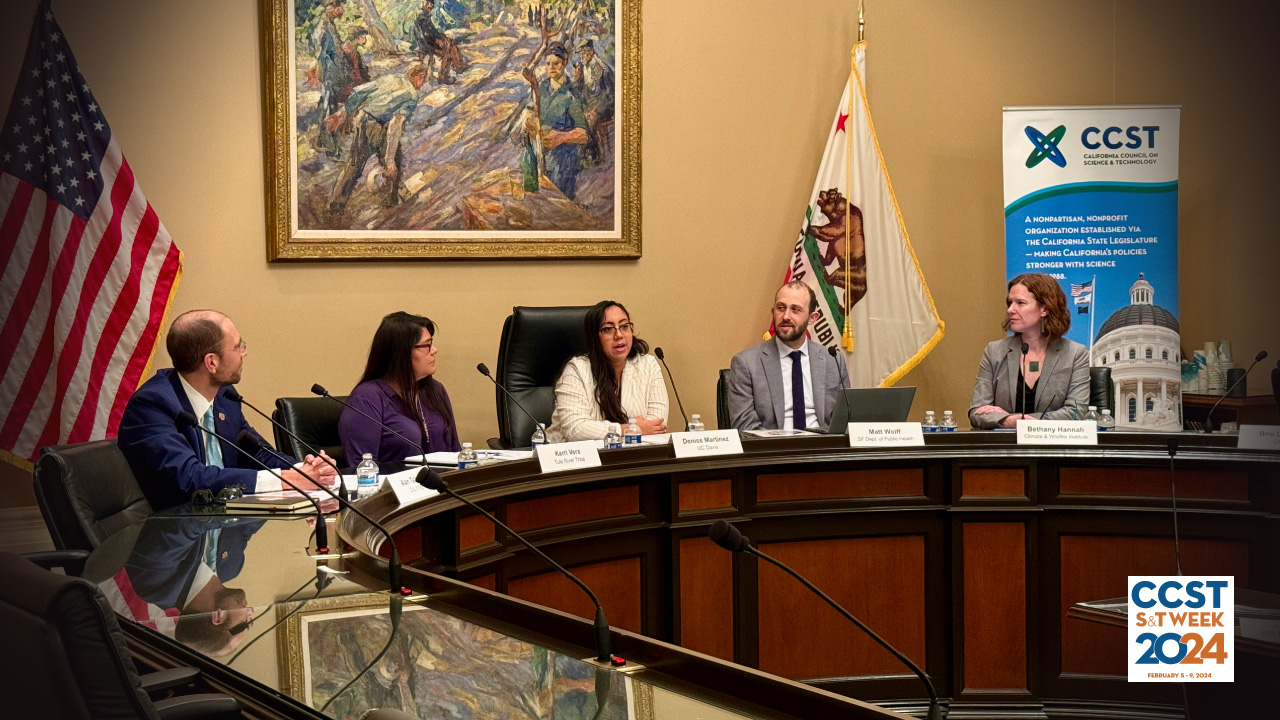
This in-person Expert Briefing explored opportunities to build more robust connections between forest management and public health with the goal of making California’s communities more smoke resilient.
CCST’s peer-reviewed report, The Human Health Benefits of Improving Forest Health in California, found a growing body of research suggesting that forest management to improve forest health can be tailored to reduce the adverse impacts of smoke and benefit human health—even when “improving health means more beneficial fire, or putting fire on the landscape,” said Moderator Alan Talhelm, Assistant Deputy Director of Climate & Energy at CAL FIRE.
Experts representing the public health sector, the Tule River Tribe, Native American studies, and a nonprofit climate and wildfire boundary organization discussed interdisciplinary solutions for mitigating the health impacts of wildland fire smoke in California’s communities.


Looking Ahead
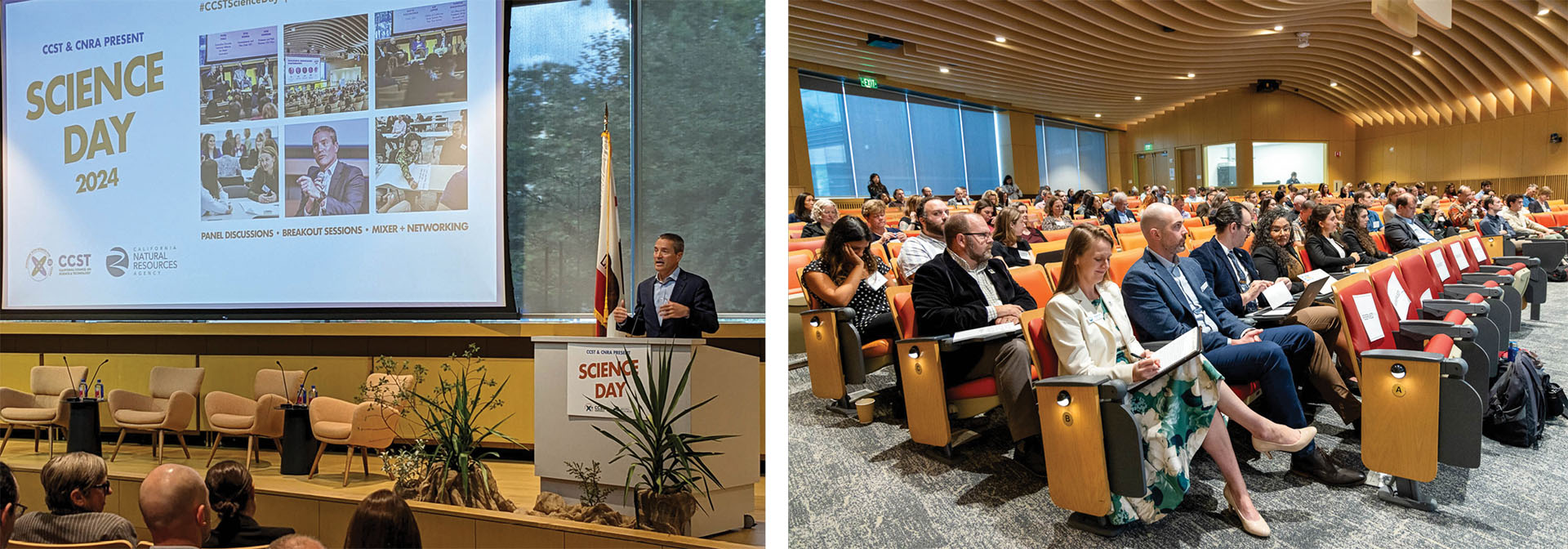
 On October 17, 2024, CCST and the California Natural Resources Agency (CNRA) brought together leaders in science and policy from across CCST’s Partner Institutions, nonprofits, and the State for our second annual Science Day. With more than 350 registrants in-person and online, panelists and attendees shared exciting ideas to build partnerships addressing the many challenges facing California, particularly as we seek to decarbonize our economy in response to climate change.
Driven by the leadership of Natural Resources Secretary Wade Crowfoot, this annual event fosters collaboration and removes barriers to partnership between research institutions and the State. The 2024 event kicked off with opening remarks from Secretary Crowfoot and CCST CEO Julianne McCall and featured two panel discussions, brainstorming breakout sessions, a Science Translators session, and a networking mixer.
“Science has never been more important. The partnerships that are growing in this room and across the state are more critical than ever.” – Natural Resources Secretary Wade Crowfoot
Facing an ever-growing set of natural resource challenges, California has set ambitious goals to invest in climate resilience, protect its biodiversity, and ensure equitable access for all Californians to its natural resources. Watch the two panel discussions with researchers from California’s many world-class educational and research institutions who are eager to leverage their expertise to complement the State’s efforts.
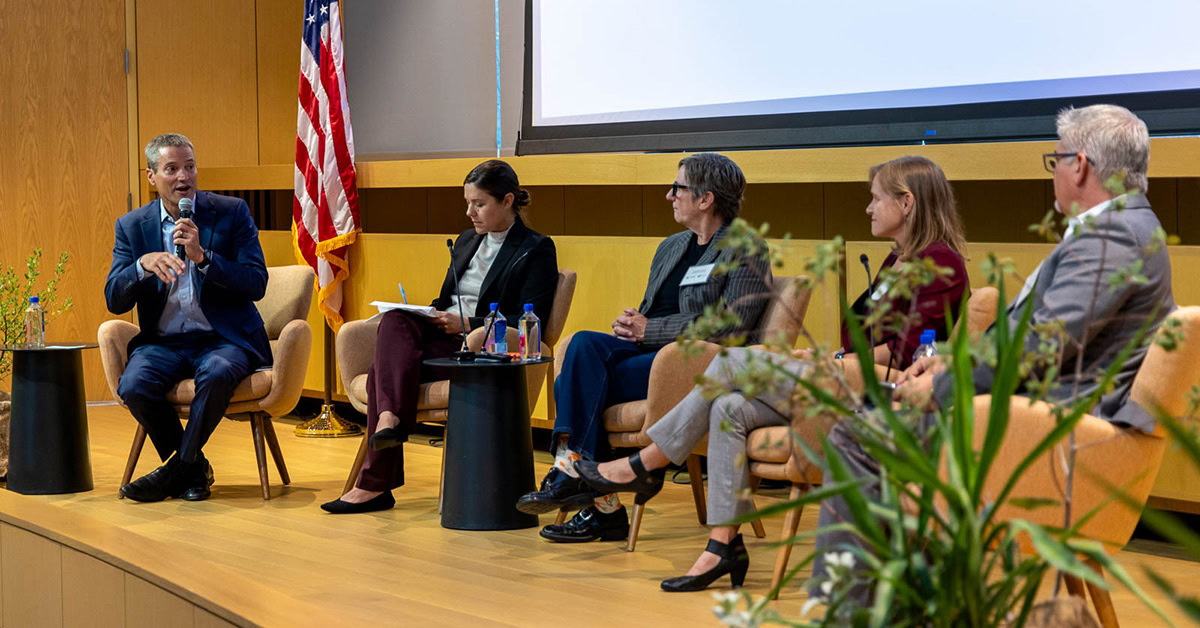
To meet California’s climate, decarbonization, and conservation goals, we must harness talent at all levels across the state. This will require shared resources and deep partnerships across government, academia, industry, nonprofits, and beyond.
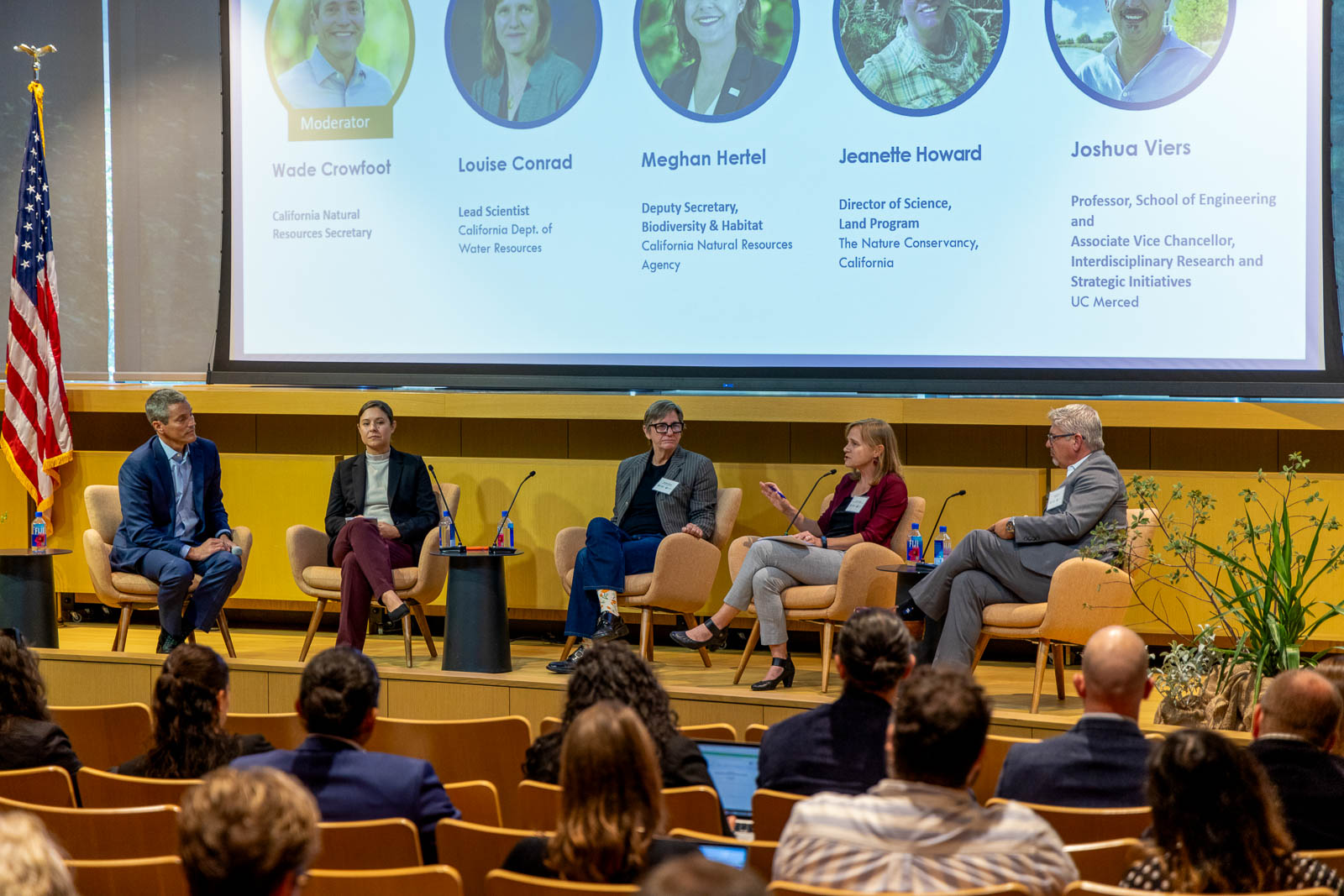
Our kickoff panel, “Lessons Learned from Successful State/Scientist Partnerships,” highlighted successful partnerships between science-focused organizations and CNRA that demonstrate how the State can integrate science into its decision-making processes. The discussion included a mix of scientists and policy leaders from CNRA and external organizations leading projects that focus on wildfire, water and drought, biodiversity, and energy. Panelists discussed the importance of developing collaborations and the challenges and benefits which arise from cross-sector partnerships.
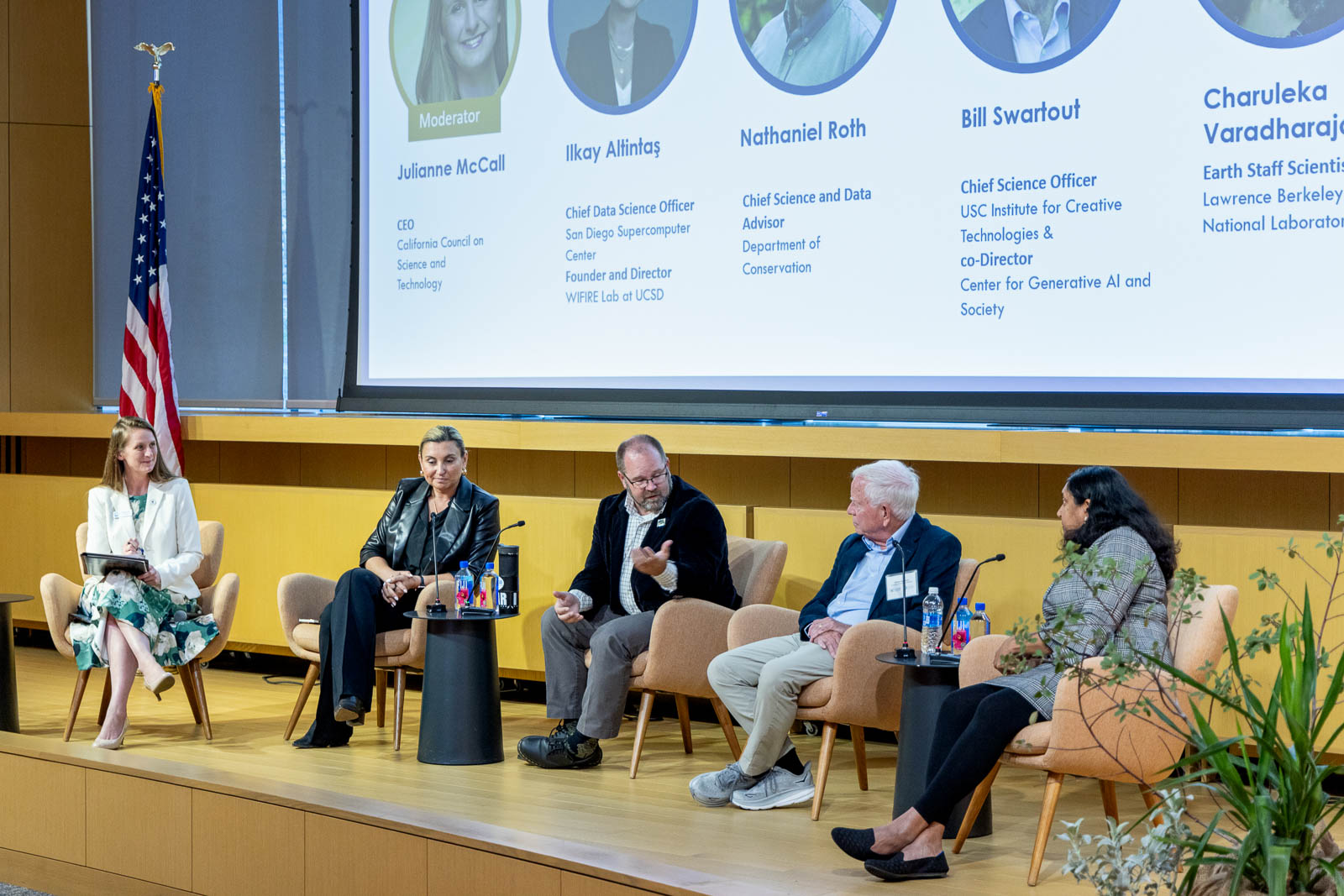
Recent years have seen rapid advancements in artificial intelligence, with the emergence of Generative AI models capturing the public’s interest. As this technology continues to develop at such a swift pace, tools that utilize AI are being developed for a wide variety of applications. Our second keynote panel, “California for the Next Generation: The Role of AI in Addressing our Natural Resources Challenges,” took a forward-looking approach to the role of AI in the natural resources space. The discussion explored topics including: What are emerging applications of AI for natural resources? How do we ensure our data infrastructure can support the deployment of these tools? And how do we better prepare our current and future workforce for this rapidly evolving landscape?
“Traditional AI tools, such as those that rely on machine learning, have continued to develop at incredible rates, offering unprecedented capacity to take on and tackle large-scale challenges.“ – CCST CEO Julianne McCall
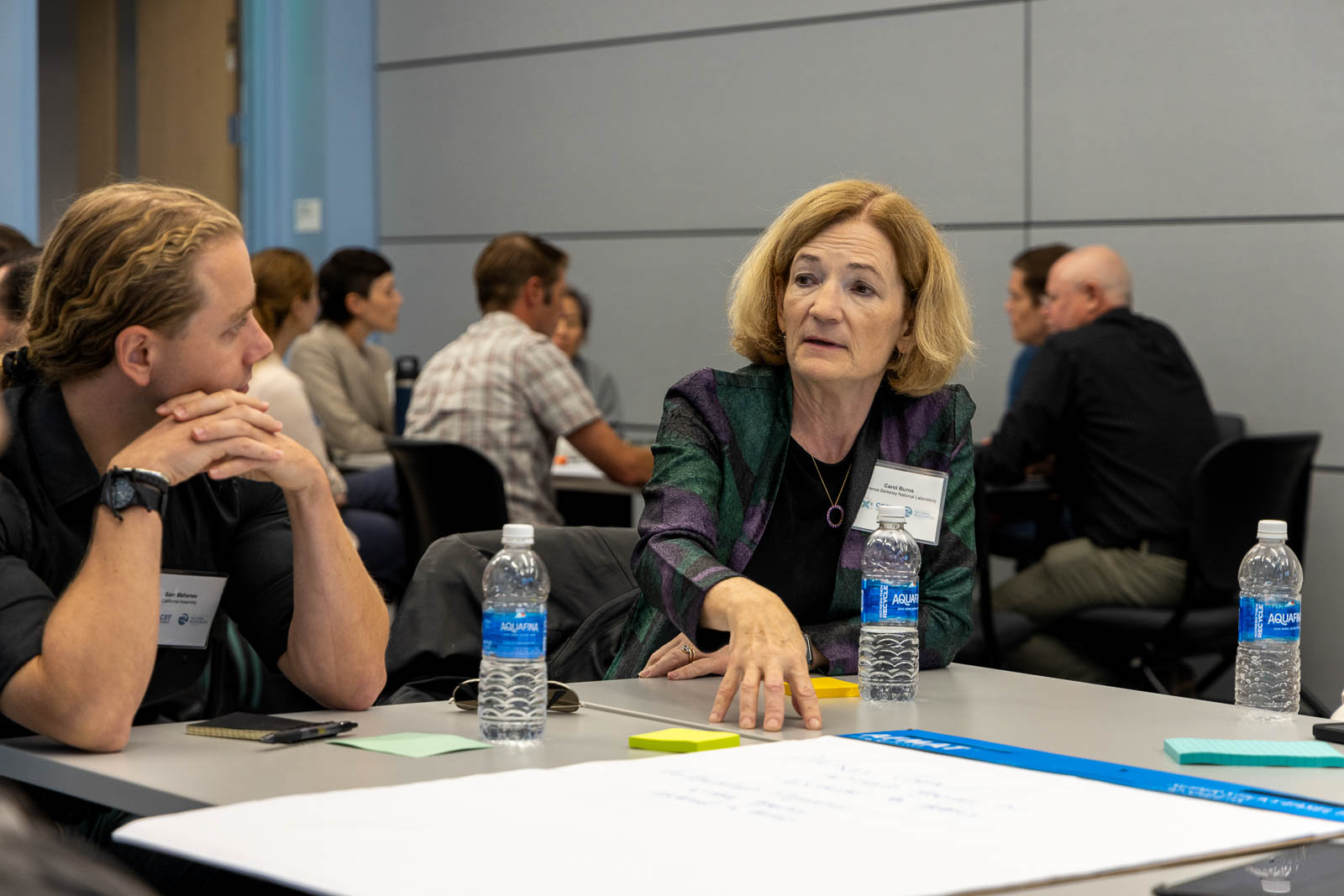
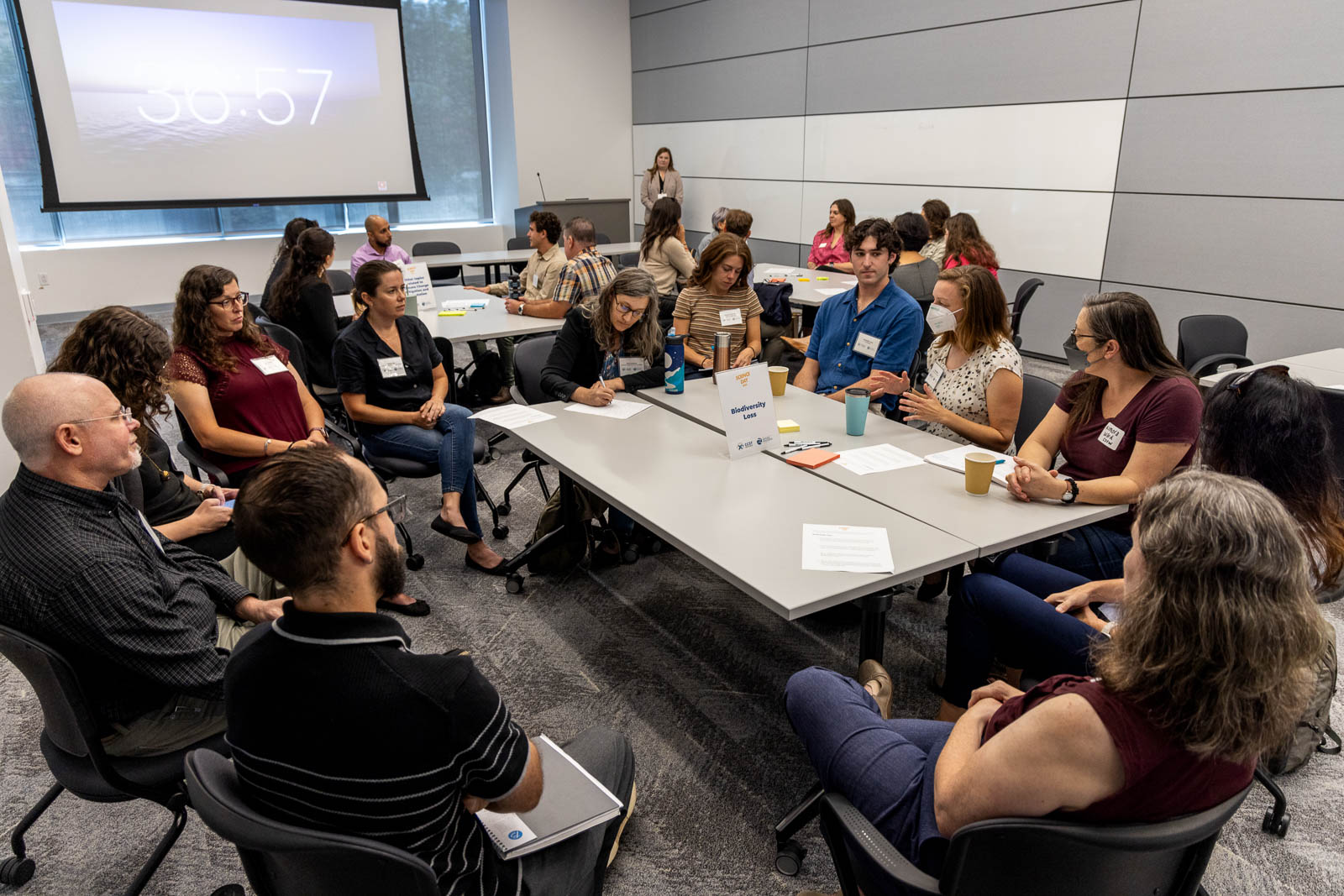
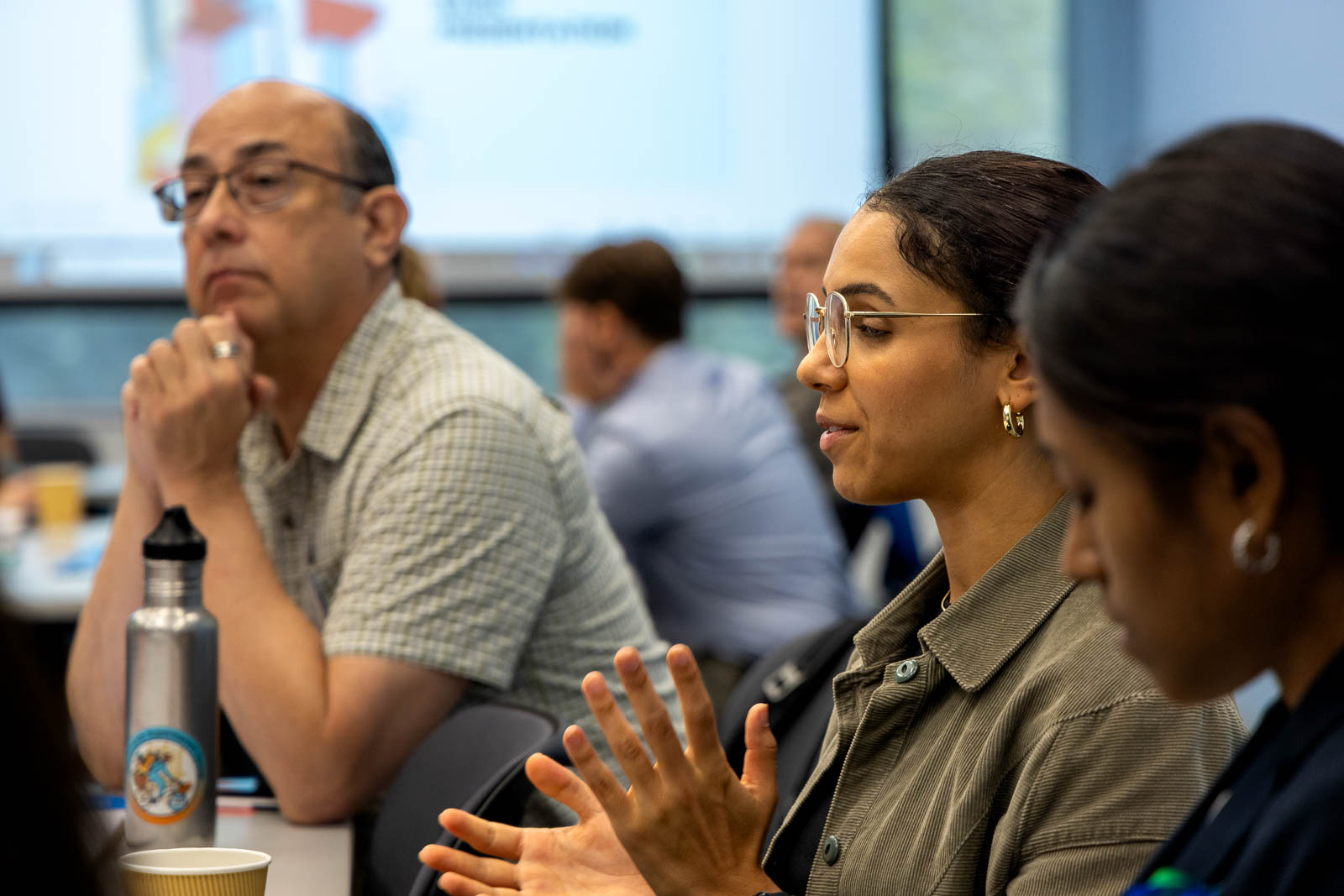
Science Day attendees connected across the research ecosystem in morning and afternoon breakout sessions that explored issues related to climate change and the mechanics of creating lasting research partnerships between the State and other entities. CCST Science Translators Alumni returned to share their research and engage with State experts. Attendees continued the conversations at a networking mixer, where CCST Partners and CNRA units staffed booths to share more information about their innovative work. Experts across the State and research ecosystem fostered connections new and old to move the needle toward real-world outcomes in a way only cross-sector approaches make possible.
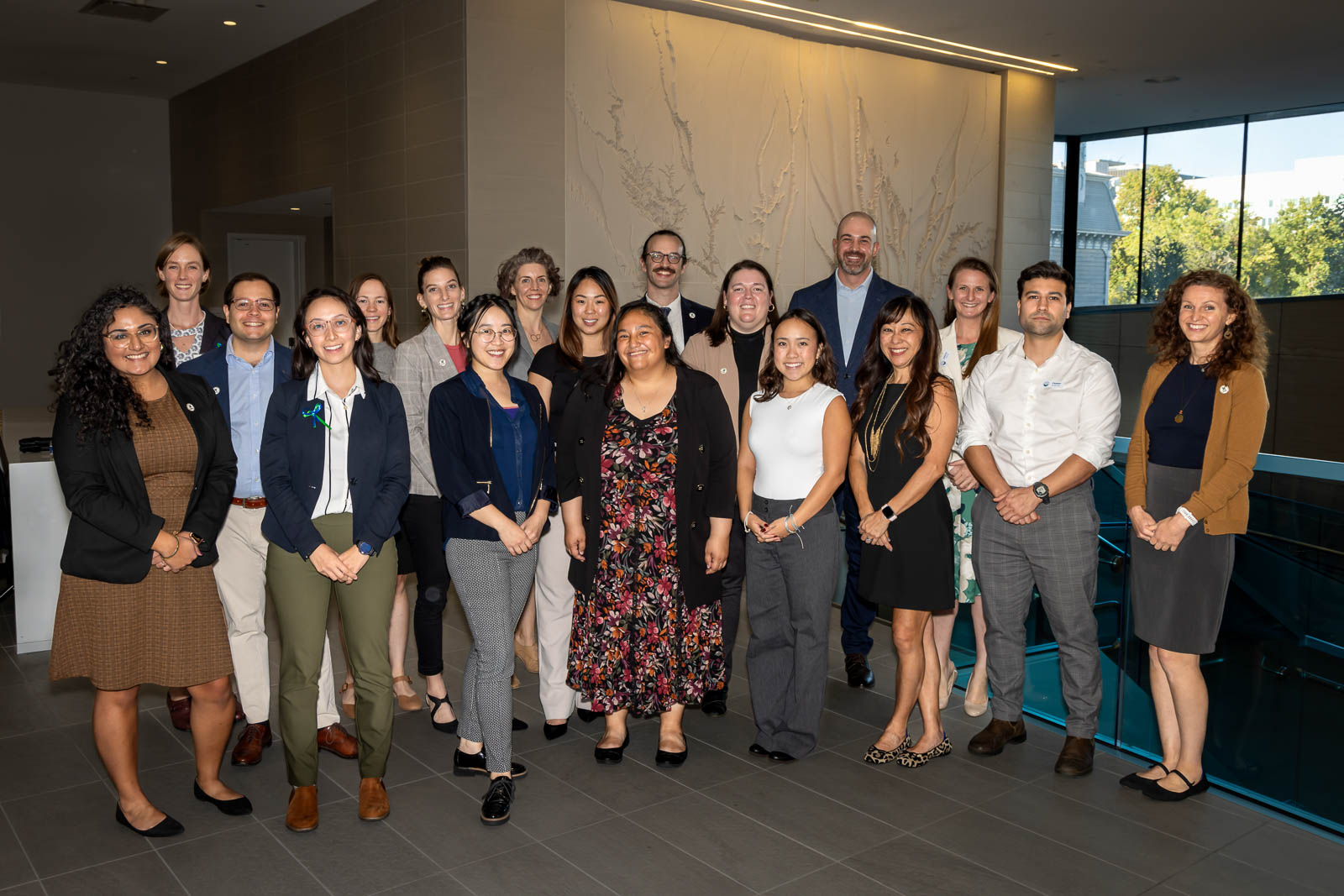
Kathleen Chen, PhD | Assembly Utilities & Energy Committee
PhD: Chemistry and Biochemistry, UCLA
BA: Chemistry, Wellesley College
 Stephanie Choing, PhD | Assembly Transportation Committee
PhD: Chemistry, UC Berkeley
BA: Chemistry, Northwestern University
 Brenda Cisneros Larios, PhD | Assembly Environmental Safety and Toxic Materials Committee
PhD: Molecular & Integrative Physiology, University of Michigan
BS: Physiology, San Francisco State University
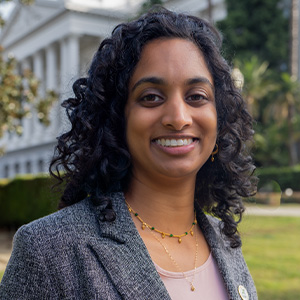 Sarina Patel, PhD | Assembly Emergency Management Committee
PhD: Earth and Planetary Science, UC Berkeley
BA: Geology, Middlebury College
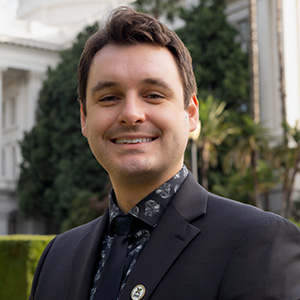 Slater Sharp, PhD | Assembly Privacy and Consumer Protection Committee
PhD: Neurobiology, Harvard University
BA: Biochemistry and Molecular Biology, Cornell College
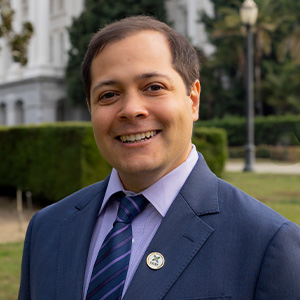 Max Ladow, PhD | Senate Housing Committee
PhD: Neuroscience, UC San Francisco
BS: Neuroscience, Brown University
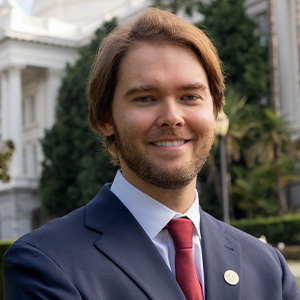 Benjamin O’Brien Hokanson, PhD | Senate Transportation Committee
PhD: Cell Biology, Medical College of Wisconsin
BA: Neuroscience, University of Wisconsin-Madison
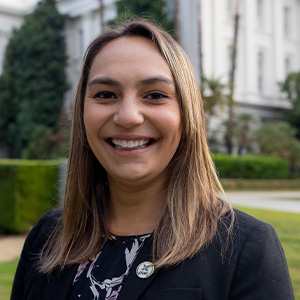 Holly Rudel, PhD | Senate Environmental Quality Committee
PhD: Environmental Engineering, Yale University
BA: Chemical Physics, Bowdoin College
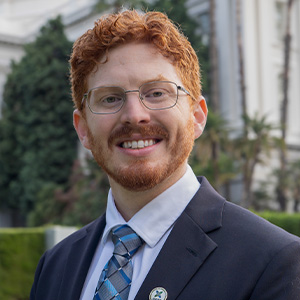 Erik Davies, PhD | California Air Resources Board, Office of the Chair
PhD: Earth and Planetary Science, UC Davis
BS: Physics, University of Redlands
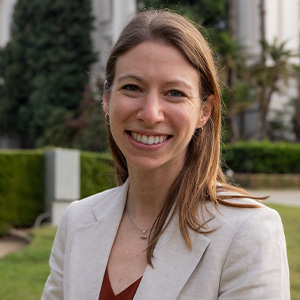 Jill Horing, PhD | California Energy Commission, Office of Chair David Hochschild
PhD: Management Science and Engineering, Stanford University
BA: Environmental Engineering, Dartmouth College
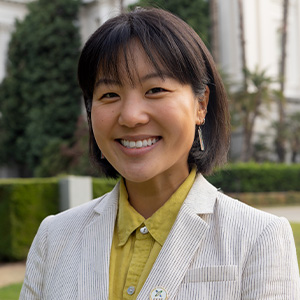 Ellia La, PhD | California Department of Toxic Substances Control
PhD: Food Science & Technology, The Ohio State University
BS: Chemistry and Biochemistry, UC Santa Barbara
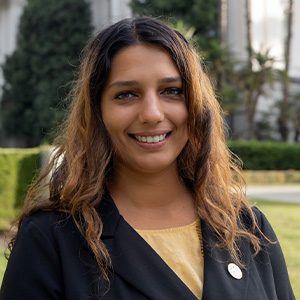 Alexandra Lanjewar, PhD | California Governor’s Office of Business and Economic Development
PhD: Neuroscience, University of Southern California
BS: Neuroscience, University of Miami
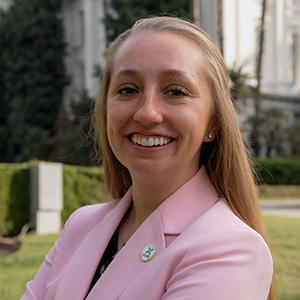 Julianne Rolf, PhD | California Department of Finance
PhD: Chemical and Environmental Engineering, Yale University
BS: Environmental Engineering, UC Riverside
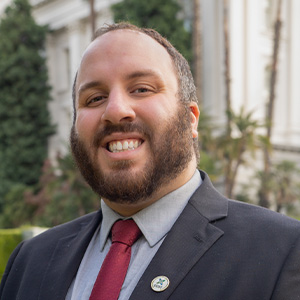 Nicholas Santiago, PhD | California Office of Environmental Health Hazard Assessment
PhD: Environmental Health and Toxicology, UC Santa Cruz
BS: Biology and Society, Neurobiology and Behavior Concentration, Cornell University
Fellows share their path from science to policy.
Charting My Policy Path: Connecting the Past to Drive a Sustainable Environmental Future
Holly Rudel, PhD
Trusting My Instincts: Taking the Leap from Postdoc to Policy
Ben O’Brien Hokanson, PhD
How a Neuroscientist Approaches Housing Policy
Max Ladow, PhD
Alumni Profile:
Bish Paul (’17) Pays it Forward Through Science, Policy, and Advocacy
Alumni Profile:
Tepring Piquado (’13) Leads National Science Policy Network as First Executive Director
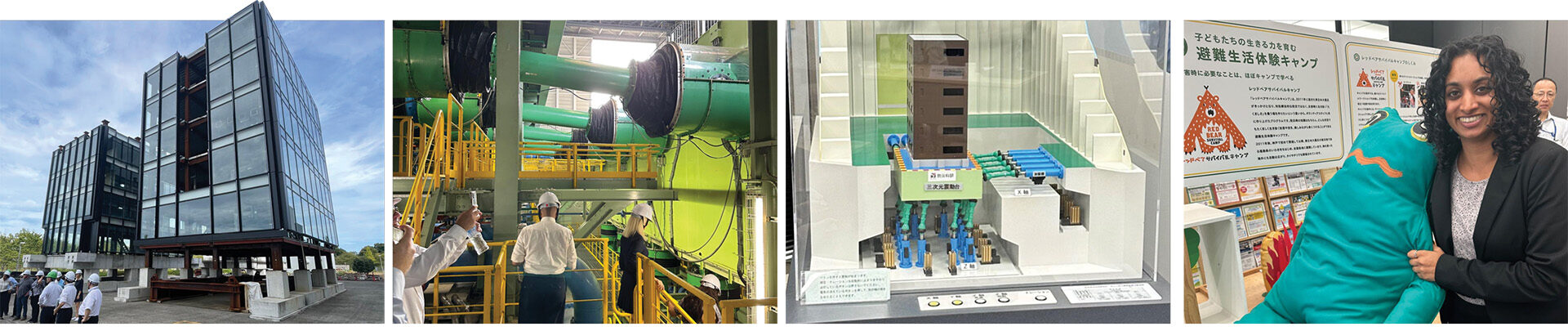
In September 2024, I had the absolute privilege of staffing a delegation of Assemblymembers on a trip to Japan, focused on disaster management and with an emphasis on earthquake resilience. Over the course of four jam-packed days, we met with members of Japan’s Parliament, various Japanese agencies for disaster management and recovery, the US Embassy, the UN office in Japan, innovative city planners and engineers, and communication experts. During these meetings, we learned from one another, shared experiences, and even cried together remembering Japan’s horrific earthquake and tsunami in 2011.
I am a seismologist by training. During my PhD I studied earthquake early warning and seismic engineering using a citizen science smartphone app called MyShake. During my tenure on the MyShake team, the app was adopted by California, Oregon, and Washington as the official delivery service for earthquake early warning to the public. This allowed me to have a more direct perspective on the human impacts of my science than is typical in academia, and I came to the CCST fellowship seeking even broader impact. In my placement with the Assembly Emergency Management Committee, I was able to put my earthquake safety background to use and broaden my understanding to include all the hazards Californians face.
By luck of the geological draw, California hasn’t experienced the kind of devastating earthquake our region is capable of within living memory. But Japan has. Japan has endured, grieved, and rebuilt after such tragedies, and we sought lessons we could take home from each of our meetings. As my committee chair would point out, it’s not a matter of if California will get its Big One, but when.
“The last earthquake to cause notable damage in California was a magnitude 6 in Napa which killed one person. That was 11 years ago. Seismologists think it could get as bad as a magnitude 8 in California. For reference, every number on the magnitude scale indicates 32 times more energy released than by the number before.“ – Sarina Patel
California and Japan share a lot in common when it comes to our natural hazards. Both places are subject to floods, fires, extreme weather, and, of course, earthquakes. Note: I use the word “hazards” intentionally here. The United Nations Disaster Risk Reduction unit told us they are moving away from the term ”natural disasters.” Disasters, they explained, aren’t natural inevitabilities. Natural hazards—like earthquakes, fires, or floods—are Mother Nature’s domain. But the degree to which they’re disastrous for humans is directly controlled by our exposure and vulnerability.
This is not a new paradigm. I taught a class at Berkeley where we also framed risk as a product of hazard and vulnerability. But there is something powerful around framing policy in this way. By differentiating hazards as inevitable but disasters as preventable, we make room for interventions, preparedness, and mitigation. And by considering vulnerability as something that can be reduced, we can also view disasters—horrible as they are—as an opportunity to rebuild for more resilience against the next time.
Issues Article

Our impact today would not be possible without the generous history of donations and support over the years from organizations and individuals toward California’s science and technology future.

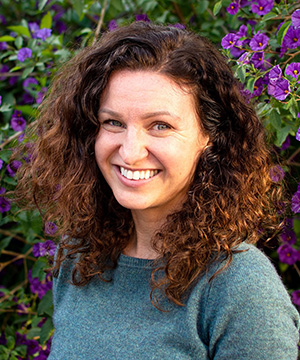
Keleigh Friedrich
Director of Communications

Mikel Shybut, PhD
Science Communications and Content Manager
Plus Design + Layout
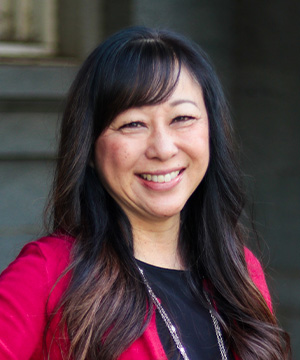
Lisa Poon, CPA
Director of Finances and Operations