California’s Federal Labs and Research Centers: 2023 Impact Report
A Guide for Policymakers
Impact Report
Published: January 16, 2026 (Last Updated: January 16, 2026)
Six federal laboratories and science centers in California have formal partnerships with CCST – the State’s premier resource to connect policymakers with leading scientists in California and beyond – as Federal Laboratory Partners. This Impact Report offers a glimpse of the resources and expertise that each lab can offer to policymakers.
Each federal entity boasts a government relations team able to assist local, state, and federal offices. Together with CCST, these liaisons serve as a resource for community members and officials who want to learn more about federal labs and their broader impact for California. CCST helps facilitate links across the capabilities and talents of these labs and centers, and can help Members and Capitol staff navigate the tremendous resources spread across federal labs and science centers in California.
With this report, we invite you to learn how our federal labs and research centers help make California stronger with science and technology.
Dear Fellow Californians,
As the California Council on Science and Technology continues to develop innovative ways of delivering science and technology advice to the State, we would not be able to fulfill our mission without the world class network of education and research institutions that sets us apart. Alongside academic powerhouses such as the University of California, California State University, California Community Colleges, Stanford, Caltech, and the University of Southern California, we take pride in our unrivaled collection of federal laboratories and research centers.
Federal labs and research centers occupy a unique space in the research ecosystem that sets them apart from other institutions. They are tackling some of humanity’s most pressing and difficult scientific questions through large-scale, mission-based projects and facilities. Together, they represent billions of dollars of federal research investment, bringing tangible economic benefits to local communities while providing a wealth of knowledge and expertise that California can draw on.
Today, California is at a crossroads. As the State continues to confront compounding climate challenges and adapt to rapid technological advancements—including AI, biotechnology, and energy systems—our federal labs remain essential partners in building a more sustainable future. California is leading the nation, with the labs providing a strong foundation for bold action in disaster resilience, national security, and economic competitiveness.
The federal labs continue to expand their partnerships, working with California’s communities, universities, and public agencies to ensure that the benefits of scientific discovery reach every corner of the State. Whether it is developing tools to make our energy grid more resistant to external threats, using satellites to monitor emerging disasters to aid first responders, or deploying new technologies to decarbonize the transportation sector, the breakthroughs developed in these labs continue to benefit millions of Californians every year.
As California continues to move forward and confront big challenges, these labs and centers are ready to help. We encourage all Californians, from policymakers to educators, entrepreneurs to community leaders, to connect with and champion the groundbreaking work happening in these federal institutions.

Julianne McCall, PhD
CCST CEO
Peter Cowhey, PhD
CCST Board Chair Dean Emeritus and Qualcomm Chair Emeritus of the UC San Diego School of Global Policy and Strategy
California is home to a diverse range of federal labs, science centers, and field stations, spanning several U.S. agencies, departments, and bureaus.
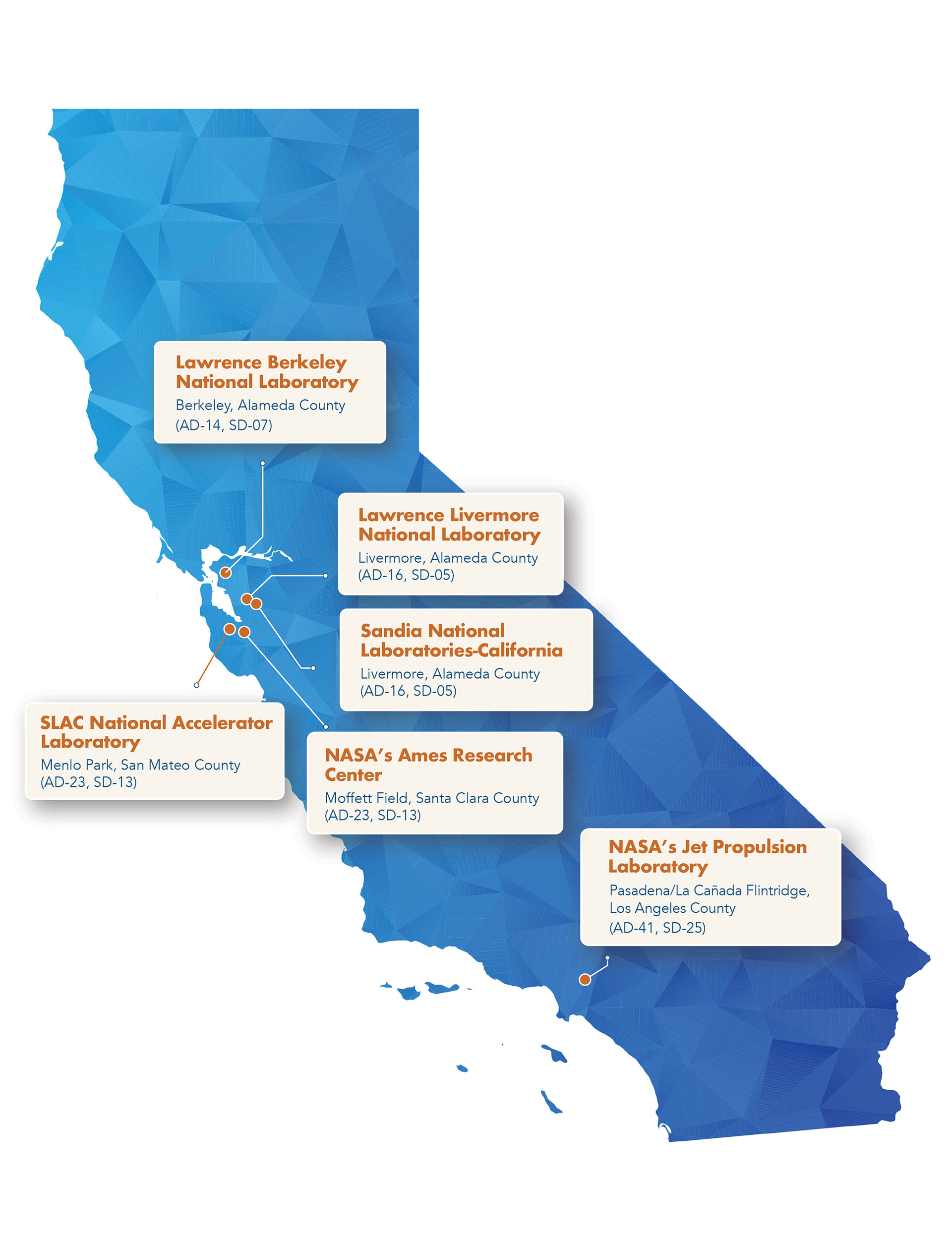
Six of these are founding members of CCST’s Federal Laboratory Partners:
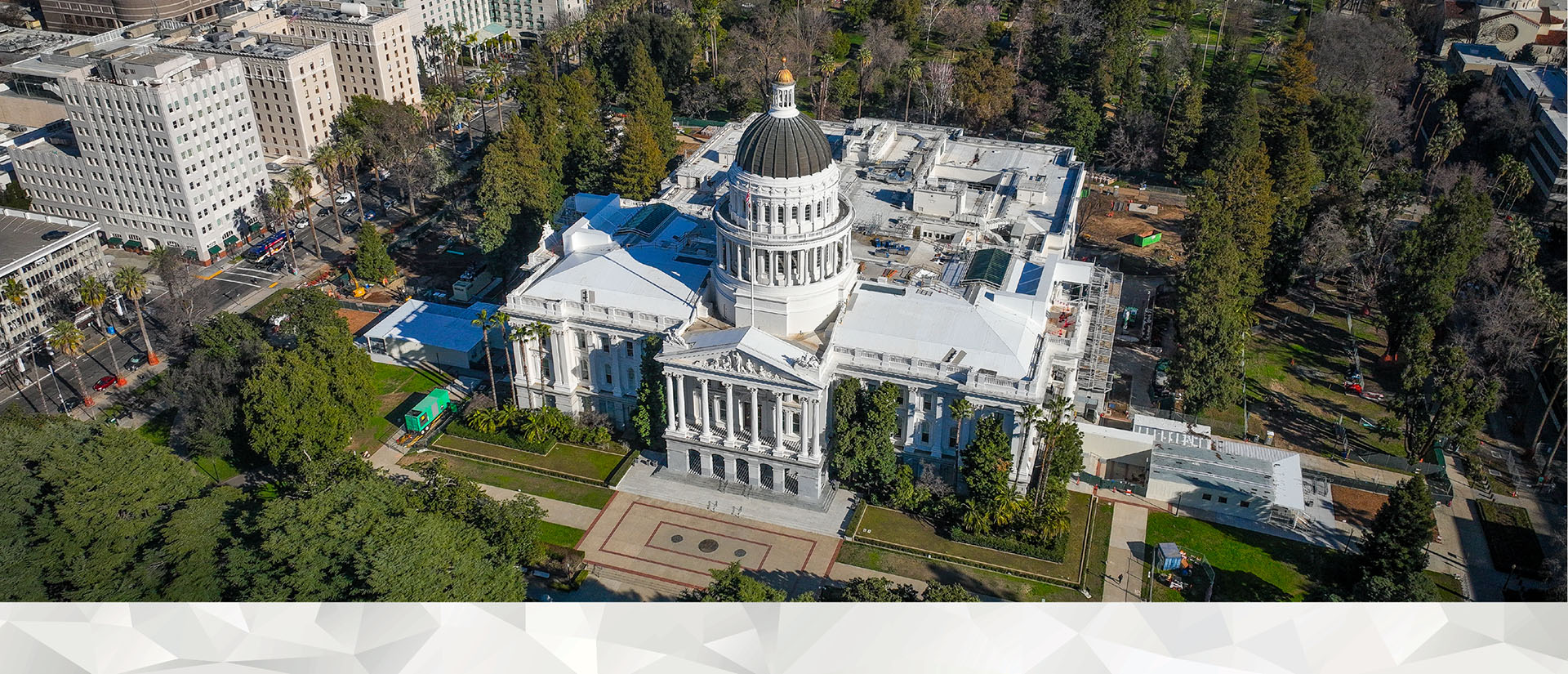
Federal agencies such as DOE and NASA are uniquely positioned to contribute to California’s scientific conversation, leveraging the might of federally directed research resources and facilities to complement the wealth of expertise within the State. These federal investments directly benefit California by generating various programs tailored to the state’s needs. Examples include an investment of $14 million to advance technologies made to transform carbon emissions and a partnership between the state and NASA’s Jet Propulsion Laboratory to support recovery efforts following the fires that devastated the Los Angeles region in early 2025.
Federal laboratories possess an advantage in forging collaborative relationships with a wide array of institutions and agencies within California. They bring mission-oriented research and scientific facilities that complement the wealth of knowledge at the University of California, California State University, Caltech, Stanford, USC, California Community Colleges, and other academic campuses throughout the State. By connecting these resources to various California State agencies, the federal laboratories are a source of expertise for policymakers grappling with pressing science and technology challenges. For example, the Joint Bioenergy Institute at Lawrence Berkeley National Laboratory is a multi-disciplinary research partnership dedicated to developing advanced biofuels across five national labs and eight academic-research campuses–including UC Berkeley, UC Davis, UC San Diego, and UC Santa Barbara. This confluence of partnerships across both academic and governmental spheres creates a powerful synergy for knowledge sharing and evidence-based policymaking in California.
Federal laboratories help California by leveraging resources and conducting research to benefit local communities and businesses. These include how Sandia National Laboratories played a crucial role in developing the first commercial hydrogen-powered ferry. The Combustion Research Facility at Sandia was an essential resource in delineating many of the safety measures needed to properly handle the hydrogen fuel used by the ferry.
Another example comes from Lawrence Livermore National Laboratory (LLNL) by creating the world’s fastest supercomputer named El Capitan, representing the culmination of a multi-sector collaboration between LLNL, other federal labs, such as Los Alamos and Sandia, and industry leaders, including Hewlett Packard Enterprise, AMD and RedHat. Finally, research performed at SLAC National Accelerator Laboratory discovered batteries in electric vehicles lasted longer than expected. These examples demonstrate how research and development performed at federal laboratories benefit their communities, help with economic development, and drive technological progress.
Recognizing the crucial link between scientific advancements and informed policymaking, each federal research laboratory maintains a dedicated government relations team. These specialized units possess the expertise and infrastructure to provide comprehensive support to local, state, and federal government offices. Collaborating closely with CCST, these government relations liaisons function as vital resources for both public officials and community members. They stand ready to offer in-depth information about the diverse activities conducted within federal laboratories and to illuminate the extensive and multifaceted impacts these institutions have on the state of California. This collaborative effort ensures that stakeholders have direct access to reliable information and facilitates a deeper understanding of the significant contributions of federal research to the well-being and progress of California.
CCST was established in 1988 via the Legislature to help connect policymakers with leading scientists within California. Through partnerships with federally funded laboratories the CCST is able to provide policymakers with independent, nonpartisan scientific advice by a variety of means. This includes high impact reports, workshops, briefings, and convenings.
When should policymakers contact CCST?
If your office is considering legislation, regulations, or other work products that you believe would benefit from science and technology expertise, or if you are seeking data and advice to strengthen your decisions with science, contact CCST — and we will help you navigate the bounty of top scientific minds available to California.

www.nasa.gov/ames
Moffett Field, Santa Clara County
(AD-23, SD-13)
NASA’s Ames Research Center (NASA Ames) applies the spirit of Silicon Valley to NASA’s mission, and there’s a little bit of Ames in every launch and flight. The numerous one-of-a-kind facilities here and interconnected areas of expertise are vital elements of the nation’s strategy for exploration – including contributions of emerging private space endeavors, made possible with Ames’ support.
Ames combines space technology and biology with two driving aims: detecting life off of our planet and understanding how Earth life changes in space, so healthy humans can explore from the Moon to Mars. Closer to home, Ames leads the national research initiative to devise the best ways for commercial drones, flying cars, and today’s aircraft to safely share America’s skies.
NASA in Silicon Valley contributes to the nation’s technical prowess as only a government research organization can: When research matures to a place where others can use it, we seek out partners. NASA Ames serves as an active portal bringing together specialized NASA R&D along with a research cluster of affiliated high-tech companies, universities, and other federal laboratories. To advance both NASA’s mission and the American economy, Ames shares its knowledge… and moves on to the next unknown.
BY THE NUMBERS
Founded in the San Francisco Bay Area more than 85 years ago, NASA’s Ames Research Center has shaped the region with its passion for knowledge and technology. Today, by bridging public and private partnerships to capitalize on the innovation and entrepreneurship resident here, Ames is helping NASA take essential steps forward to the Moon and Mars – through Silicon Valley. In parallel, the Ames presence in this important region offers California easy access to NASA technologies, facilities, and expertise. Ames and its partners provide California with the opportunity to quickly connect to a wide range of potential solutions to challenging regional concerns.
Many NASA-developed technologies and discoveries have practical applications and significant future commercial value through the creation of new industries, products, services, and jobs (e.g., small, inexpensive satellites). NASA Ames is deeply committed to collaborations, both public and private. In fiscal year 2024, the NASA Small Business Innovation Research/Small Business Technology Transfer (SBIR/STTR) programs provided nearly $38 million in Phase I and Phase II awards to California firms, and an additional $11.4 million to assist firms in bridging the “valley of death” to bring their technologies to the marketplace, via Post Phase II investments through Phase II-Extended and Sequential Phase II awards.
NASA Ames’ service to both the state and region includes:
NASA Ames develops groundbreaking technologies for NASA missions, while promoting collaboration with U.S. industry. NASA Ames has partnered with the California Department of Water Resources, the California Department of Parks, the California Natural Resources Agency, and the San Francisco Bay Conservation and Development Commission. Such collaborations offer breakthroughs each year for the benefit of the American public. NASA Ames continues to expand partnerships that can leverage taxpayer-funded NASA research and technology for the benefit of the State of California and the country.
NASA Helps Emerging Space Companies ‘Take the Heat’
As new companies develop innovative ways to do business in space, NASA Ames supports this commercial growth by offering its know-how, unique facilities, and the advanced materials invented here, enabling new uses for space with big benefits for humanity. In 2024, Varda Space Industries of El Segundo, California, in partnership with Rocket Lab USA of Long Beach, California, returned to Earth the first product processed on its autonomous, free-flying, in-space manufacturing platform: a pharmaceutical that may gain unique properties by forming in the near-absence of gravity. Through a partnership agreement supporting Varda’s initial missions, Ames made the heat shield material – originally developed at the center, too – that protects the spacecraft from the intense heat generated when entering the atmosphere. NASA also transferred the knowledge that will let Varda begin producing its own thermal protection material, independently. An increasing number of start-ups with smart ideas but limited funding and spaceflight experience are turning to NASA and its decades of expertise to get their ideas off the ground and safely home again.
Enabling Wildfire Response, “24-7”
NASA is building on decades of air traffic management and research to develop new tools that help aerially fight and monitor wildland fires, 24 hours a day. NASA’s Advanced Capabilities for Emergency Response Operations (ACERO) project’s portable airspace management system (PAMS) provides remote pilots with fire information plus aircraft location and flight plans, enabling safe coordination of flights during low-visibility conditions – during the night or during periods of heavy smoke – which is not currently possible. Managed by NASA Ames, ACERO is working with stakeholders, including CAL FIRE, the U.S. Forest Service, and California aviation startups, to advance this technology, and a spring 2025 flight test demonstrated the PAMS could work successfully in an actual wildland fire environment, complete with mountains, valleys, and weak cellular service. NASA aims to transfer these capabilities to wildland fire crews for use in the field, saving more lives and property.
www.lbl.gov
Berkeley, Alameda County
(AD-14, SD-07)
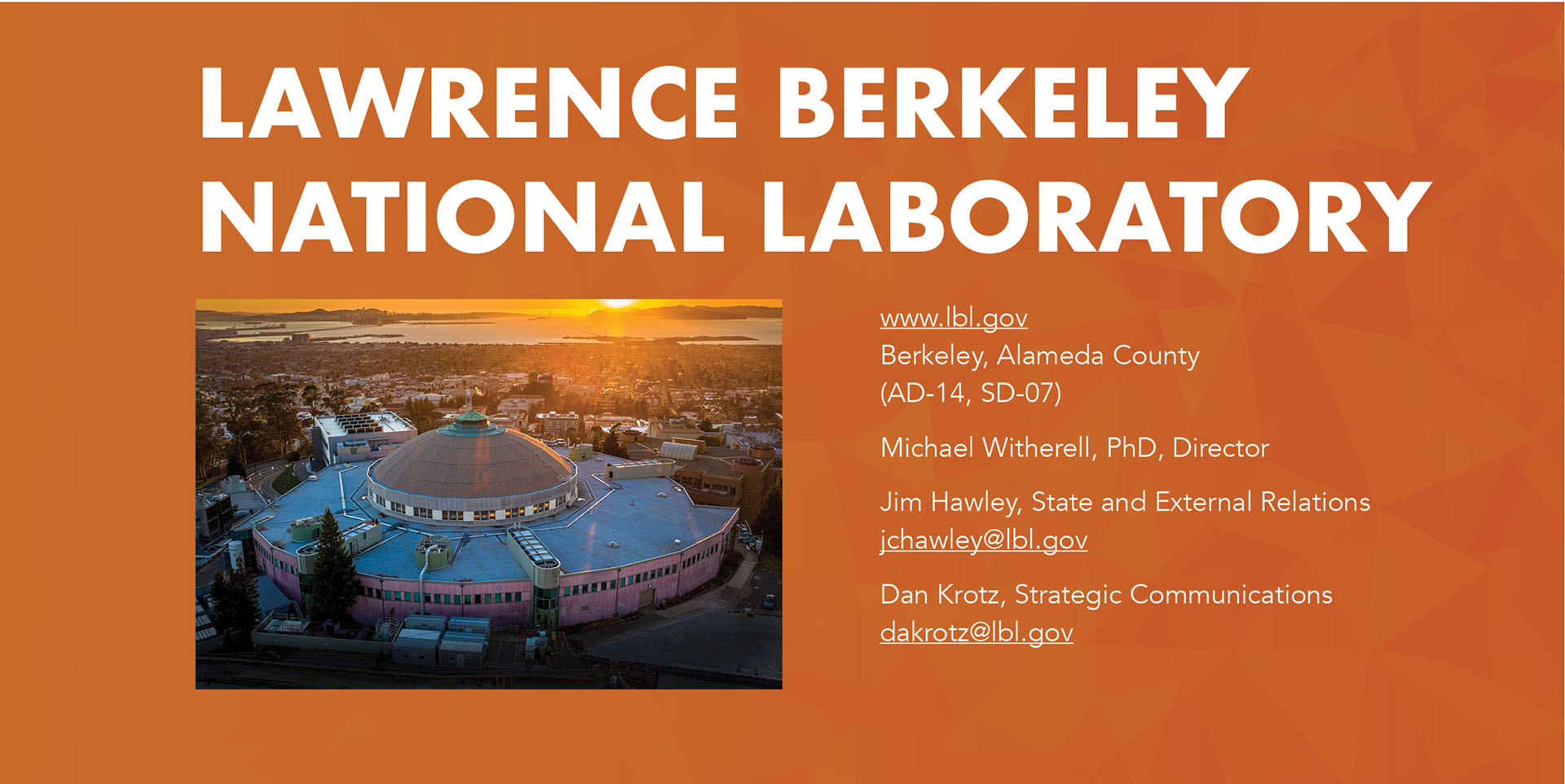
Lawrence Berkeley National Laboratory (Berkeley Lab) was founded in 1931 by Ernest Orlando Lawrence. Considered the father of multidisciplinary team science, Lawrence was a University of California (UC) Berkeley physicist who won the 1939 Nobel Prize in physics for his invention of the cyclotron, a circular particle accelerator that opened the door to high-energy physics and the foundation of today’s Nobel Prize-winning accelerators such as the Large Hadron Collider.
Today, Berkeley Lab is managed by the University of California for the Department of Energy (DOE). Berkeley Lab’s close relationship with UC Berkeley and other UC campuses brings the intellectual capital of the university’s faculty, postdocs and students to bear on the nation’s great scientific questions, a partnership that underpins the lab’s extraordinary scientific productivity.
By the Numbers
See https://www.lbl.gov/impact/map/ for a summary of the Lab’s national impact.
As one of two California national laboratories managed by the DOE’s Office of Science, Lawrence Berkeley National Laboratory (Berkeley Lab) is committed to nonclassified research, advancing cutting edge work in fields such as high-performance computing, materials science, biosciences, energy technologies and environmental systems
Berkeley Lab leads one of the nation’s largest quantum computing and networking research programs, as well as significant initiatives in artificial intelligence and machine learning. Berkeley Lab scientists advance research to further affordable, reliable clean energy, including enhanced geothermal systems to provide 24/7 power, flexible demand technologies to make maximum use of energy when it is cheap and abundant and new strategies to advance interconnection and affordably manage load growth.
They study the Earth’s environment to frame strategies for assuring future water supply and mitigate growing risks from extreme weather and the threat of megafires.
Berkeley Lab also designs and houses some of the world’s most powerful microscopes, x-ray beams, and supercomputers. Berkeley Lab researchers aim to coax more power from solar cells, build better batteries, and develop advanced fuels such as clean hydrogen and aviation biofuels and liquid fuels from sunlight. They study questions as awe-inspiring as the formation of the universe, as relevant as water production and desalination, and as important as cybersecurity. They also can provide expertise on genetic analysis, chemical and materials sciences, and geoscience fields such as geothermal energy and carbon sequestration.
Berkeley Lab partners with a number of California agencies — including the California Energy Commission, the California Geologic Energy Management Division, the Department of Water Resources, State Water Resources Control Board, Strategic Growth Council, and the California Natural Resources Agency — to support our state’s ambitious clean energy and environmental goals.
Berkeley Lab houses many “user facilities” — state-of-the art lasers, instruments, and computers available for industry and university use. In 2016, more than 16,500 researchers (approximately one third were from California research institutions) accessed these facilities. Berkeley Lab hosts nearly 40% of all usage of DOE’s major public research facilities. Work conducted at Berkeley Lab user facilities has led to the development of better medicines, new materials, and more efficient solar cells and batteries.
The user facilities at the Berkeley Lab include:
Too numerous to detail, other notable research facilities include the Advanced Quantum Testbed, Center for X-Ray Optics, FLEXLAB, the Advanced Biofuels Process Demonstration Unit, the Materials Projects and other assets available to government, university, and company researchers.
Smart Windows
With support from the Department of Energy and the California Energy Commission, Berkeley Lab has partnered with the window industry to develop energy-efficient windows, tools, and rating systems. Berkeley Lab’s work with manufacturers led to the deployment of low-emissivity (low-E) coatings, now used in over 70% of commercial and 90% of residential window sales, reducing energy use by 30-40%. This collaboration has grown the window industry, with manufacturers like Cardinal Glass opening 32 US sites and employing over 5,000 people. Berkeley Lab also created thin-triple windows, demonstrated with California Energy Commission funding, showing potential for broad implementation and significant energy savings.
Outcomes
Building California’s Bioeconomy
Leading the largest bioscience unit in the Department of Energy, Berkeley Lab’s bioscience area is leading the effort to convert farm and forest biomass wastes into valuable products. Berkeley Lab has joined with BEAM Circular, a consortium of three Central Valley counties, UC Merced, and many others, to establish a bioindustrial manufacturing capability in California’s Northern San Joaquin Valley. The Lab’s Advanced Biofuels and Bioproduct Process Demonstration Unit (ABPDU), a shared biofoundry serving as a test bed for companies to develop technologies and prototype materials, will play a key role. ABPDU has collaborated with over 80 companies, over 50 of which are located in California. Twenty of these California-based companies – making everything from skis, to cosmetics, food products and more – have raised over $1.7 billion in private investment.
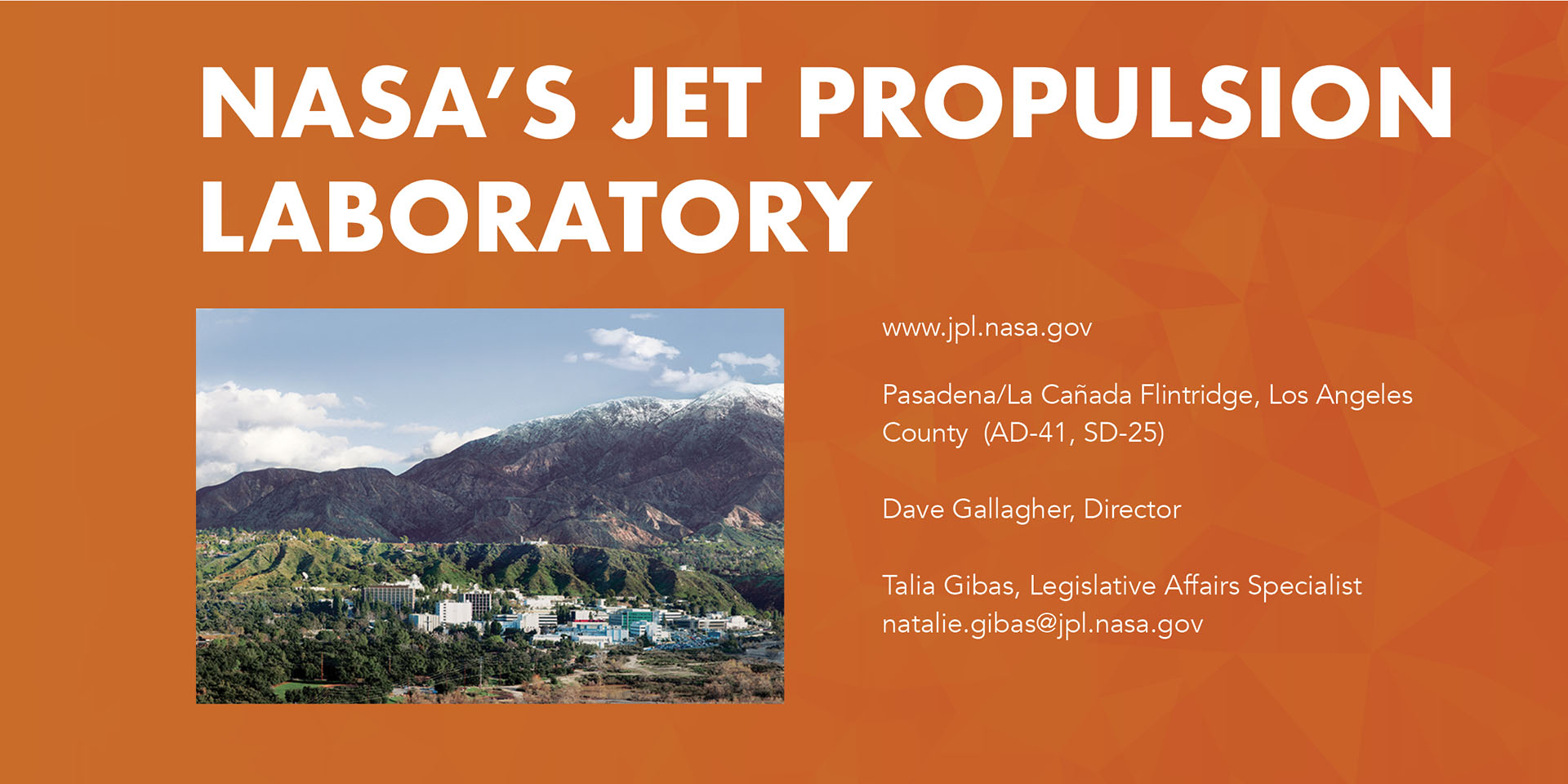
www.jpl.nasa.gov
Pasadena/La Cañada Flintridge, Los Angeles County (AD-41, SD-25)
The roots of NASA’s Jet Propulsion Laboratory (JPL) date to the 1930s, when students at the California Institute of Technology (Caltech) — collectively known as the “Suicide Squad” — gathered to test rocket engines near Pasadena, California.
During the 1940s and 1950s, JPL grew as it developed rockets and other technologies for the U.S. Army. JPL designed, built, and operated America’s first satellite, Explorer 1, launched in 1958. Explorer 1 also delivered the first science finding from space — the discovery of Earth’s Van Allen radiation belts. Later that year, Congress established NASA, and JPL was transferred to the space agency.
Since then, JPL has sent robotic spacecraft to all of the planets in the Solar System and is responsible for all five rovers that have explored the surface of Mars. In addition, JPL conducts significant programs in earth sciences, space-based astronomy, and technology research and development.
By the Numbers
Home to Mars rovers, space telescopes and an array of Earth-orbiting satellites, JPL is one of NASA’s premier research facilities. In 1958, JPL made news as it created America’s first satellite and, in the 1960s, sent the first robotic spacecraft into interplanetary space. As of December 2025, JPL has more than three dozen active missions and science instruments in operation. In addition, JPL developed and manages NASA’s Deep Space Network, a worldwide system of antennas that communicate with interplanetary spacecraft.
As a federally funded research and development center (FFRDC), JPL is staffed and managed for NASA by Caltech. This unique relationship creates an intellectual infusion with a university whose faculty and alumni have garnered 47 Nobel Prizes, 66 National Medals of Science, and 14 National Medals of Technology.
This Caltech-JPL synergy is boosted by cooperative initiatives, dedicated research seed funding, and joint-faculty appointments. Furthermore JPL’s research is conducted in 1,138 laboratory or technical rooms in 76 buildings with active missions on Earth, Jupiter, Mars, interstellar space, and stars and galaxies.
NASA JPL’s expertise is of particular potential benefit to California in two broad areas: 1) regional decision support systems based on Earth observations and models, and 2) advanced technology and earth science. Resources include airborne and spaceborne instruments that remotely:
NASA JPL is advancing technology in the areas of energy systems, robotics, miniaturized sensors, artificial intelligence, autonomy and remote sensing. These advances in tracking natural hazards and climate change and advancing ecosystems science will offer deep insights for California policymakers.
Brinson Exploration Hub
In 2024, JPL and Caltech launched the Brinson Exploration Hub, rewriting the future of space exploration with a game-changing $100 million investment from the Brinson Foundation. The Hub provides teams of scientists and engineers from Caltech and JPL with access to funds and facilities to develop, test, and implement novel scientific concepts and instrumentation on faster timescales and at lower costs than is possible through conventional means. The Brinson Hub is the new home for projects to push boundaries, embrace risk, and deliver scientific breakthroughs, empowering innovation now.
Understanding Water
In 2025, the Surface Water and Ocean Topography Satellite (SWOT), which launched in 2022, continued to track the height of Earth’s lakes, rivers, reservoirs, and oceans and empowered scientists to decode our planet’s water mysteries. From probing the hidden depths of Death Valley’s ephemeral lake to mapping rivers with unprecedented precision, SWOT made the invisible visible. SWOT also mapped the seafloor with unprecedented ac curacy. Through its first-ever global survey of Earth’s surface water, SWOT is revolutionizing how we understand the essential resource of our world. More importantly, the data can be used to understand California’s water resources, coastal flooding events and sea level changes to prepare for future extreme events and weather changes.
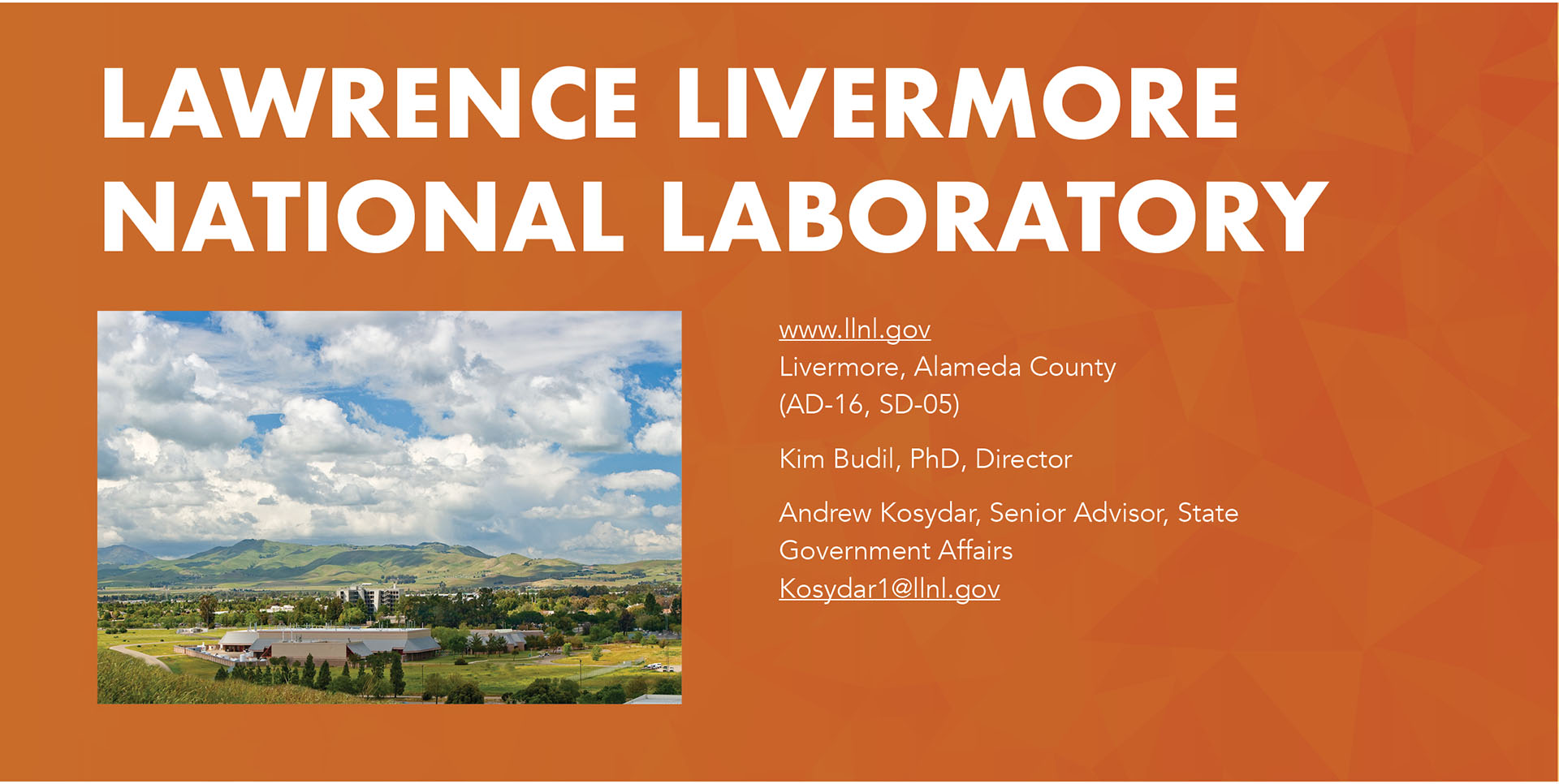
www.llnl.gov
Livermore, Alameda County
(AD-16, SD-05)
Originally established by Edward Teller and Ernest O. Lawrence as a branch of Berkeley’s UC Radiation Laboratory, the Lawrence Livermore National Laboratory (LLNL) has been a pillar of the Tri-Valley community since 1952.
Today, LLNL is a U.S. Department of Energy/National Nuclear Security Administration national security laboratory managed by Lawrence Livermore National Security, LLC — a partnership of the University of California, Bechtel Corporation, BWX Technologies, Inc. and Amentum. Its mission is to enable the nation’s security and global stability and resilience by empowering multidisciplinary teams to pursue bold and innovative science and technology. This is achieved through four key mission areas – nuclear deterrence, threat preparedness and response, energy security and multi-domain deterrence.
LLNL’s mission is strengthened through R&D investments in such areas as computing, engineering, fusion, advanced manufacturing, artificial intelligence, bioengineering and physical and life sciences, and by initiatives that partner LLNL capabilities with industry and academia, which in turn can be applied to public and private sector needs regionally and statewide.
By the Numbers
Since its founding in 1952, the Lawrence Livermore National Laboratory (LLNL) has been an icon in northern California, applying cutting-edge technology to enhance our nation’s security and solve some of the most pressing challenges of our time.
Those goals are met, in part, through strategic partnerships with California industry and academia. LLNL’s Innovation and Partnerships Office (IPO) spearheads the Laboratory’s engagement with industry. Whether through technology commercialization, entrepreneurship encouragement, or business development activities, the primary mission is to grow the economy by advancing the development and commercialization of scientific discoveries. LLNL currently has active commercial licenses with more than 60 companies (35 in California) as well as dozens of active cooperative research and development agreements. Licensing and royalty income exceeded $4.9 million in FY24. LLNL licensed technologies have enabled the launch of numerous new businesses that are helping drive economic growth locally, regionally and beyond.
LLNL also has deep and longstanding relationships with the University of California and California State University systems, which serve to drive engagement with higher education and help fill the workforce pipeline needed for the Laboratory to fulfill its mission responsibilities.
LLNL has missions in energy, biosecurity, artificial intelligence, computations, defense, cybersecurity, weapons systems, counterintelligence and nonproliferation. LLNL’s fundamental work in science, technology, and engineering — such as basic research and development to achieve the breakthroughs applied directly by LLNL programs– is spread across three disciplinary organizations: Computing, Engineering, and Physical and Life Sciences:
In addition to designing, developing, and deploying high-performance computing capabilities, the Computing Directorate assures that mission and program goals are attained by delivering outstanding computer science expertise and creative technology and software solutions. The program also possesses technical expertise in information technology services and solutions that help missions.
The Engineering Directorate undertakes projects with high technical risk, integrates and extends technologies, and uses the extremes of both ultrascale and microscale to achieve results. LLNL engineers develop systems that push technologies to their extremes.
The Physical and Life Sciences Directorate delivers science that ensures the success of LLNL’s national security programs, anticipates their future needs, and provides innovative solutions to the hardest scientific problems facing the nation and our state.
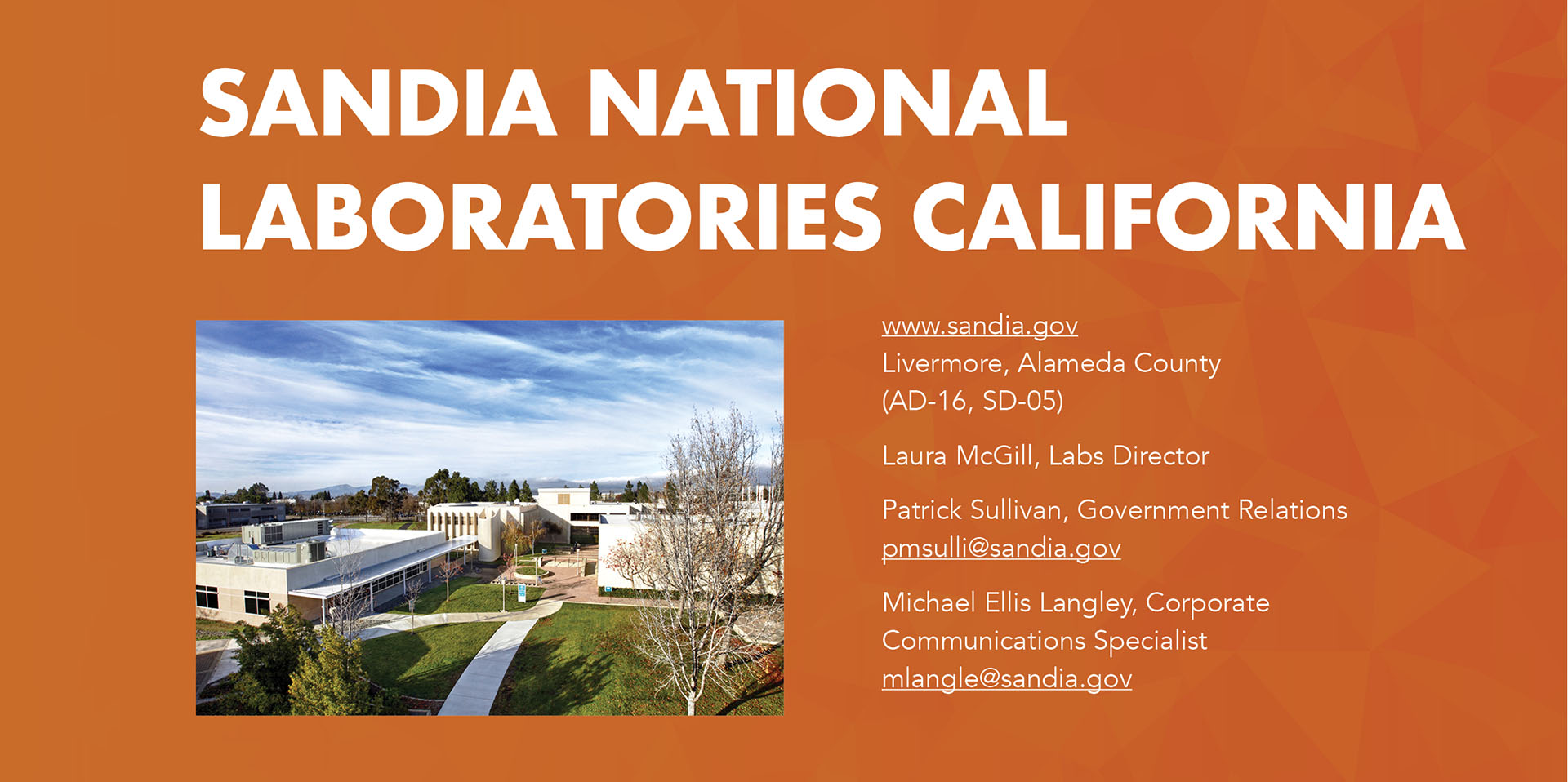
www.sandia.gov
Livermore, Alameda County
(AD-16, SD-05)
From its origins as a single-mission engineering organization for nonnuclear components of nuclear weapons, Sandia National Laboratories (Sandia) now has multiple programs involved in a broad spectrum of national security issues. As one of three National Nuclear Security Administration research and development laboratories, Sandia provides exceptional service in the national interest by applying science to help detect, repel, defeat, or mitigate threats to national security.
Sandia began in 1945 as the “Z-Division” — the weapons design, testing, and assembly branch of Los Alamos National Laboratory in New Mexico. It officially became Sandia Laboratory in 1948, and in 1956 a second site was opened in California’s Livermore Valley (Sandia California). In 1979, Congress made Sandia a Department of Energy National Laboratory. In 1993, Sandia became a government-owned, contractor-operated (GOCO) laboratory under Lockheed Martin Corporation. Today Honeywell International, Inc., manages and operates Sandia as National Technology and Engineering Solutions of Sandia, LLC.
By the Numbers
The Livermore campus of Sandia National Laboratories (Sandia California) has delivered essential science and technology to resolve the nation’s most challenging issues for almost 70 years.
Many of these nationwide security challenges — like alternative energy, transportation, homeland security, cybersecurity and more — surfaced early for the State of California, providing this Sandia campus with a special opportunity to contribute to the first wave of science and technology solutions serving the United States.
Sandia California boosts the state’s regional and statewide economy, with contracts totaling more than $165 million directed to small businesses and $262 million total in contracts across all California businesses.
Part of Sandia California is dedicated to the Livermore Valley Open Campus, a 110-acre campus that brings academia and businesses together with researchers from Sandia and its Department of Energy sibling, Lawrence Livermore National Laboratory.
Sandia California researchers pursue a variety of security and resource management research.
Teams of researchers on the Livermore campus have created a platform for discovering, designing, and engineering novel antibody countermeasures for emerging viruses, defining a more effective approach to developing nanobody therapies that prevent or treat viral infection.
The Electronic Polymer Dosimeter for Radiotherapy developed at Sandia California can help cancer patients who must undergo debilitating radiation therapy. A disposable adhesive patch is applied directly to a patient’s skin, precisely measuring radiation intensity and spatial distribution at the points of entry in real time. This approach eliminates uncertainties present in current therapies.
The SUMMIT tool, developed at Sandia California, aids in preparing for human-caused or natural disasters by improving the cycle of activities that emergency response teams undertake. SUMMIT was included as part of a memorandum of agreement with the California Fire and Rescue Training Authority to deliver an emergency response framework to the California Exercise Simulation Center. The enhanced, 3-D virtual view of hazard damage creates a new level of realism and a common operating picture for members in exercises at national, regional, and local levels.
The first hydrogen-fueled ferry, called the Sea Change, was built through innovations developed at Sandia California. Using hydrogen fuel cell technology, the vessel emits only water vapor, a portion of which is remineralized and used in the onboard water fountain, making it the only vessel in the world with drinkable emissions. San Francisco Bay Ferry and a coalition of private and public collaborators launched Sea Change in 2024 for a successful 6-month test cruise.
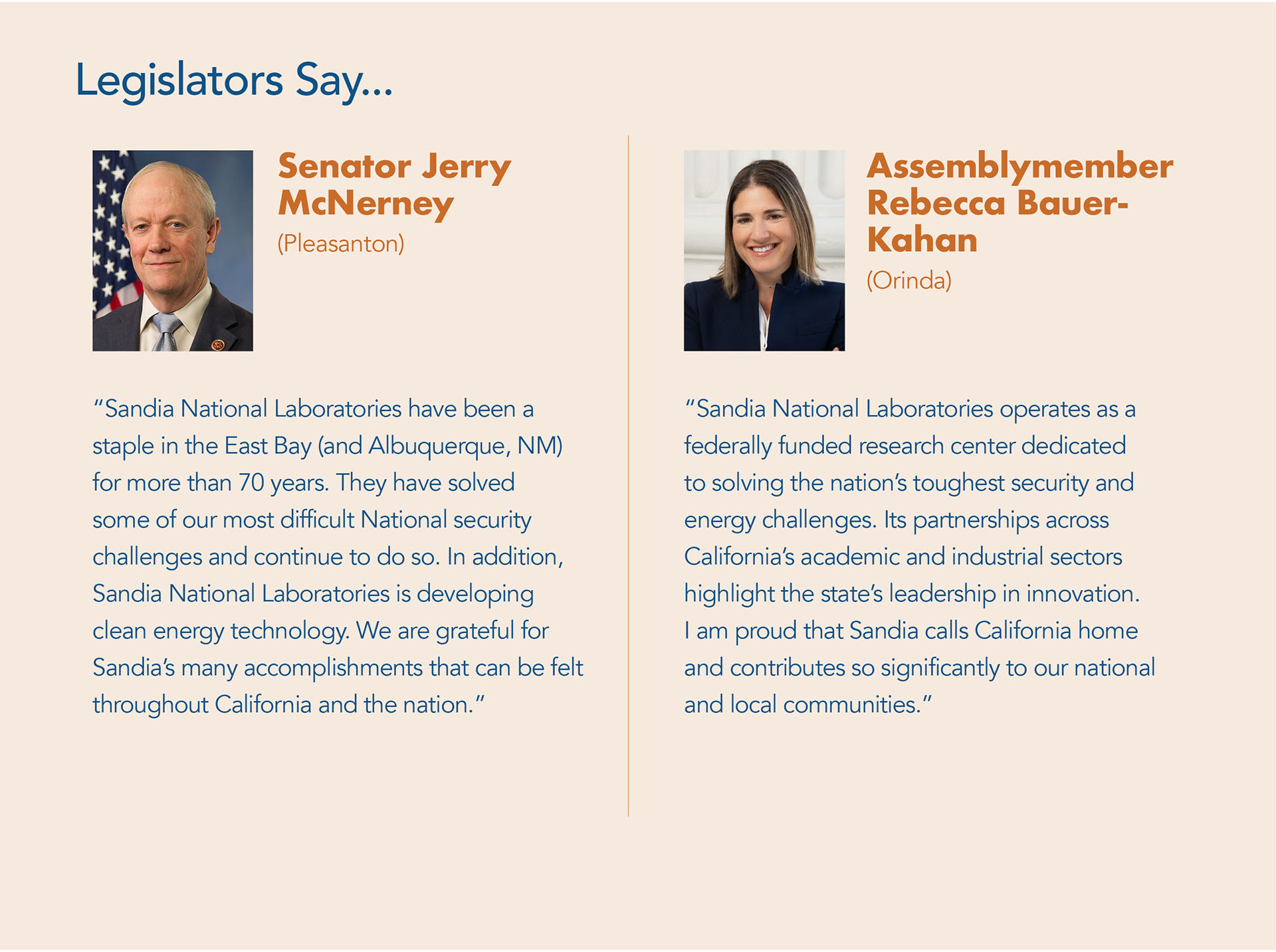
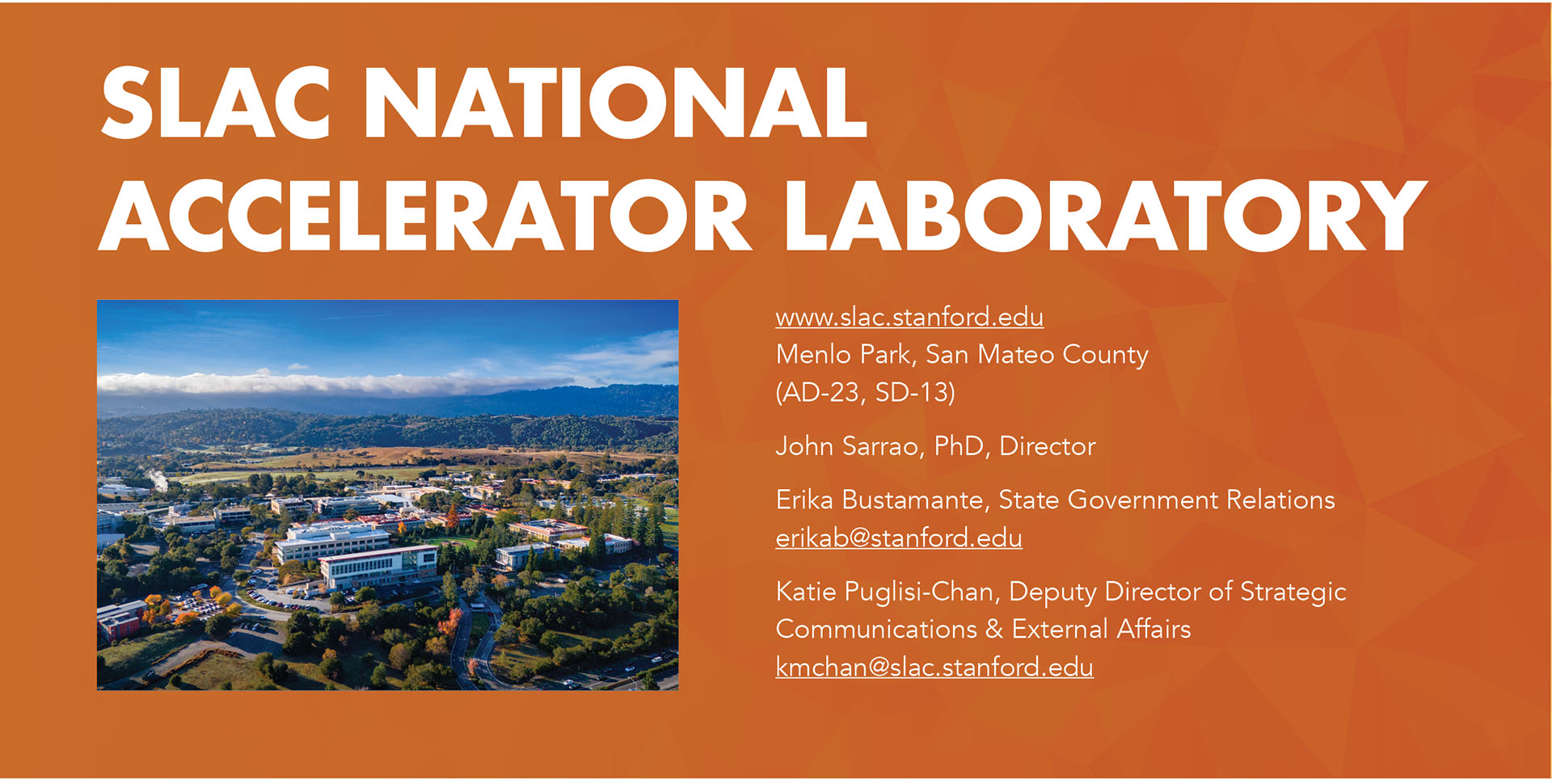
www.slac.stanford.edu
Menlo Park, San Mateo County
(AD-23, SD-13)
The people, expertise and facilities at SLAC National Accelerator Laboratory offer potential to transform nearly every sector of our economy.
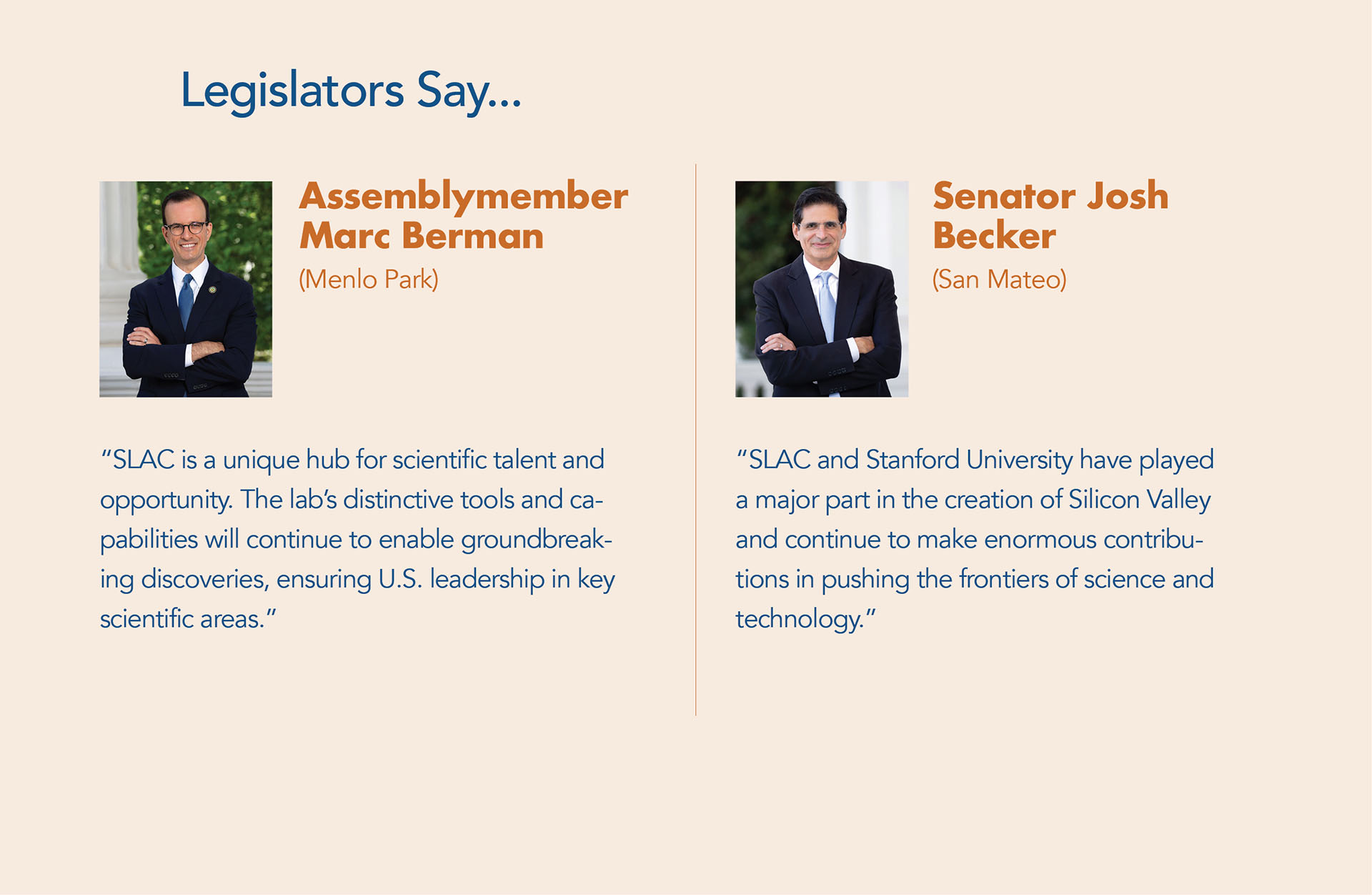
Stanford University operates SLAC for the Department of Energy’s (DOE) Office of Science. Located in Menlo Park, the lab explores how the universe works at the biggest, smallest, and fastest scales, from the fundamental processes of chemistry, to the makeup of the cosmos, dark matter, and dark energy. SLAC built the world’s largest digital camera for astrophysics located at the heart of the NSF-DOE Vera C. Rubin Observatory, which will scan the night sky for 10 years creating the largest astronomical movie of all time.
The laboratory operates the most powerful X-ray free-electron laser on the planet. Extremely bright and fast X-ray pulses are used to create movies of atomic and molecular structures and interactions with unprecedented precision — driving advances in energy science, human health, industrial chemistry, novel materials, information technology, and more. SLAC helps shape the future by advancing areas such as quantum technology, scientific computing and the development of next-generation accelerators.
BY THE NUMBERS
SLAC National Accelerator Laboratory (SLAC) contributes to California’s global reputation as a hub of innovation. SLAC invents, develops, and operates sophisticated particle accelerator and X-ray technology and other pioneering scientific tools, including sensors, detectors, controllers, lasers, AI and edge computing for processing torrents of data and images. SLAC also develops novel laser architectures for our own research and work with local laser firms, further securing California as a hub of the optical laser industry. Through its partnership with the National Alliance for Water Infrastructure at Lawrence Berkeley National Lab, SLAC conducts research on the science of water desalination and technoeconomic assessment of full water treatment systems.
Each year, SLAC hosts thousands of researchers who come to use its sophisticated X-ray facilities for a wide range of basic and applied science — including California companies developing new pharmaceuticals, improving chip manufacturing, and developing sensor technology for self-driving cars.
SLAC has deep ties to a major university — SLAC employees are Stanford University employees, and the SLAC director is a dean of Stanford. SLAC’s expertise and ties with Stanford are a powerful combination that provides unique educational experiences and serves as a vital training ground for the nation’s future scientific workforce. SLAC educates the public through tours, lectures, and outreach programs, and it also provides internships and fellowships to students and early career professionals.
SLAC has world-leading expertise in the design, engineering, and fabrication of advanced electronics, sensors, detectors, instrumentation — in addition to largescale data handling and computing systems, and associated facilities that help advance real-world applications. These include:
On the ground, SLAC has the ability and knowledge to manage major, complex scientific infrastructure projects that require the development of entirely new technologies. And at the edge of human exploration, SLAC’s experts can guide us in understanding the context and importance of dark matter, dark energy, particle physics — and the evolution of the cosmos itself.
CCST can assist California Legislative and Executive offices in navigating federal research resources in the State of California.
For assistance, please contact:
John Thompson, PhD
CCST Science Services Manager
[email protected]
(916) 492-0996
NASA’s Ames Research Center
www.nasa.gov/ames
Lisa Lockyer, Government Affairs
[email protected]
Michele Johnson, Office of Communications
[email protected]
NASA’s Jet Propulsion Laboratory
www.jpl.nasa.gov
Talia Gibas, Legislative Affairs Specialist
[email protected]
Lawrence Berkeley National Laboratory
www.lbl.gov
Jim Hawley, State and External Relations
[email protected]
Dan Krotz, Strategic Communications
[email protected]
Lawrence Livermore National Laboratory
www.llnl.gov
Andrew Kosydar, Senior Advisor,
State Government Affairs
[email protected]
Sandia National Laboratories, California
www.sandia.gov
Patrick Sullivan, Government Relations
[email protected]
Michael Langley, Corporate Communications Specialist
[email protected]
SLAC National Accelerator Laboratory
www.slac.stanford.edu
Erika Bustamante, PhD, State Government Relations
[email protected]
Katie Puglisi-Chan, Deputy Director of Strategic Communications & External Affairs
[email protected]