The Human Health Benefits of Improving Forest Health in California

Convening Proceedings
Proceedings
Funding: Cornell Atkinson Center for Sustainability
Published: August 18, 2025 (Last Updated: August 18, 2025)
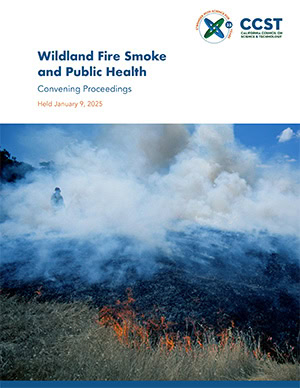
On January 9th, 2025, the California Council on Science and Technology (CCST), in partnership with Professors Alistair Hayden and Corinna Noel of the Department of Public and Ecosystem Health at Cornell University, brought together 30 interdisciplinary experts at the UC Student and Policy Center in Sacramento for the Wildland Fire Smoke and Public Health Convening. The event was held against the backdrop of the devastating Palisades and Eaton fires in Los Angeles, providing a somber reminder of the urgency of dealing with extreme fires. The convening aimed to connect the various disciplines working to respond to wildland fire smoke in California, particularly focusing on the roles of land managers and public health practitioners. Land management and public health experts participated in breakout sessions where they discussed current practices in their respective fields and identified gaps in research, policy, and practice that need to be addressed.
Authors: Hayden, A.; Noel, C.; Oyewole, O.; Thompson, J.; Shah, G.; Shybut, M.
Partners:
Suggested Citation: Hayden, A., Noel, C., Oyewole, O., Thompson, J., Shah, G., Shybut, M. 2025. Wildland Fire Smoke and Public Health: Convening Proceedings. Sacramento, CA: California Council on Science and Technology. DOI: https://doi.org/10.63429/hmps5032
On January 9th, 2025, the California Council on Science and Technology (CCST), in partnership with Professors Alistair Hayden and Corinna Noel of the Department of Public and Ecosystem Health at Cornell University, brought together 30 interdisciplinary experts in Sacramento for the Wildland Fire Smoke and Public Health Convening. The event was held against the backdrop of the devastating Palisades and Eaton fires in Los Angeles, providing a somber reminder of the urgency of dealing with extreme fires.
The convening aimed to connect the various disciplines working to respond to wildland fire smoke in California, particularly focusing on the roles of land managers and public health practitioners. Land management and public health experts participated in breakout sessions where they discussed current practices in their respective fields and identified gaps in research, policy, and practice that need to be addressed.Note
Three main themes emerged from the day’s discussions, including:
Note: These proceedings are a summary of the discussions that took place during the Wildland Fire Smoke and Public Health Convening on January 9, 2025. The information discussed represents a snapshot of conversations, that occurred during the event, which have been validated by workshop participants, but not formally peer-reviewed or modified. The document does not represent the views or endorsements of any one individual or institution.↩
1. Frontline Wildfire Defense. (2020). California Wildfire History & Statistics. Accessed May 2025.↩
2. CAL FIRE Palisades Fire Incident Report.; CAL FIRE Eaton Fire Incident Report (2025). Accessed August 2025.↩
3. Tang et al. (2025). Disproportionately Large Impacts of Wildland-Urban Interface Fire Emissions on Global Air Quality and Human Health. Sci. Adv.11,eadr2616(2025). DOI:10.1126/sciadv.adr2616↩
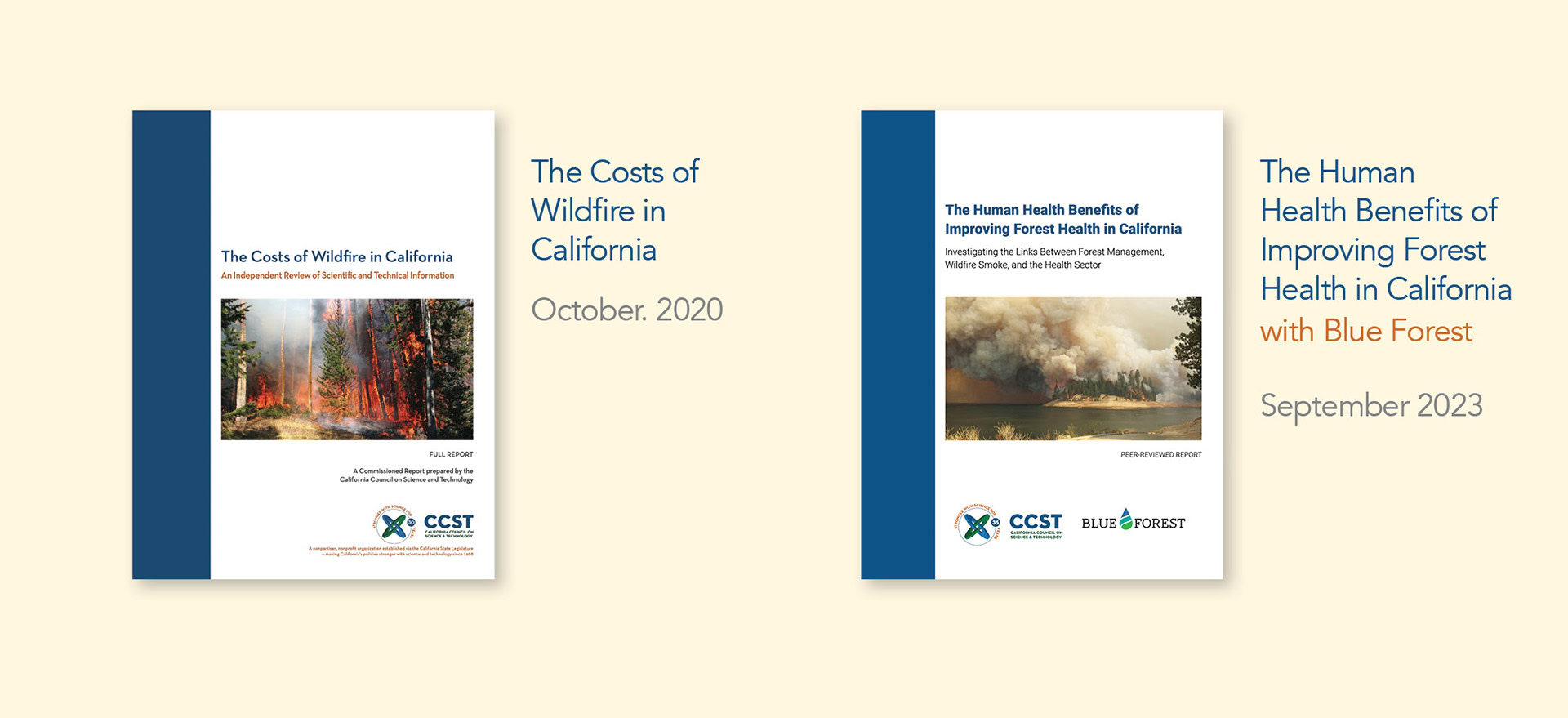
In 2020, with funding from the Gordon and Betty Moore Foundation, CCST led a study on the Costs of Wildfires in California. A key finding was that the human health impacts of wildfire smoke were not quantifiable, largely due to gaps in existing data. Since the time of the study, wildfires have burned more than 7.6 million acres across the state.1
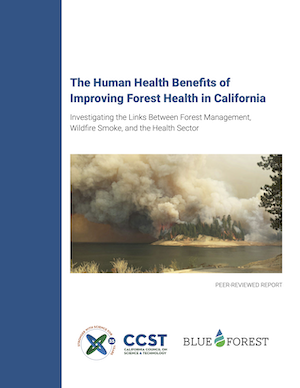
In 2023, an astounding year for wildfires across North America, CCST conducted a follow up study with Blue Forest focused on The Human Health Benefits of Improving Forest Health in California. At the time, wildfires raged in parts of southern Canada while distant communities, from the Great Lakes to the East Coast of the United States, experienced widespread effects of the resulting smoke. In assessing wildfire coordination efforts, the study found channels of communication between land managers and public health practitioners to be limited, drastically impeding timely public health responses to wildfire smoke.
The human health impacts of smoke can be long-lasting and disproportionately impact vulnerable communities. Impacts include respiratory illness, exacerbation of pre-existing obstructive pulmonary diseases, pre-term births, cardiovascular complications, adverse mental health outcomes, and more. In order to anticipate and protect against smoke, communities require proactive interventions and plans.
Held during the second week of January 2025, the CCST convening coincided with the devastating Palisades and Eaton Fires in Los Angeles County. By January 9, the day of the convening, the Palisades Fire had burned over 17,234 acres while the Eaton Fire had burned over 10,600 acres, destroying homes and buildings, displacing community members, and ultimately taking 30 lives.2 These wildfires also exposed residents to particularly hazardous particles and toxins, as smoke from wildfires in the Wildland Urban Interface (WUI) is significantly more toxic than smoke from wildland fires in remote areas.3 WUI and urban fires produce deadly emissions from burning buildings, vehicles, biomass, and other infrastructure that are three times more likely than wildland fire smoke to cause premature deaths.2
The convening was designed to connect land managers and public health experts on the subject of wildland fires and smoke, as well as identify gaps in research, practice, and policy that require further study to ensure that both public health and forest health are prioritized by stakeholders in these respective areas.
The day opened with a keynote panel, “Considerations for Both Public Health and Land Management in Managing Smoke for Public Health Protection.” The discussion was followed by six productive breakout sessions that centered on research and policy gaps (see Appendix B). Participants were pre-assigned to breakout rooms based on their expertise, and each session had balanced representation of experts in public health and land management.
Sessions lasted approximately 75 minutes and included a small-group discussion and a gallery walk to allow attendees to engage with the ideas presented by other groups. Attendees voted for ideas that resonated with them. Initial questions in each session focused on current practices under the session’s theme that participants identified. Participants then spent the remaining time discussing research, policy, or practice gaps in that thematic area. During the final segment of each session, participants moved around to different boards to assess ideas about research, policy, and practice gaps in each area and cast votes.
The day concluded with a Lightning Summaries session. Reporters from each breakout session provided summaries of key discussions and recommendations, which are described further in these proceedings.
Considerations for Both Public Health and Land Management in Managing Smoke for Public Health Protection
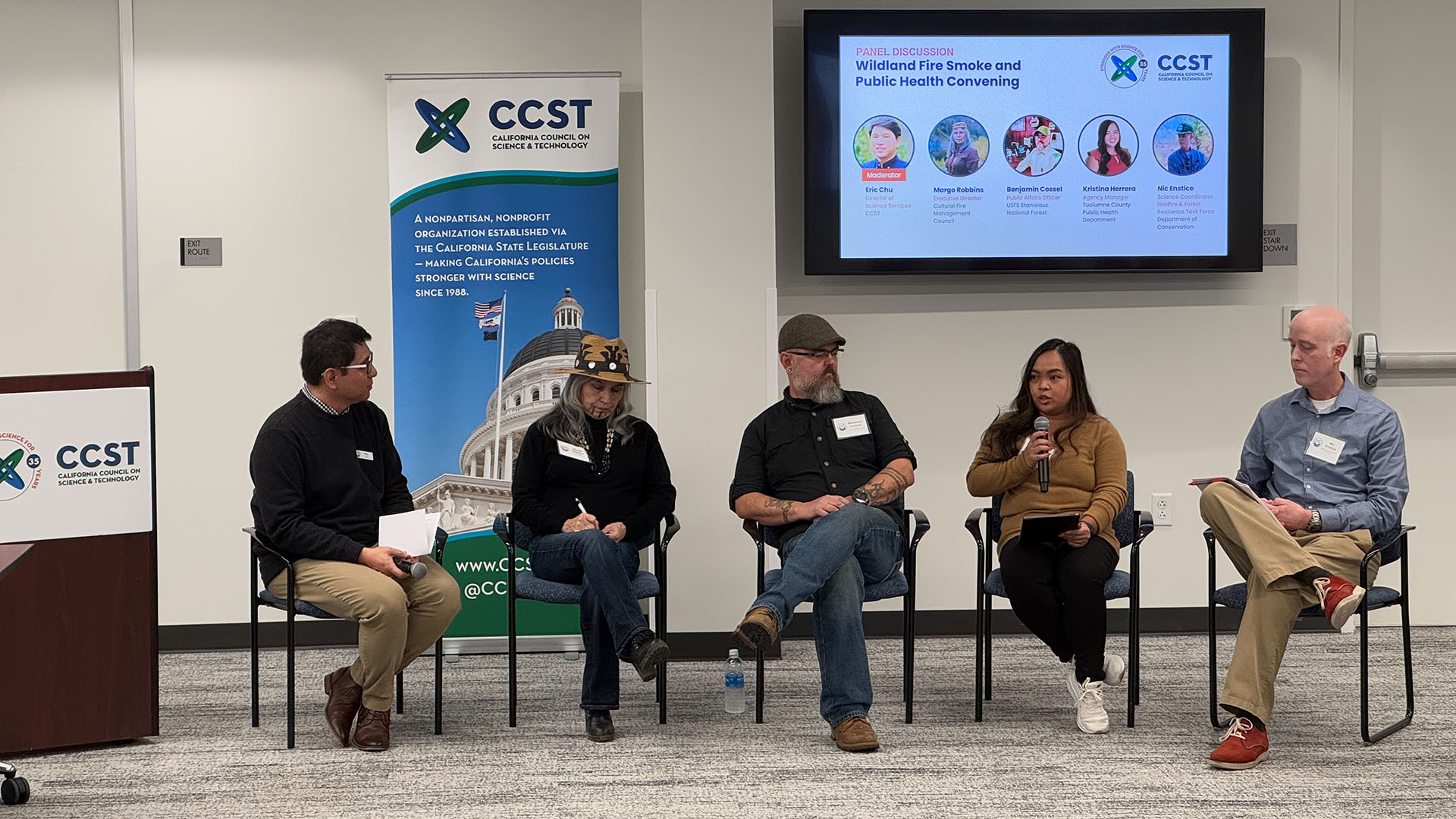
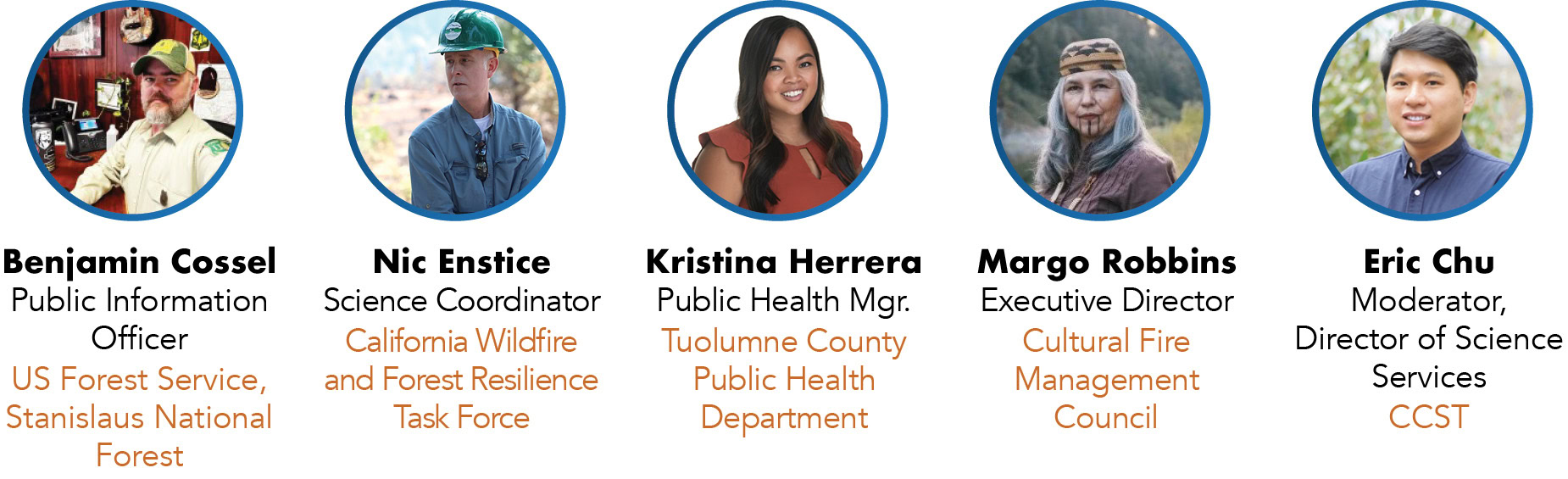
The keynote panel emphasized the importance of collaboration between land managers and public health practitioners, highlighting a successful collaboration in California while examining the communication and resource gaps faced by communities during wildfire and smoke events. The discussion centered on language for communicating risk and how to enable public health and land management connections, including the priorities of both groups, metrics for measuring success, and opportunities for collaboration moving forward.
Cossel highlighted the challenge of managing wildfire smoke and the need for collaboration between public health and forest management professionals:
Enstice on planning burns more effectively:
Herrera focused on public health needs, especially in rural areas:
Robbins on the need to put fire back on the land:
Emphasized the need to invest time and energy in putting fire back on the land and protecting public health by providing resources to mitigate the adverse impacts of smoke.
In most California ecosystems, fire is unavoidable and can often be beneficial; therefore, panelists emphasized the need to utilize all available tools to address the unique needs of different landscapes and communities across the state. The importance of dialogue, clear lines of communication, and trust to foster a resilient and sustainable response to wildland fires and smoke was also emphasized.
Cossel and Herrera have collaborated on the Social and Ecological Resilience Across Landscapes (SERAL) Initiative since 2023. They coordinate public messaging on prescribed burns that the US Forest Service (USFS) conducts in the area. As land managers, the USFS leverages public health networks by informing and educating local public health officials about their activities. Thus, the public is more aware of their risks and is better equipped with resources to protect themselves. They highlighted the shared public health and land management goals of resilient forests that benefit both the ecosystem and public health.
“We have spent too long in silos focused on studying the science and effects; now we must come together to communicate findings and knowledge.”
Margo Robbins
Cossel warned about the rural-urban divide in understanding fire management. He mentioned that while urban communities understand the need for forest management, rural communities and recreational wildland visitors are often resistant to the use of fire that increases smoke in the air. Addressing this divide requires increased capacity and public education about the need for planned burns, which would necessitate some smoke in the air for a significant portion of the year.
Robbins suggested the analogy of treating cancer using chemotherapy, which has strong short-term adverse effects on the body, but is important in returning the body to health. She advocated using this mindset to treat forests and heal the land.
Concerning metrics and successes, panelists discussed the importance of long-term plans for land stewardship. They highlighted Indigenous metrics, including surveying the land for markers such as the ability to see the horizon and resource reserves, and focusing on the number of homes that can keep smoke out. Public health metrics focused on emergency room visits, injuries, and health outcomes from compromised air quality. Enstice pointed out that measuring the engagement of public health officers with land management staff and prescribed fire work in different communities is also necessary. Given the backlog of fuels in the state due to a historic reliance on fire suppression over fuel treatment, determining the best treatment options for each area to reduce the amount of smoke per acre is key. For Cossel, measuring the remaining wildfire risk after completing a fuels treatment project is an important metric.
Capacity and public perception of fire and smoke were identified as issues that can be solved with funding and dedicated communicators. Panelists noted a lack of public understanding of the connection between forests and public health, which contributes to public resistance to fire as a solution for addressing accumulated fuels. Capacity issues arise because resources are strained with existing fire events, complicating the response to new events. Multiple and overlapping emergencies further complicate coordination and response.
Panelists recognized the strain that a year-long fire season places on the firefighting workforce, so they recommend a separate workforce for starting fires for stewardship purposes. Training centers across the state that teach prescribed and cultural burning would contribute to capacity building. These training centers could also educate landowners and provide them with tools to manage their land effectively. Providing resources to local communities or regions would also be important in building a flexible and adaptive system that can be appropriately applied throughout the state.
The panel also discussed the importance of consistent language that realistically describes practice. They advocated avoiding the use of “cultural burning” as a catchall term to describe both the work of native practitioners and non-native landowners who have managed their land for generations, reserving the term for burning conducted by Tribal members for cultural purposes based on extensive knowledge of the land. Finally, to further inform practitioners’ mindsets, panelists proposed the use of “land stewardship” in place of “land management” to better represent the care for the land that is required in this work.
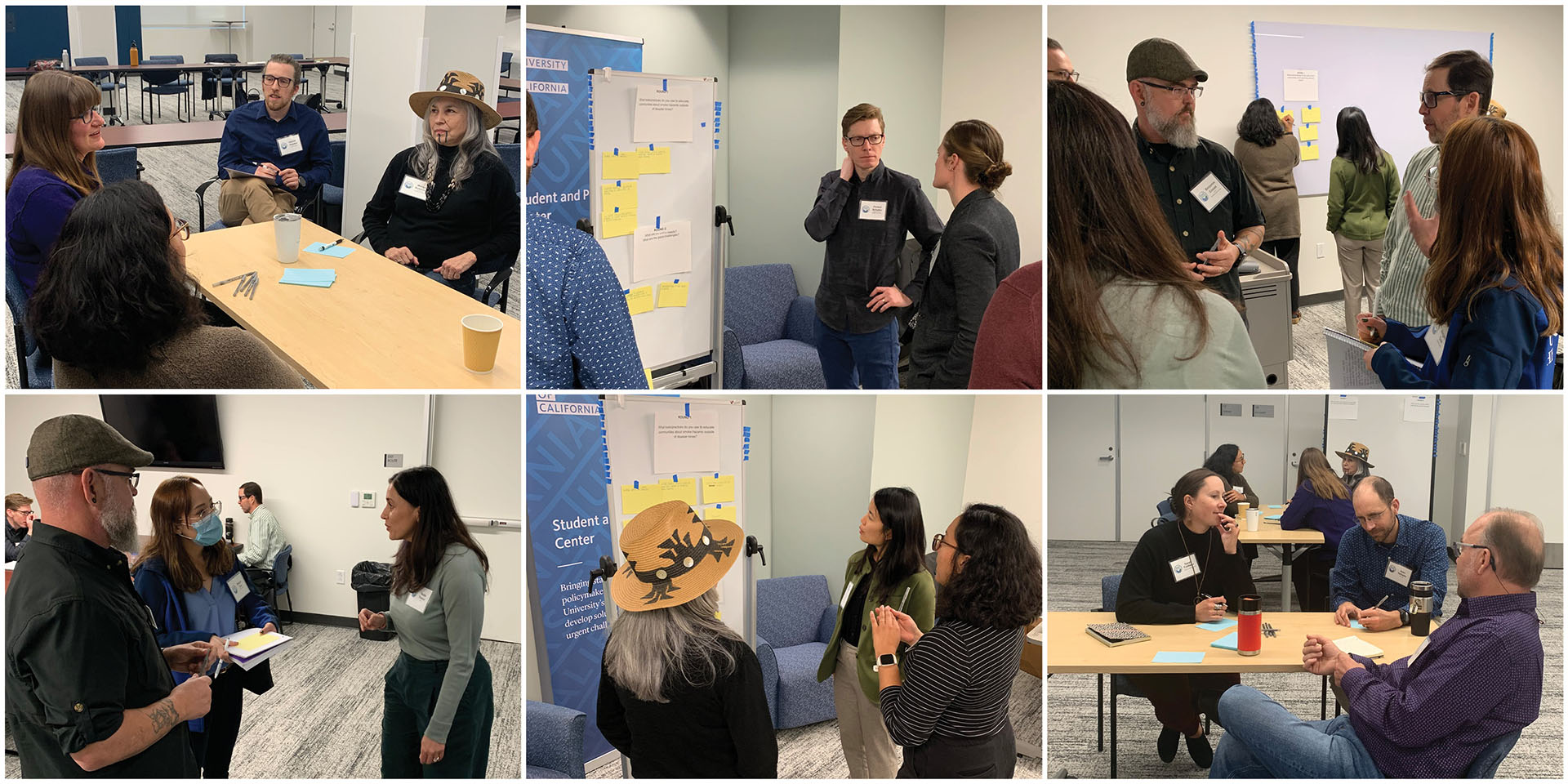
The activities of the Smoke Convening focused on personal interactions and provided opportunities for attendees to engage in small-group discussions, generating questions that can inform policymakers. Thus, attendees spent most of the Convening in two pre-assigned breakout sessions, each focused on a particular theme.
In each session, attendees were divided into small groups and asked to discuss current practices related to their thematic focus. After identifying key research, policy, and practice needs within their small groups, participants read the ideas generated by the other groups in their breakout sessions through a gallery walk activity. They then voted on the most important needs based on their experiences. This voting method was used to help surface the critical topics and questions that were representative of the experts in the room. The takeaways from each breakout session are summarized below.
Attendees in the different breakout sessions answered questions relevant to the themes in their respective sessions.
This session focused on mitigating smoke during wildland fires, considering both wildfires and prescribed burns. Attendees discussed current smoke management and mitigation practices and land managers’ efforts to incorporate public health considerations into their work. These efforts include notifying communities and schools about smoke hazards through social and local media, and communicating recommended practices for staying safe from smoke. Other practices discussed include:
This session explored smoke research gaps by examining the past (inventories), present (monitoring), and future (modeling) aspects of smoke during wildfires and prescribed fires. The goal was to assess attendees’ current awareness of monitoring and awareness tools and to highlight new tools and opportunities for improving research, policy, and practice. Current practices to monitor and raise awareness about wildland fire smoke include:
This session discussed the concentration and locations of smoke impacts in the state, focusing on measuring past, present, and future smoke impacts on public health. Attendees also noted that much of the data is analyzed at the aggregate level, thereby excluding individual data that could be informative. Current practices for measuring effects on public health discussed include:
This session focused on communication between practitioners and the public, and how this can mitigate the impacts of wildfire smoke. The prepared questions focused on tools to educate communities about smoke outside disaster times, warnings about planned burns, and alert tools during wildfire smoke events. In this session, attendees mentioned current practices related to public education, including:
This session engaged attendees in discussions about the specific needs of vulnerable and priority populations during smoke events to optimize their health outcomes. Particular interest was given to definitions of vulnerable and priority populations and tools for protecting these populations before, during, and after a smoke event. In this discussion, participants raised some points about vulnerability to smoke events, including:
This session provided an opportunity to discuss other issues related to fire and smoke that concern attendees. Some compounding factors discussed include extreme heat, diseases, and ambient air pollution.
Attendees raised several points about compounding factors, including:
Across the six sessions, attendees identified research gaps that, if resolved, would improve smoke management and diminish the public health impacts of smoke. The audience for these research gaps includes academic researchers, state government agencies, and practitioners who would work with them. Effective communication and best practices for messaging on burns from land managers and clinicians emerged as themes that participants in most breakout sessions highlighted. For example, studies on assessments of communications that lead to behavioral change in communities are needed. Participants also highlighted the importance of smoke data in informing decision-making, land management, and public health practice. Beyond gaps in communication, several other gaps and challenges were surfaced during the discussion, including:
Policy gaps pertain to actions that policymakers can take to support building resilience to fires in the state. Attendees highlighted various missing policies supporting research and practice in managing smoke and fires in the state.
In discussing practice gaps, attendees focused on the actions that land management and public health practitioners can take to mitigate the public health impacts of smoke in the state.
At the end of the day, pre-selected representatives from each of the six breakout sessions were invited to provide a summary of the themes and takeaways discussed in their breakout sessions during the Lightning Summaries Session. This was followed by an opportunity for other participants to add to or provide feedback on the ideas covered in each session.
Attendees agreed on the critical need for better publicly available smoke forecasting tools useful for public health and responder communities.
Other highlights from this session included the need for studies on:
And policies that:
The convening highlighted the partnerships needed to enable comprehensive and effective responses to wildfires, land management, and public health in the state. Several attendees mentioned being encouraged by the example of the Stanislaus National Forest collaboration with the Tuolumne County Public Health Department. More examples across the state are essential to ensure public health impacts of wild and prescribed fires are managed and avoided when possible.
Download the full proceedings for appendices and additional information.