CCST Project
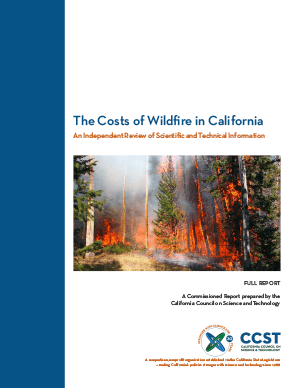
The Costs of Wildfire in California
Overview
This report, undertaken by CCST and made possible with support from the Gordon and Betty Moore Foundation, summarizes the state of knowledge regarding wildfire losses and their associated costs across key sectors. It challenges the assumptions underlying current fire management policies and proposes a novel framework for understanding the total cost of wildfire in California.
The results of this study suggest opportunities for policymakers to improve the effectiveness of wildfire management in California by enabling regional approaches, increasing investments in mitigation and resilience strategies, and accounting for the cumulative public health impacts of exposure to multiple fire events—including the interacting effects of wildfire smoke and COVID-19. In delivering a comprehensive framework to assess wildfire costs in California, the study finds that a full statewide calculation of wildfire costs is not possible with currently available data. Furthermore, the study finds that the costs associated with unquantified categories of loss (e.g., health impacts, loss of ecosystem services) likely exceed the reported costs. A more accurate accounting may result in more than double the currently reported costs.
Project Description
The economic burden of wildfires on the State of California and its residents is a wide-ranging topic, so correctly framing the scope of work is a crucial step in the study process.
The overarching question for the report is:
What are the key considerations concerning costs and losses from California wildfires, and what information already exists to answer them?
Elements that were considered for the report scope:
(1) Pre-Incident and Ongoing Activities
Efforts carried out to prevent unintentional human-caused wildfire ignitions or to mitigate the negative outcomes of wildfires.
-
- Education/training (public and fire department)
- Ignition Detection
- Enforcement/Permitting/policing/inspections
- Monitoring and Forecasting of conditions (e.g. wind events, fuel loads)
- Infrastructure and Home Hardening
- Public Safety Power Shutoffs
- Fuels management (e.g. mechanical thinning, prescribed burns)
- Insurance
- Disaster Assistance Funds
(2) Active Incident
Suppression and emergency response efforts in response to active wildfires, wildfire smoke plumes, or related incidents (e.g. landslide, flooding).
-
- Firefighting activities
- Evacuations
- Emergency Shelter
- Closures (Schools, Hospitals, Roads, work stoppages, etc.)
(3) Incident Outcomes and Recovery
Direct and indirect losses caused by wildfires, wildfire smoke, related incidents (e.g. landslide, flooding), or suppression efforts (e.g. impacts of fire retardants). Losses may be incurred during or after an active incident and may occur within the footprint of the wildfire or at a distance from the wildfire perimeter.
-
- Death and injuries, including psychological impacts
- Loss of structures and infrastructure
- Loss of natural resources
- Loss of agriculture
- Environmental impacts (vegetation loss, watershed and soil impacts, etc.)
- Remediation and cleanup
- General economic impacts (business interruption, population decline)
- Supply chain impacts
- Interruption of services (utilities, transportation, government)
- Housing market impacts
- Decrease in Tax Base
Related News Stories
Bridging Science and Policy for a Stronger California: CCST Releases 2024/25 Annual Report

Watch: Climate Change and Human Mobility Briefing Series
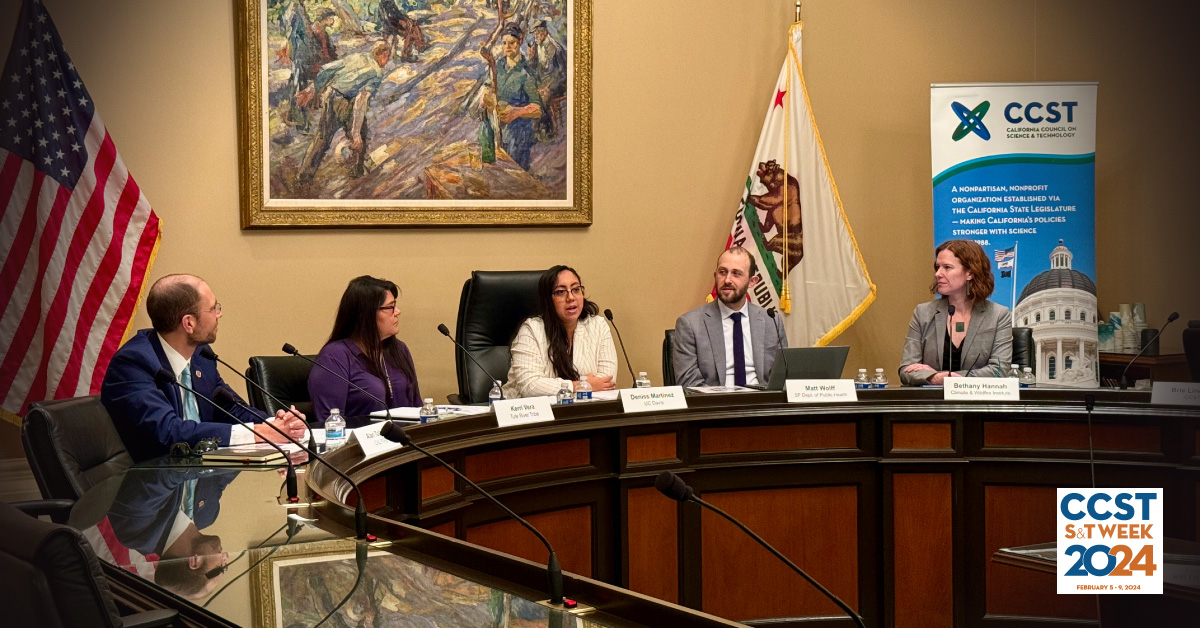
Watch: Pathways for a More Smoke-Resilient California
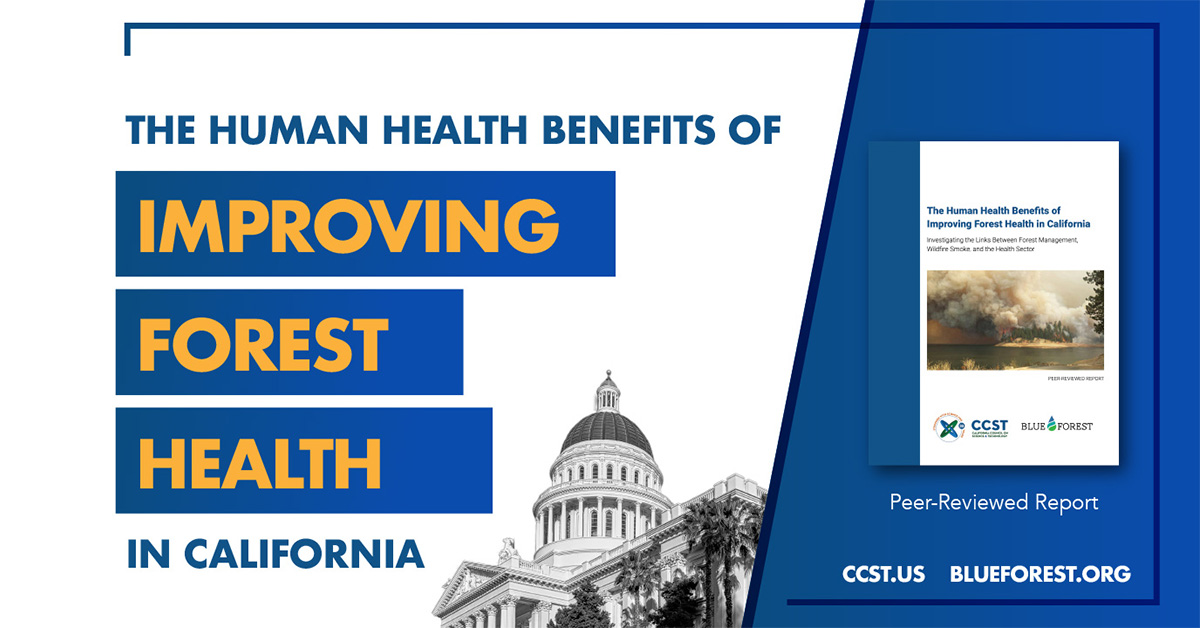
Watch: The Human Health Benefits of Improving Forest Health in California