Call for Experts: State Staff Academy on Emerging Technologies — Artificial Intelligence Module

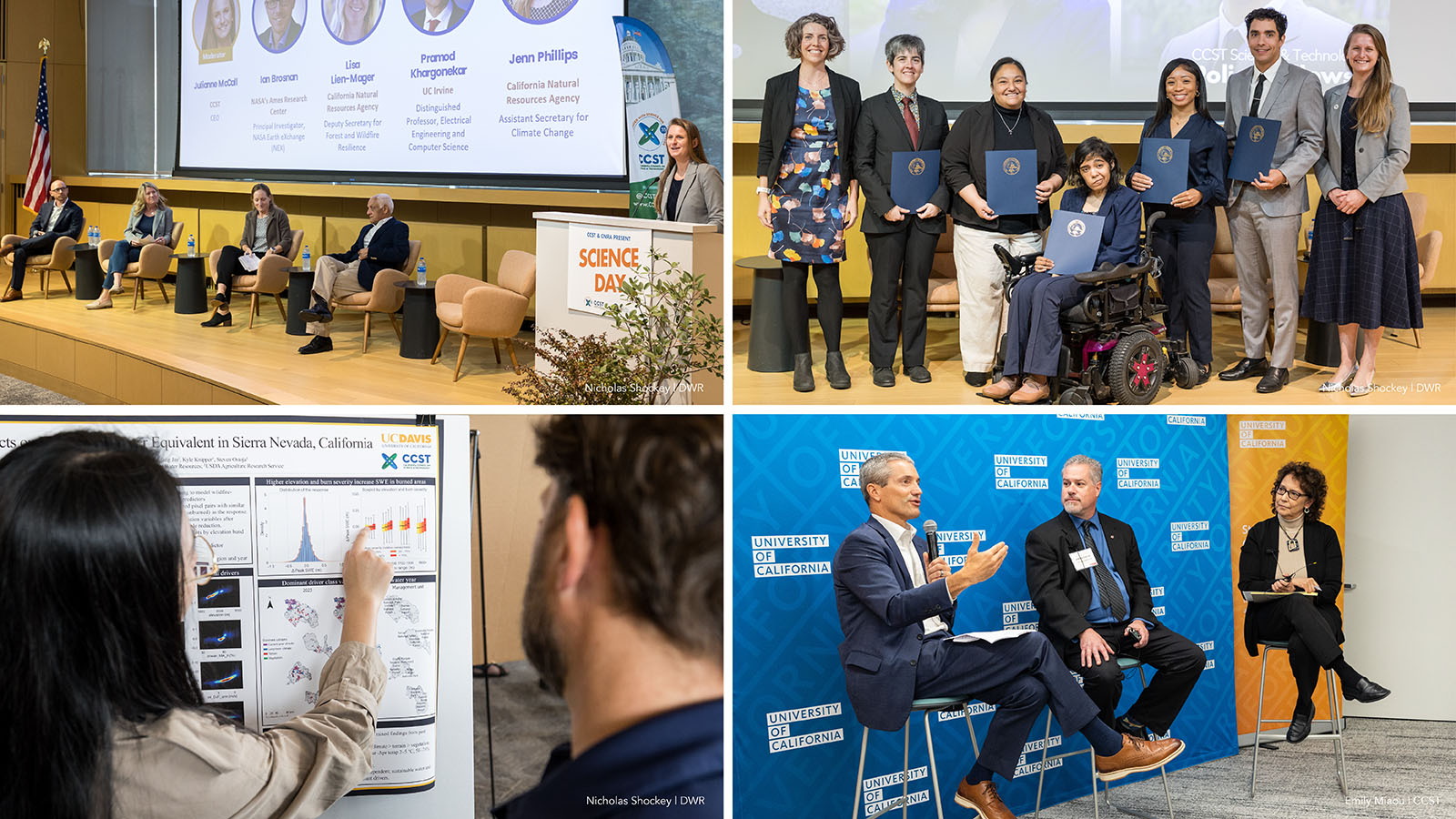
Scientists and Policy Experts Cut Across Sectors Toward Successful Partnerships at Science Day 2025
October 9, 2025 | CCST Newsroom, CCST S&T Policy Fellows, Events, Photo Gallery, Press Releases
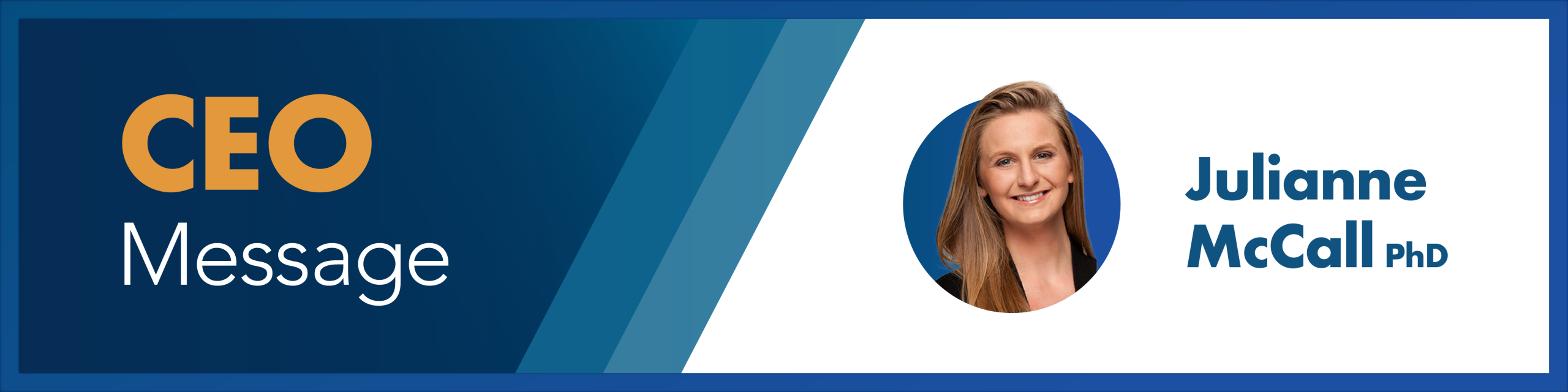
Message from CCST’s CEO
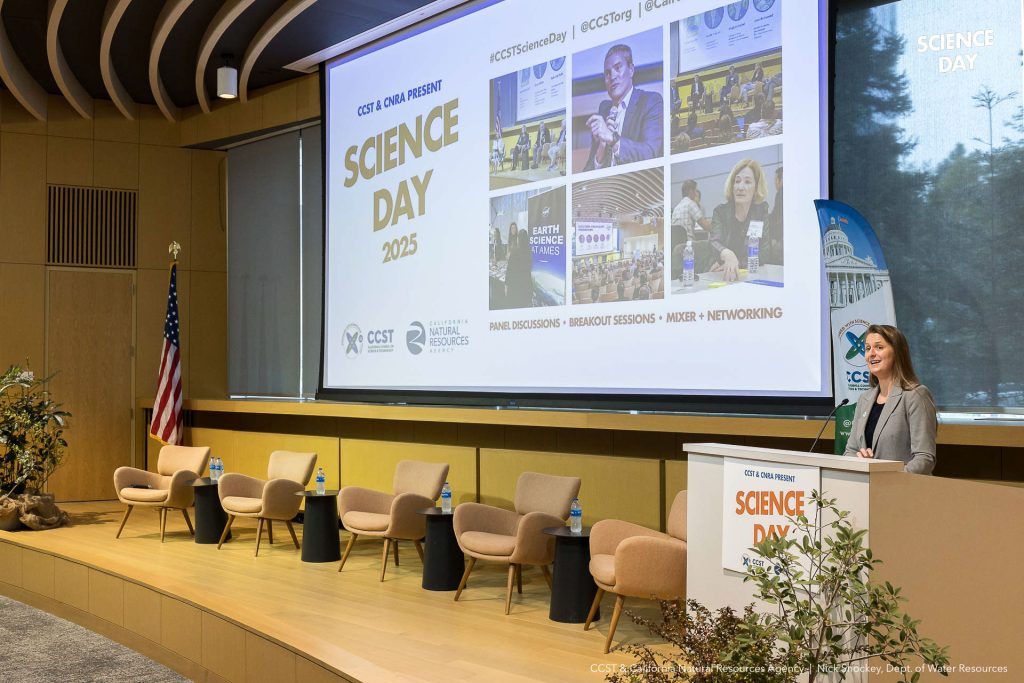
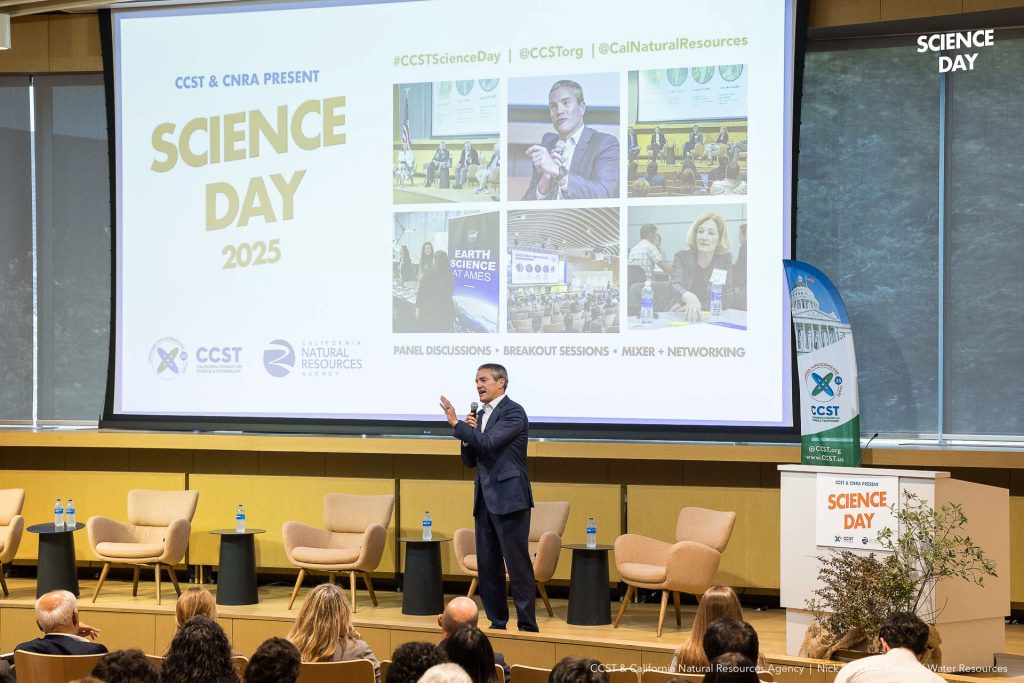
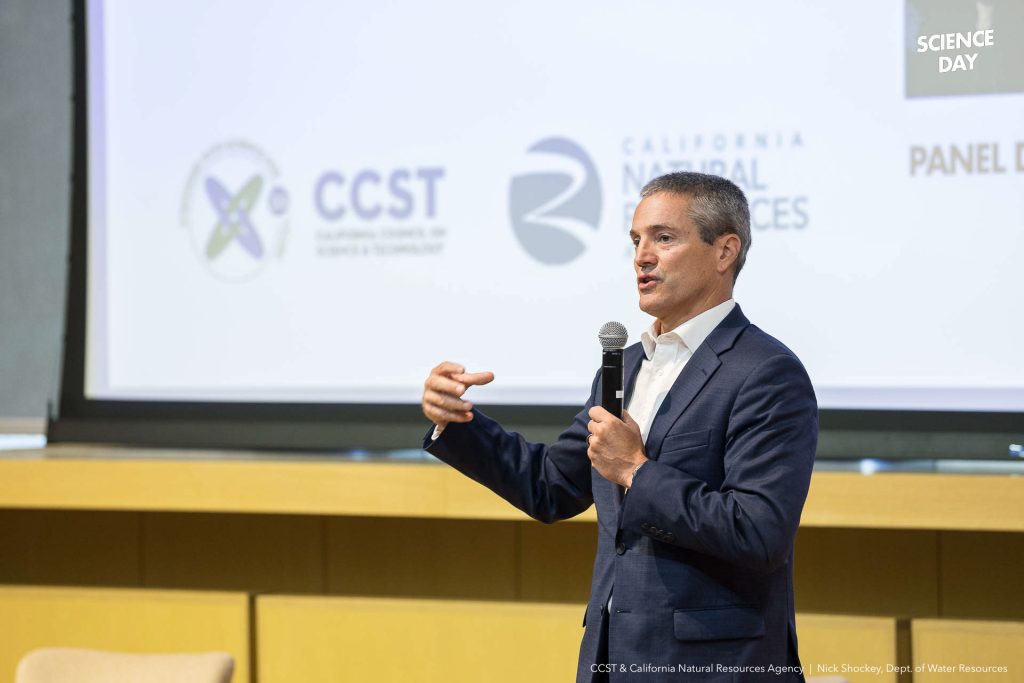
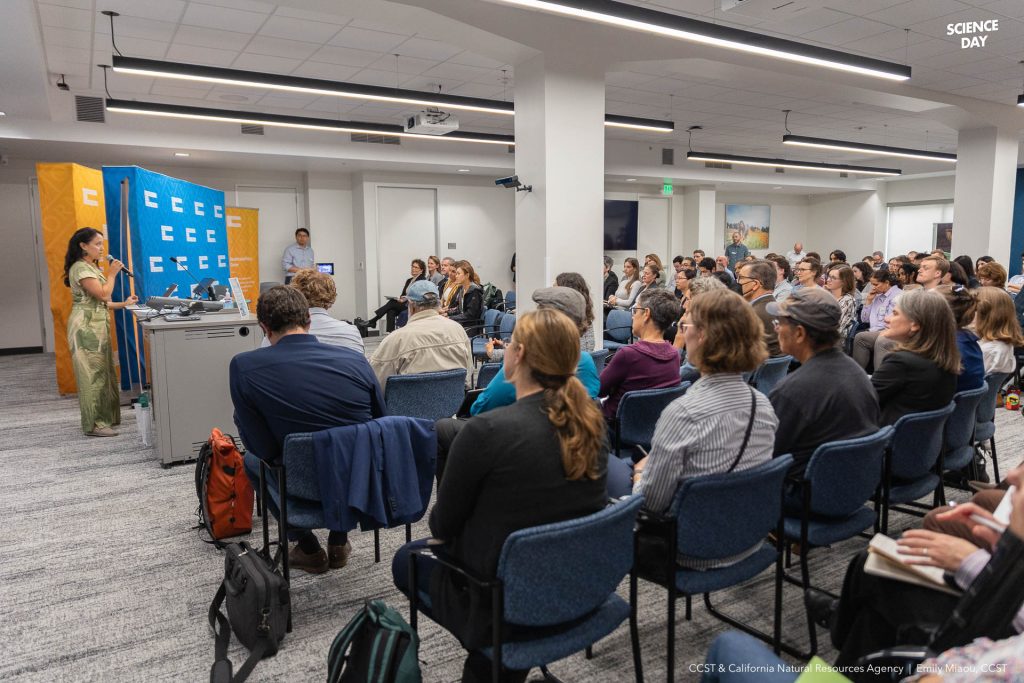
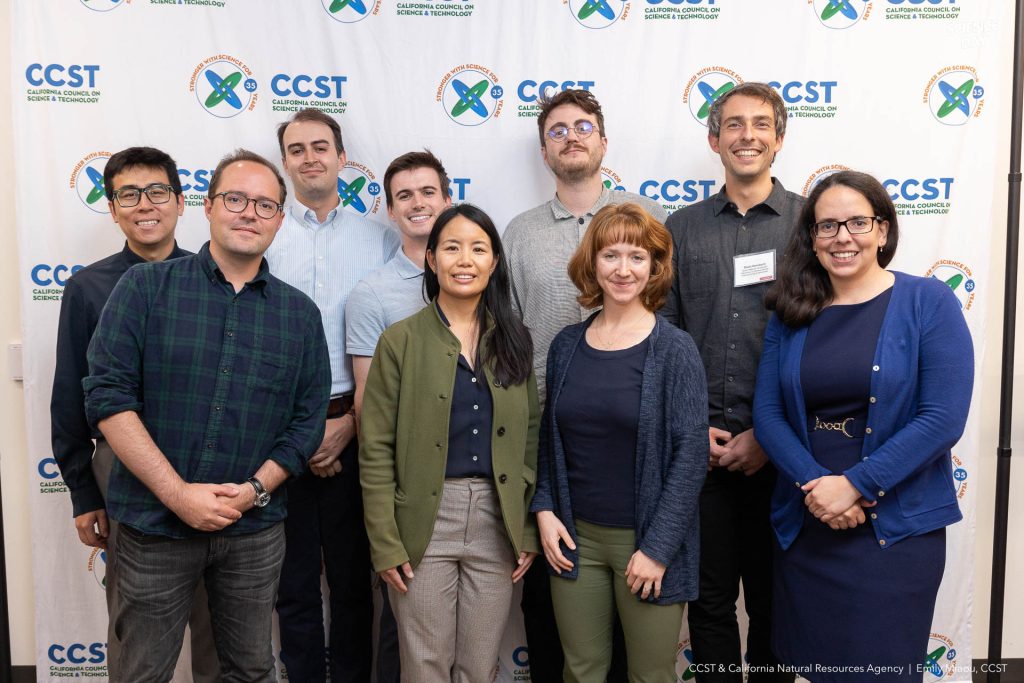
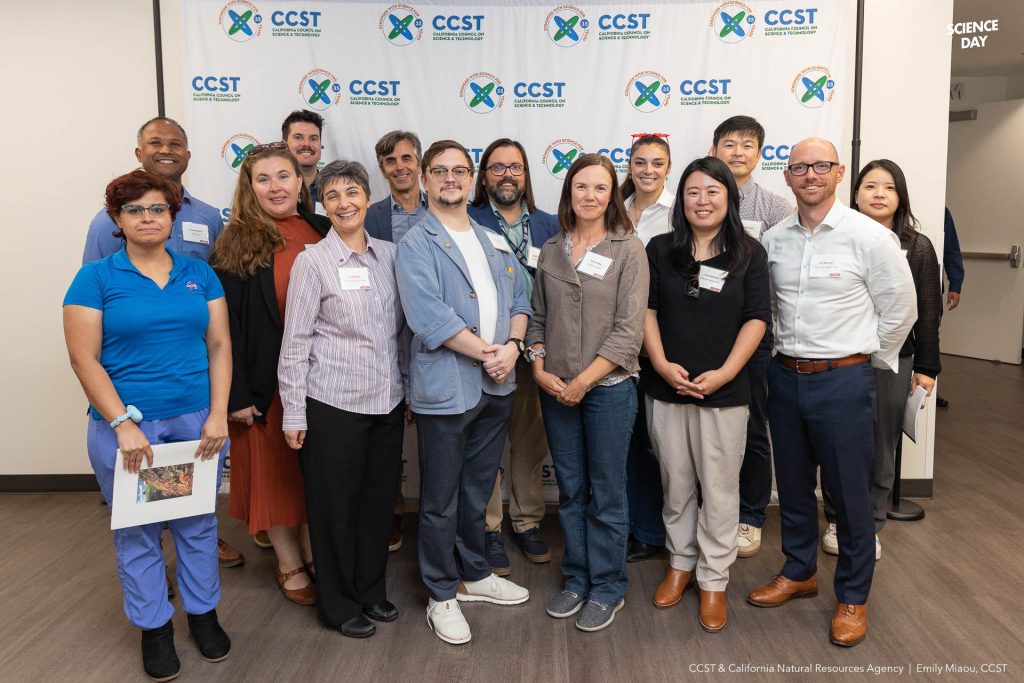
On September 29, we hosted our 3rd annual Science Day with the California Natural Resources Agency (CNRA). On behalf of CCST and CNRA, sincere thanks to the 400+ participants who joined us for Science Day 2025!
This event is a shining example of what drives us, connecting state-level science and policy with the incredible research happening in universities, labs, and other research institutions across California in order to build partnerships that strengthen our state’s resilience.
In my opening remarks, I referenced a concept from author James Clear:
“We don’t rise to the level of our goals; we fall to the level of our systems.”
This theme echoed throughout the day — in the keynote discussion on partnerships like the Wildfire, Ecosystem Resilience, & Risk Assessment (WERK) project between CNRA and NASA Ames; in breakout sessions on nature and health, data and technology, and climate planning; and in the many conversations sparked during the poster session, career center, and networking showcase.
Again and again, we were reminded that California’s scientific enterprise is one of its greatest assets, but its impact depends on the structures and partnerships we build and support.
Science Day thrives because of your participation and your commitment to bridging science and policy. I hope you’ll stay connected with CCST and our partners as we continue advancing the systems that will enable California to achieve its goals for resilience, equity, and sustainability.
Julianne McCall
CEO, California Council on Science and Technology
For full res photos, contact [email protected].
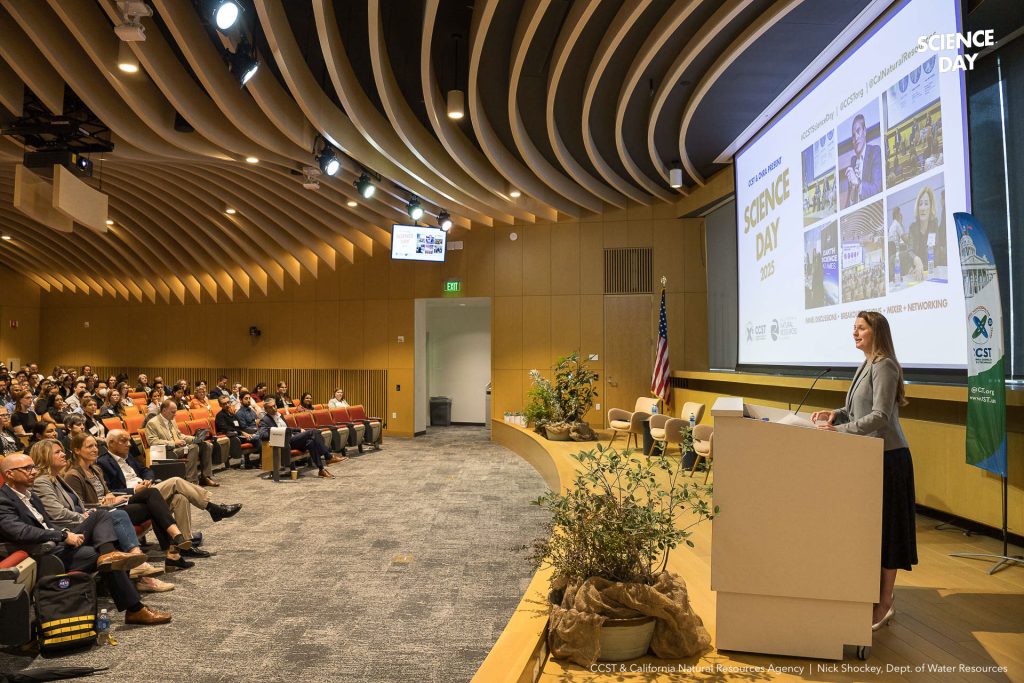
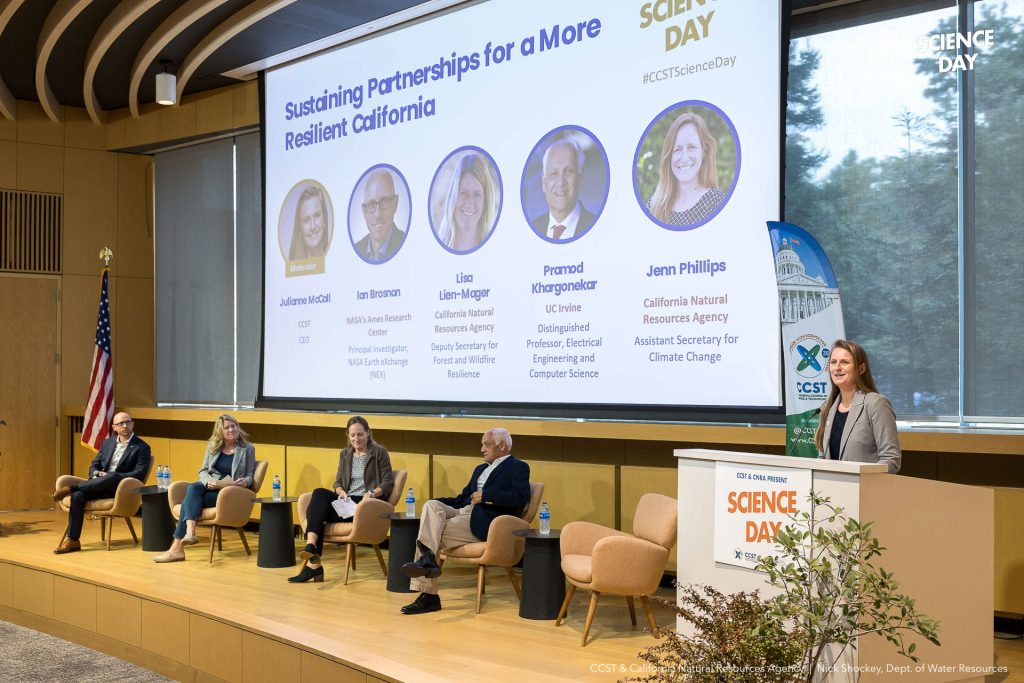
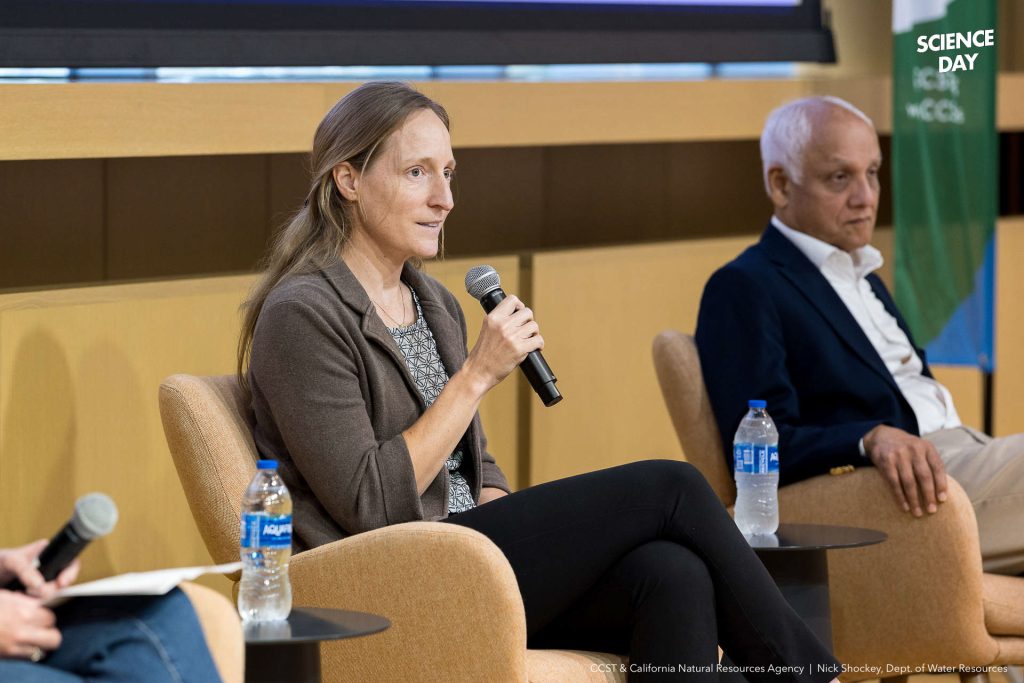
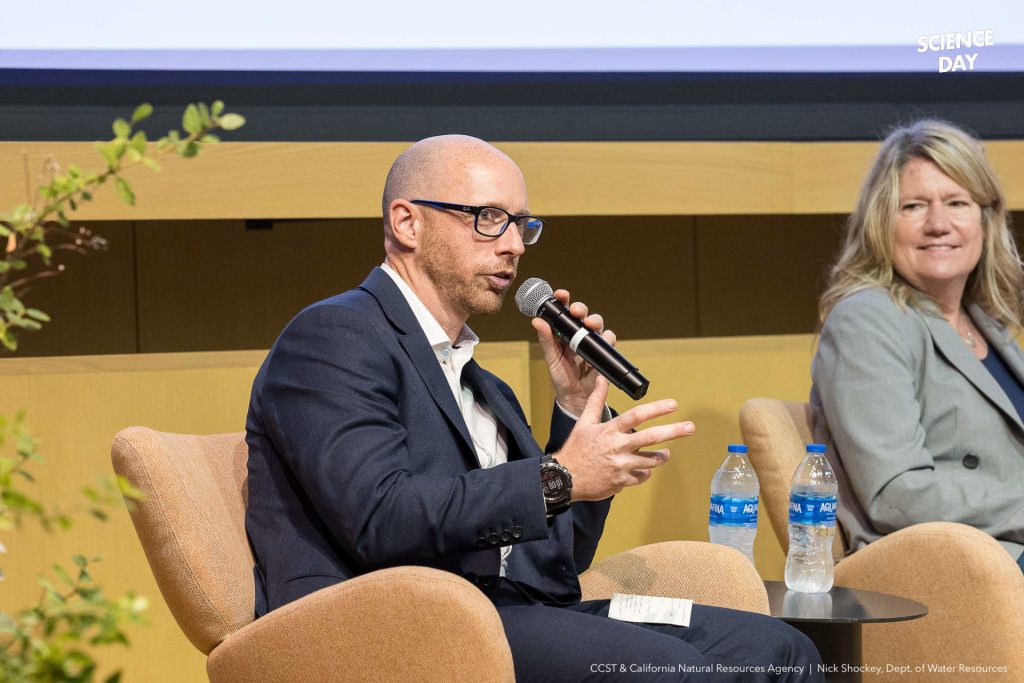
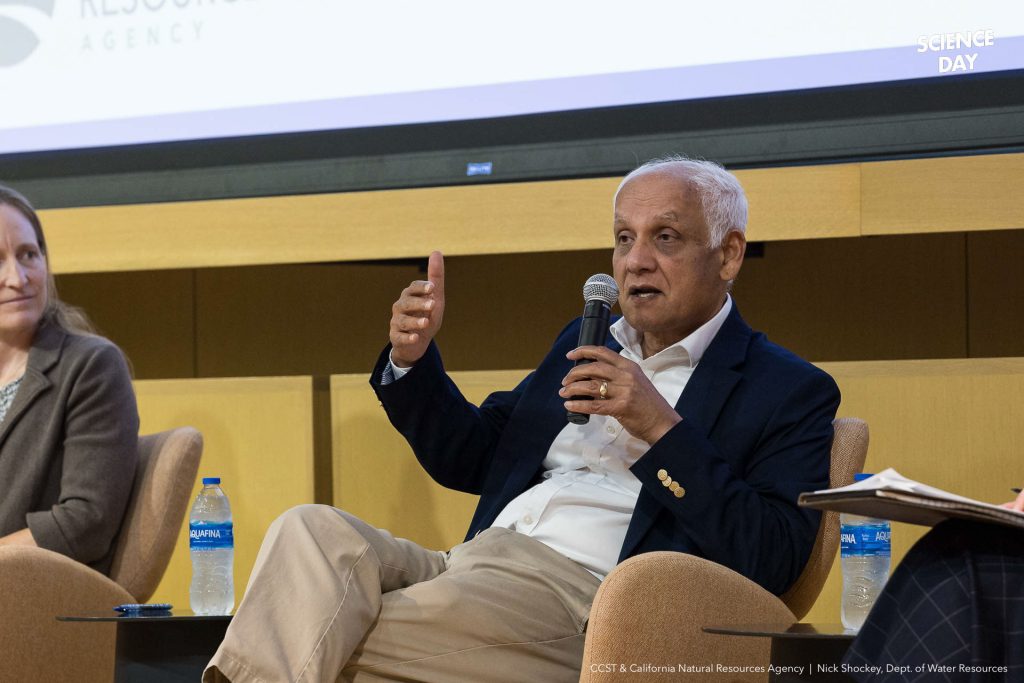
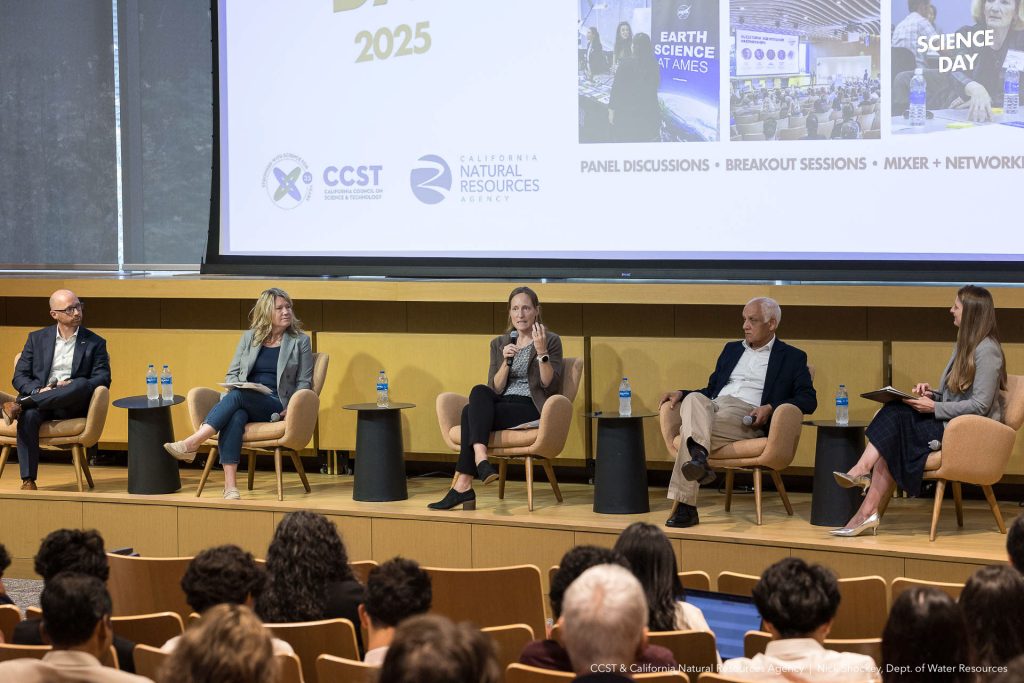
Keynote Panel: Sustaining Partnerships for a More Resilient California

Overview
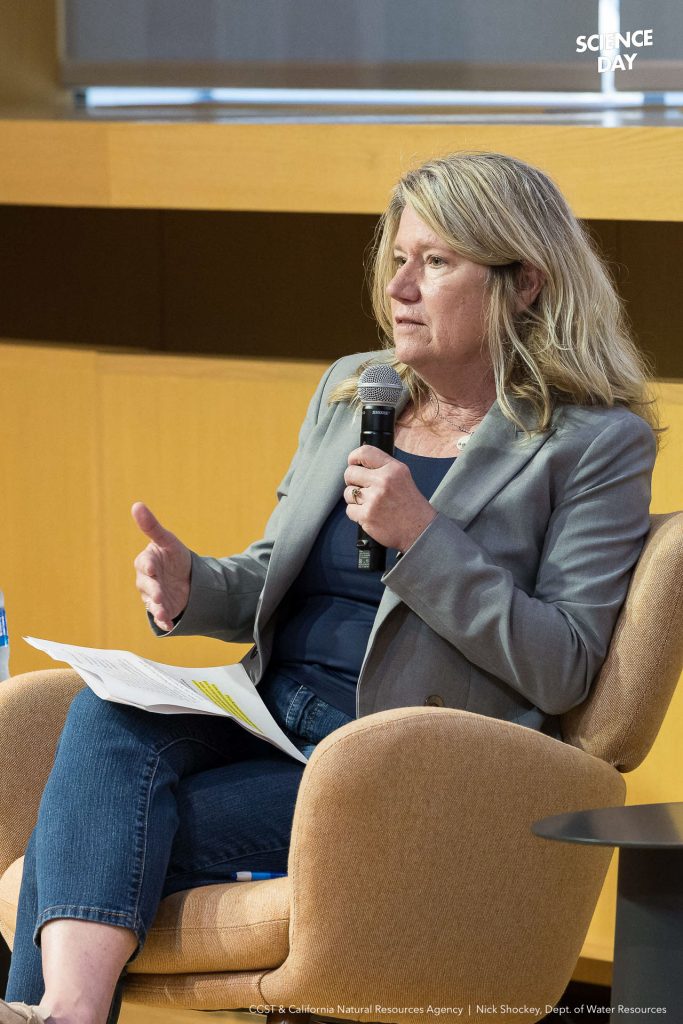
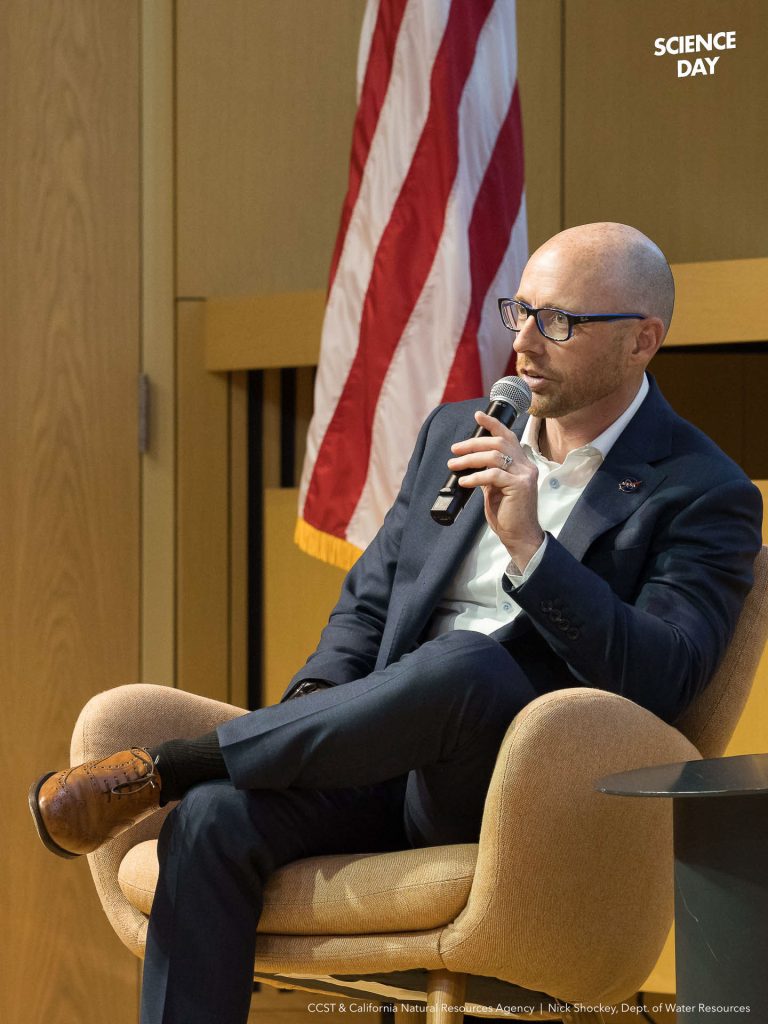
The Keynote Panel highlighted two examples of state-science partnerships in California. The Wildfire, Ecosystem Resilience, and Risk Assessment Initiative (WERK), which emerged from conversations during the inaugural Science Day in 2023, is a collaboration between CNRA, CARB’s Nature-Based Strategies team, and NASA AMES. The second example, California’s Fifth Climate Change Assessment, is a State-academia partnership that will contribute to the scientific foundation for understanding climate-related vulnerability throughout California. In this dynamic discussion among project leaders, the panelists described how their partnerships came to be, the goals of their respective projects, milestones they have achieved, and challenges they have encountered along the way.
Watch
Panelists
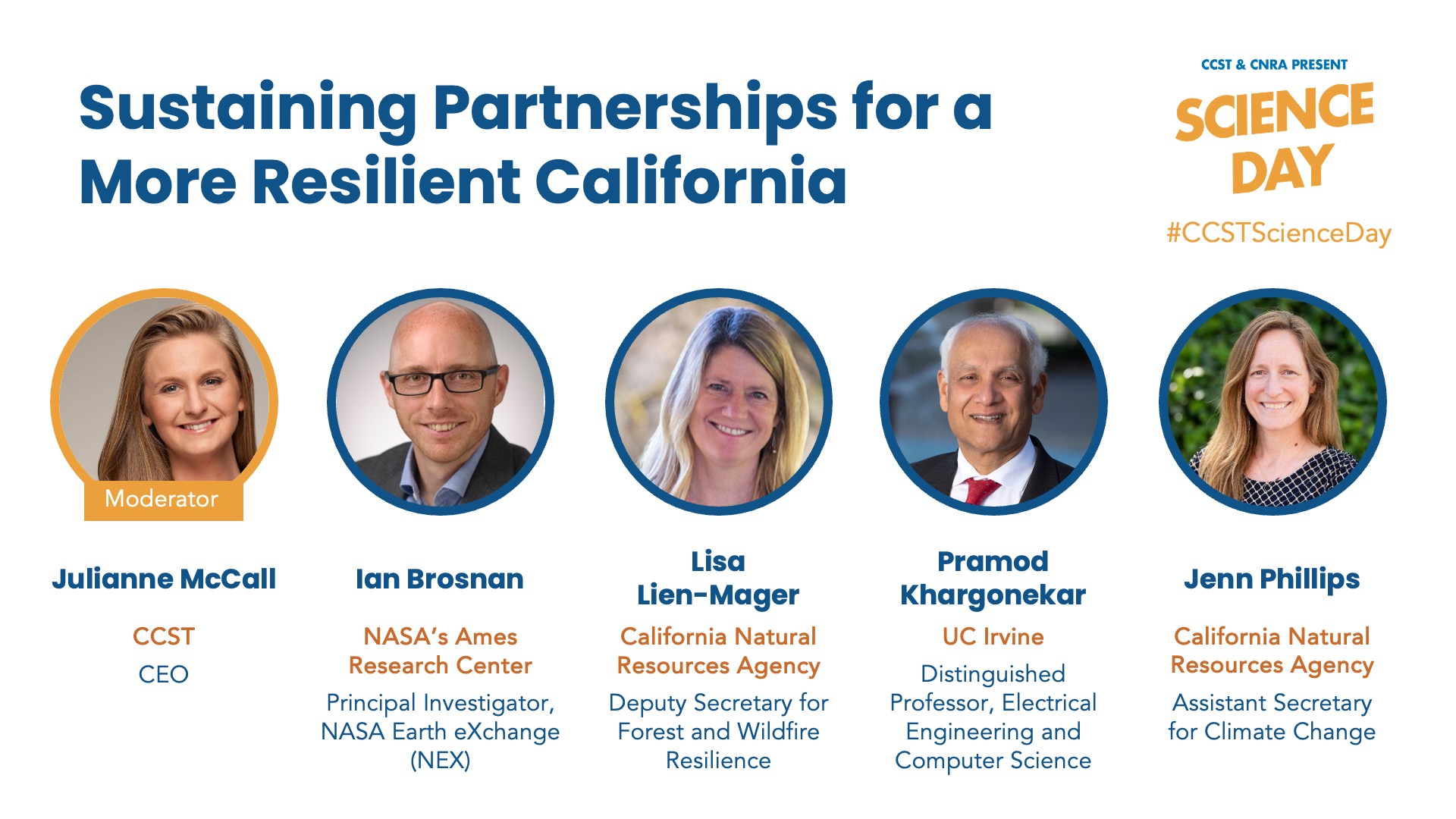
Photo Gallery
Fireside Chat: Policy, Science, and Partnerships

Overview
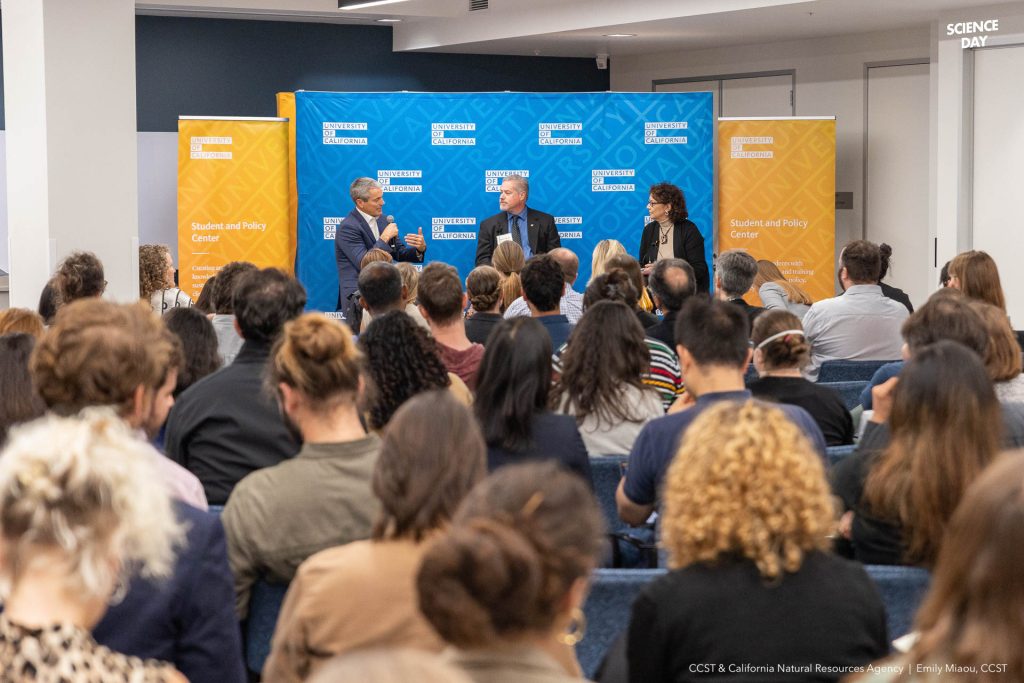
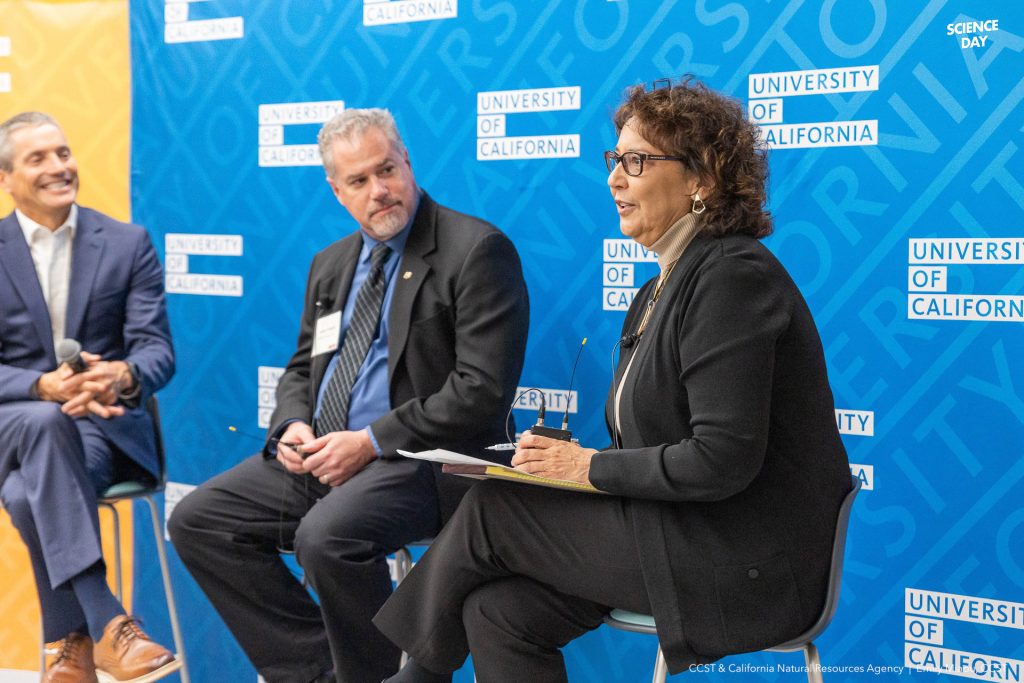
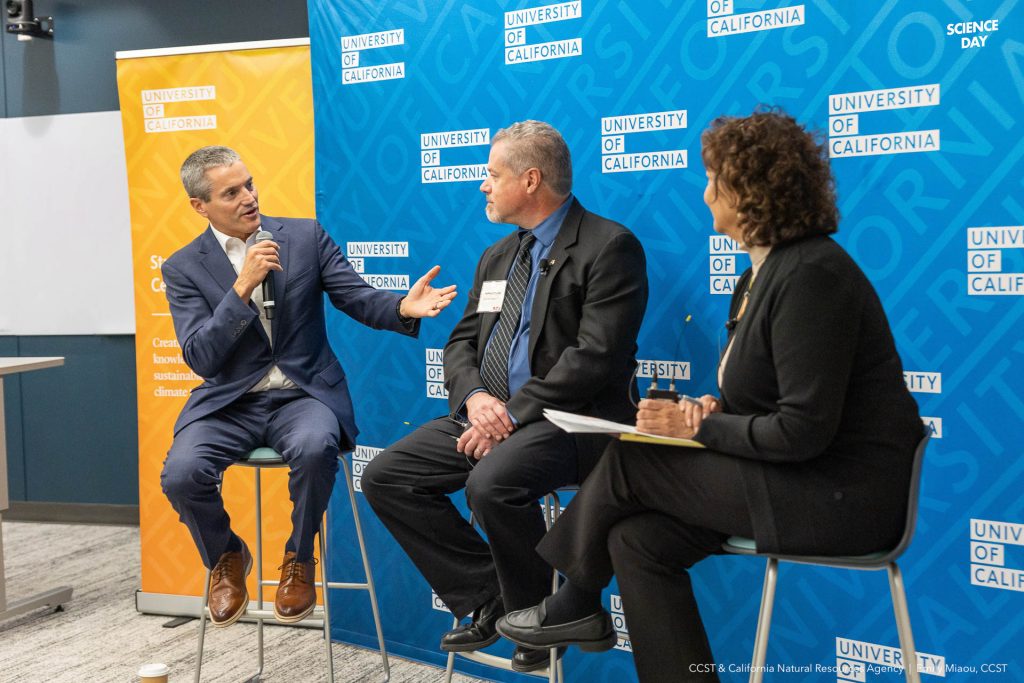
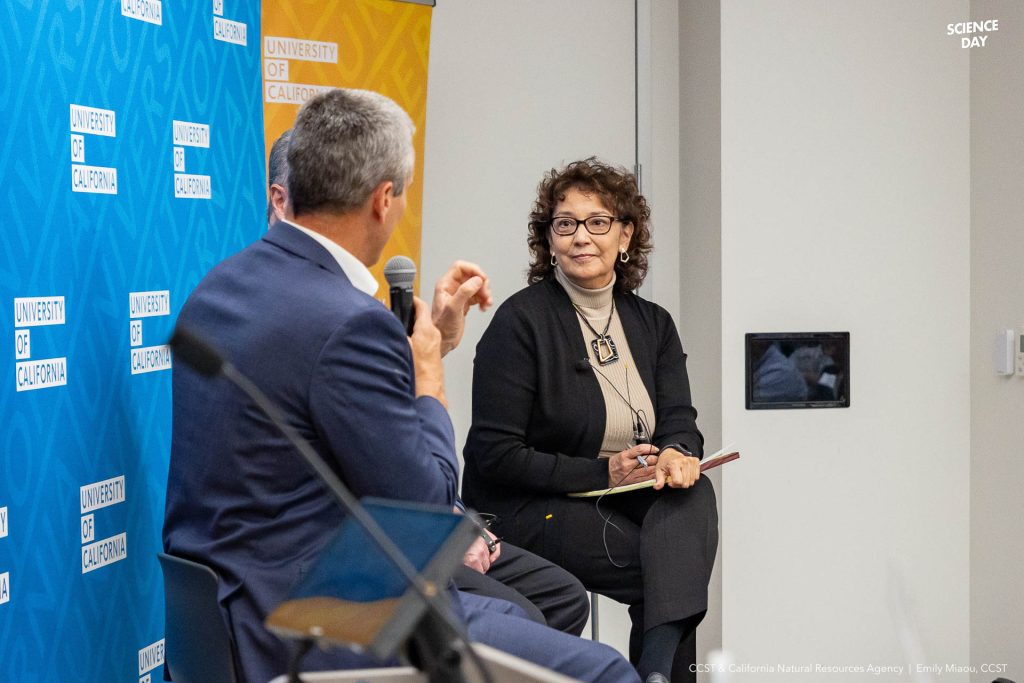
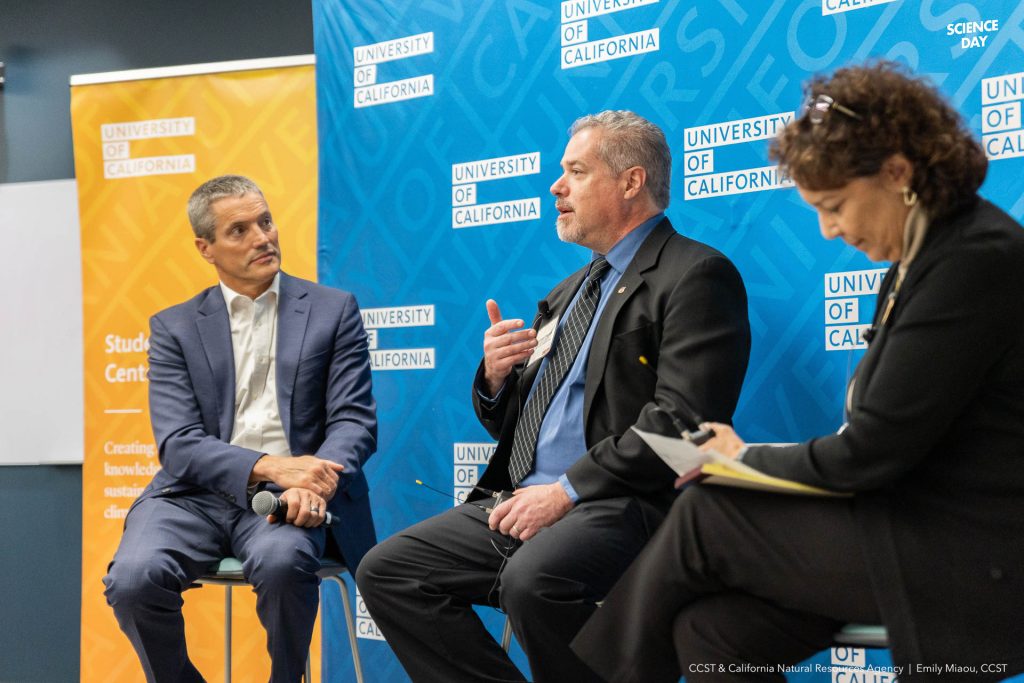
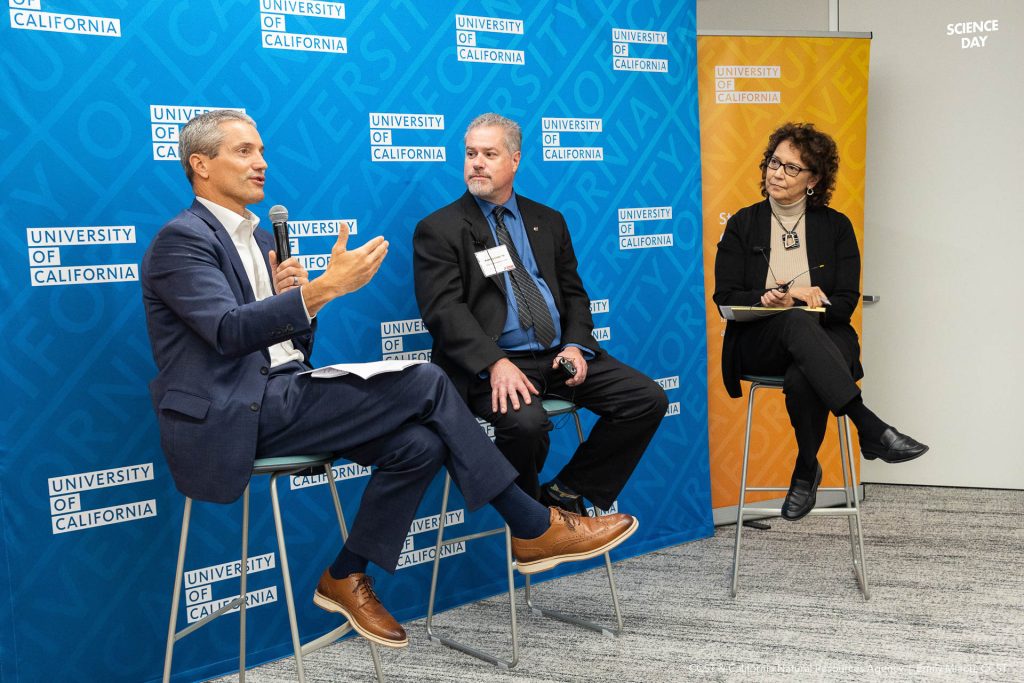
The Fireside Chat, led by Secretary Wade Crowfoot and held at the UC Student and Policy Center Auditorium, was an opportunity for state, academic, and federal leaders to discuss California’s scientific enterprise, touching on its significance to policy work, the role the state has in supporting science — especially in uncertain times — and thoughts on partnerships to support the scientific community.
Featuring:
Anthony Colaprete
Director of Science (Acting),
NASA Ames Research Center
Theresa Maldonado
Vice President for Research and Innovation,
UC Office of the President
Photo Gallery
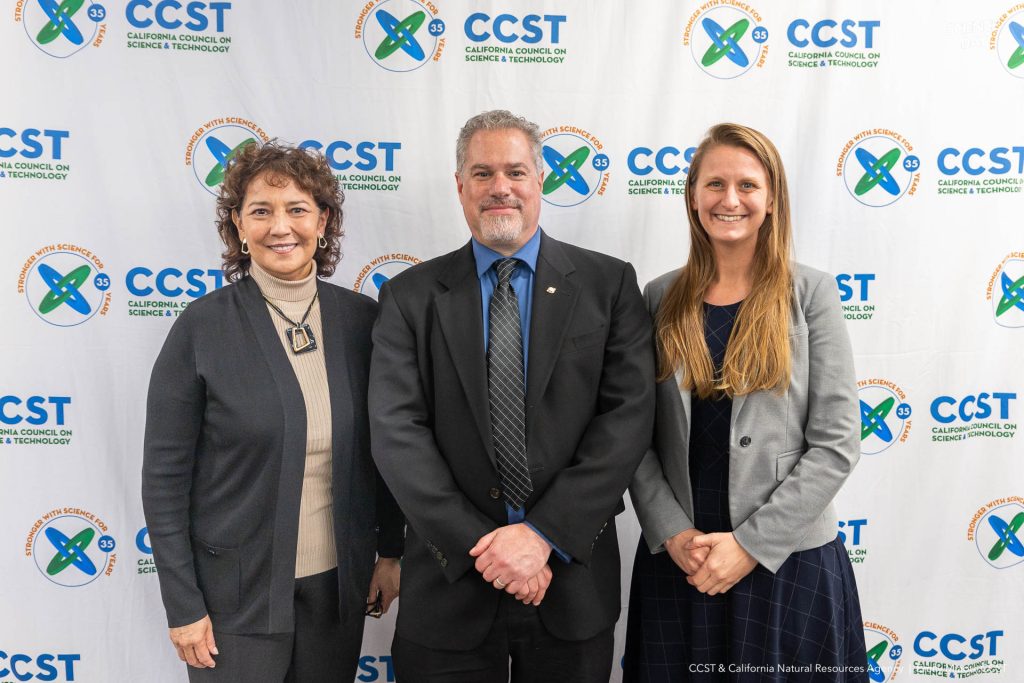
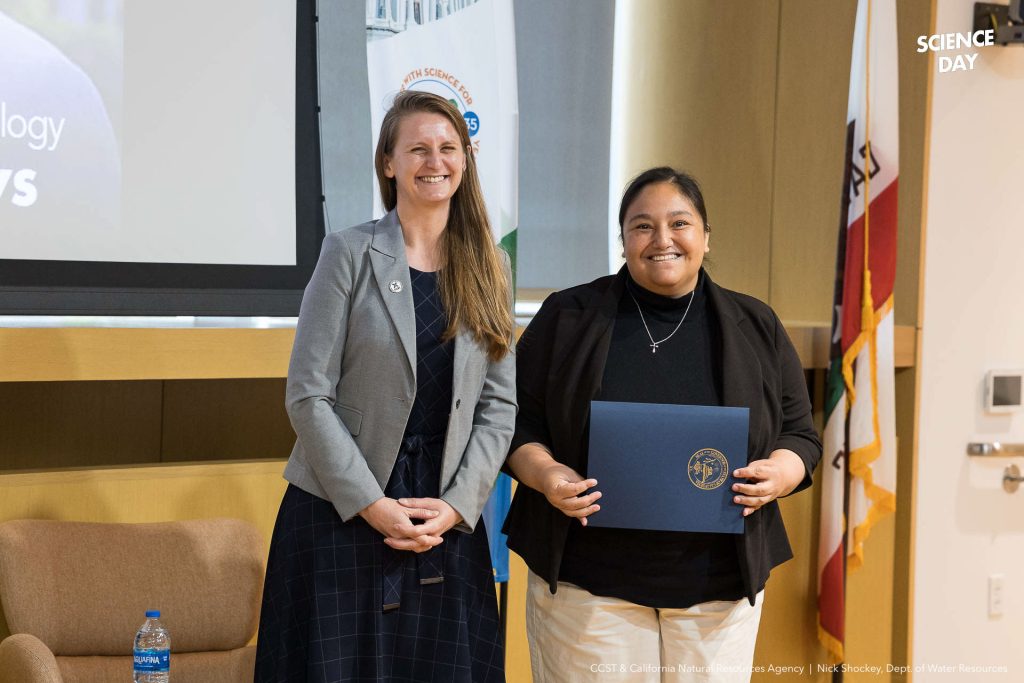
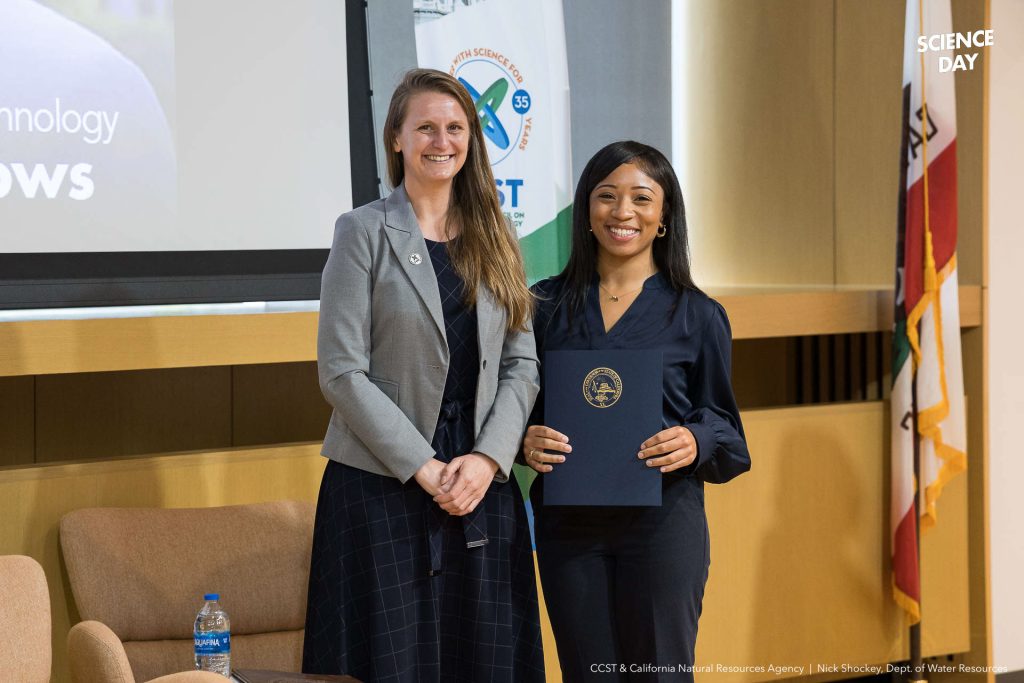
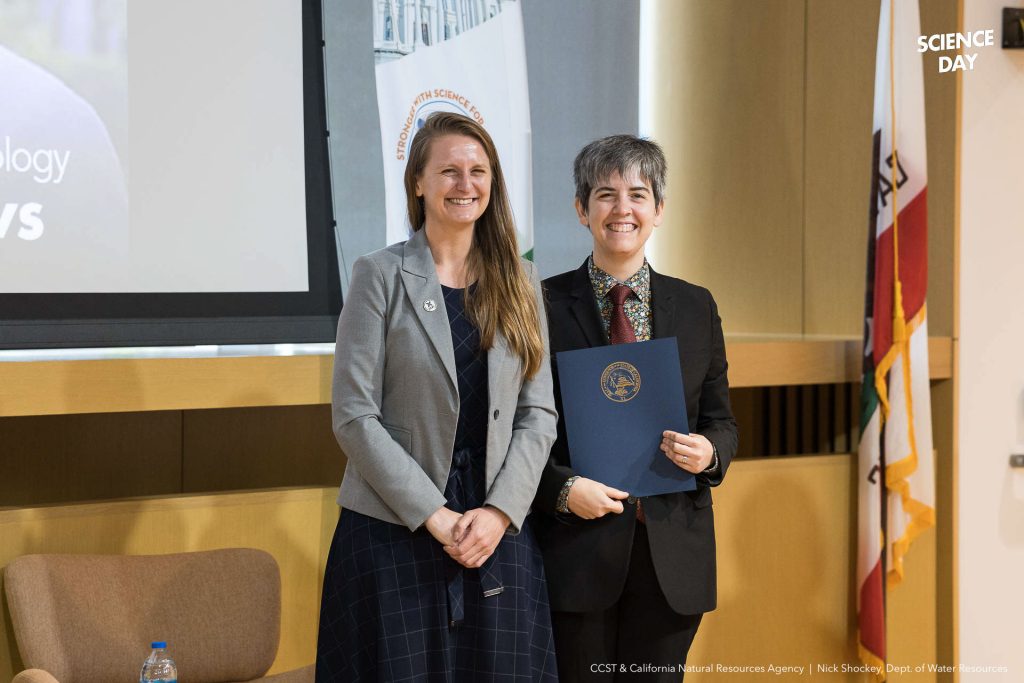
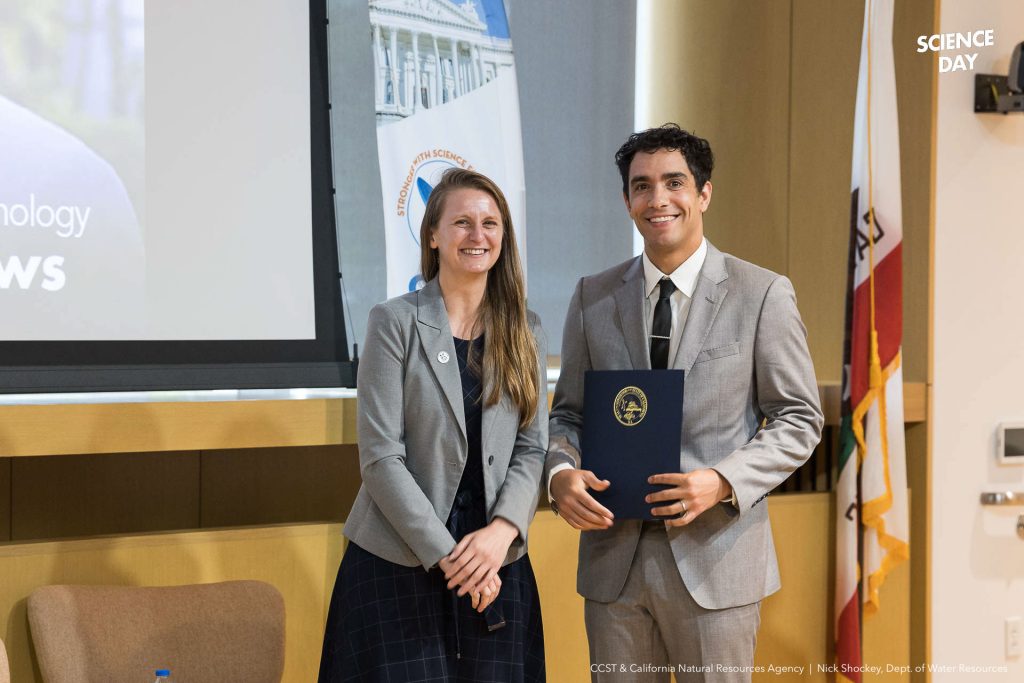
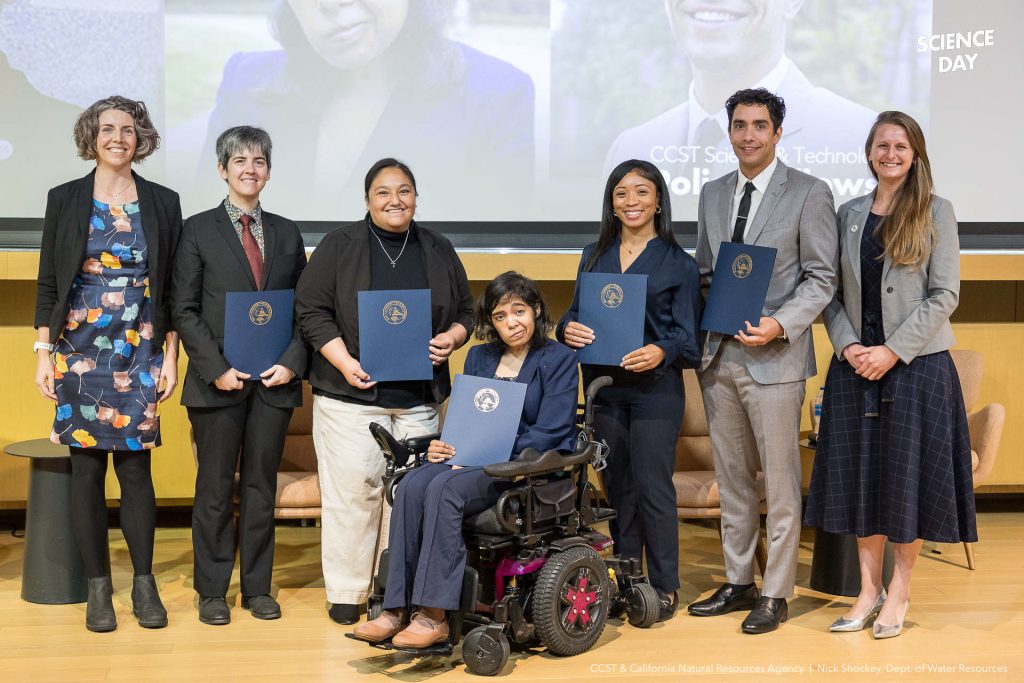
Fellows Recognition

Overview
The CCST Science & Technology Policy Fellows placed in the Executive Branch, including State Agencies and Offices of the Governor, were recognized for their year of public service in policy:
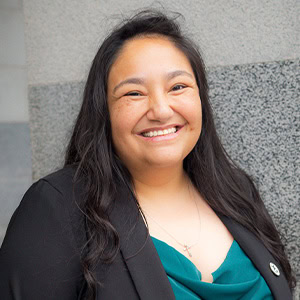 Jessica Bolivar, PhD
California Natural Resources Agency
Inspired by a professor who recognized her potential, Jessica embraced the opportunity to delve into the world of Cell and Molecular Biology, studying the molecular mechanisms that cells use to deal with stress.
PhD: Biochemistry, Molecular, Cellular, and Developmental Biology, UC Davis
BS: Biology with a concentration in Botany, SF State University
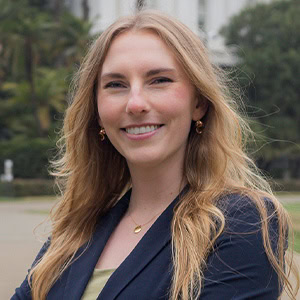 Hannah Griggs, PhD
California Energy Commission, Office of Chair Hochschild
An astrophysicist turned energy scientist, Hannah studied the cascading effects of outages on energy infrastructure.
PhD: Physics, Georgia Institute of Technology
BA: Physics & Mathematics, Bryn Mawr College
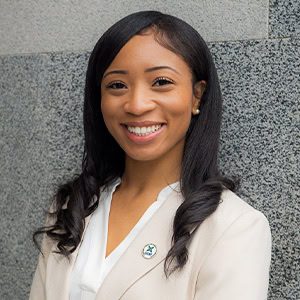 Ayana Henderson, PhD
California Department of Toxic Substances Control, Office of Legislation and Regulatory Review, California Environmental Protection Agency
Originally from the D.C./Maryland area, Ayana moved to Boston to explore the reproductive health effects of chemicals found in consumer products.
PhD: Biological and Biomedical Sciences, Harvard University
BS: Biological Sciences, University of Maryland, Baltimore County
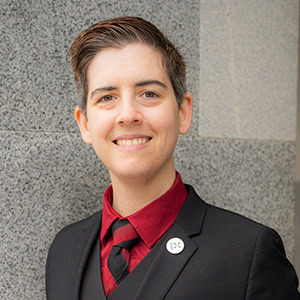 J Humphreys, PhD
Office of Environmental Health Hazard Assessment, California Environmental Protection Agency
Originally from Texas, they moved to California to study volcanic systems and pivoted to studying lithium in the Salton Sea Geothermal Field.
PhD: Geological Sciences, UC Riverside
BS: Geoscience, UT Dallas BA: Visual & Dramatic Arts, Rice University
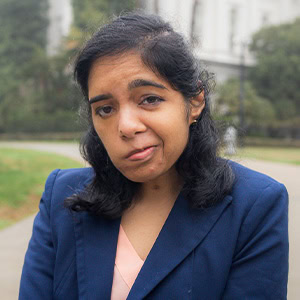 Raisa Rahim, PhD
California Department of Food and Agriculture
Given her lived experience, Raisa wants to expand beyond her research in child ADHD interventions into the environmental justice sphere.
PhD: Neuroscience, UC Davis
BS: Psychology, with an Emphasis in Biology, UC Davis
 Haynes Stephens, PhD
California Air Resources Board, Office of the Chair, California Environmental Protection Agency
A Bay Area native, Haynes studied climate change impacts on agriculture as well as transmission infrastructure for energy planning.
PhD: Geophysical Sciences, University of Chicago
BA: Astronomy & Astrophysics, UC Berkeley
Photo Gallery
POSTER SESSION

Overview
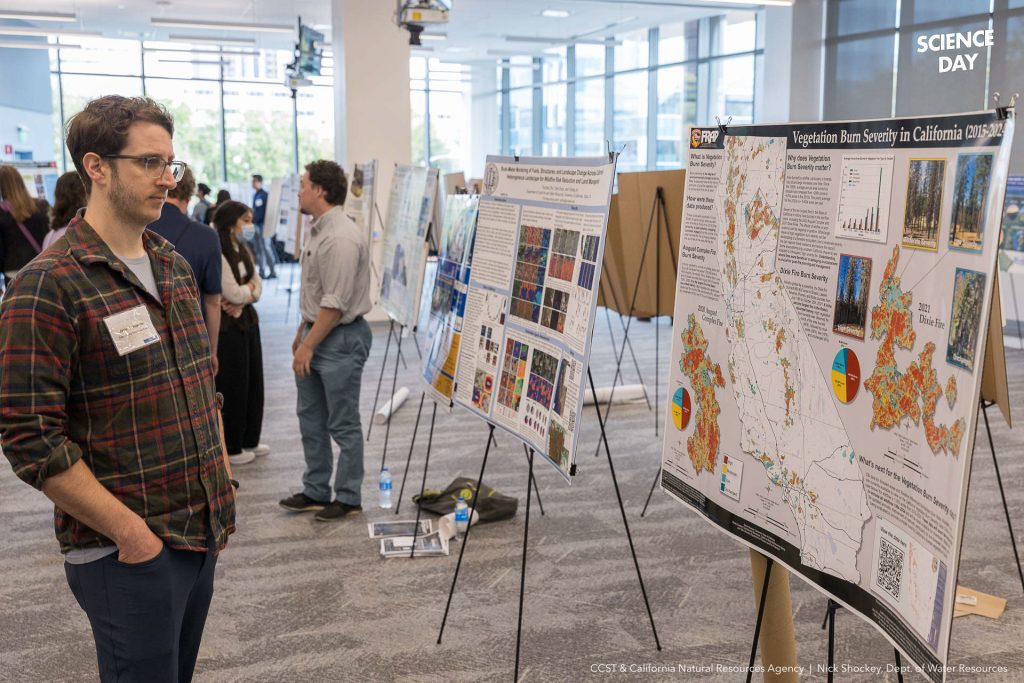
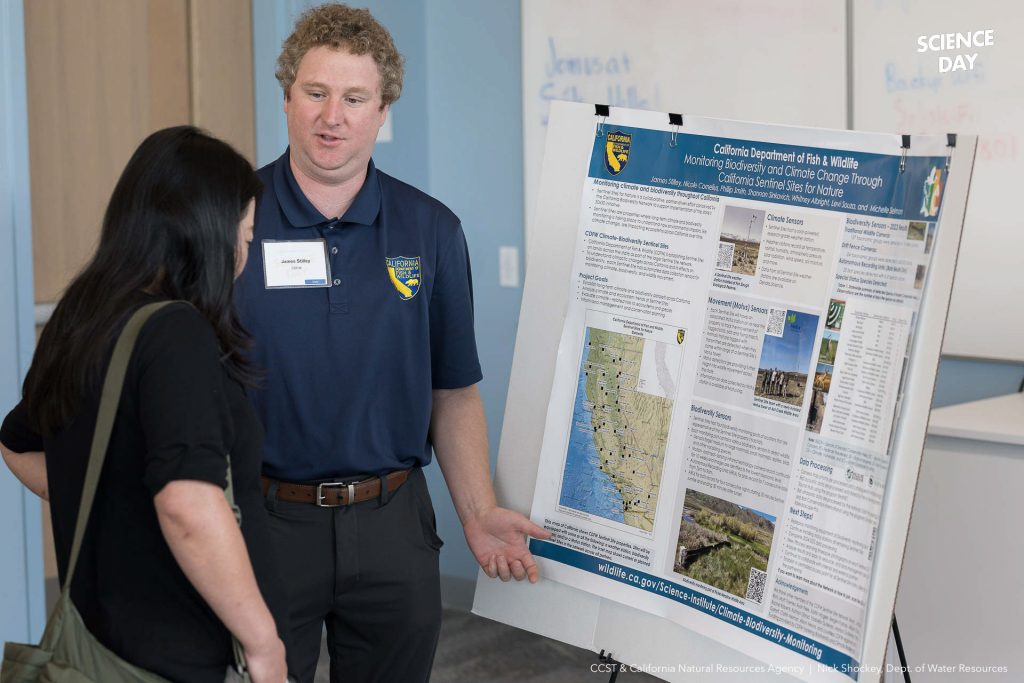
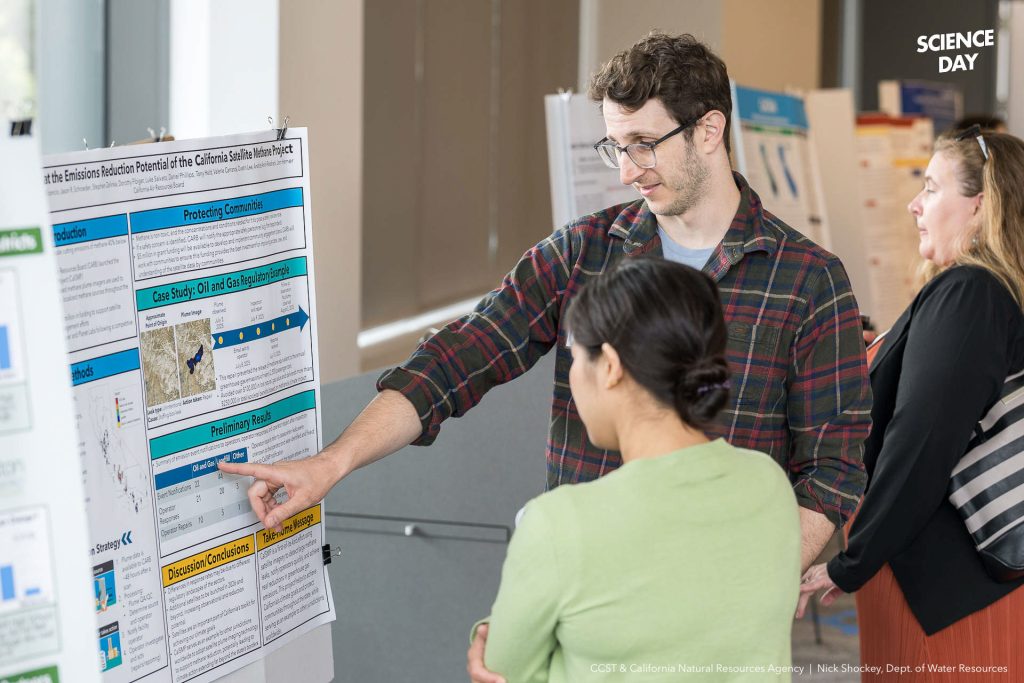
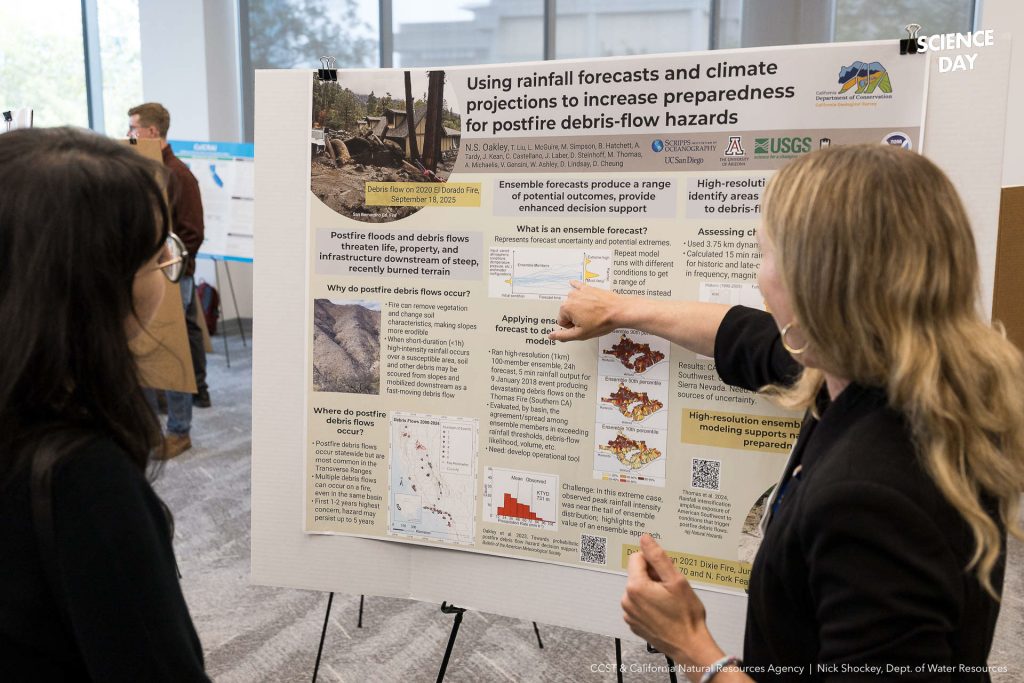
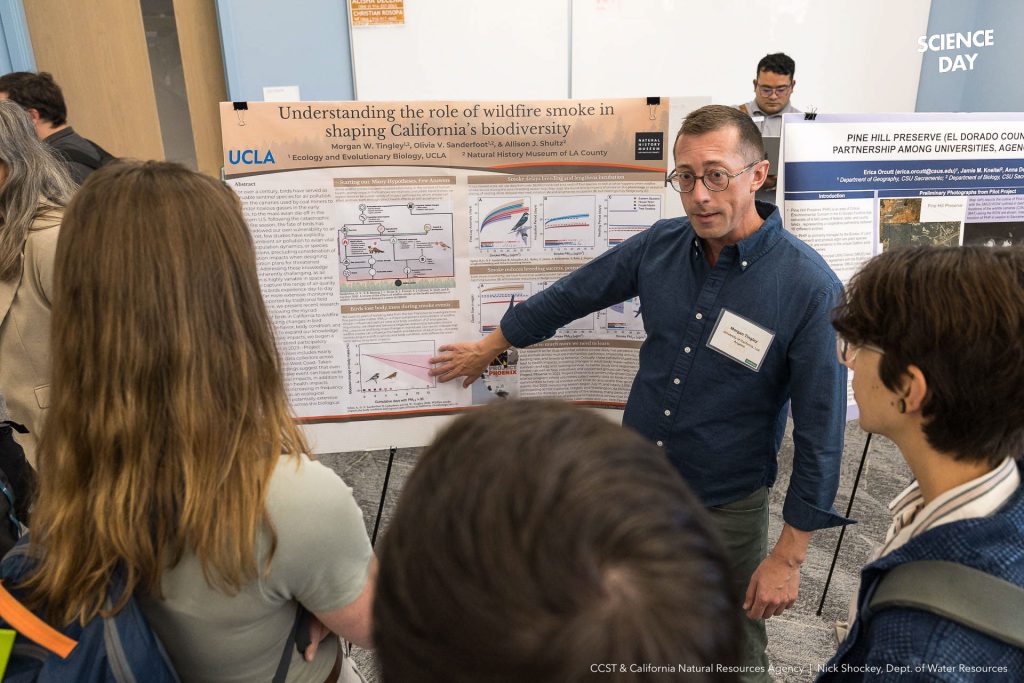
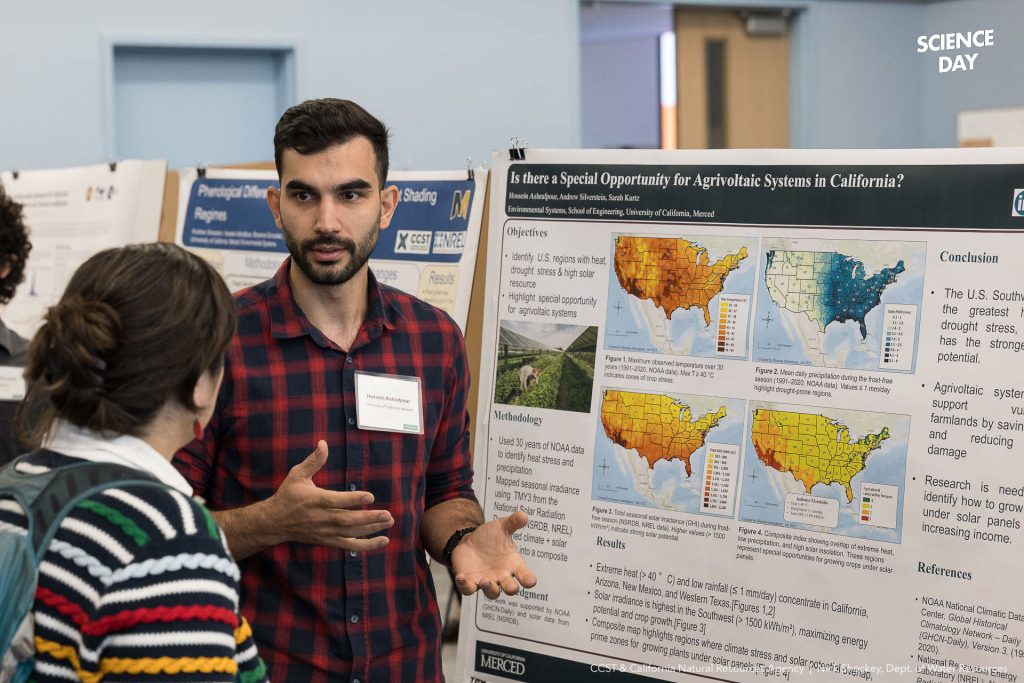
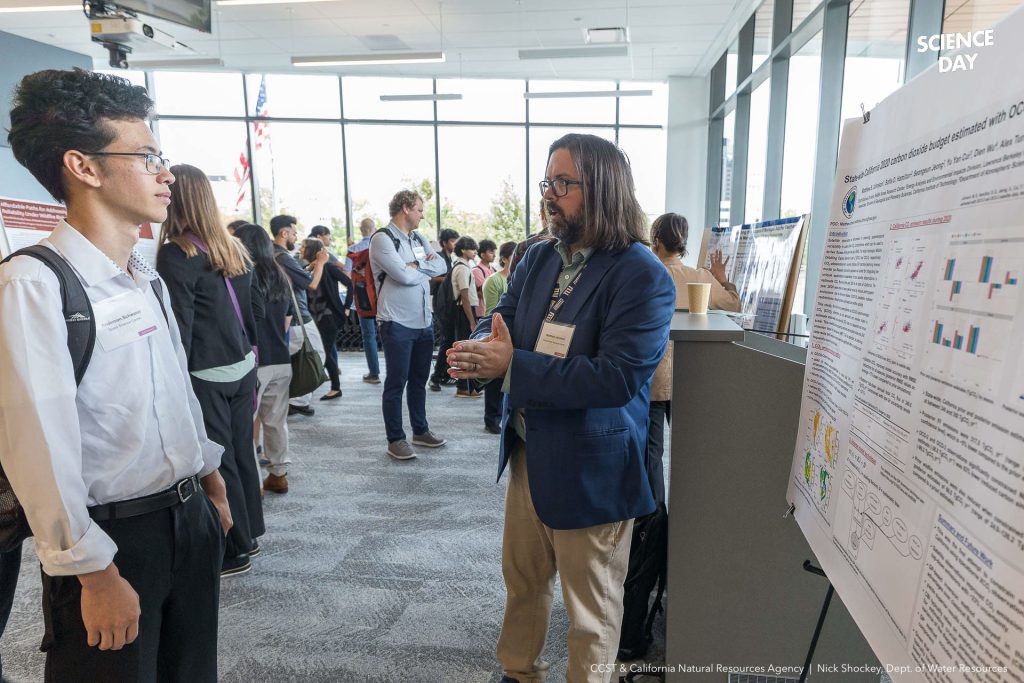
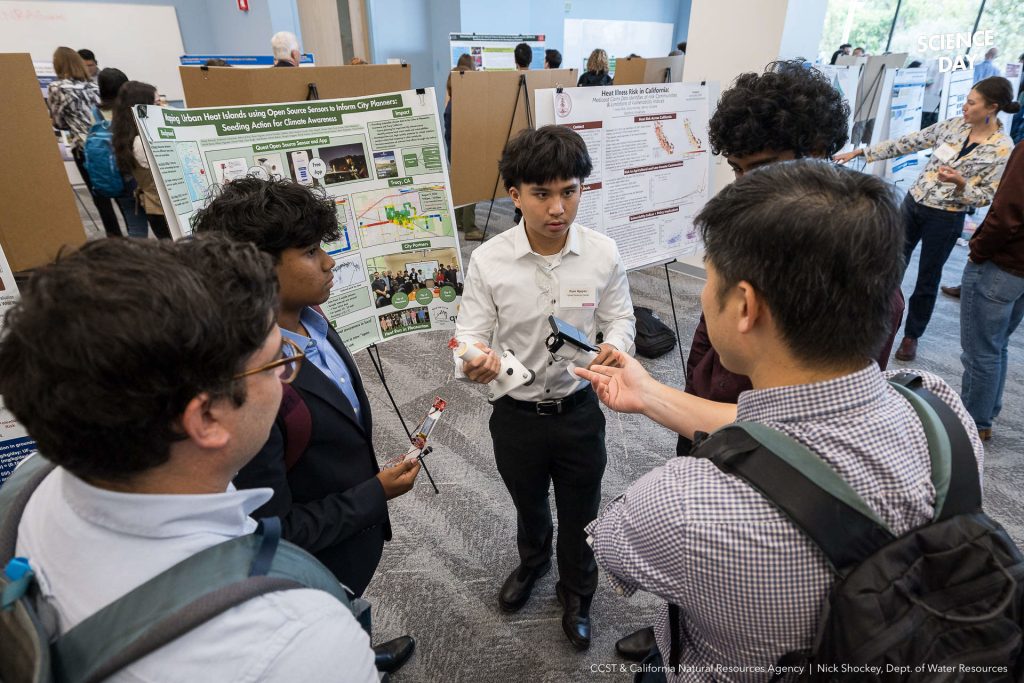
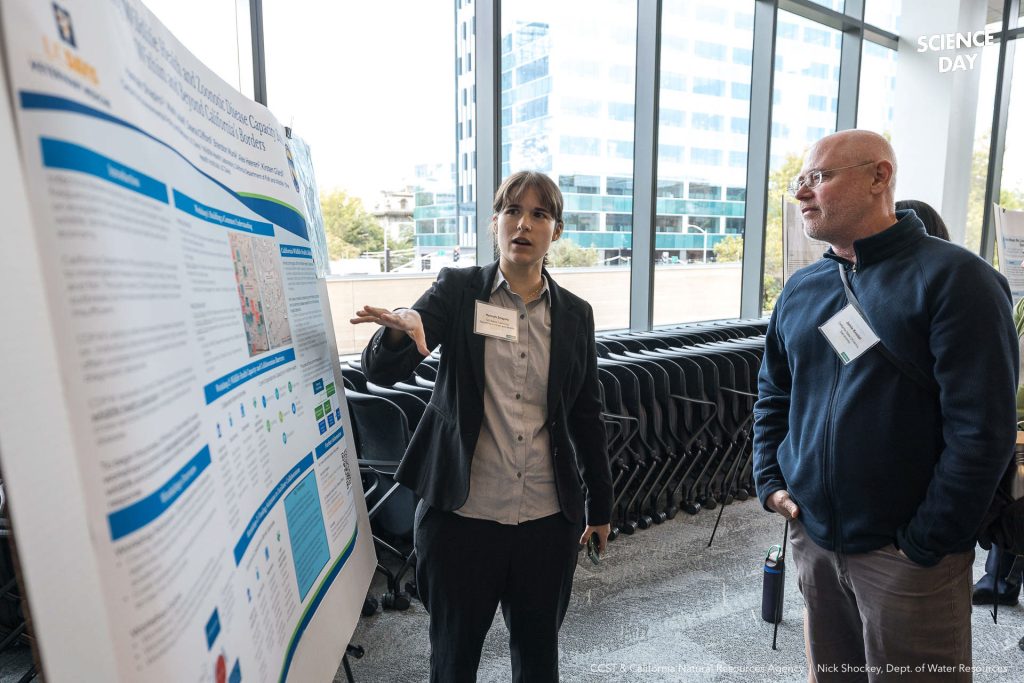
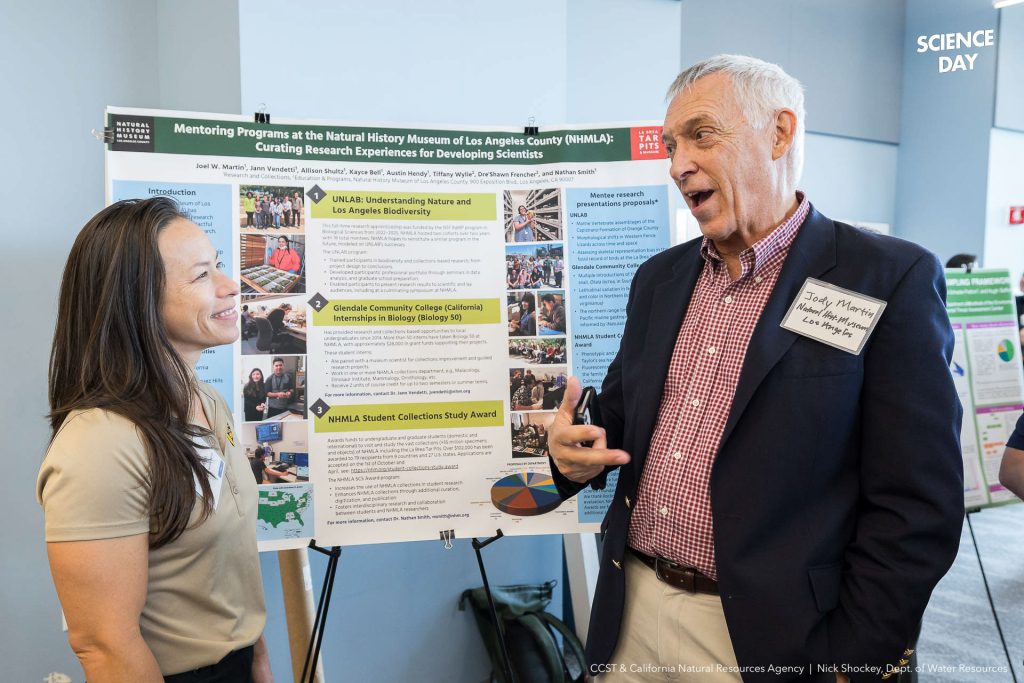
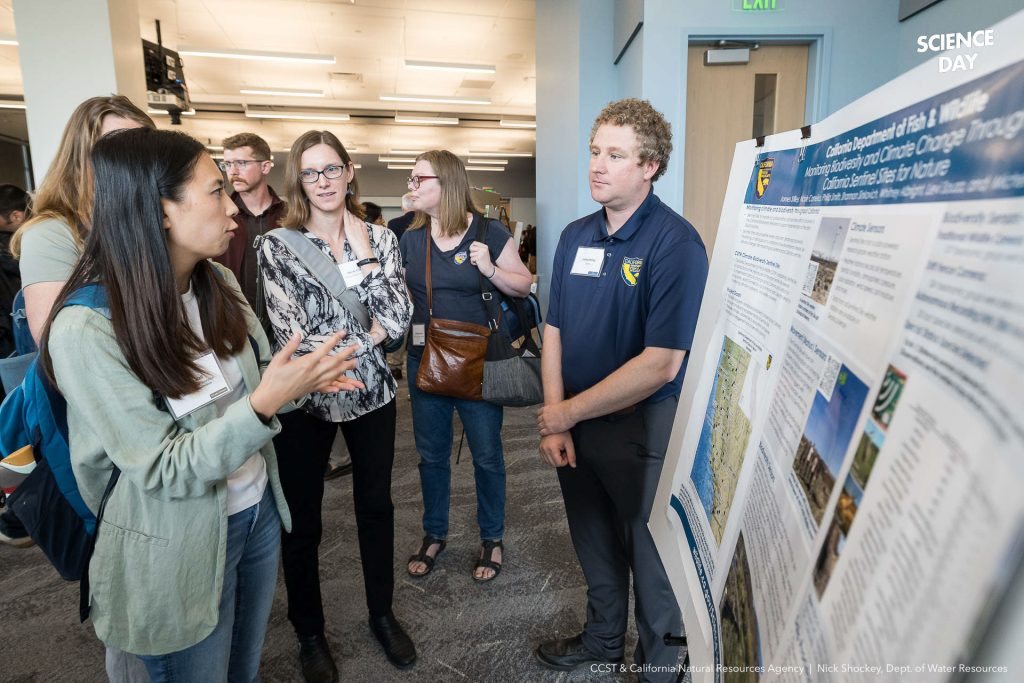
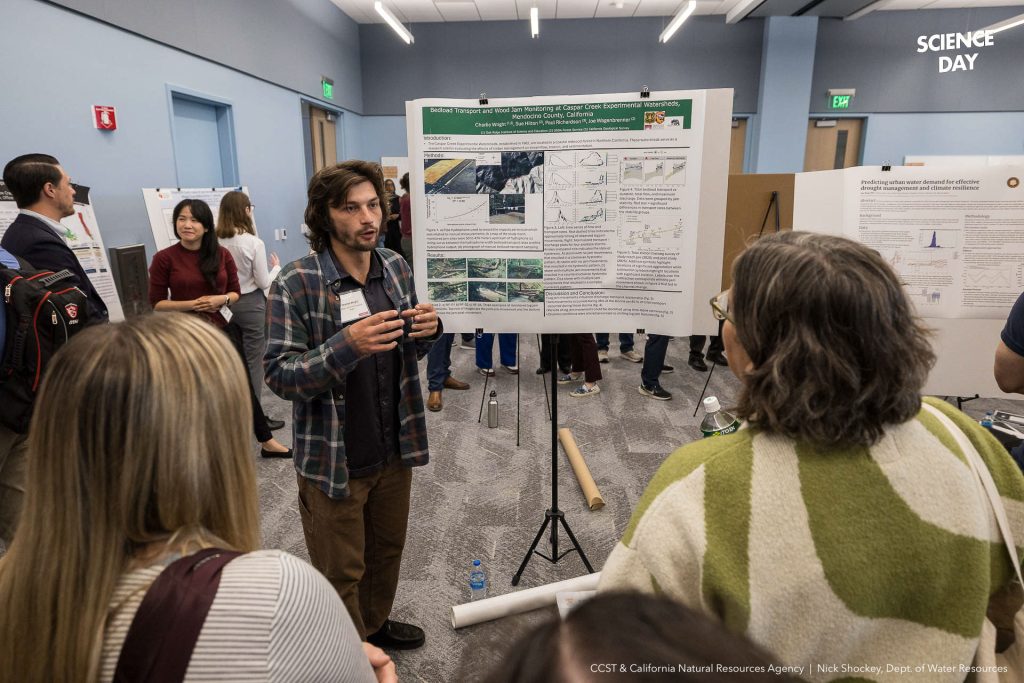
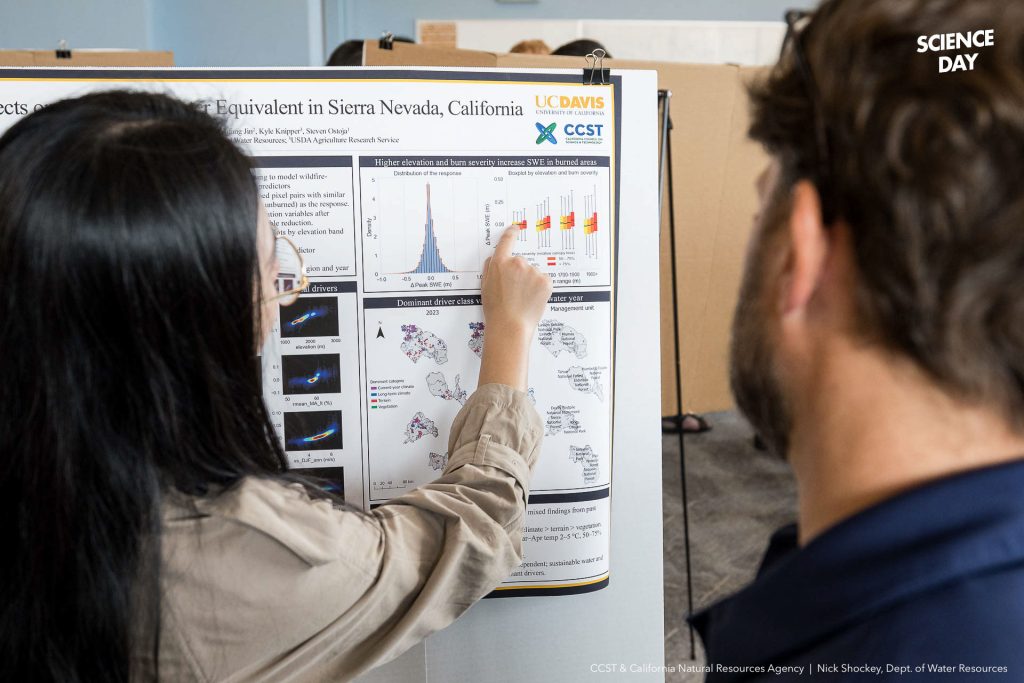
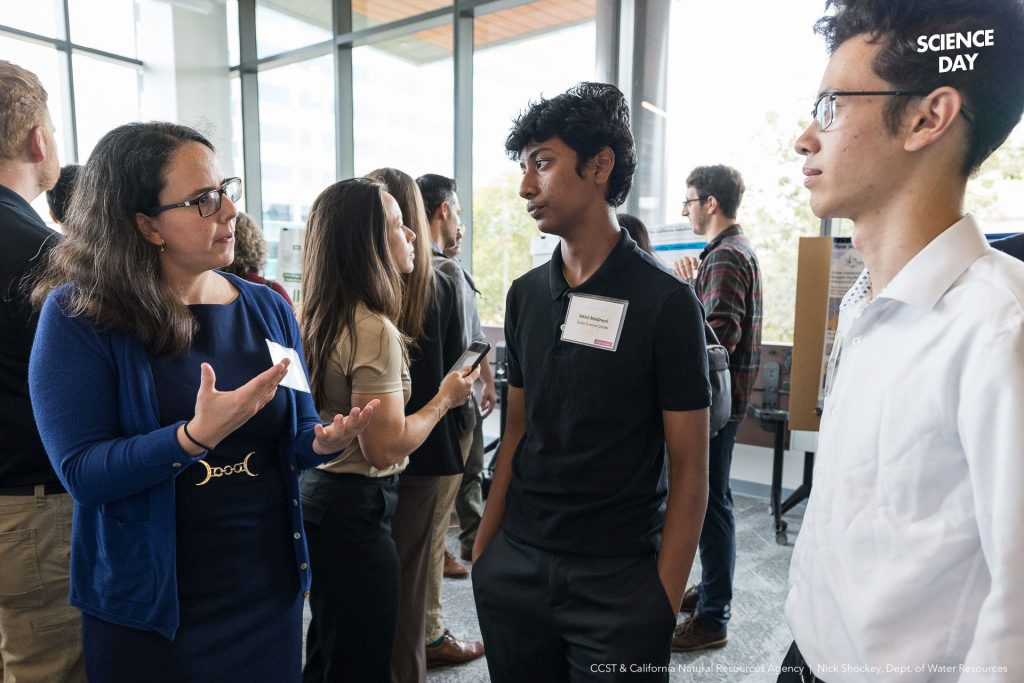
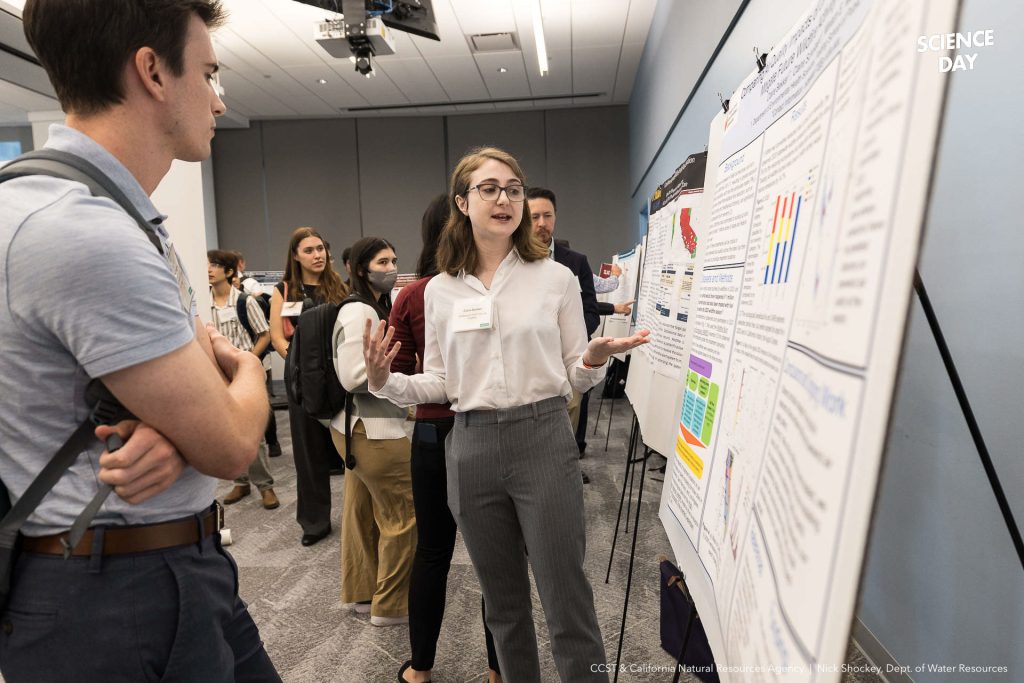
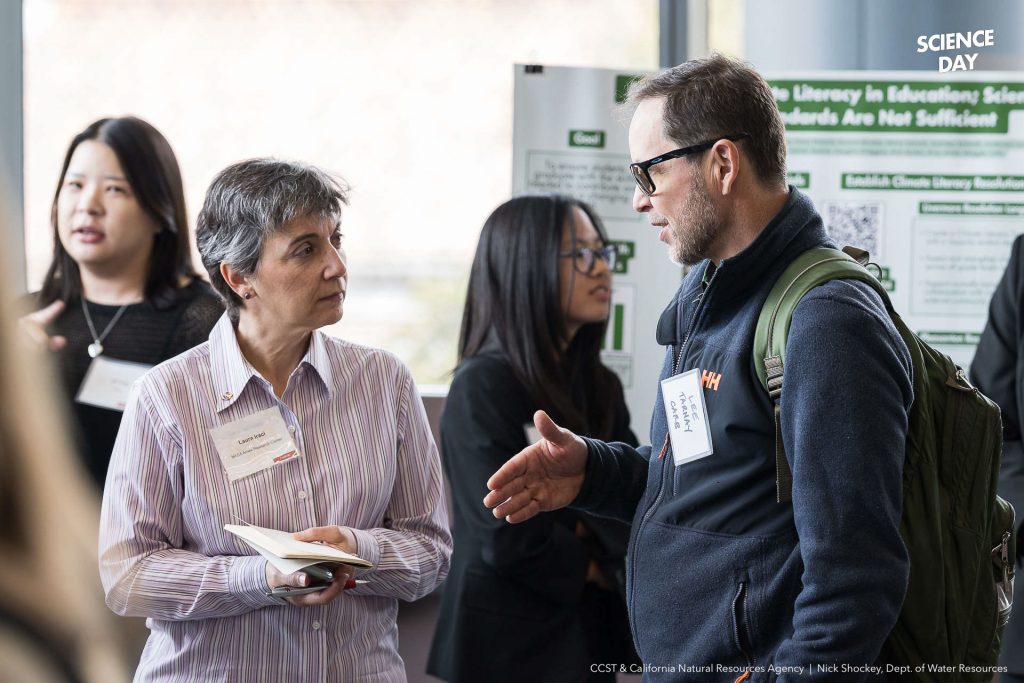
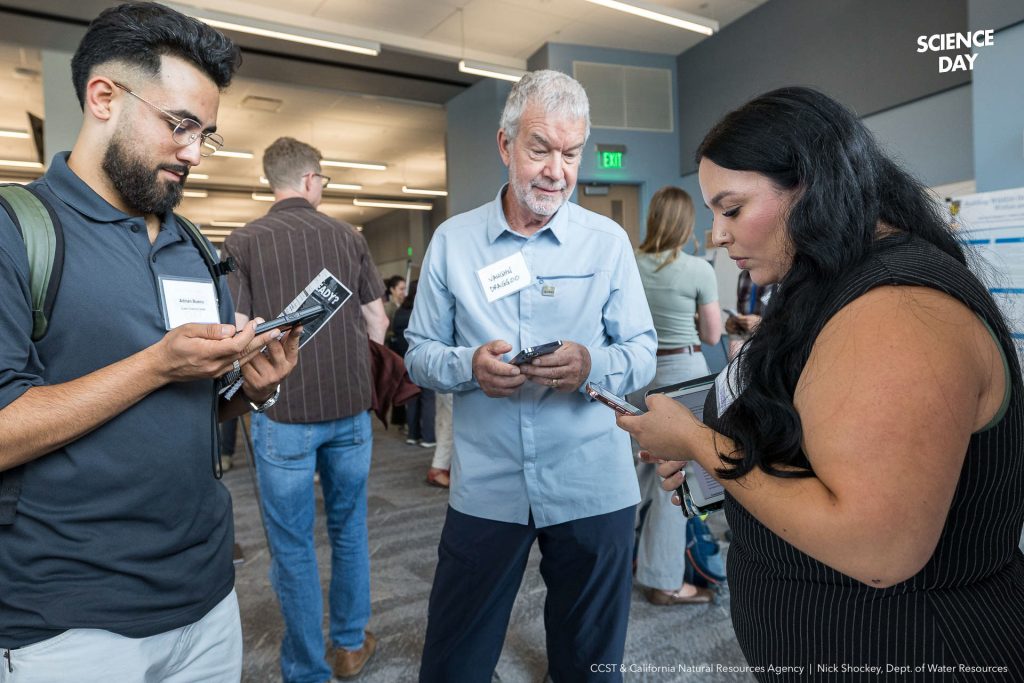
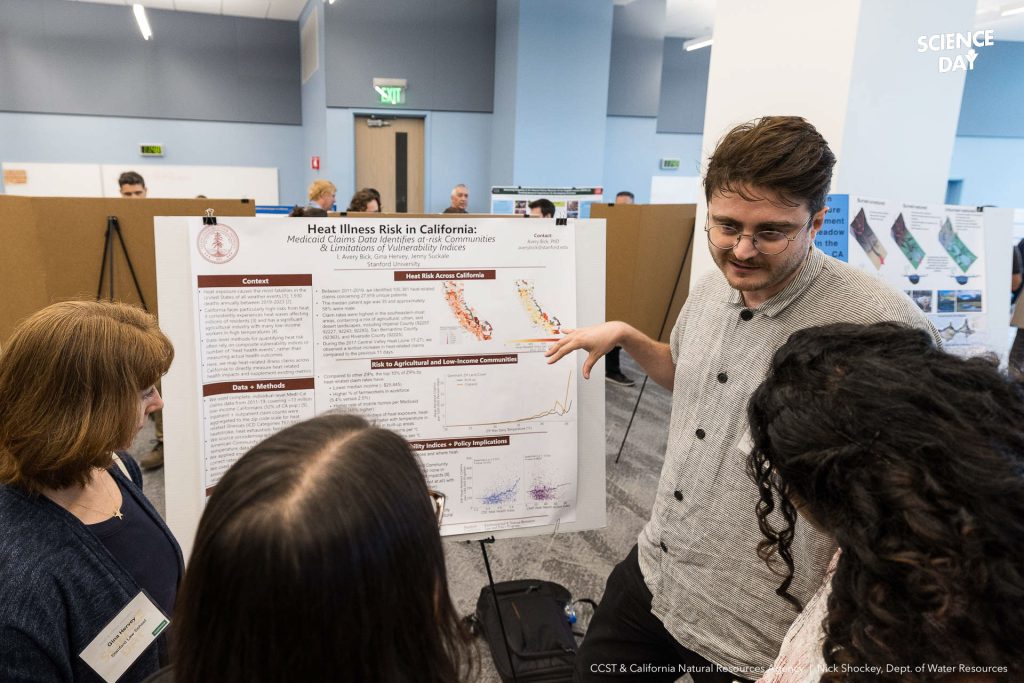
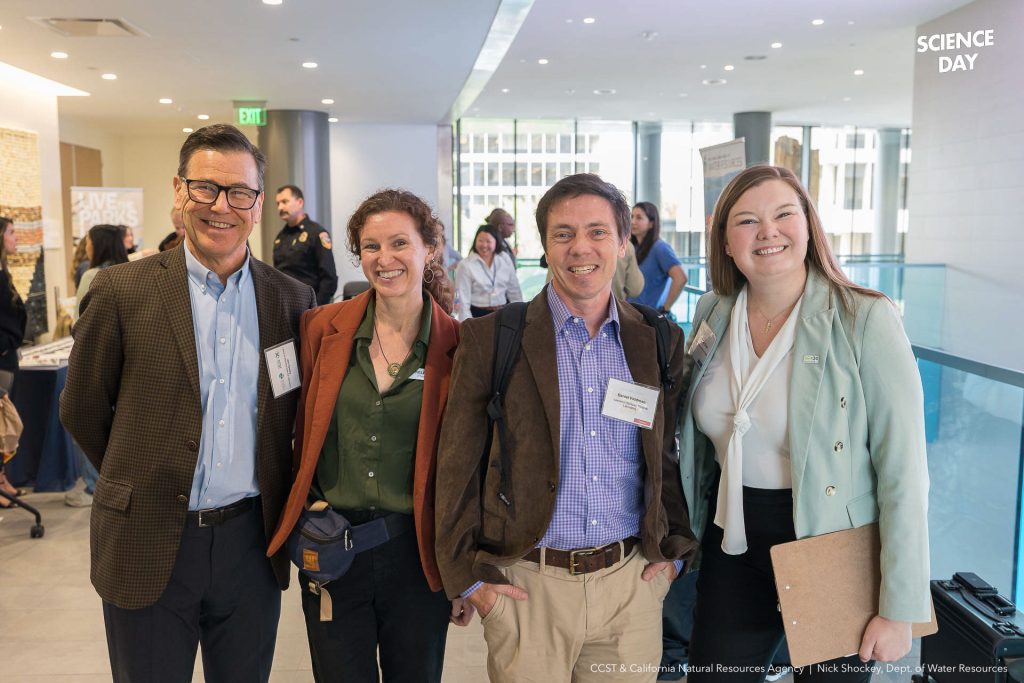
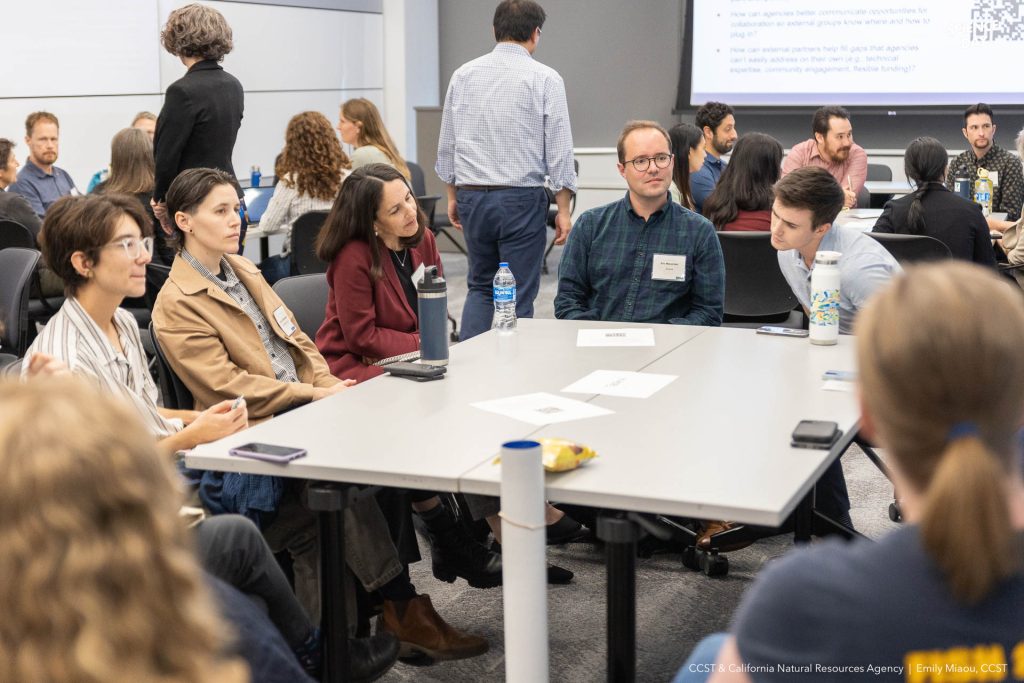
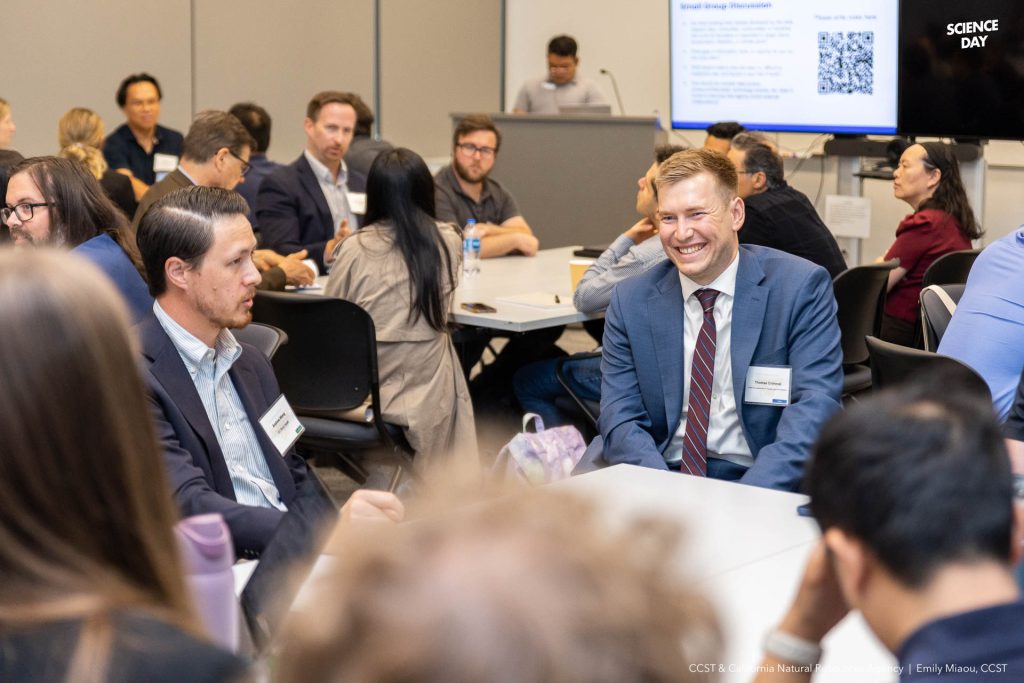
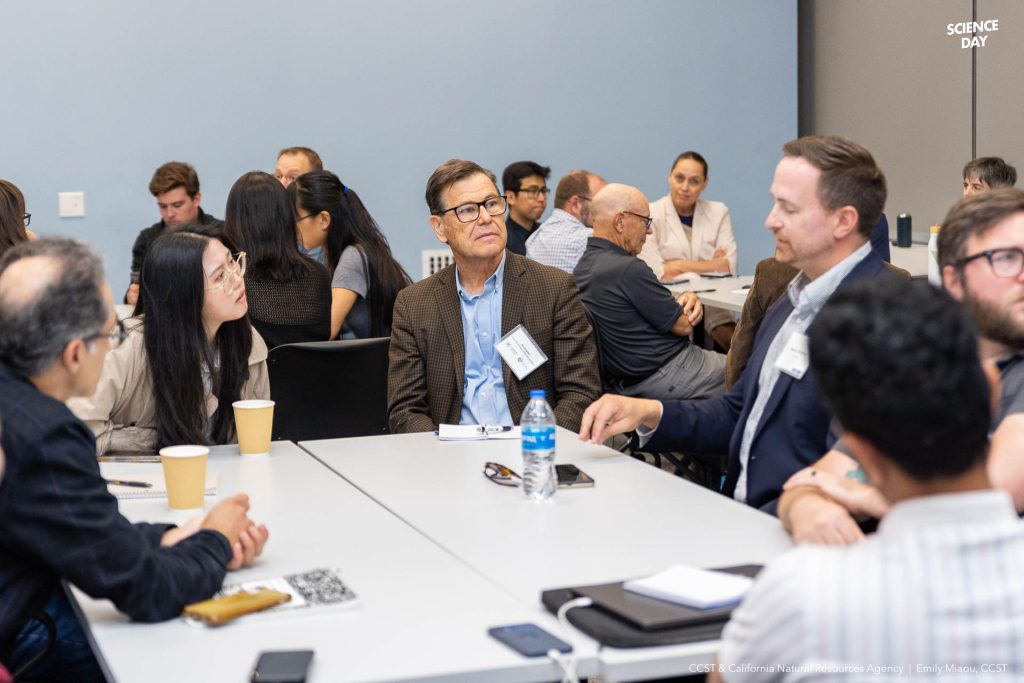
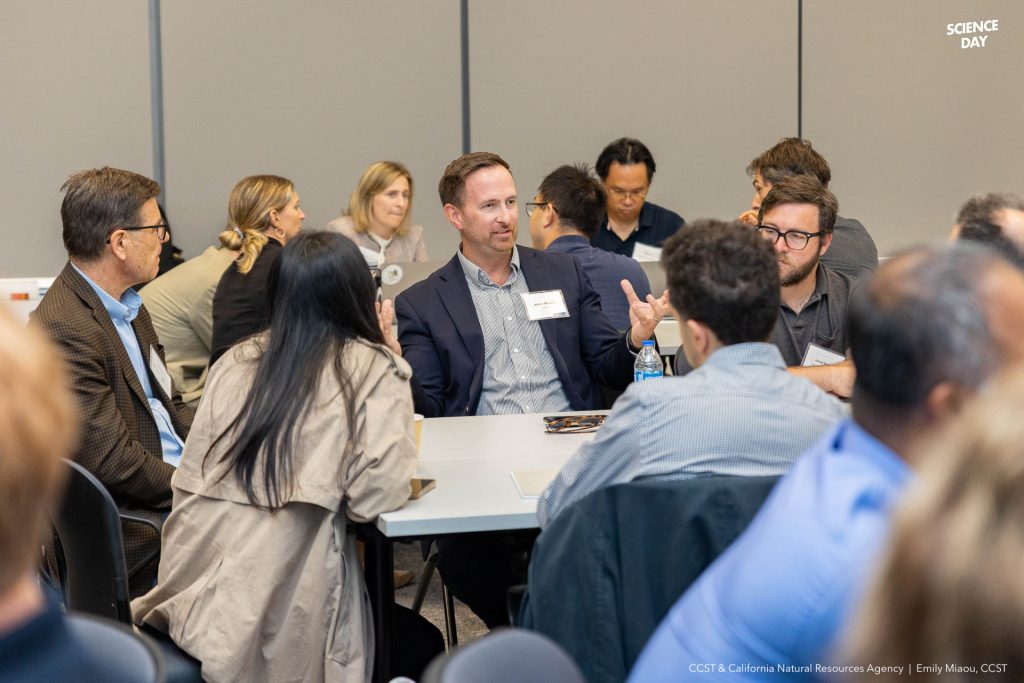
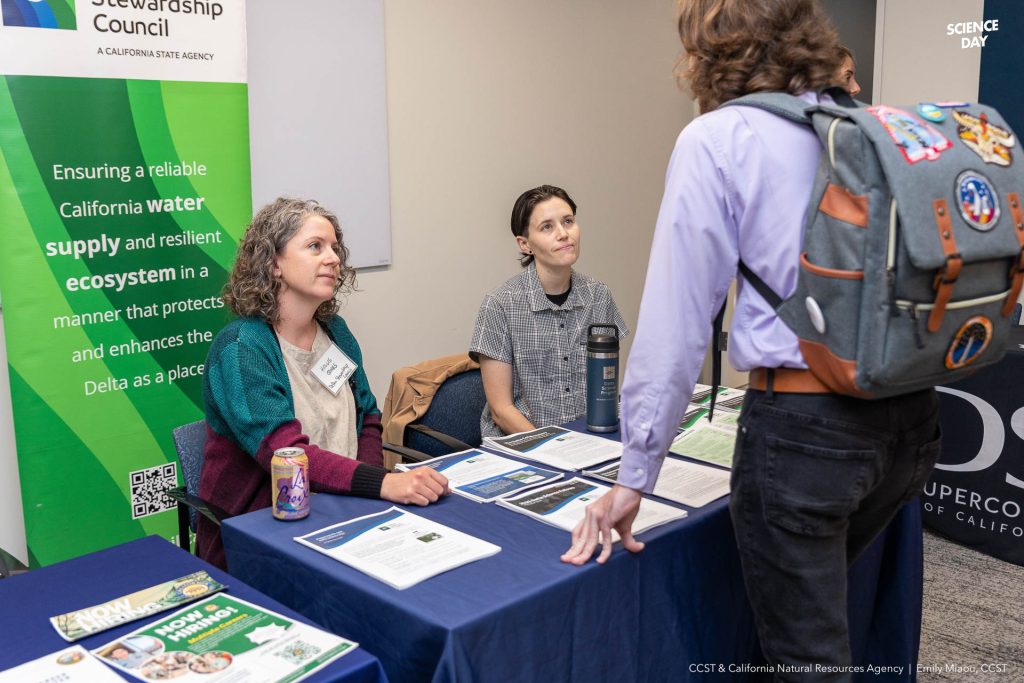
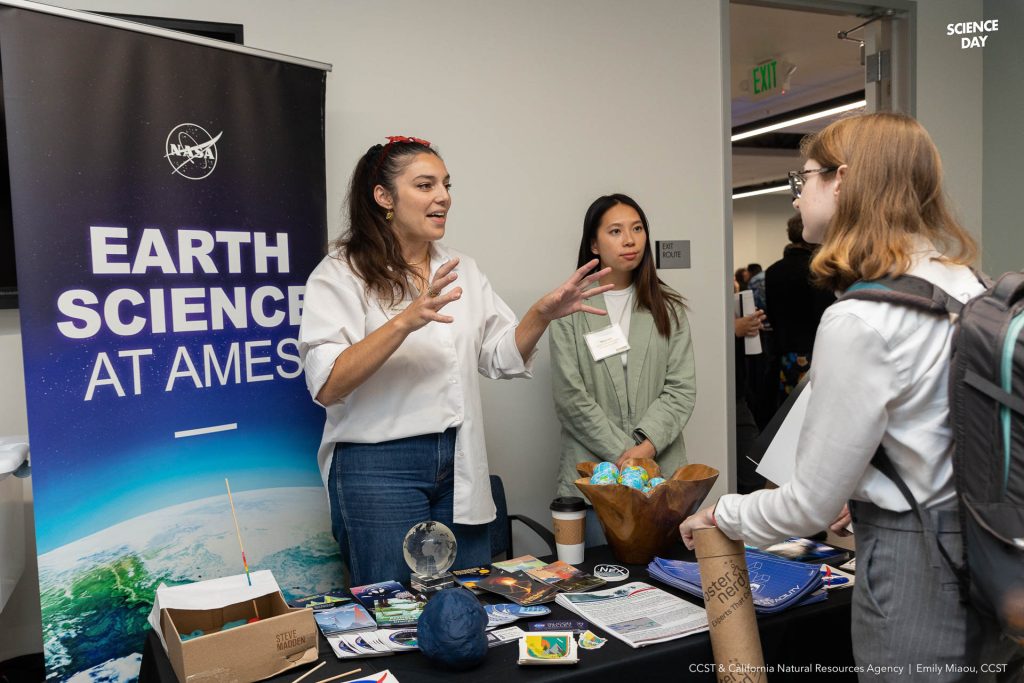
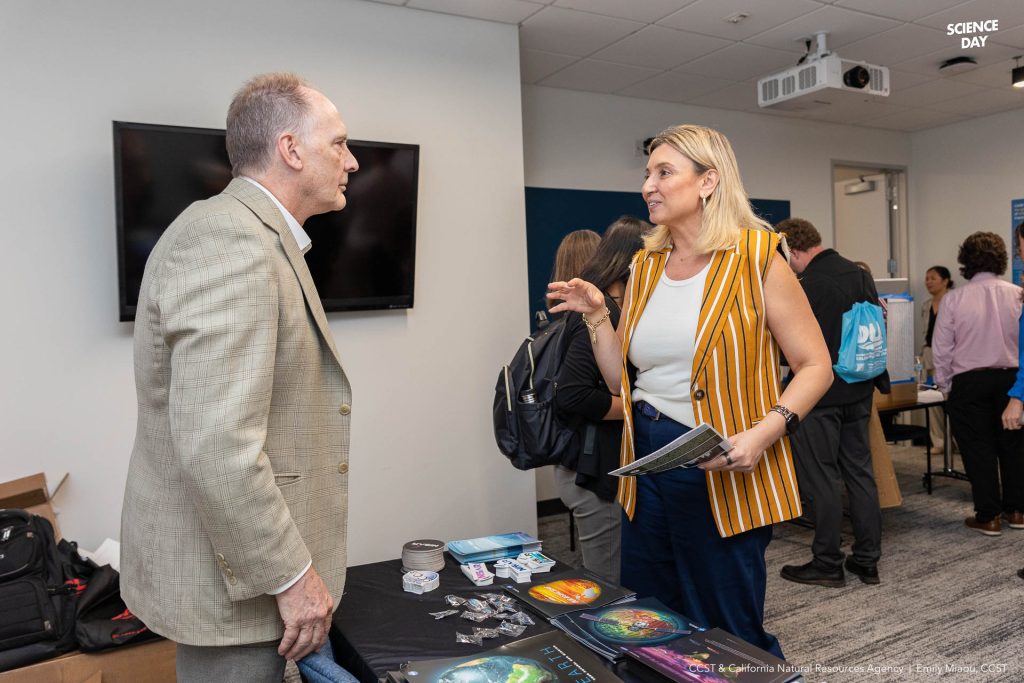
With more than 50 presenters showcasing their work on the second floor of CNRA headquarters, the Poster Session served as an excellent opportunity for attendees to connect with researchers from across California’s science and policy landscape. Participants represented a range of organizations, including state and federal agencies, academic institutions, national labs, and non-profit organizations. Posters covered a broad spectrum of topics, including biodiversity, community engagement, wildfire, education, water, and energy. In true Science Day spirit, the session fostered meaningful cross-sector networking, fresh insights, and new collaborations — highlighting just a small sample of California’s vibrant research enterprise.
Career Center Tabling
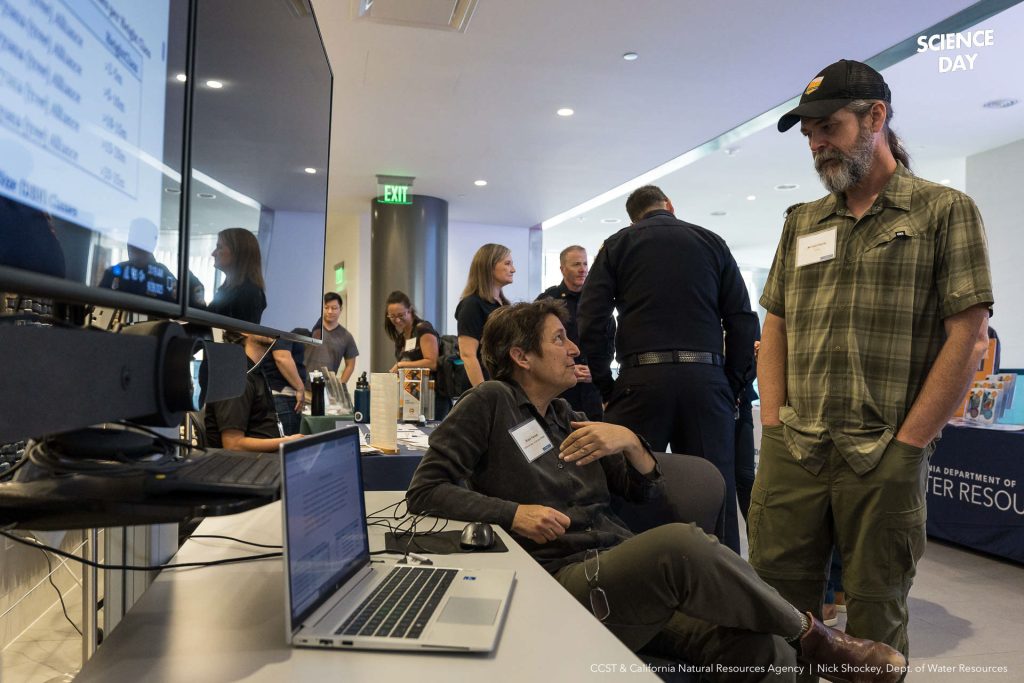
Running concurrently with the poster session, attendees had the chance to connect directly with representatives from five California state departments: CAL FIRE, Department of Water Resources, California State Parks, Department of Conservation, and CalTrans. Participants explored career pathways, learned about internships and hiring opportunities, and delved into how science informs agency priorities.
Photo Gallery
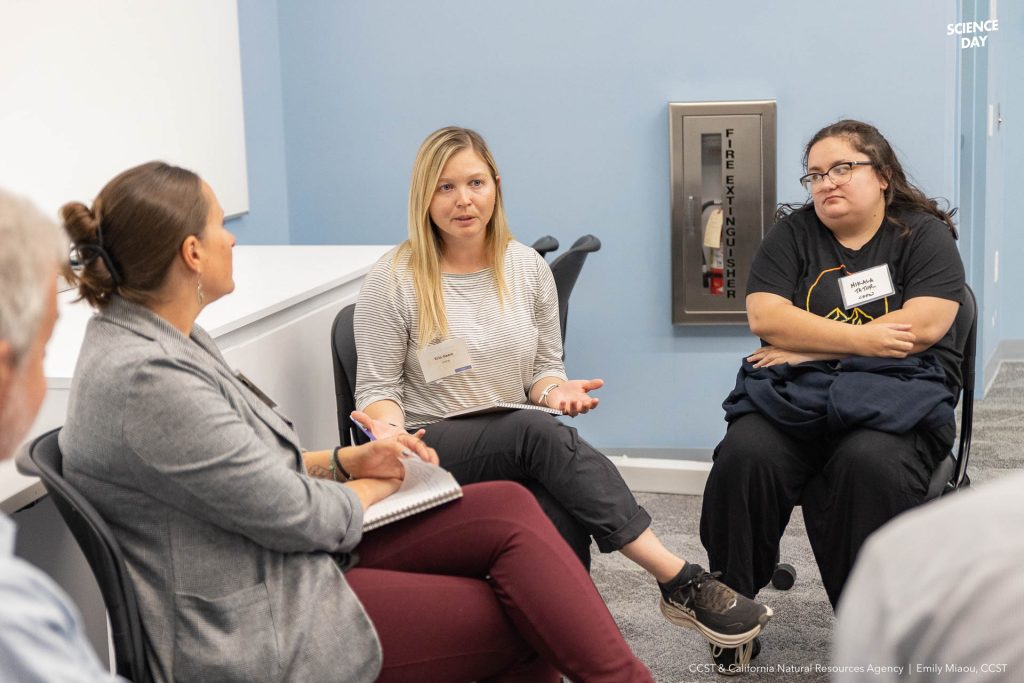
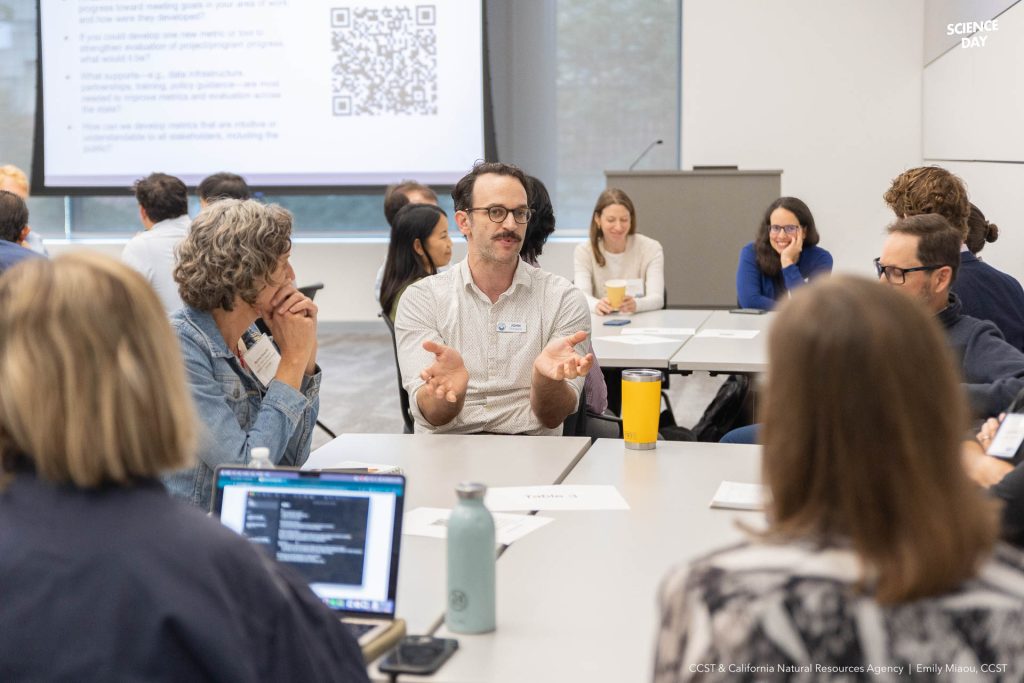
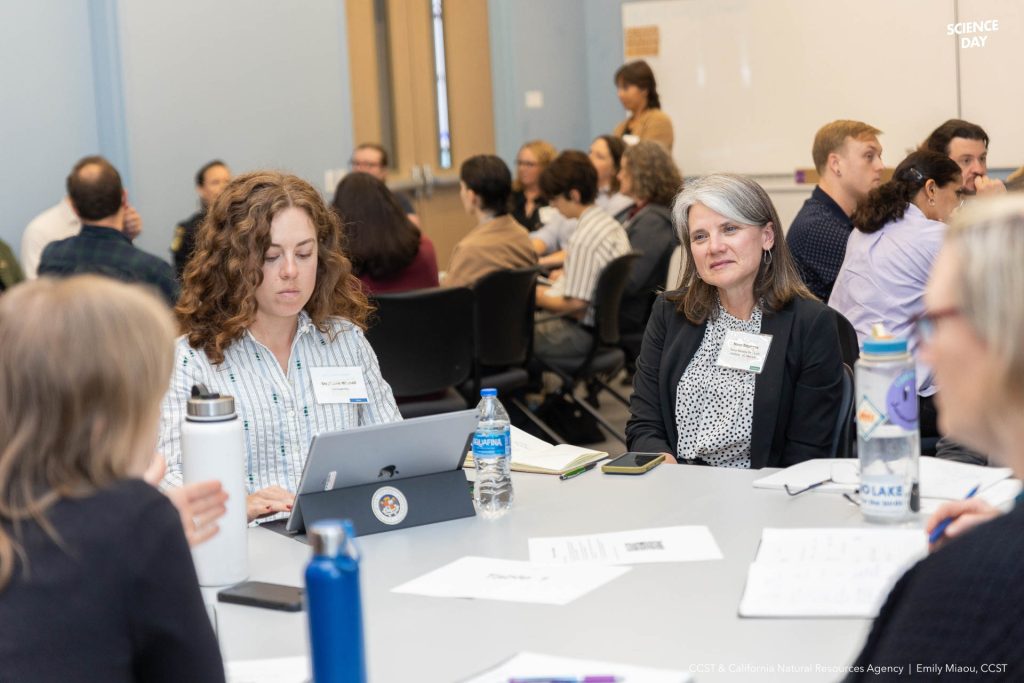
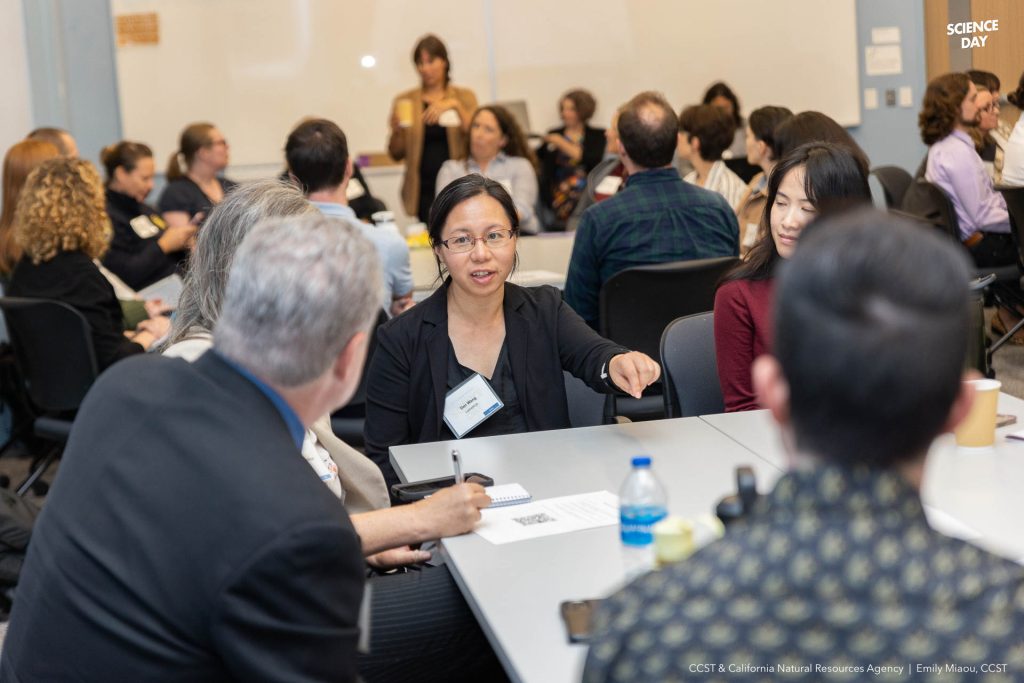
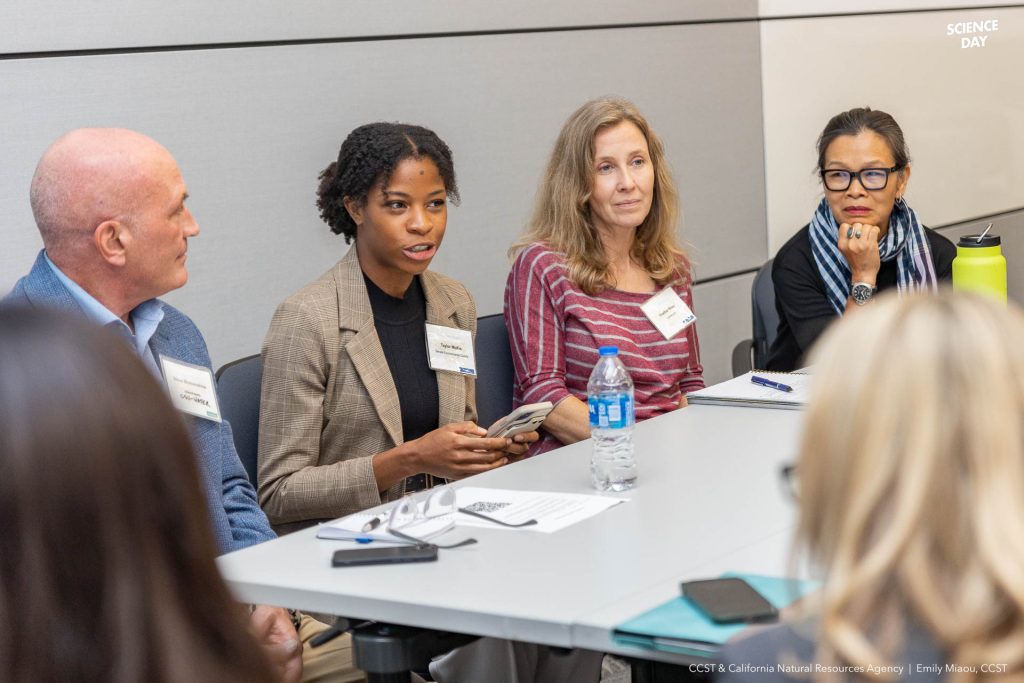
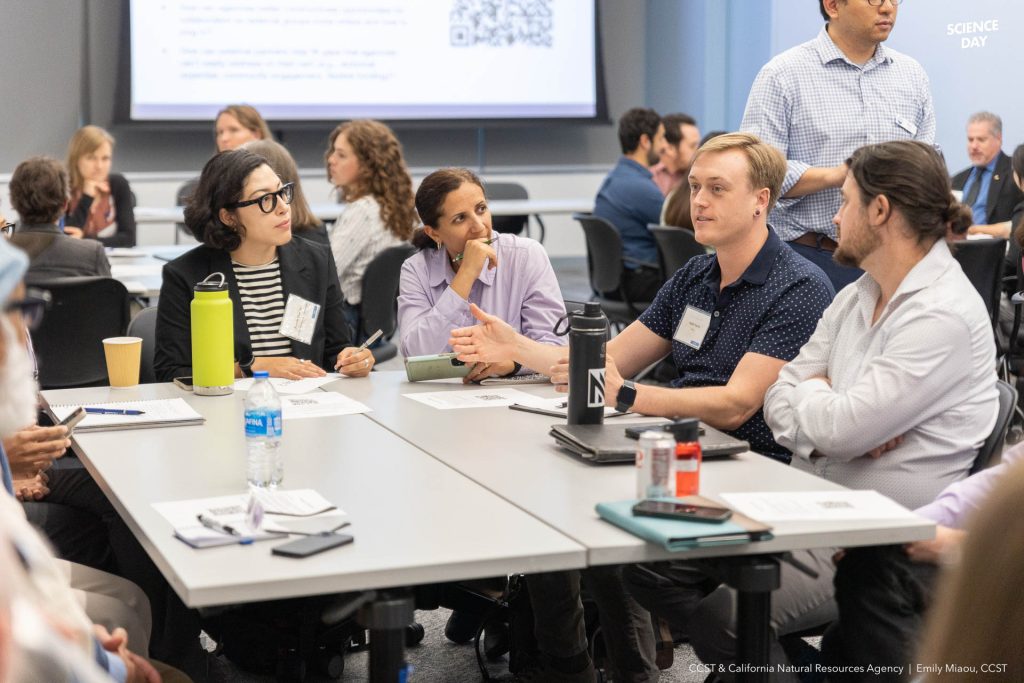
Breakout Sessions

Overview
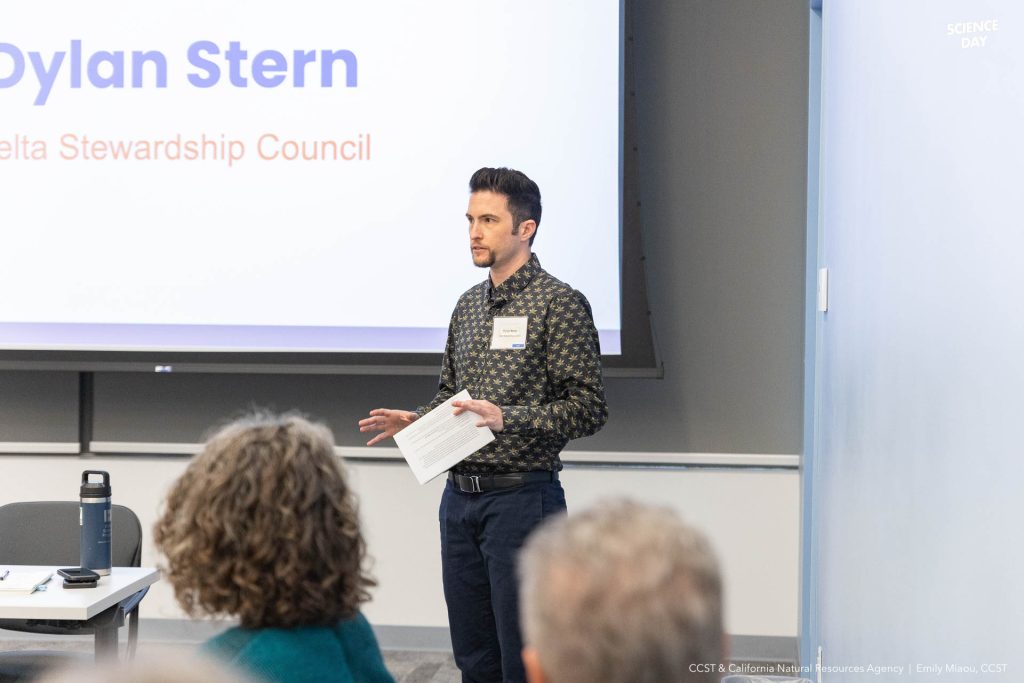
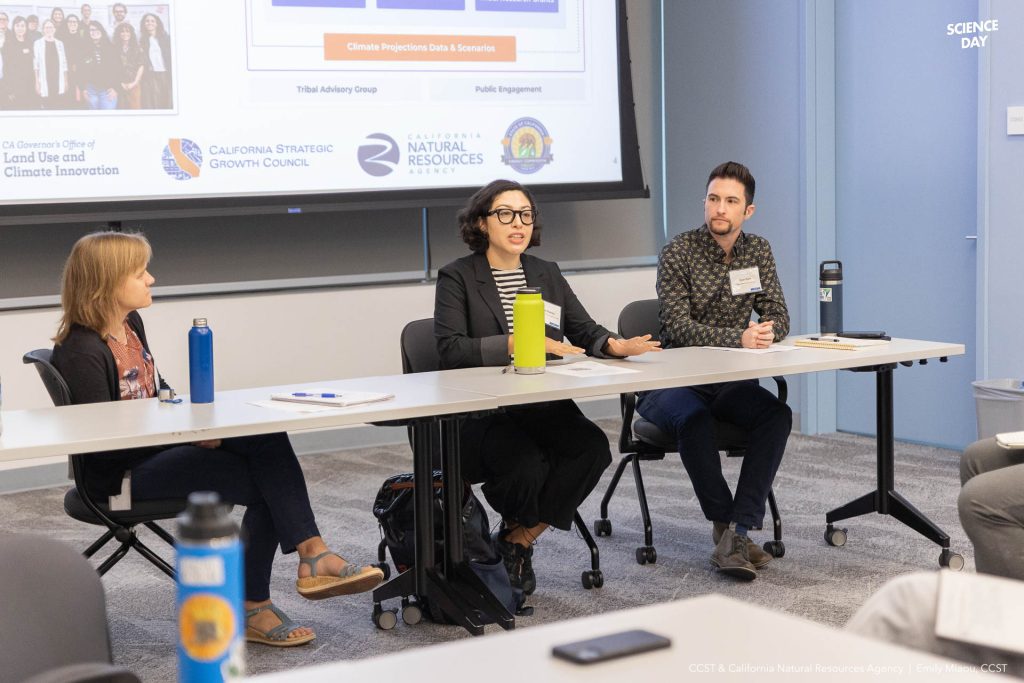
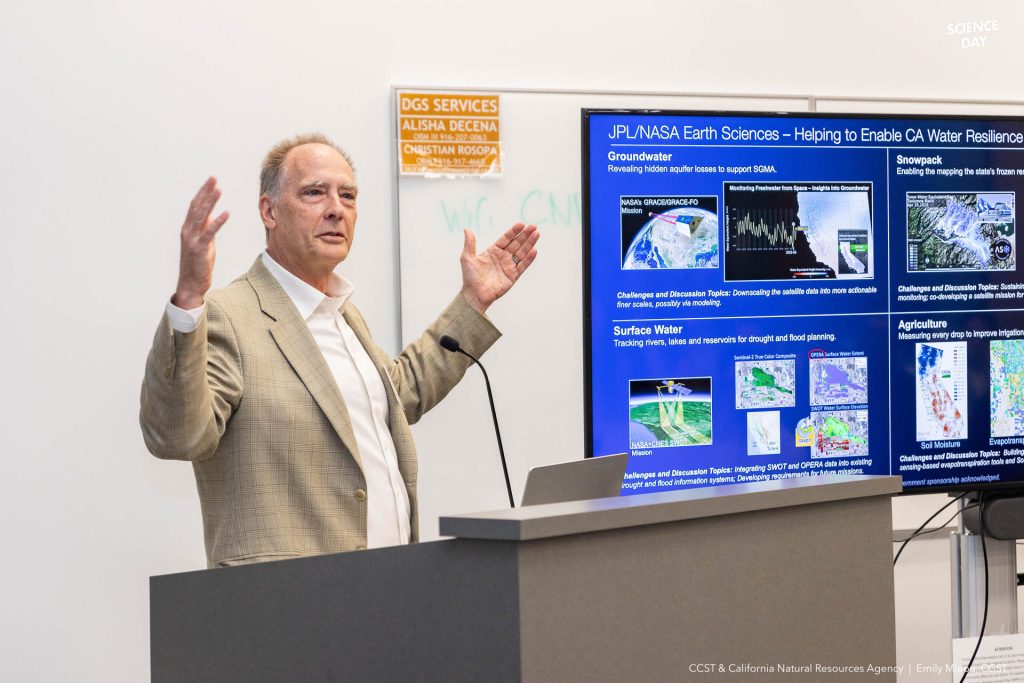
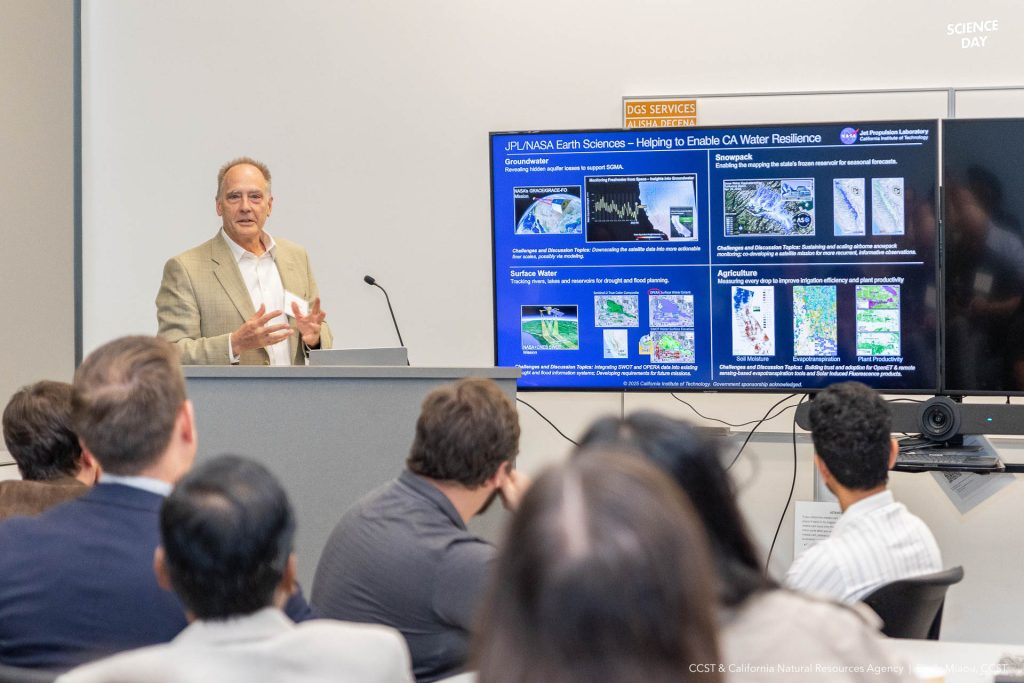
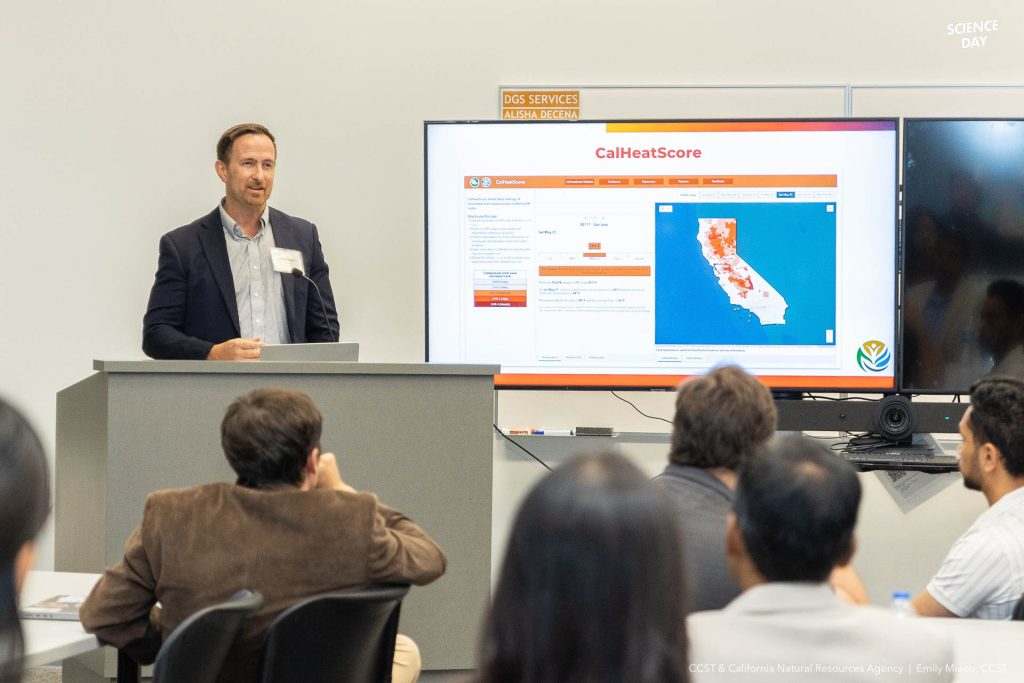
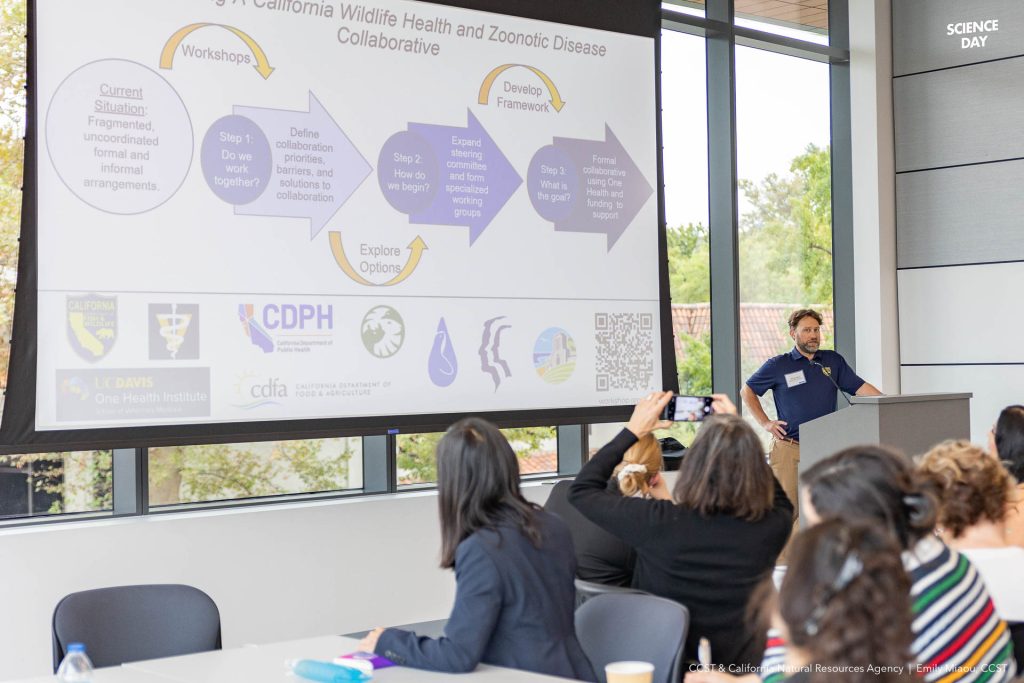
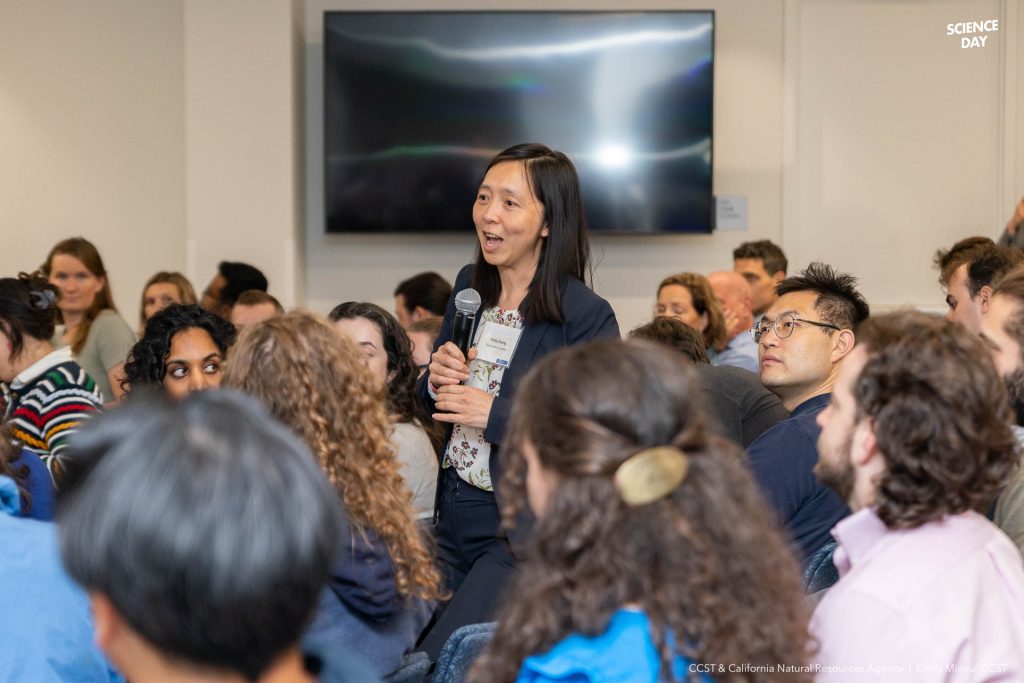
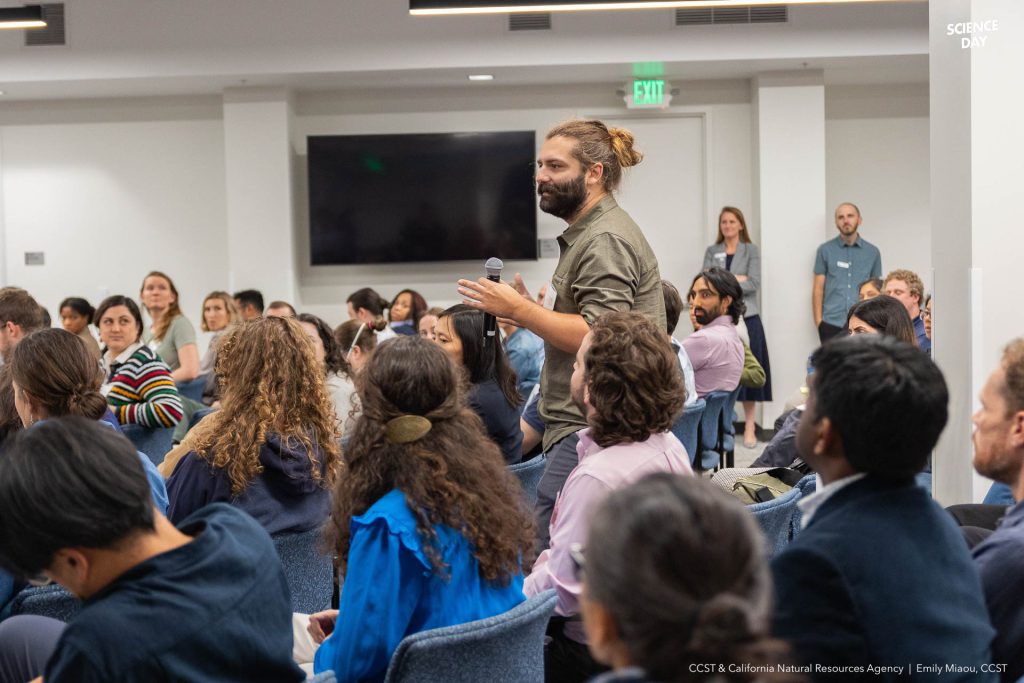
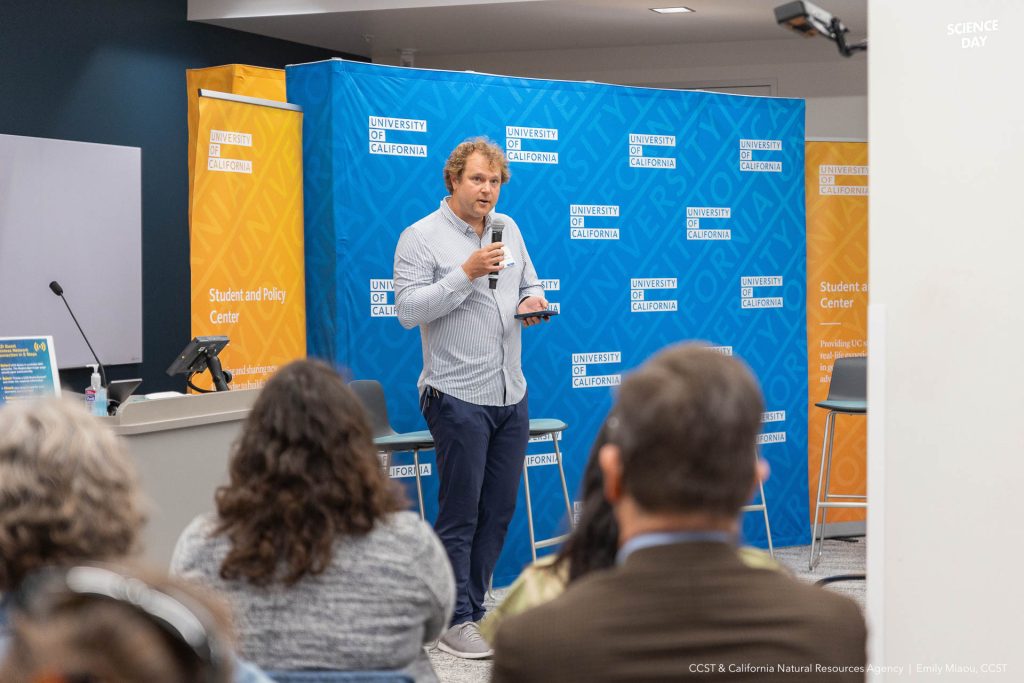
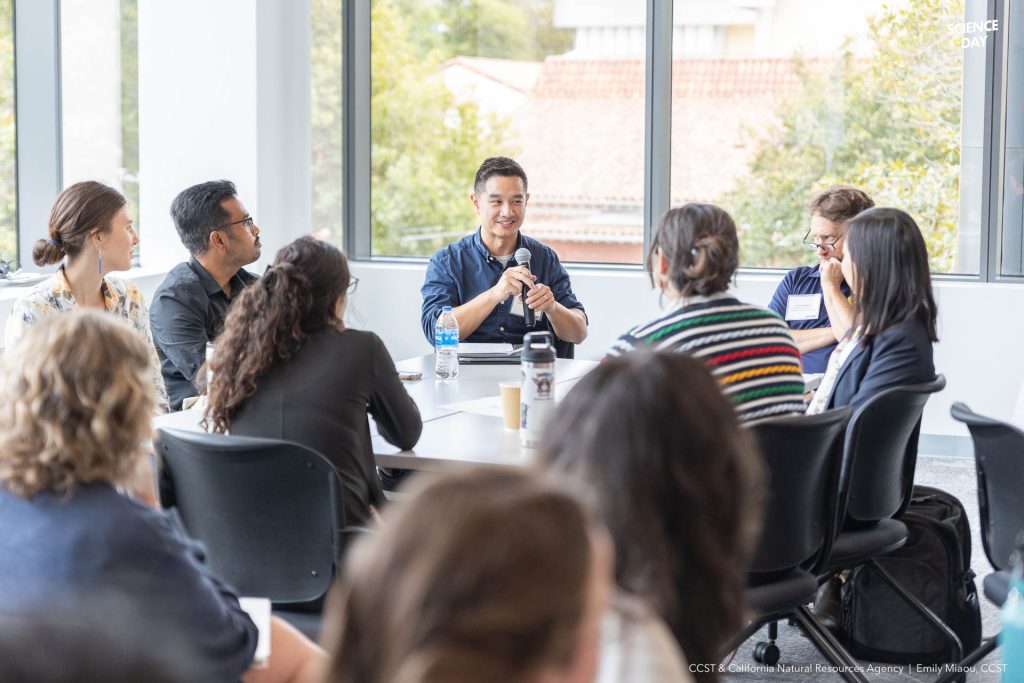
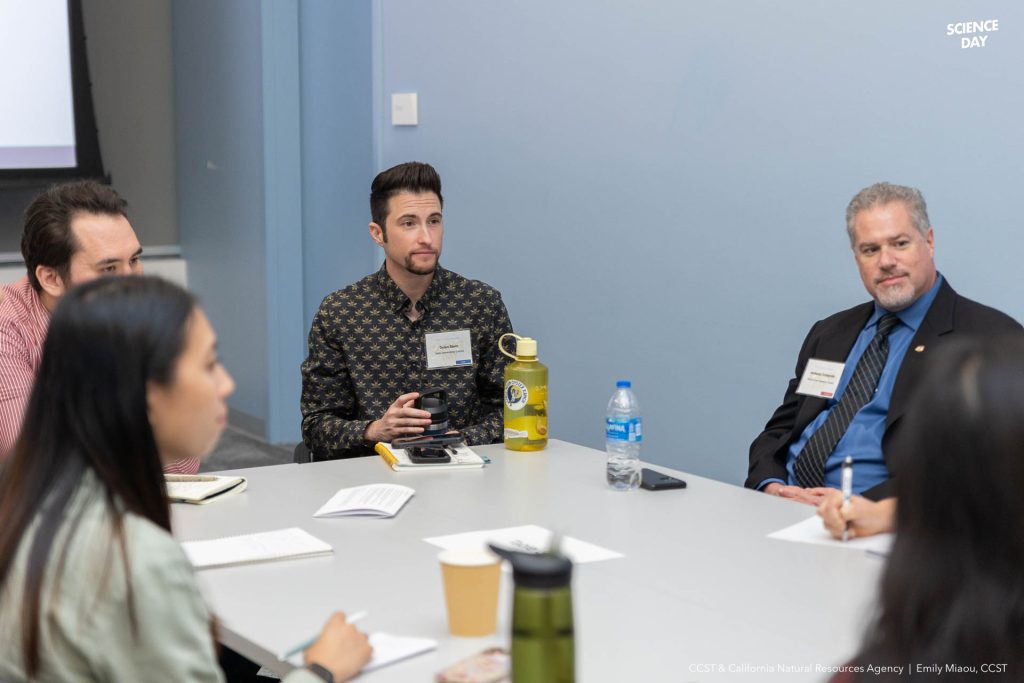
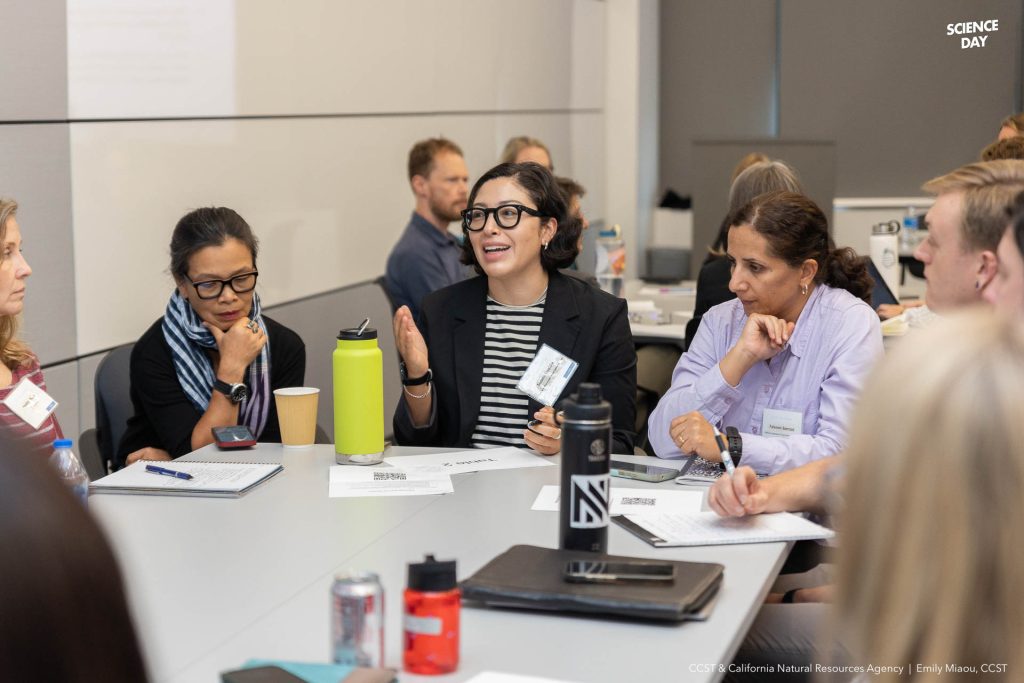
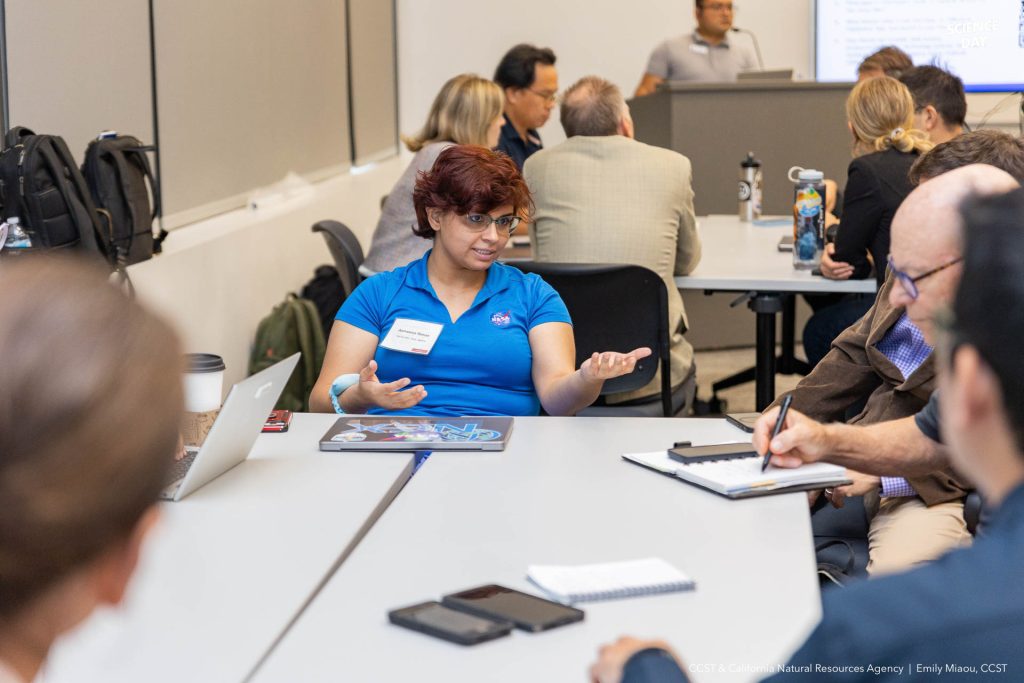
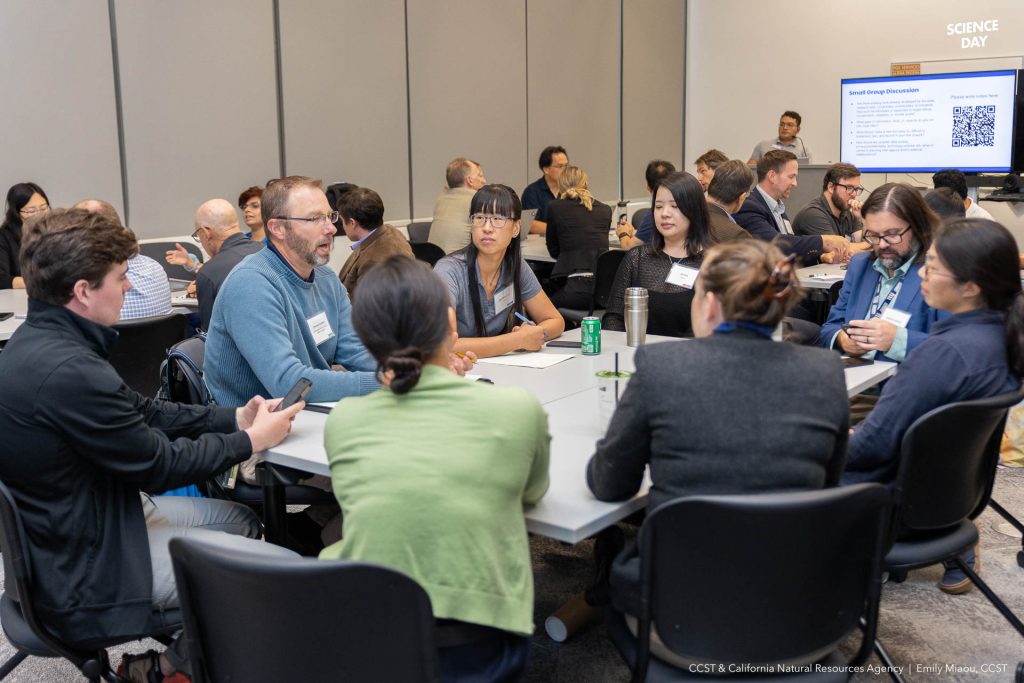
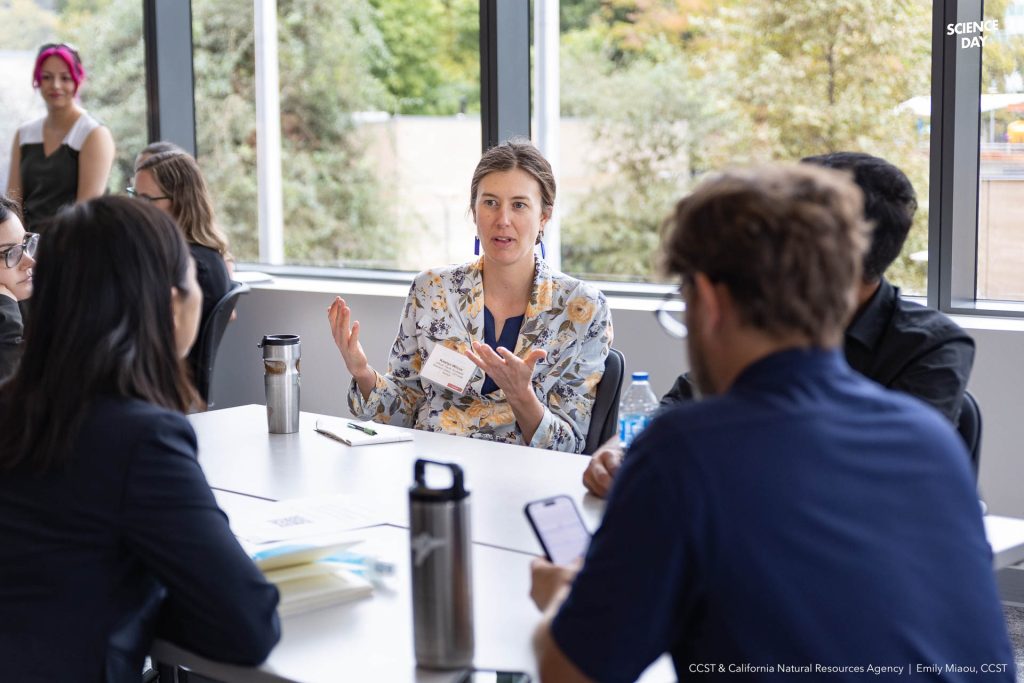
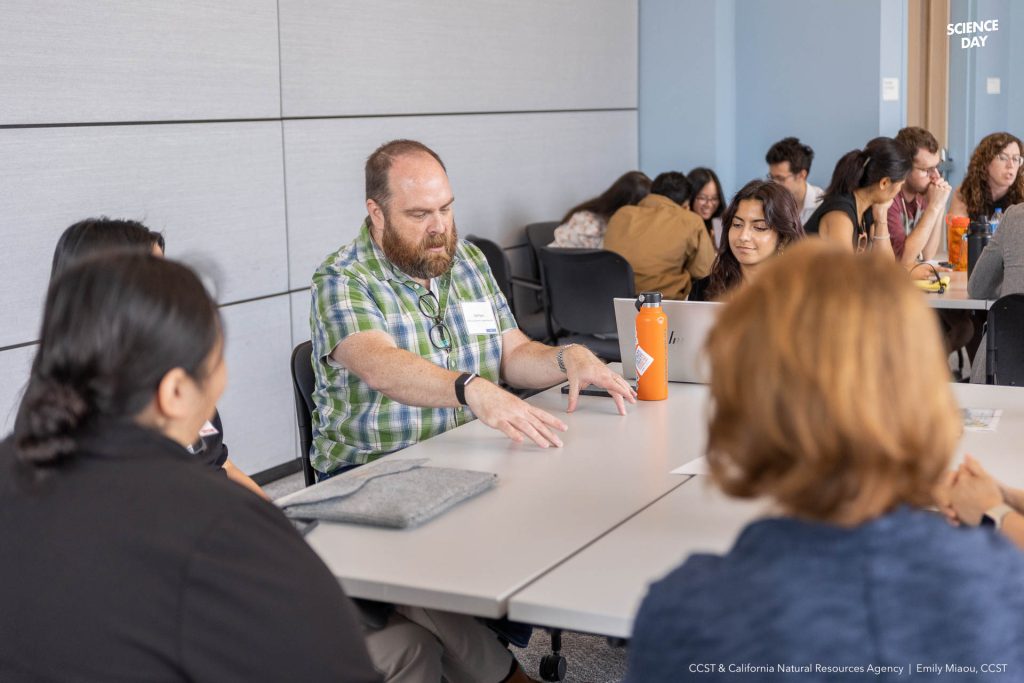
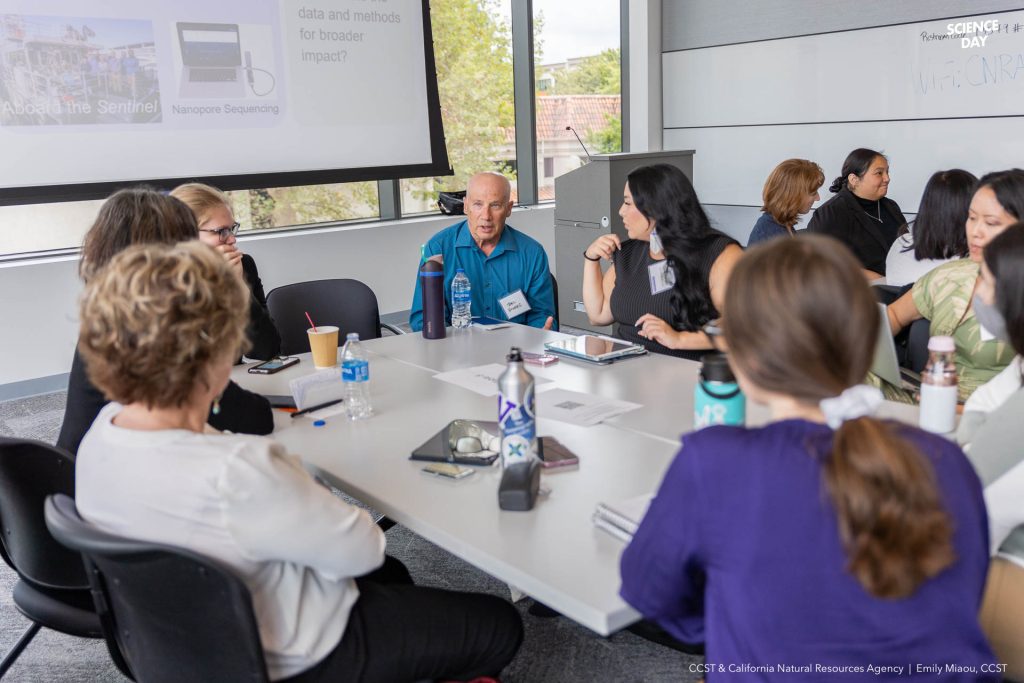
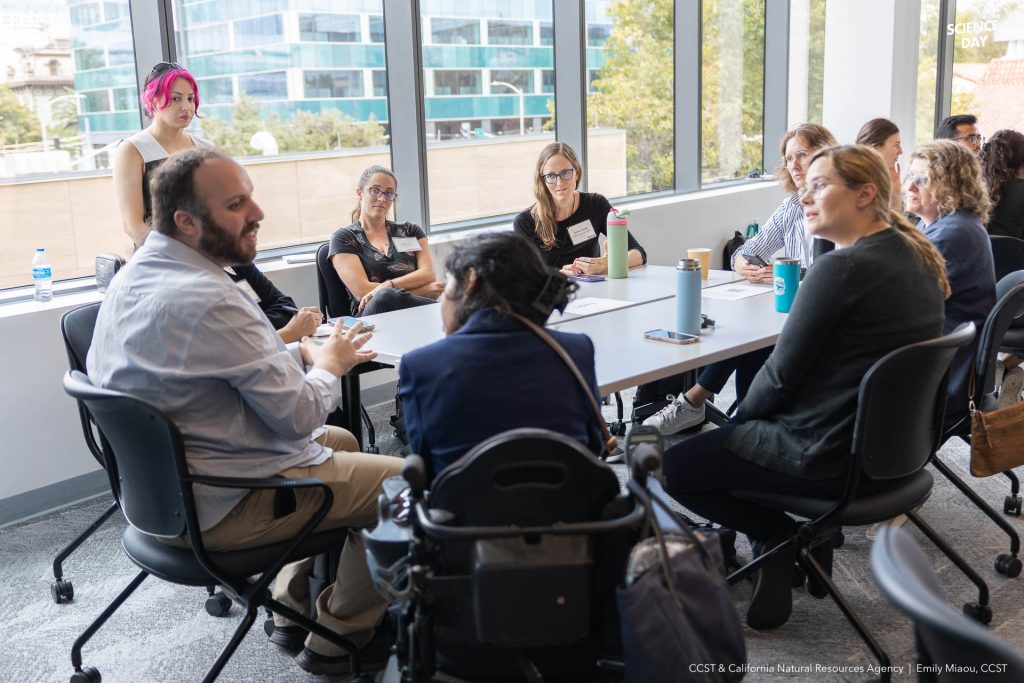
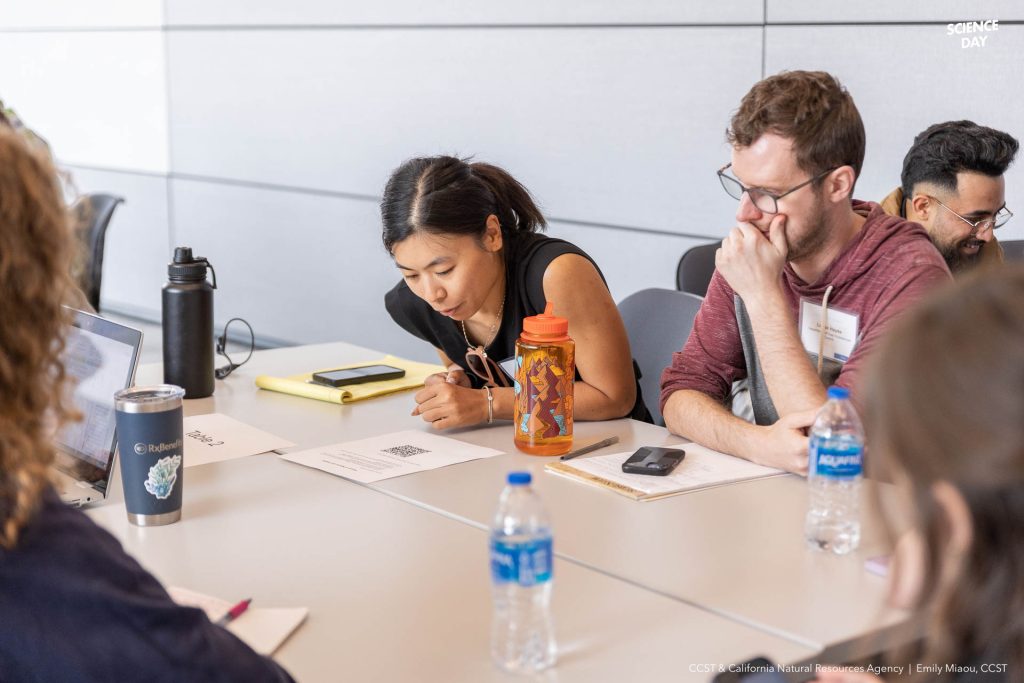
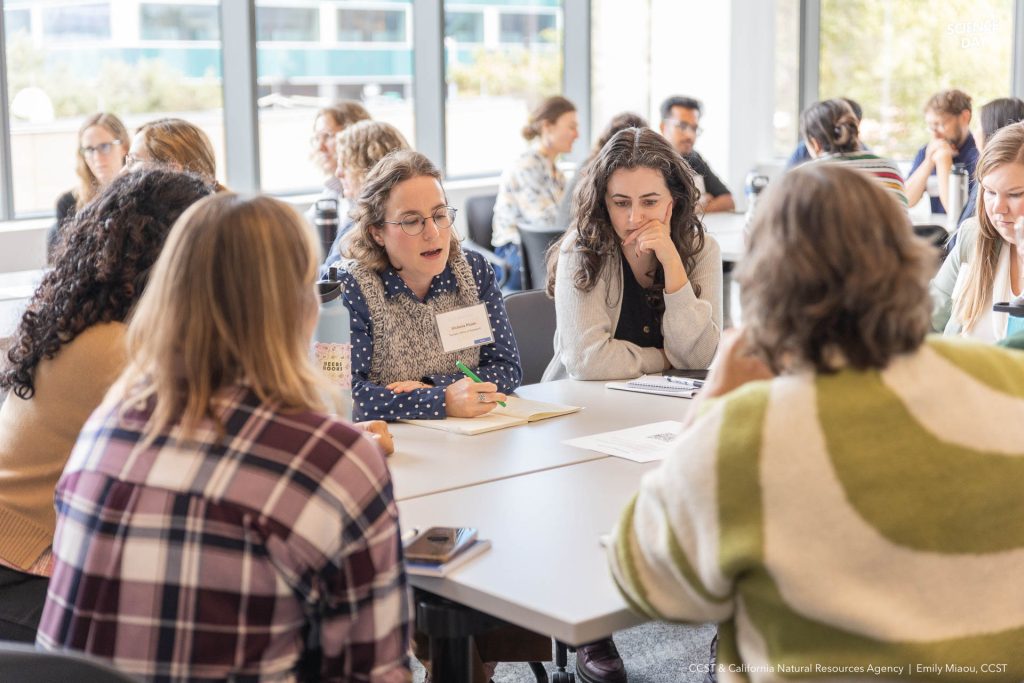
In the afternoon, four concurrent, 1.5-hour Breakout Sessions focused on cross-cutting topic areas with 2-3 Anchor Stories in each session. Storytellers were state agency, tribal, academic, and/or non-profit partners working together on a project. Each project delivered a three-minute presentation on the project – the origins, successes, and challenges, which formed the basis for further discussions.
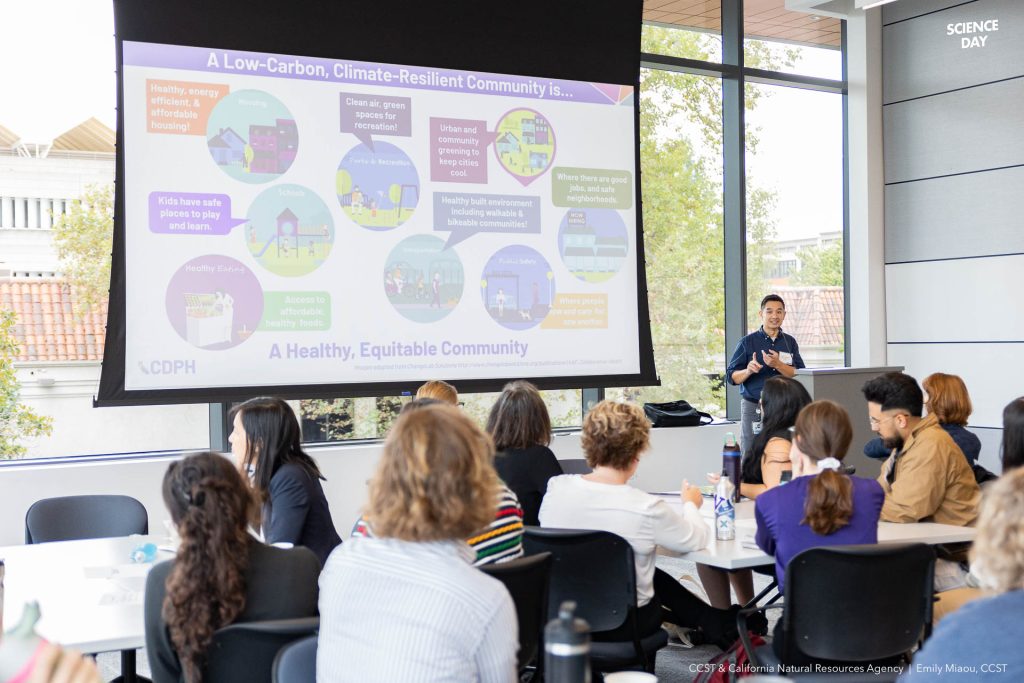
Nexus of Nature and Health
Facilitation Lead: Jessica Bolivar, CCST/CNRA
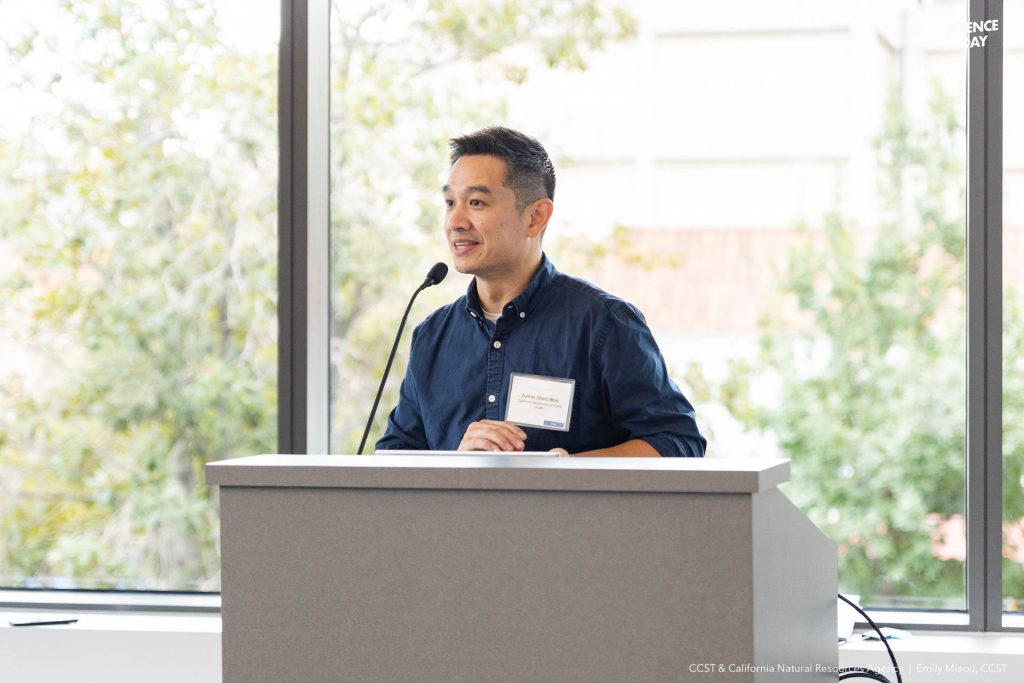
This session covered the relationship between the environment/natural world and public health. Discussions centered on state-implemented projects for building resilience to climate impacts, safeguarding health (one health considerations), and preserving environmental well-being.
Nexus of Nature and Health – Anchor Story Abstracts:
- Dan Woo (California Department of Public Health)
- Brandon Munk (California Department of Fish and Wildlife)
- Lauren Lui (Lawrence Berkeley National Lab)
Data and Technology
Facilitation Lead: Héctor Corzo, CCST
This session focused on the tools and technological advancements developed or used by the state to achieve climate goals, as well as the role of partnerships in this process.
Data and Technology – Anchor Story Abstracts
- Walker Wieland (Office of Environmental Health Hazard Assessment)
- Duane Waliser (NASA Jet Propulsion Laboratory)
- Daniel Feldman (Lawrence Berkeley National Lab)
Planning and Coordination
Facilitation Lead: Eric Chu, CCST
This session addressed the process of collaboration across state agencies and between state and non-state partners.
Planning and Coordination – Anchor Story Abstracts
- Natalie Obaldia (LCI/Fifth Climate Change Assessment)
- Dylan Stern (Delta Stewardship Council)
- Louise Conrad (Department of Water Resources)
Metrics and Evaluation
Facilitation Leads: John Thompson, CCST
Discussion centered on the state’s work assessing and measuring progress towards climate goals, as well as identifying available tools and areas needing further metric and tool development.
Metrics and Evaluation – Anchor Story Abstracts
- Taejin Park (NASA Ames)
- Matthias Falk (California Air Resources Board)
- Dean Tonenna (Fifth Climate Change Assessment – Tribal Advisory Group)
Photo Gallery
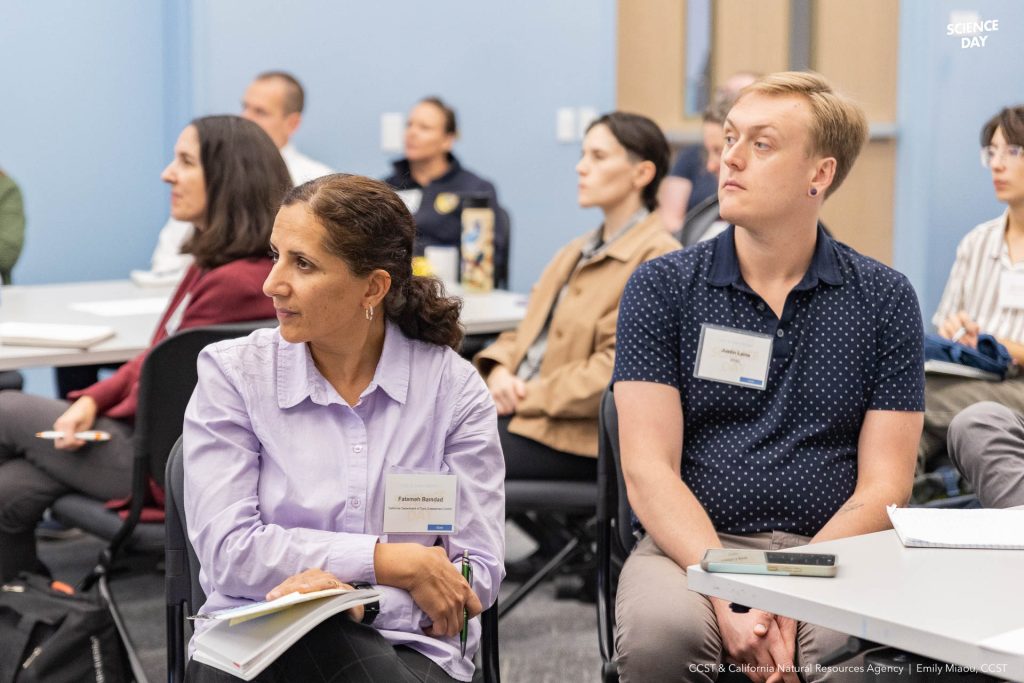
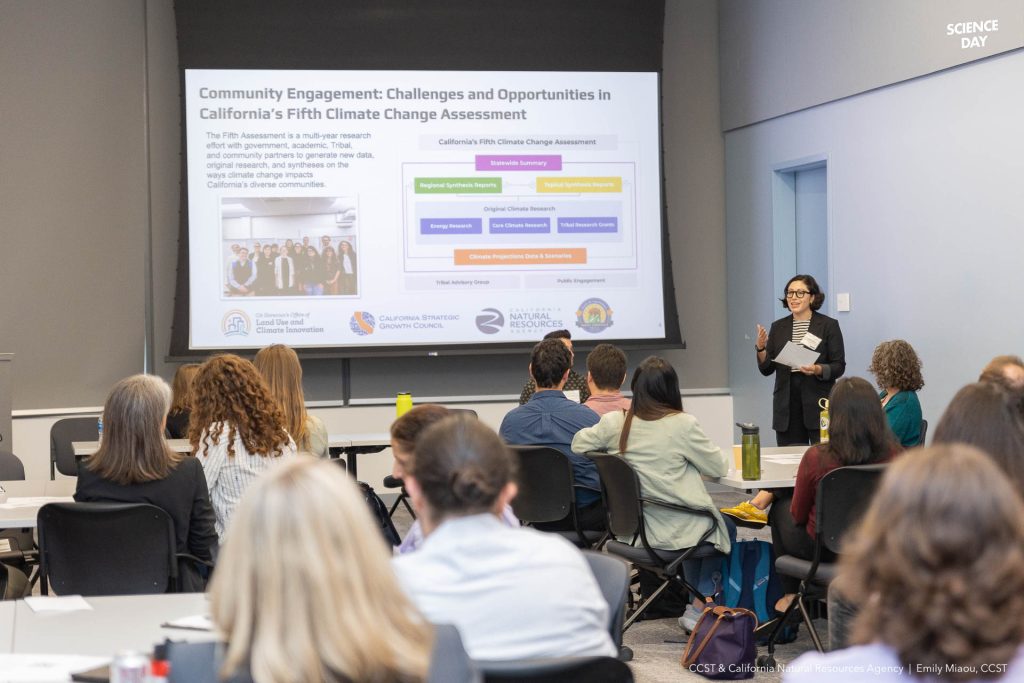
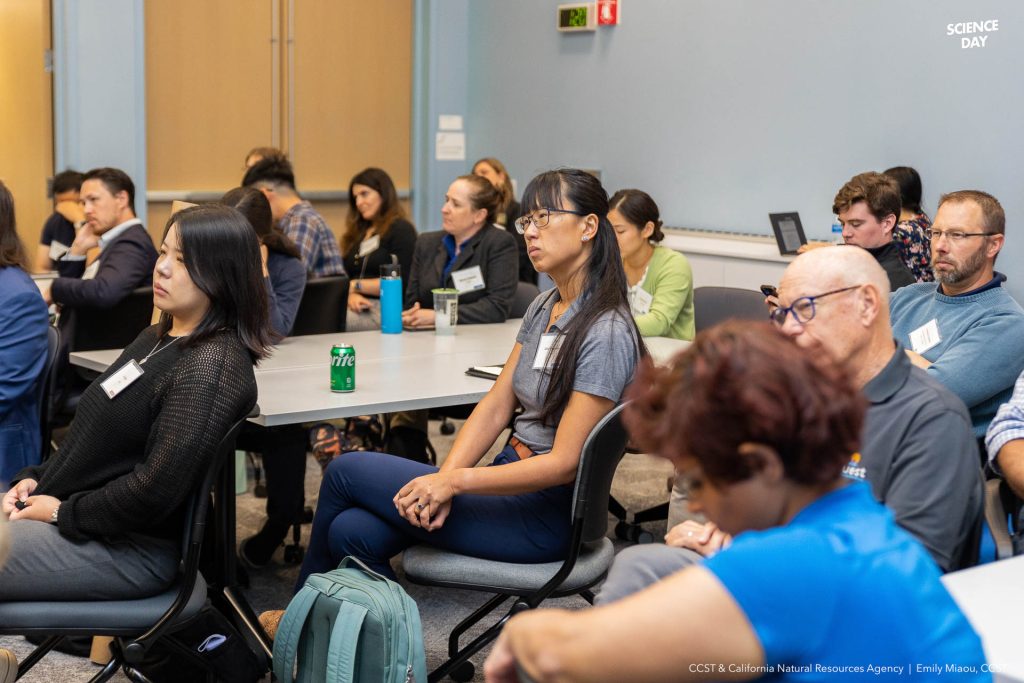
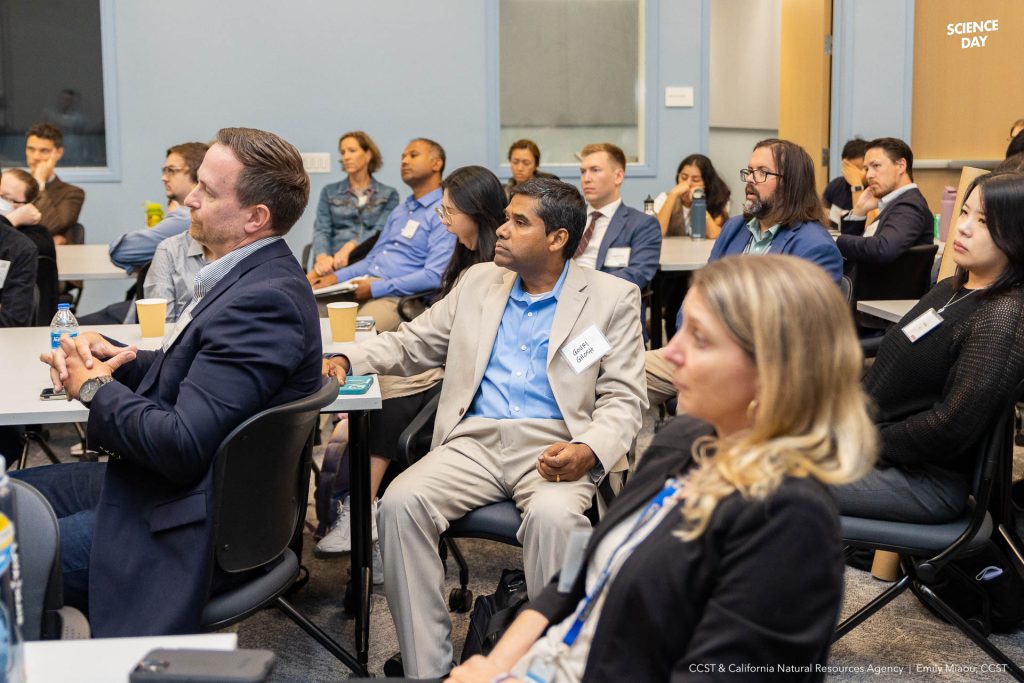
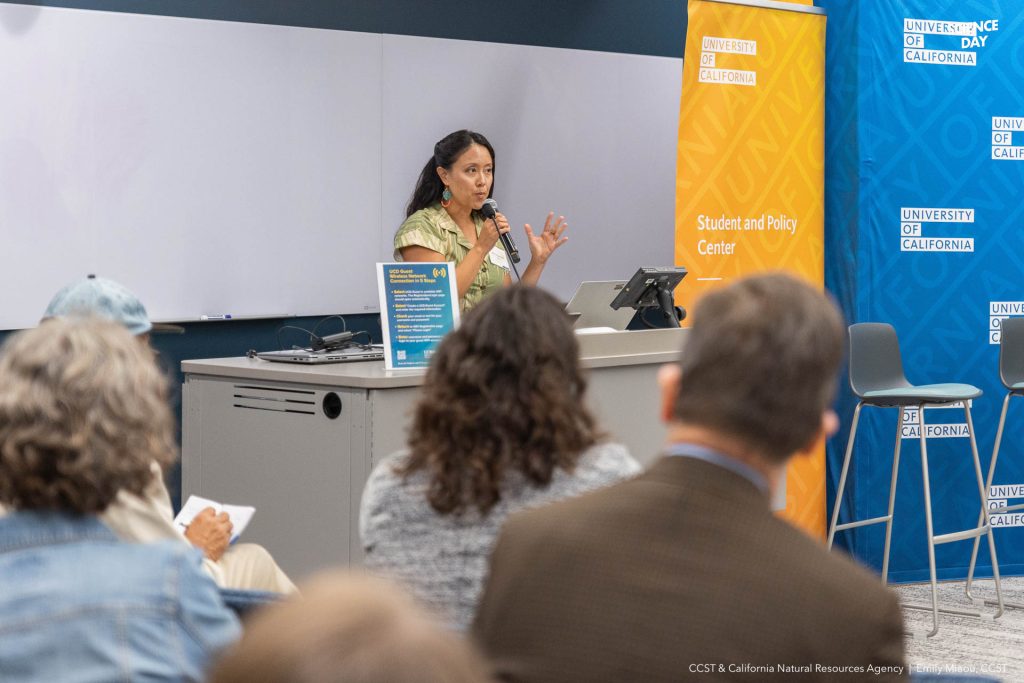
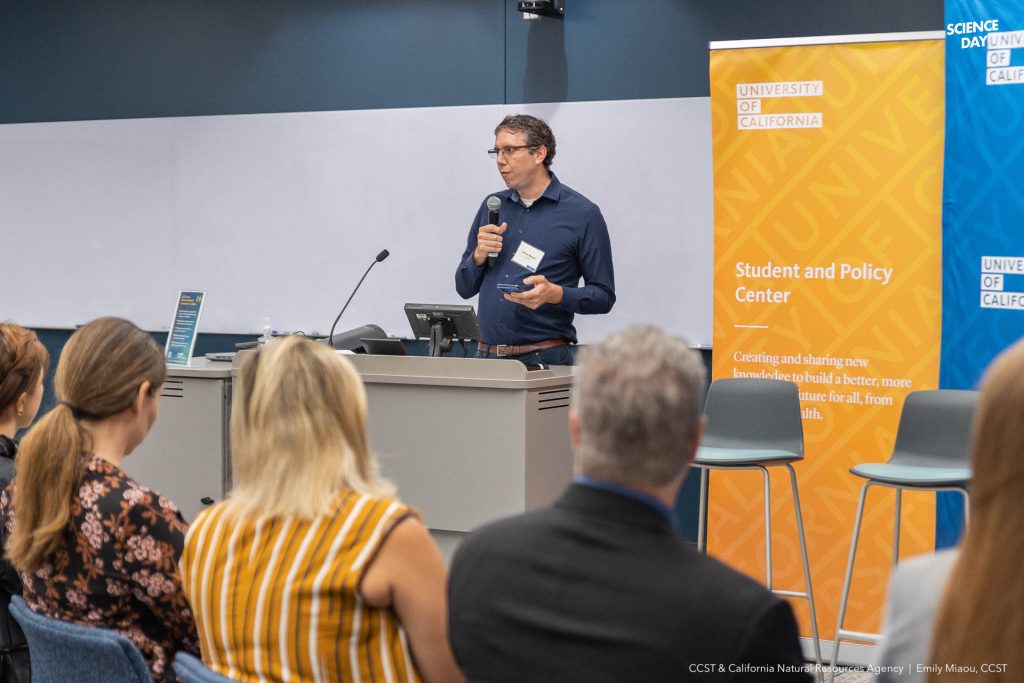
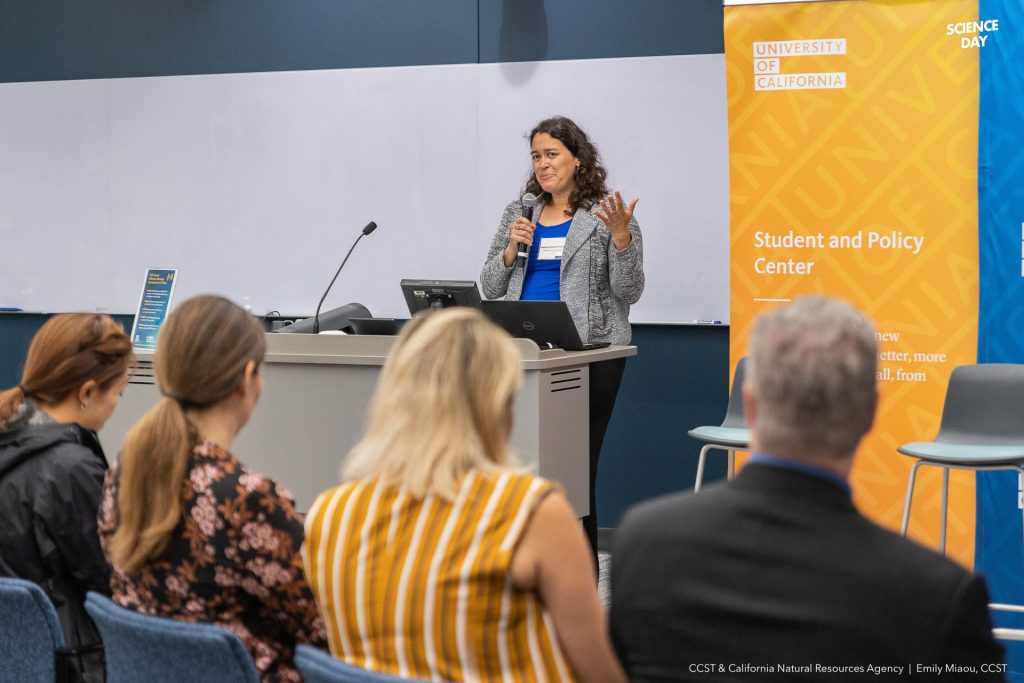
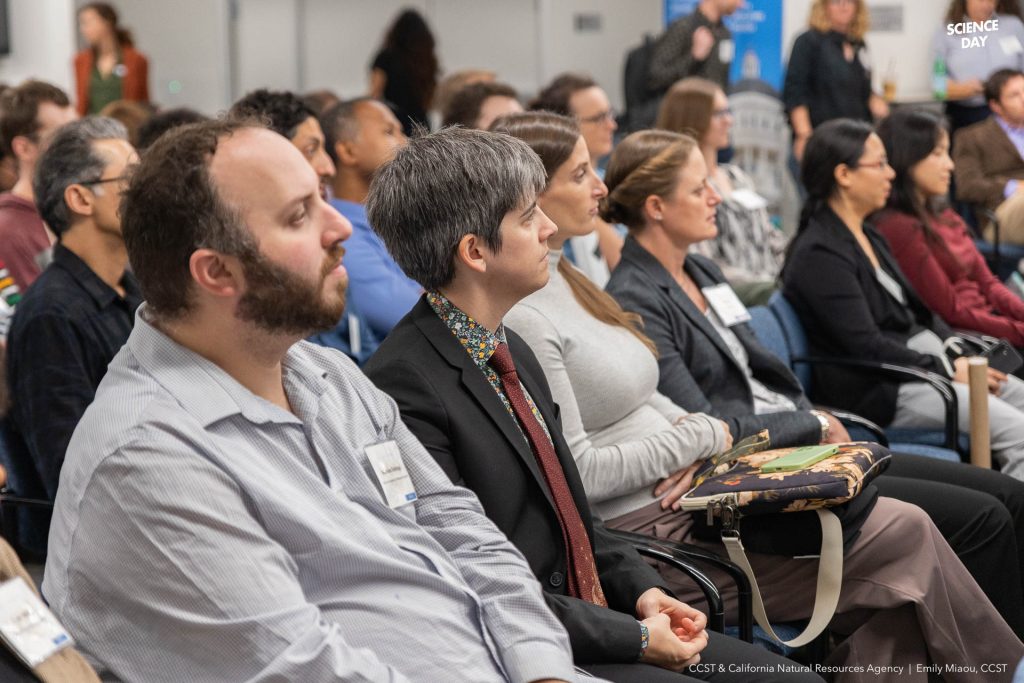
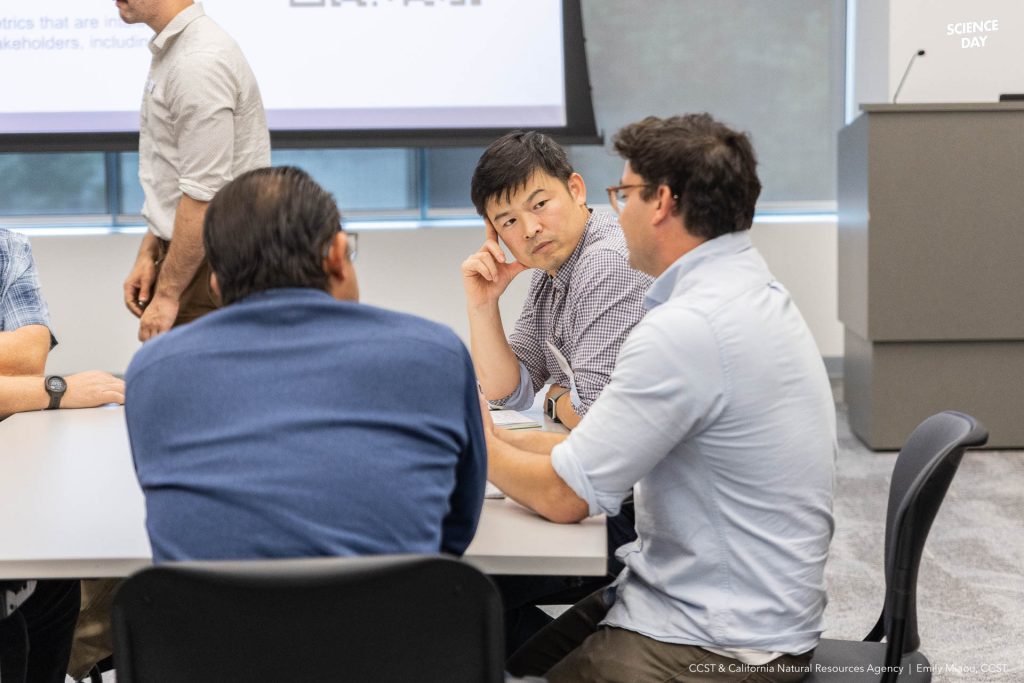
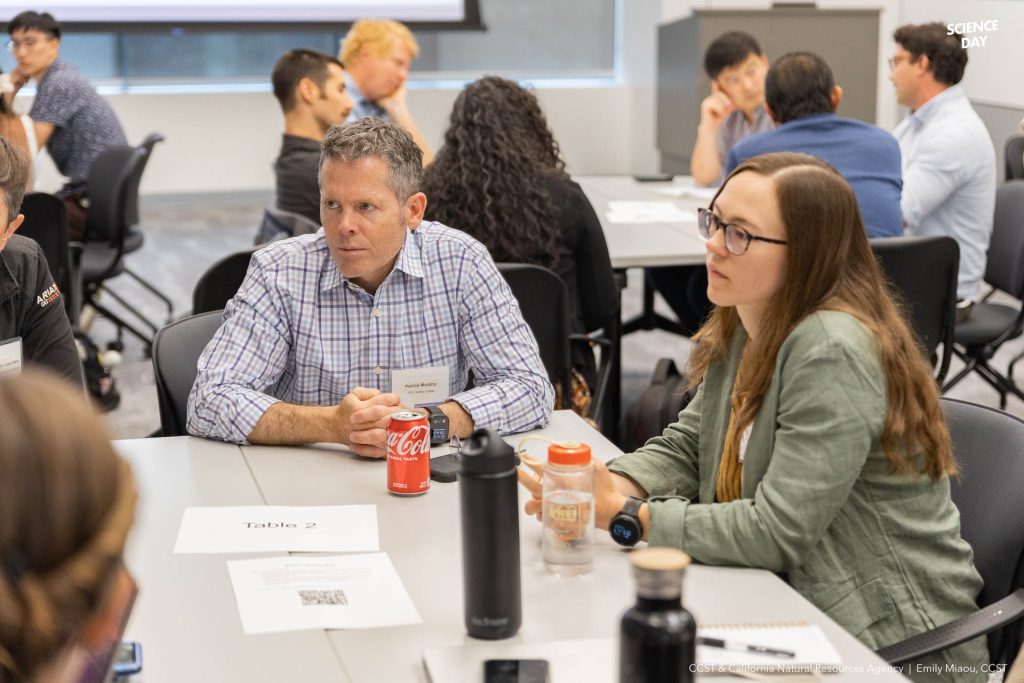
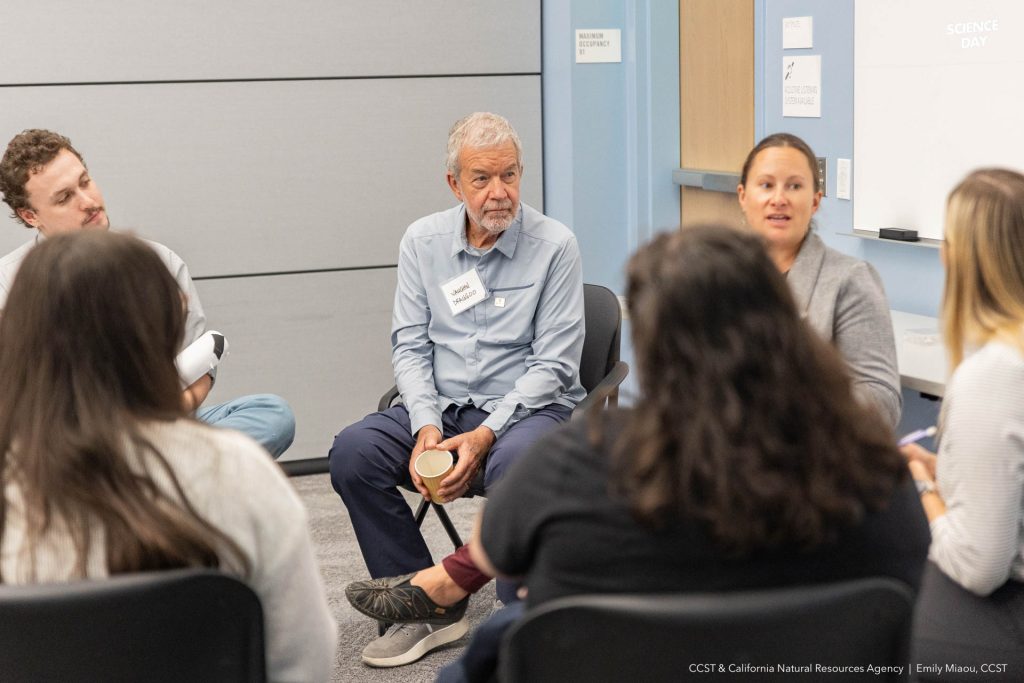
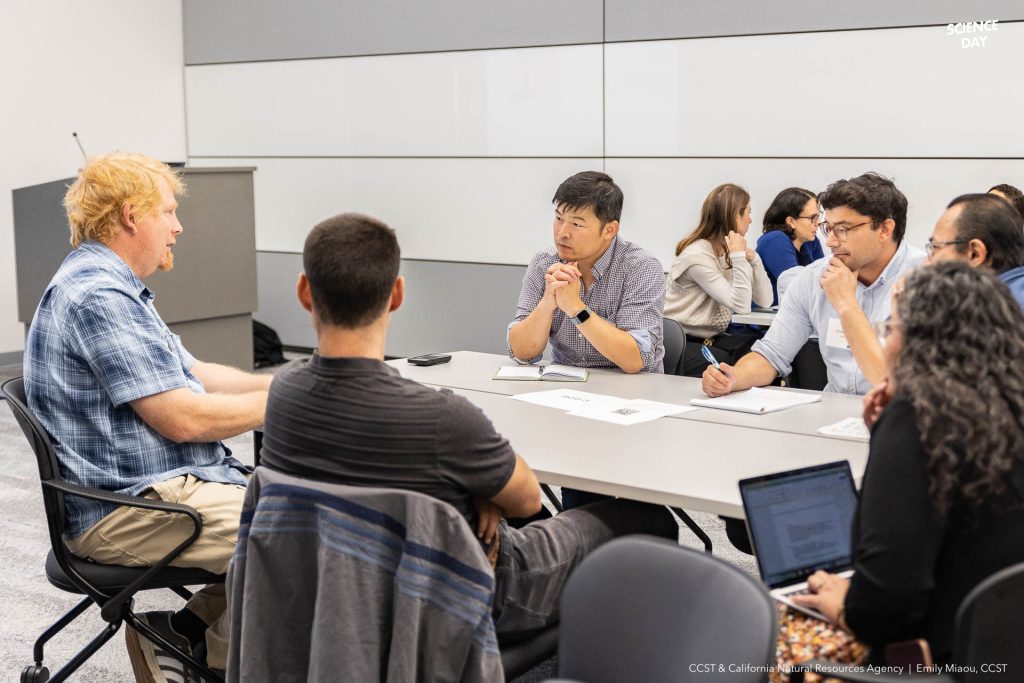
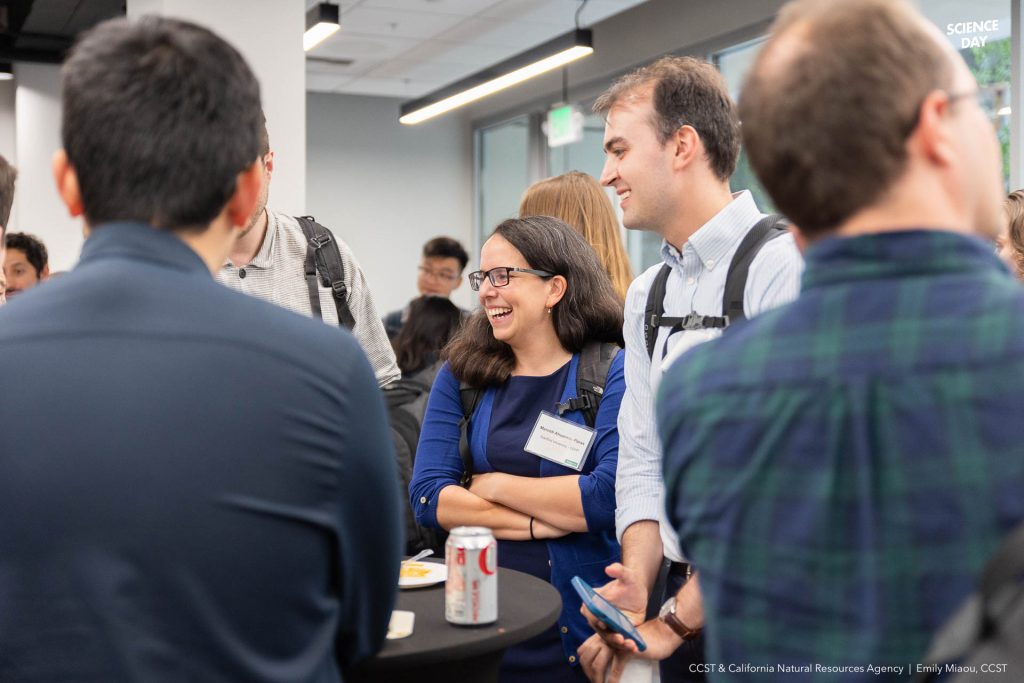
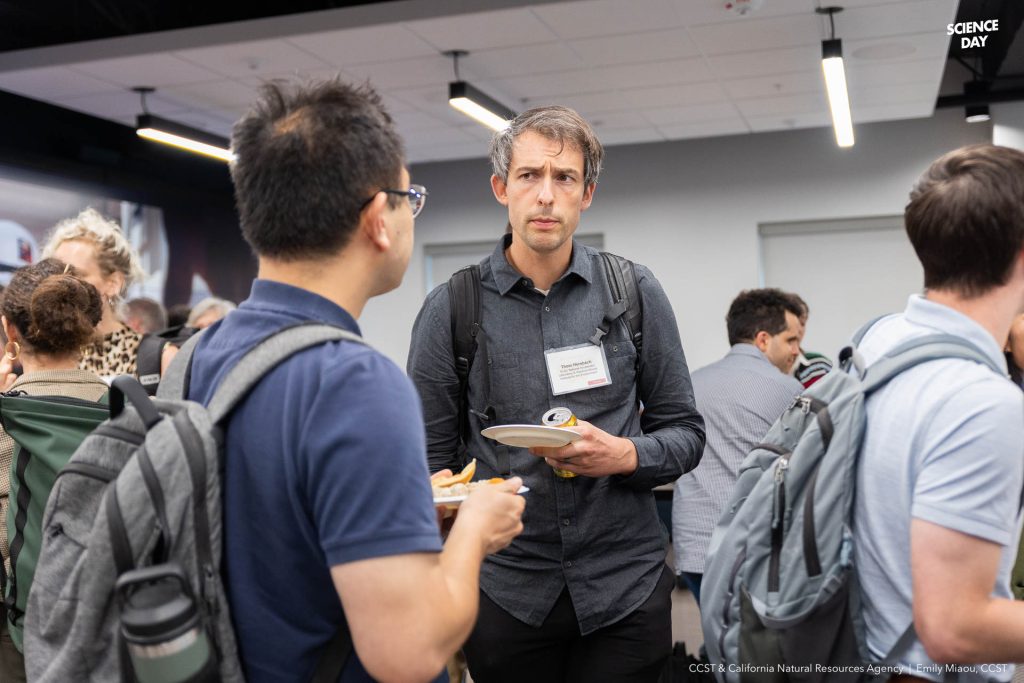
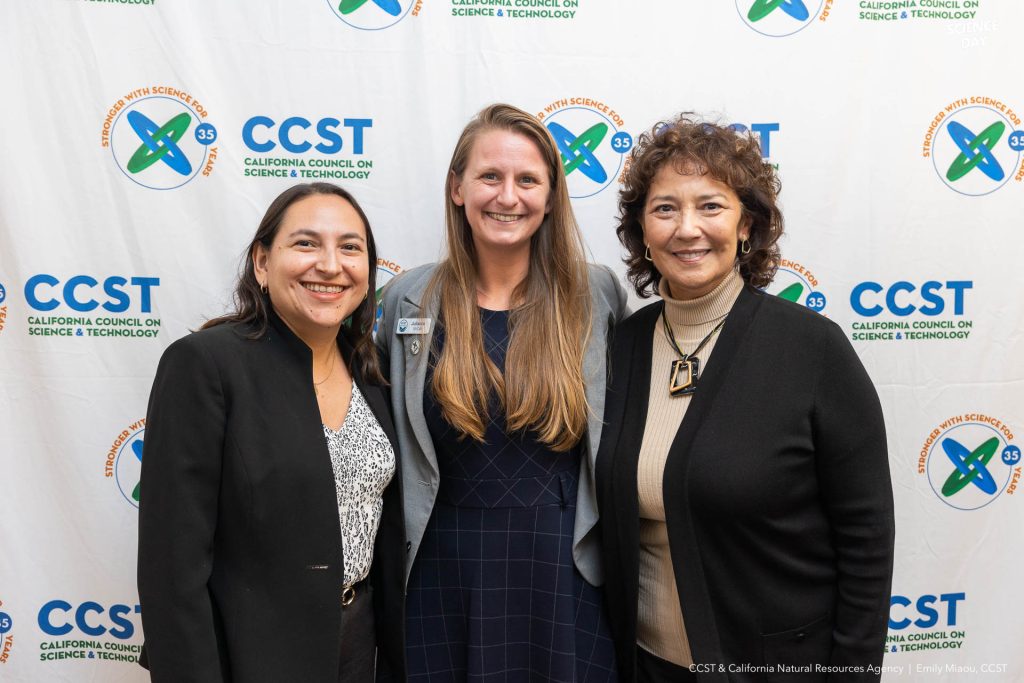
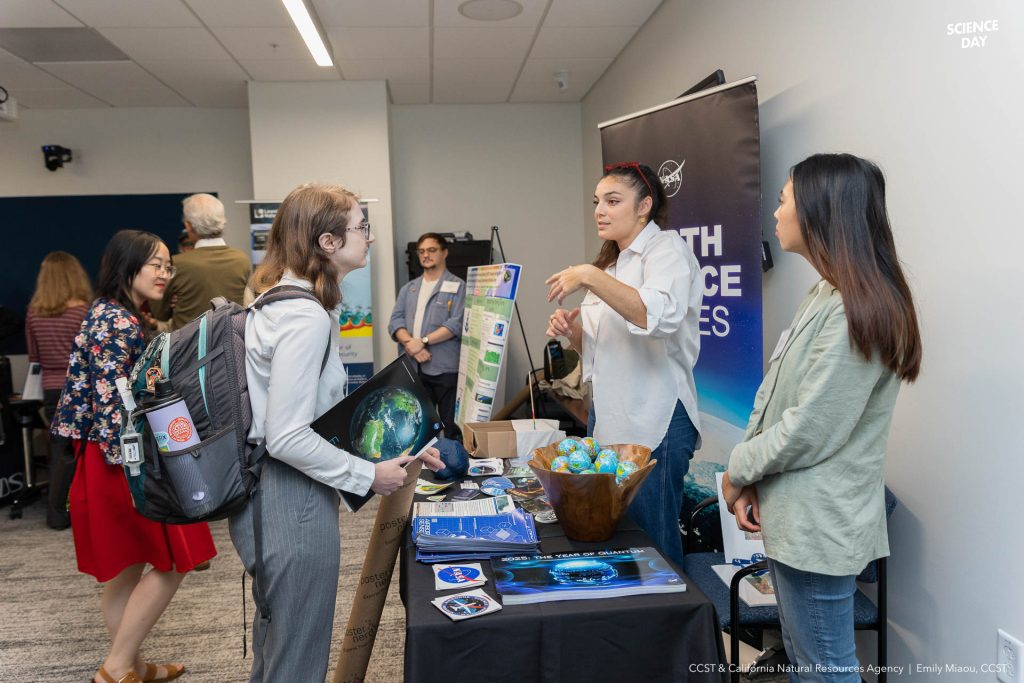
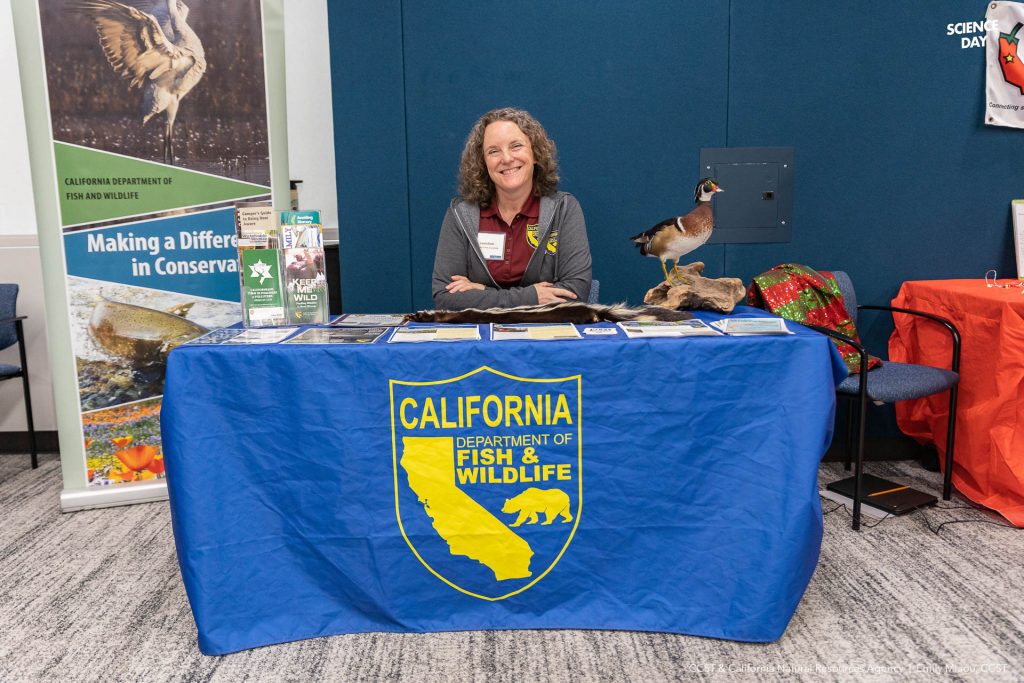
Networking Mixer and Tabling Session
Photo Gallery
###
About Science Day
Science Day aims to connect state-level science and policy with the incredible research happening in universities, labs, and other research institutions across California. Through exploring the various initiatives being implemented by different state agencies, this effort seeks to develop new or expanded opportunities to support California in achieving its climate goals.
About CCST
The California Council on Science and Technology is a nonpartisan, nonprofit organization that engages leading experts in science and technology to advise State policymakers — ensuring that California policy is strengthened and informed by scientific knowledge, research, and innovation. Established via a unanimous vote of the California State Legislature, CCST has been making California’s policies stronger with science and technology since 1988.