
CCST Board Member
William G. Tong
Board of Directors
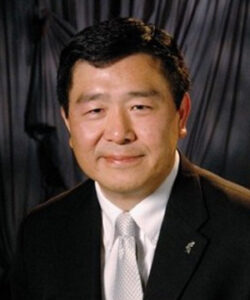
William G. Tong
Provost and Senior Vice President
San Diego State University
Dr. Bill Tong is the Provost and Senior Vice President at San Diego State University, a Research 1 institution with more than 44,000 students in San Diego, California. He has served as SDSU Provost or Vice Provost since 2020. He moved to SDSU in 1985 as an associate professor of chemistry and biochemistry from Oak Ridge National Laboratory, U.S. Department of Energy. He has chaired dissertation/thesis committees for more than 50 Ph.D. (University of California San Diego and San Diego State University) and M.S. students, and mentored many postdoctoral scholars and visiting professors from many countries. He has received major grants from the U.S. National Science
Foundation, U.S. National Institutes of Health (R01), U.S. National Institute of General Medical Sciences, U.S. Department of Defense, U.S. Department of Homeland Security, U.S. Army Research Office, etc. He regularly serves on NIH, NSF, DoD, NASA, and American Chemical Society (ACS) panels. He founded a laser technology
company in La Jolla, California, for U.S. security and defense projects. He lives in La Jolla, California.
He was named the 2003 Distinguished Scientist (San Diego Region) by the American Chemical Society (2 of the winners of this award later won the Nobel Prize in Chemistry). He was named Distinguished Professor of Chemistry and Biochemistry at SDSU in 2005. He served on the SDSU Campanile Board of Directors and other boards at different U.S. universities and institutions. He is a leader in building international programs in different countries. He has developed and patented various multi-photon nonlinear laser wave-mixing methods with zeptomole or sub-parts-per-quadrillion detection sensitivity levels. Potential applications include earlier detection of diseases (Parkinson’s, Alzheimer’s, Multiple Sclerosis, CTE), more sensitive detection of biomarkers, cancer cells, heart-failure biomarkers, and viruses (HPV, HIV, COVID), more sensitive detection of pollutants and chemicals both inside the human body and in the environment, remote standoff detection of chem/bio agents, and authentication of paintings and art objects.