CCST Welcomes UC Santa Barbara’s Rachel Segalman, PhD, to Board of Directors

CCST Completes Final Report in Multi-Part Fumigant Alternatives Study, Examining Methyl Bromide and MITC Generators
July 21, 2026 | CCST Newsroom, Press Releases
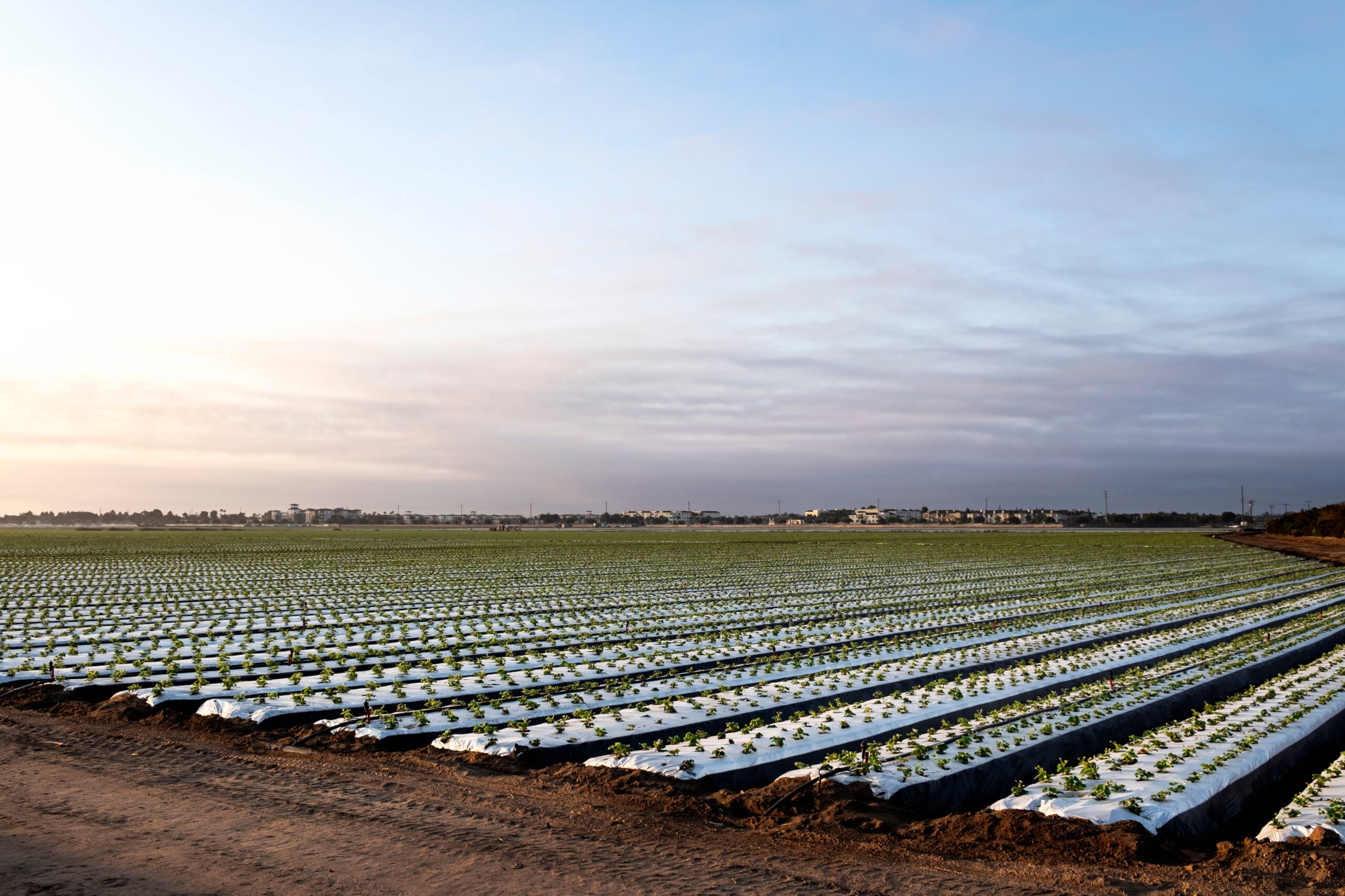
Photo: Strawberry Field | Adobe Stock
FOR IMMEDIATE RELEASE
The California Council on Science and Technology (CCST) completed the report Fumigant Use in California and an Assessment of Available Alternatives – Phase II Report on Methyl Bromide and the MITC Generators. This is the fourth and final report released in a multi-part study requested by the California Department of Pesticide Regulation (DPR) to support the state’s transition toward safer and more sustainable pest management practices.
DPR announced the release of the report today via a press release. The full independent, scientific, and technical assessment focused on pre-plant fumigants, specifically methyl bromide and three pesticides known as MITC generators: dazomet, metam-sodium, and metam-potassium.
Consistent with CCST’s earlier reports in the series, the study found that while alternatives to these fumigants exist, no single alternative currently serves as a direct, 1:1 substitute for methyl bromide or MITC generators. The report concludes that more nursery-, crop-, and region-specific research is needed to determine how well alternatives perform at commercial scale, and identifies cost and effectiveness as significant ongoing barriers to adoption for growers.
Cal Poly Strawberry Center Director Gerald J. Holmes, PhD, served as the study’s Steering Committee Chair, with University of Idaho Professor Emeritus Alan S. Kolok, PhD, serving as Co-Chair. The four-member Steering Committee worked on this report with authors Janet C. Broome, PhD, of the University of California, Santa Cruz, and Broome Plant Health Consulting; and Kimberly Parra, MPH, PhD, of the Harvard T.H. Chan School of Public Health.
“Methyl bromide and MITC generators have long served as key tools for growers managing soil-borne pests before planting, but their use is of increasing concern due to health, environmental, and regulatory reasons,” said Holmes. “This report finds that no single alternative can serve as a direct, drop in replacement for these fumigants. It examines current use patterns, the availability and performance of existing alternatives, and the research still needed to support growers as the state moves toward safer, alternative pre-plant pest management.”
“California’s growers face genuinely complex decisions about managing soil-borne pests, and this report is meant to inform those decisions with the best evidence available today,” said Julianne McCall, PhD, CCST’s CEO. “The finding that no single alternative yet serves as a direct replacement for methyl bromide or MITC generators – and that cost and effectiveness of existing alternatives remain real barriers – reflects the constraints growers, regulators, and communities are navigating together. CCST’s role is to provide independent, expert-led analysis as one critical input to that shared work. We’re grateful to the authors, steering committee members, peer reviewers, and the many practitioners and experts whose input advanced this study.”
This report followed CCST’s standard study process and completes the series DPR commissioned following release of its Sustainable Pest Management (SPM) Roadmap, funded through the California Budget Act of 2023-24. The first report, released in May 2025, examined the soil fumigants 1,3-D and chloropicrin. The second, published in February 2026, evaluated alternatives to sulfuryl fluoride for structural fumigation. A third product released in May 2026 summarized an expert convening on post-harvest commodity fumigation.
Download the Report on Fumigant Use and Alternatives for Methyl Bromide and MITC Generators
###
About the California Council on Science and Technology
The California Council on Science and Technology (CCST) is a nonpartisan, nonprofit organization that serves as a trusted source of expert science and technology advice for California policymakers—powered by a world-class partner network. CCST was established via a unanimous vote of the California State Legislature in 1988 to make California’s policies stronger with science and technology.