• Skip to main content
CCST Logo
MENU
  • About
    • Our People
    • Partners
    • Annual Report
    • Careers
    • Contact
  • Fellows
    • Program Overview
    • Fellows and Alumni
    • FAQ
    • Application
  • Science Services
    • Expert Briefings
    • S&T Week
    • Science Day
    • Resilience
    • Artificial Intelligence
    • Distinguished Experts
    • Nominate an Expert
  • Publications
  • News
    • Get Email Updates
    • Events
    • Fellows
    • Press Releases
  • Donate
MENU
×
  • About
    • Our People
    • Partners
    • Annual Report
    • Careers
    • Contact
  • Fellows
    • Program Overview
    • Fellows and Alumni
    • FAQ
    • Application
  • Science Services
    • Expert Briefings
    • S&T Week
    • Science Day
    • Resilience
    • Artificial Intelligence
    • Distinguished Experts
    • Nominate an Expert
  • Publications
  • News
    • Get Email Updates
    • Events
    • Fellows
    • Press Releases
  • Donate

CCST Project

California Public Interest Energy Research (PIER)

COMPLETED: June 2005

MENU
  • Overview
  • Publications
  • Process

Overview

Welcome to the archived Public Interest Energy Research (PIER) project web site. In 1996, Assembly Bill 1890 restructured the California electricity industry. Legislation also authorized collection of a surcharge on retail electricity sales to ensure a continuation of public interest energy research, development, and demonstration (RD&D) projects. The PIER program was established at the California Energy Commission in 1998 to implement this provision. California leads the nation in fostering and implementing new sources of electricity to sustain its economy while preserving its natural environment. The contributions of PIER to this effort were recognized by legislation extending its original charter through 2012.

Public Resources Code Section 25620.9(a) directed that an independent panel be established to conduct a comprehensive evaluation of the PIER program. The California Council on Science and Technology (CCST) assisted the California Energy Commission (CEC) in the review process. CCST helped the CEC identify independent review panel members and managed two PIER independent reviews - the 1st PIER Independent Panel Review (1999-2001) and the 2nd PIER Independent Panel Review (2003-2005).

PIER 2005 Independent Review Panel Report Cover
Final Report

Related News Stories

Sorry, we couldn't find any posts. Please try a different search.

CCST Logo

A trusted, nonpartisan source of expert science and technology advice for California policymakers, powered by a world-class partner network.

Linkedin Icon
BlueSky
Instagram
X
Facebook Icon
Subscribe to News & Events

Explore

  • Publications

  • People

  • Expert Briefings

  • Fellows Program

  • Careers

  • About CCST

Areas

  • Artificial Intelligence

  • Disaster Resilience

  • Energy

  • Federal Laboratories

  • Strategic Plan

Contact

  • 1100 11th St., Sacramento, CA 95814

  • Mailing: 1017 L St., #438, Sacramento, CA 95814

  • (916) 492-0996

  • Contact CCST

Copyright © 2026 | CCST | Privacy | Integrity | Accessibility

CCST Logo
MENU
  • About
    • Our People
    • Partners
    • Annual Report
    • Careers
    • Contact
  • Fellows
    • Program Overview
    • Fellows and Alumni
    • FAQ
    • Application
  • Science Services
    • Expert Briefings
    • S&T Week
    • Science Day
    • Resilience
    • Artificial Intelligence
    • Distinguished Experts
    • Nominate an Expert
  • Publications
  • News
    • Get Email Updates
    • Events
    • Fellows
    • Press Releases
  • Donate
MENU
×
  • About
    • Our People
    • Partners
    • Annual Report
    • Careers
    • Contact
  • Fellows
    • Program Overview
    • Fellows and Alumni
    • FAQ
    • Application
  • Science Services
    • Expert Briefings
    • S&T Week
    • Science Day
    • Resilience
    • Artificial Intelligence
    • Distinguished Experts
    • Nominate an Expert
  • Publications
  • News
    • Get Email Updates
    • Events
    • Fellows
    • Press Releases
  • Donate

CCST Project

California Report on the Environment for Science and Technology (CREST)

COMPLETED: November 1999

MENU
  • Overview
  • Publications

Overview

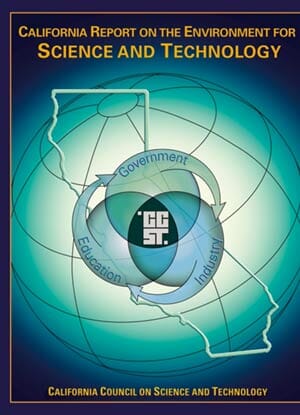
The first comprehensive assessment of the state's science and technology indicators, CREST draws on extensive research and analysis and offers recommendations for how industry leaders, academic planners, and state policy makers can respond more effectively to a high-tech economy. CREST addresses the absence of a regularly executed strategic planning process for the California economy by providing essential information upon which strategic and tactical decisions can be based.

The CREST report clearly demonstrates the importance of high-tech industry to California's economy and its people. Nevertheless, the economic miracle is not benefiting all Californians. CREST found that:

  • A significantly growing number of Californians do not have the educational preparation to enable them to benefit from high-tech job opportunities.
  • The number of Californians being educated with the skills necessary to meet employer needs is insufficient.
  • Many Californians graduating from K-12 and community college systems are not adequately prepared to enter the high-tech workforce.

Eleven experts headed research projects analyzing and gathering data for the CREST integrated report.

Principal CREST recommendations:

  • State government must take a leadership role in sustaining California's high-tech future by supporting the science and technology infrastructure, by setting priorities in its R&D, and by coordinating its research policies.
  • The problems of K-12 education must be addressed; K-12 classroom instruction and teacher training programs must enhance and expand emphasis on science and math education.
  • Science and technology education in community colleges and in the state's colleges and universities must be expanded.


CREST Report Cover
Summary Report
Executive Summary

Related News Stories

Aug 3, 2018

CCST and California Community Colleges Welcome Makerspace Education Leaders to ISAM 2018 at Stanford
ISAM300
The California Council on Science and Technology (CCST) joins with the California Community Colleges CCC ...
Read More

May 4, 2018

CCST Expert Briefing Shares Community Colleges, Cal State, and UC Makerspace Ideas for STEM Workforce Training
hartmann300
Bjoern Hartmann, Director of the new Jacobs Institute for Design Innovation at UC Berkeley, was ...
Read More

Jun 30, 2016

UC Berkeley and UC San Diego Explore Engineering Education of the Future through Making
jacobs300
The Jacobs Institute for Design Innovation at UC Berkeley, like the EnVision Maker Studio at ...
Read More

Apr 28, 2016

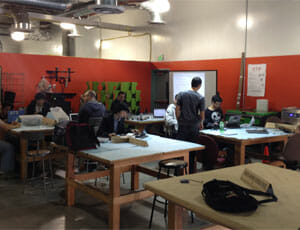
CCST Releases Roadmap for Engaging California Community Colleges and Makerspace Movement
fablab300
The Pasadena City College Fab Lab is one of several existing makerspaces already developed independently ...
Read More
CCST Logo

A trusted, nonpartisan source of expert science and technology advice for California policymakers, powered by a world-class partner network.

Linkedin Icon
BlueSky
Instagram
X
Facebook Icon
Subscribe to News & Events

Explore

  • Publications

  • People

  • Expert Briefings

  • Fellows Program

  • Careers

  • About CCST

Areas

  • Artificial Intelligence

  • Disaster Resilience

  • Energy

  • Federal Laboratories

  • Strategic Plan

Contact

  • 1100 11th St., Sacramento, CA 95814

  • Mailing: 1017 L St., #438, Sacramento, CA 95814

  • (916) 492-0996

  • Contact CCST

Copyright © 2026 | CCST | Privacy | Integrity | Accessibility

Executive Summary

Download

CREST 1: California Science and Technology Indicators

Download

CREST 2: The Role of the State in Research and Development Funding

Download

CREST 3: Analysis of California R&D Funding from 1994-1995 to 1996-1997

Download

CREST 4: Effectiveness of the California R&D Tax Credit

Download

CREST 5: California Venture Capital Infrastructure Study

Download

CREST 6: Private Foundation Support for Science and Technology in California

Download

CREST 7: Industry Sector Analysis of the Supply and Demand of Skilled Labor in California

Download

CREST 8: California’s Inventive Activity: Patent Indicators of Quantity, Quality, and Organizational Origins

Download

CREST 9: California’s Science Base: Size, Quality, and Productivity

Download

CREST 10: Science and Technology Skilled Workforce and Related Educational Issues

Download

CREST 11: An Analysis of Major Federal Laboratories in California Vol. I: Overview

Download

CREST 12: An Analysis of Major Federal Laboratories in California Vol. II: Policy Options and Background Information

Download

  • « Go to Previous Page
  • Page 1
  • Interim pages omitted …
  • Page 8
  • Page 9
  • Page 10