CCST Welcomes UC Santa Barbara’s Rachel Segalman, PhD, to Board of Directors
Introducing the 2026 CCST Science & Technology Policy Fellows
January 20, 2026 | CCST Newsroom | Contact: Bethany Hopkins

Overview
We are excited to introduce the 2026 Class of CCST Science & Technology Policy Fellows. Now in its 17th year, the program places PhD-level scientists, engineers, and social scientists in the California State Legislature, State Agencies, and Offices of the Governor, training them for careers in public policy while helping to equip California’s decision makers with science-savvy staff.
These fifteen PhD scientists arrived in Sacramento in November, where they participated in our annual policy training program — a crash course on the process, history, and landscape of California policymaking, as well as skills development and communications workshops to prepare them for the intense, dynamic pace of the Capitol policy world.
Fellows placed in the California State Legislature work on policy committees and in member offices in the California State Senate and Assembly. Fellows placed in the Executive Branch work in California State Agencies and in Offices of the Governor. The program is made possible by the State of California as well as continued philanthropic support.
Bringing PhD-Level Expertise to Policy
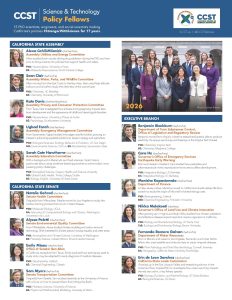
The 2026 Fellows bring a wide range of technical expertise across fields:
- Brain circuits driving drug addiction
- Chemistry of the ozone layer
- Impacts of illness during pregnancy on fetal brain development
- Using Microalgae as biofuel
- Cardiac scarring process caused by heart disease
- Climate modeling and carbon removal technology
- Application of geological study to early diagnostic technology
- Astroid collision modeling and prevention
- Electricity production by bacteria
- Endocrine disrupting pesticides and pharmaceuticals
- The origin of life
- Important marine organisms on the California coast
- Vineyard disease
- Impact of ocean warming on key fishery species
Apply to Be a Fellow
Are you looking to apply your PhD research skills to an exciting and impactful career in policy?
- Applications for the next class close March 2026, open now!
- The CCST Science & Technology Policy Fellows program is open to those holding a PhD or equivalent degree in science, engineering, or social science fields such as economics, sociology, or psychology.
- Eligibility information, program timeline, the application link, and our annual webinar with alumni can be found at ccst.us/ccst-science-fellows-program
WATCH: Application Webinar with Alumni
Interested in learning more about the Fellowship from our Alumni network? View the recording of our Application Webinar to get an overview of the Fellowship program and followed by a Q&A session with alumni.
Meet the 2026 CCST Science & Technology Policy Fellows
California State Assembly:
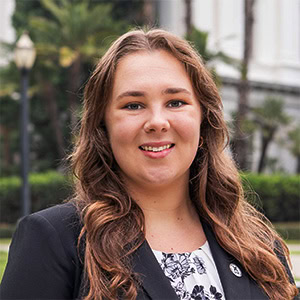 Alexa Cohil-Milanick, PhD
Assembly Utilities & Energy Committee
Alexa studied brain circuits driving drug addiction during her PhD and now aims to bring science into policies that support health and safety.
PhD: Neuroscience, University of Iowa
BS: Molecular Neuroscience, North Central College
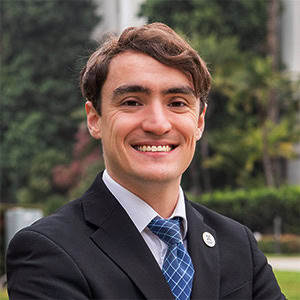 Sean Clair, PhD
Assembly Water, Parks, and Wildlife Committee
After moving from the East Coast to the Bay Area, Sean used high-altitude balloons and aircraft to study the chemistry of the ozone layer.
PhD: Chemistry, UC Berkeley
BS: Chemistry, University of Richmond
 Kate Davis, PhD
Assembly Privacy and Consumer Protection Committee
From Texas, Kate investigated how sickness during pregnancy impacts fetal brain development and the appearance of childhood neurological disorders
PhD: Neuroscience, University of Texas at Austin
BS: Psychology, Southwestern University
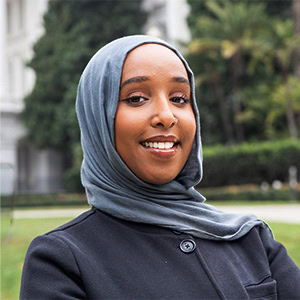 Ugbad Farah, PhD
Assembly Emergency Management Committee
From Sacramento, Ugbad studied microalgae used for biofuel, pursuing an interest in advancing equitable solutions to issues in energy and agriculture.
PhD: Biological Sciences: Ecology, Behavior, & Evolution, UC San Diego
MS: Environmental Science, California State University, Los Angeles
BS: Biochemistry, Sacramento State University
 Sarah Cate Hawthorne, PhD
Assembly Education Committee
With a background in liberal arts and hard sciences, Sarah Cate is passionate about using evidence-based approaches to solve today’s most pressing policy challenges.
PhD:Biomedical Science, Oregon Health and Science University
MS: Global Public Health, Trinity College, Dublin
BA: Biology, English, University of Notre Dame
California State Senate:
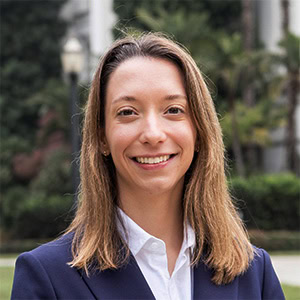 Natalie Gehred, PhD
Senate Health Committee
Originally from Milwaukee, Natalie moved to Los Angeles to study the cardiac scarring process that occurs in heart disease.
PhD: Molecular Biology, UCLA
BA: Genomics & Computational Biology and Classics, Washington University in St. Louis
 Alyssa Poletti, PhD
Senate Environmental Quality Committee
From Philadelphia, Alyssa studied climate modeling and carbon removal technology. She’s interested in climate justice, housing equality, and other areas
PhD: Atmospheric and Climate Science, University of Washington
BS: Planetary Science, Caltech (Minor: Environmental Science)
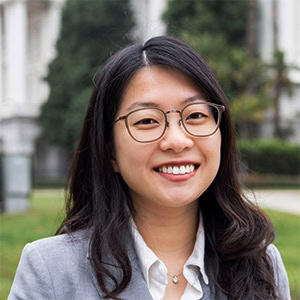 Emily Miaou, PhD
Senator Ben Allen
A California transplant from Texas, Emily explored how techniques used to study rocks may be adapted for early diagnosis of medical diseases.
PhD: Geochemistry, Caltech
BS: Chemical Engineering, Caltech
 Sam Myers, PhD
Senate Transportation Committee
Originally from Seattle, Sam studied asteroids at the University of Arizona with a focus on how to prevent them from hitting the Earth.
PhD: Planetary Science, University of Arizona
BS: Physics and Mathematical Modeling, University of Idaho
California State Agencies and Offices of the Governor:
 Benjamin Blackburn, PhD
California Department of Toxic Substances Control, Office of Legislation and Regulatory Review, California Environmental Protection Agency
Benjamin moved from Virginia, where he researched bacteria able to produce electricity. He enjoys swimming and cheering on the Virginia Tech Hokies!
PhD: Chemistry, Virginia Tech
BS: Chemistry, Allegheny College
 Cara He, PhD
Governor’s Office of Emergency Services – Earthquake Early Warning
Born and raised in Oakland, Cara studied the developmental effects of pesticides and pharmaceuticals that mimic reproductive hormones.
PhD: Integrative Biology, UC Berkeley
BA: Integrative Biology, UC Berkeley
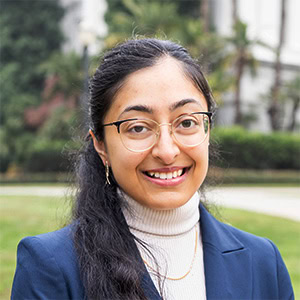 Manisha Kapasiawala, PhD
California Department of Finance
A New Jersey native, Manisha moved to California to build cellular life from scratch to study the origin of life and for biotechnology uses.
PhD: Bioengineering, Caltech
BA: Chemical Engineering, Princeton University
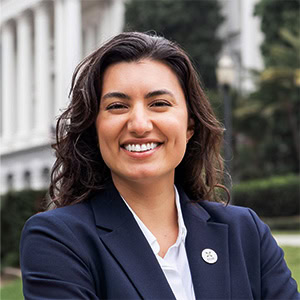 Nikka Malakooti, PhD
Governor’s Office of Land Use and Climate Innovation
After growing up in Virginia and Italy, Nikka studied how climate, predation, and infectious disease impact important marine organisms in California.
PhD: Ecology and Evolutionary Biology, UC Santa Cruz
ScB: Ecology and Evolutionary Biology, Brown University
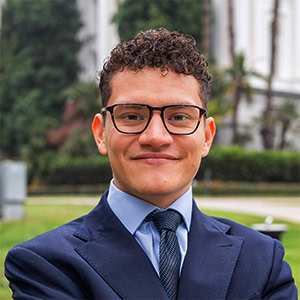 Fernando Romero Galvan, PhD
California Department of Water Resources
Born in Mexico and raised in Los Angeles, Fernando is a former NASA fellow who used satellite and airborne data to study vineyard diseases.
PhD: Plant Pathology and Plant Microbe Biology, Cornell University
BA: Geography, California State University, Northridge
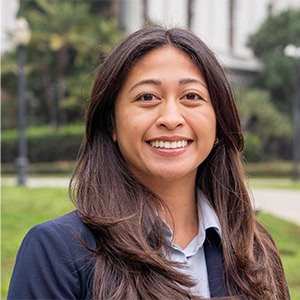 Erin de Leon Sanchez, PhD
California State Lands Commission
Growing up in the San Joaquin Valley and researching salmon in the American River inspired Erin to investigate how ocean warming impacts the red sea urchin, a key fishery species.
PhD: Ecology, Evolution, and Marine Biology, UC Santa Barbara
BS: Biological Sciences, UC Davis
About the CCST Science & Technology Policy Fellowship
The CCST Science & Technology Policy Fellows program places PhD-level scientists, engineers, and social scientists in the California State Legislature, State Agencies, and Offices of the Governor for a year of public policy, leadership training, and public service—training scientific thinkers to be policy-savvy, while helping equip California’s policymakers with science-savvy staff. Discover how our CCST S&T Policy Fellows make a difference in California’s policy arena and learn how to apply at CCST.us/CCST-Science-Fellows-Program.