
CCST Project
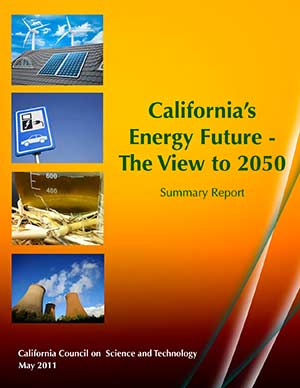
California's Energy Future - The View to 2050
COMPLETED: January 2015
Overview
California has set itself some ambitious goals for reducing greenhouse gas emissions in the coming decades. In order to achieve these goals, the state may need to make widespread changes to the ways in which it manages energy production, storage, and consumption.
The California's Energy Future (CEF) projects explore what's needed to meet the state's goal, answering the call of S-3-05 - the executive order from 2005 mandating the reduction of the state's emissions to 80 percent below the 1990 level by 2050.
Following completion of the CEF projects, CCST began a followup series of reports, the California's Energy Future Policy project.
Related News Stories



Follow-Up Reports
California’s Energy Future – Powering California with Nuclear Energy
California’s Energy Future – Transportation Energy Use in California
California’s Energy Future – Electricity from Renewable Energy and Fossil Fuels with Carbon Capture and Sequestration
California’s Energy Future – Portraits of Energy Systems for Meeting Greenhouse Gas Reduction Requirements
California’s Energy Future: Building and Industrial Efficiency
California’s Energy Future: The Potential for Biofuels
Policies for California’s Energy Future – Electricity Pricing and Electrification for Efficient Greenhouse Gas Reductions
Policies for California’s Energy Future – Scaling Up Advanced Biofuels
Policies for California’s Energy Future – Choosing a Climate Friendly Electricity System
Policies for California’s Energy Future – Electricity from Natural Gas with CO2 Capture for Enhanced Oil Recovery
Presentations
Chair’s Lecture: CEF Study Results (Jane C.S. Long)
California’s Energy Future Study (Bryan Hannegan)
California Biofuels in 2050 (Heather Youngs)
Mobile Sources in California’s Energy Future (Jeffery Greenblatt)
Nuclear Power in California’s Energy Mix (Burton Richter)
Transportation Sector Efficiency (Christopher Yang)
CCST Project
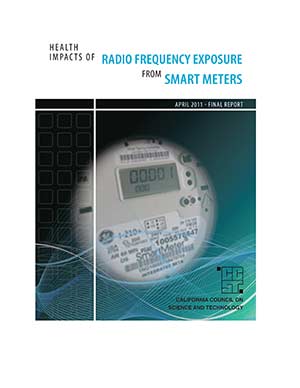
Health Impacts of Radio Frequency from Smart Meters
COMPLETED: March 2011
Overview
With rapidly emerging and evolving technologies, lawmakers at times find themselves pressed to make policy decisions on complex technologies. Smart meters are one such technology.
Smart meters are being deployed in many places in the world in an effort to create a new generation of utility service based on the concepts of a smart grid, one that is agile, efficient and cost effective.
The electricity crisis of 2000 and 2001 helped force the issue here in California, lending significant urgency to the need for better management of power generation and distribution. In 2006, the California Public Utilities Commission authorized the Pacific Gas and Electric Company to implement a relatively new technology, smart meters, to gather much more precise information about power usage throughout the state. The process of installing the meters throughout the state is still underway.
As with any new technology, there are unknowns involved. Smart meters generally work by transmitting information wirelessly. Some people have expressed concerns about the health effects of wireless signals, particularly as they become virtually ubiquitous. These concerns have recently been brought to the attention of state legislators, with some local municipalities opting to ban further installation of the meters in their communities.
We are pleased that Assembly Members Huffman and Monning have turned to CCST for input on this issue. It is CCST’s charge to offer independent expert advice to the state government and to recommend solutions to science and technology -‐ related policy issues. In this case, we have assembled a succinct but comprehensive overview of what is known about human exposure to wireless signals and the efficacy of the FCC safety standards for these signals. To do so, we assembled a project team that consulted with over two dozen experts and sifted through over a hundred articles and reports, providing a thorough, unbiased overview in a relatively rapid manner.
In situations where public sentiment urges policy makers to make policy decisions with potentially long — term consequences, access to the best information possible is critical. This is the role that CCST was created to fulfill.
Related News Stories
The California Council on Science and Technology Celebrates the 30th Anniversary of Its Establishment Via the California State Legislature
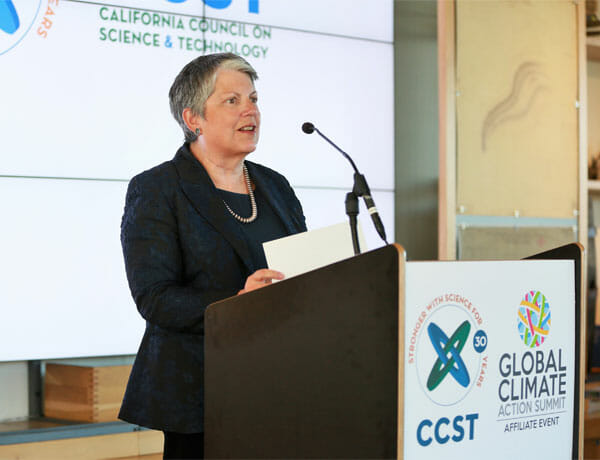
University of California President Janet Napolitano was one of the speakers at the celebration of ...
Celebrating Science Informing Policy: CCST to Partner with Governor’s Office of Planning and Research for ‘Science and Education’ Evening at Global Climate Action Summit

As the state-created science advisory body to the California government, the California Council on Science ...
CCST SmartMeter Report Released
The final version of "Health Impacts of Radio Frequency from Smart Meters" has been released. ...
Rollin Richmond Leads Smart Meter Project Team
CCST's analysis of the safety of smart meters was prepared in a matter of months ...
American Academy of Pediatrics
The Sensitivity of Children to Electromagnetic Fields – August 3, 2005
Australian Radiation Protection and Nuclear Safety Agency (ARPANSA)
Radiation Protection – Mobile Telephones and Health Effects – June 25, 2010
Documents from the California Department of Public Health (CDPH)
Correspondence Provided by Rick Kreutzer, California Department of Health – March 10, 2011
Mixed Signals About Cellphones’ Health Risks Hang Up Research – The Chronicle – September 26, 2010
Summary of the Literature: What do we Know About Cell Phones and Health? – July 20, 2010
Brain Tumor Risk in Relation to Mobile Telephone Use: Results of the INTERPHONE International Case, Oxford University Press – March 8, 2010
Mobile Phones and Health, U.K. Department of Health
Late Lessons from Early Warnings: Towards Realism and Precaution with EMF, David Gee, European Environment Agency – January 30, 2009
Statement of Finnish Radiation and Nuclear Safety Authority (STUK) Concerning Mobile Phones and Health – January 7, 2009
Fact Sheet: Children and Safe Cell Phone Use, Toronto Public Health – July 2008
Children and Mobile phones: The Health of the Following Generations in Danger, Russian National Committee on Non-Ionizing Radiation Protection – April 14, 2008
AFSSE Statement on Mobile Phones and Health, French Environmental Health and Safety Agency – AFSSE – April 16, 2003
Committee on Man and Radiation (COMAR)
IEEE Engineering in Medicine and Biology Society Committee on Man and Radiation (COMAR)
COMAR Technical Information Statement the IEEE Exposure Limits for Radiofrequency and Microwave Energy
Commonwealth Club of California
The Health Effects of Electromagnetic Fields (Video) – November 18, 2010
Electric Power Research Institute (EPRI)
EMF/RF Program at EPRI
Radio-Frequency Exposure Levels from Smart Meters: A Case Study of One Model – February 2011
Environmental Protection Agency
EPA’s Response to Janet Newton – March 8, 2002
EPA’s Response to Jo-Anne Basile – September 16, 2002
Epidemiology
Prenatal and Postnatal Exposure to Cell Phone Use and Behavioral Problems in Children – July 2008 – Volume 19 – Issue 4 – pp 523-529
European Journal of Oncology – Ramazzini Institute
Non-Thermal Effects and Mechanisms of Interaction between Electromagnetic Fields and Living Matter – 2010
Federal Communications Commission
Radio Frequency Safety FAQs
RF Safety Page
Statement Provided by Robert Weller, Chief, Technical Analysis Branch, Office of Engineering and Technology, Federal Communications Commission, Regarding FCC Regulations – February 3, 2011
Federal Communications Commission Response to Cindy Sage – August 6, 2010
FFC Certifications for the Silver Spring Networks Devices
Download – September 28, 2009 – 1st Approval
Download – September 28, 2009 – 2nd Approval
Questions and Answers about Biological Effects and Potential Hazards of Radiofrequency Electromagnetic Fields – August 1999
Evaluating Compliance with FCC Guidelines for Human Exposure to Radiofrequency Electromagnetic Fields – August 1997
Food and Drug Administration
No Evidence Linking Cell Phone Use to Risk of Brain Tumors – May 2010
U.K. Health Protection Agency
Wi-Fi – Last Reviewed October 26, 2009
International Commission on Non-Ionizing Radiation Protection (ICNIRP)
ICNIRP Statement on the “Guidelines for Limiting Exposure to Time-Varying Electric, Magnetic, and Electromagnetic Fields (up to 300 GHz)” – September 2009
Epidemiologic Evidence on Mobile Phones and Tumor Risk – September 2009
Exposure to High Frequency Electromagnetic Fields, Biological Effects and Health Consequences (100 kHz – 300 GHz) – 2009
National Academies Press
Identification of Research Needs Relating to Potential Biological or Adverse Health Effects of Wireless Communication – 2008
An Assessment of Potential Health Effects from Exposure to PAVE PAWS Low-Level Phased-Array Radiofrequency Energy – 2005
National Cancer Institute
Cell Phones and Cancer Risk (Fact Sheet)
Cell Phones and Brain Cancer: What We Know (and Don’t Know) – September 23, 2008
National Institute of Environmental Health Sciences
Electric & Magnetic Fields
PG&E
Understanding Radio Frequency (RF)
Smart Grid: Utility Challenges in the 21st Century – Andrew Tang, Smart Energy Web – September 18, 2009
Supplemental Report on An Analysis of Radiofrequency Fields Associated with Operation of PG&E SmartMeter Program Upgrade System – October 27, 2008
Summary Discussion of RF Fields and the PG&E SmartMeter System (2005 Report and 2008 Supplemental Report)
Analysis of RF Fields Associated with Operation of PG&E Automatic Meter Reading Systems – April 5, 2005
Provided by Jerrold Bushberg
Background on the Thermal vs. Non-thermal Exposure and Health Issue – March 2011
Provided by Raymond Neutra
Should the World Health Organization (W.H.O.) Apply the Precautionary Principal to Low and High Frequency Electromagnetic Fields? – October 2010
Society for Risk Analysis
Risk Governance for Mobile Phones, Power Lines and Other EMF Technologies – 2010
University of Ottawa
Wireless Communication and Health – Electromagnetic Energy and Radiofrequency Radiation FAQs
World Health Organization
Electromagnetic Fields (EMF)
Electromagnetic Fields and Public Health – Mobile Phones
Electromagnetic fields (EMF) – Fact sheets and Backgrounders
Unsolicited Submission – Alexander Blink, Executive Director of the DE-Toxics Institute, Fairfax CA
Points and Sources Submitted for Consideration by Alexander Blink 1
Points and Sources Submitted for Consideration by Alexander Blink 2
Public Health Implications of Wireless Technologies, Cindy Sage
Memory and Behavior, By Henry Lai, Bioelectromagnetics Research Laboratory, University of Washington
Unsolicited Submission – Sage Consulting
Assessment of Radiofrequency Microwave Radiation Emissions from Smart Meters
Cindy Sage Letter to Julius Knapp (FCC) – September 22, 2010
Response Letter to Cindy Sage from Julius Knapp (FCC) – August 6, 2010
Cindy Sage Letter to Edwin D. Mantiply (FCC) – March 15, 2010
Bioinitiative Report: A Rationale for a Biologically-based Public Exposure Standard for Electromagnetic Fields (ELF and RF)
Bioinitiative Report: What is the BioInitiative Report?
Bioinitiative Report: Myocardial Function Improved by Electromagnetic Field Induction of Stress Protein hsp70
Bioinitiative Report: The Interphone Brain Tumor Study – Cindy Sage, Editorial Perspective
Bioinitiative Report: Steps to the Clinic with ELF EM
Mobile Phone Base Stations – Effects on Wellbeing and Health – Pathophysiology – August 2009
Increased Blood-Brain Barrier Permeability in Mammalian Brain 7 Days after Exposure to the Radiation from a GSM-900 Mobile Phone – Pathophysiology – August 2009
Public Health Implications of Wireless Technologies – Pathophysiology – August 2009
Genotoxic Effects of Radiofrequency Electromagnetic Fields – Pathophysiology – August 2009
Epidemiological Evidence for an Association Between Use of Wireless Phones and Tumor Diseases – Pathophysiology – August 2009
Public Health Risks from Wireless Technologies: The Critical Need for Biologically-based Public Exposure Standards for Electromagnetic Fields – BioInitiative Briefing for President-Elect Obama Transition Team
The BioInitiative Report: A Rationale for A Biologically-based Public Exposure Standard for Electromagnetic Fields (ELF and RF) – Cindy Sage PowerPoint Presentation – November 2007
Unsolicited Submission – Wilner & Associates
SmartMeters and Existing Electromagnetic Pollution – January 2011
(Please note: This study was not commissioned by CCST)
Application for Modification Before the California Public Utilities Commission
Other Documents
Health Canada Safety Code 6 and City of Toronto’s Proposed Prudent Avoidance Policy – 2010
Transmitting Smart Meters Pose A Serious Threat To Public Health – Electricalpollution.com
RF Safety and WiMax FAQs: Addressing Concerns About Perceived Health Effects
Scientific Panel on Electromagnetic Field Health Risks: Consensus Points, Recommendations, and Rationales – NCBI – 2011
Mobile Phone Health Hazard: Call for Changes in Radiation Norms – The Hindu – February 2011
Relevant Websites
EMF-Portal of the RWTH Aachen University
EMFacts Consultancy
EMF Safety Network
LBA Group
CDC’s NIOSH Program Portfolio
Stop Smart Meters
CCST Project
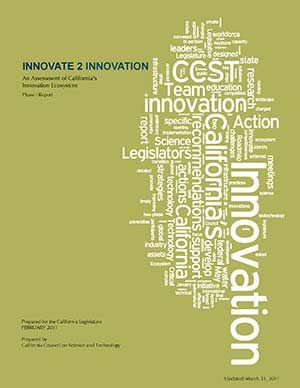
innovate 2 innovation
COMPLETED: March 2011
Overview
California's innovation ecosystem achieved world leadership in the last century because of its system of higher education, high-talent workforce, advanced technical infrastructure, and enlightened policies. These perishable assets must always be renewed. Today this renewal is more critical than ever because of the unprecedented international competition for both California's markets and its innovation workforce, as well as its increasing capacity to be world-class innovators.
Noting the changing global landscape, in 2010, a bi-partisan group of California Legislators asked the California Council on Science and Technology (CCST) to assess California's Science and Technology (S&T) Innovation Ecosystem. CCST designed a two-phase approach, with this preliminary report to coincide with the opening of the 2011 legislature and the gubernatorial transition, and a detailed set of recommendations to follow in May 2011.
In late 2010, CCST convened a series of regional roundtables with industry and research leaders across the state to seek their input on the challenges faced by California and possible solutions that could be achieved building from California's S&T capacity. From these meetings, CCST identified two key strategies essential to achieve this task:
- Developing and leveraging public-private partnerships linking California's assets in education, research, technology, finance, and philanthropy to create social and technical innovations that competitors with less complete infrastructure cannot match.
- Enlisting California's S&T community in finding solutions to two of the State's major challenges, education and water, and, in so doing, enhancing California's international competitiveness.
Related News Stories
The California Council on Science and Technology Celebrates the 30th Anniversary of Its Establishment Via the California State Legislature
University of California President Janet Napolitano was one of the speakers at the celebration of ...
2010 CCST Science Fellow Ryan McCarthy Is Keynote Speaker at Renewable Natural Gas Symposium, May 17th
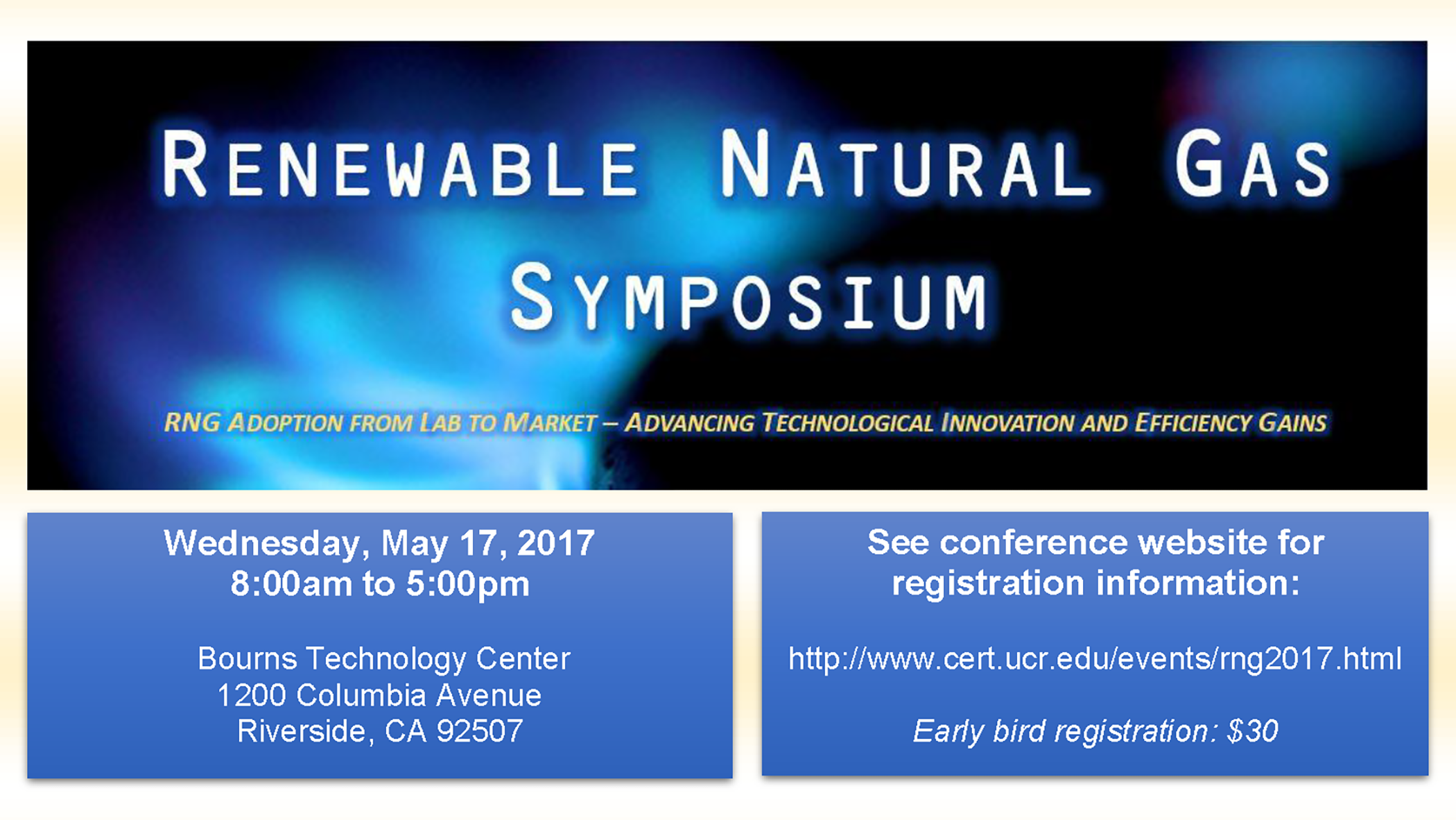
UC Riverside will be unveiling its new Center for Renewable Natural Gas at its May 17th Renewable Natural ...
‘Innovate 2 Innovation’ Envisions Resurgent California
In a not too distant California future, students experience classrooms as a rich, multimedia virtual ...
CCST Releases Preliminary Assessment of Innovation Ecosystem
California's innovation ecosystem achieved world leadership in the last century because of its system of ...