• Skip to main content
CCST Logo
MENU
  • About
    • Our People
    • Partners
    • Annual Report
    • Careers
    • Contact
  • Fellows
    • Program Overview
    • Fellows and Alumni
    • FAQ
    • Application
  • Science Services
    • Expert Briefings
    • S&T Week
    • Science Day
    • Resilience
    • Artificial Intelligence
    • Distinguished Experts
    • Nominate an Expert
  • Publications
  • News
    • Get Email Updates
    • Events
    • Fellows
    • Press Releases
  • Donate
MENU
×
  • About
    • Our People
    • Partners
    • Annual Report
    • Careers
    • Contact
  • Fellows
    • Program Overview
    • Fellows and Alumni
    • FAQ
    • Application
  • Science Services
    • Expert Briefings
    • S&T Week
    • Science Day
    • Resilience
    • Artificial Intelligence
    • Distinguished Experts
    • Nominate an Expert
  • Publications
  • News
    • Get Email Updates
    • Events
    • Fellows
    • Press Releases
  • Donate

CCST Project

Well Stimulation in California (SB4)

COMPLETED: July 2015

MENU
  • Overview
  • Publications
  • Process
  • Authors

Publications

An Independent Scientific Assessment of Well Stimulation in California, Vol. 1 (SB4)
Full Report:

Download

Executive Summary (All Volumes)

Download

Summary Report (All Volumes)

Download

Vol. 1 Executive Summary

Download

Vol. 1 Appendix L: Well-Record Result Data Set

Cover sheet (PDF) | Data file (XLS) | Data file (CSV)

Vol. 1 Appendix M: Integrated hydraulic fracturing data set regarding occurrence, location, date, and depth

Cover sheet (PDF) | Data file (XLS) | Data file (CSV)

Vol. 1 Appendix N: Pools with Production Predominantly Facilitated By Hydraulic Fracturing

Cover sheet (PDF) | Data file (XLS) | Data file (CSV) Part 1 Part 2

Vol. 1 Appendix O: Water Volume Per Stimulation Event

Cover sheet (PDF) | Data file (XLS) | Data File (CSV)

An Independent Scientific Assessment of Well Stimulation in California, Vol. 2 (SB4)
Full Report:

Download

Executive Summary (All Volumes)

Download

Summary Report (All Volumes)

Download

Vol. 2 Front Matter

Download

Vol. 2 Chapter 1

Download

Vol. 2 Chapter 2

Download

Vol. 2 Chapter 3

Download

Vol. 2 Chapter 4

Download

Vol. 2 Chapter 5

Download

Vol. 2 Chapter 6

Download

Vol. 2 General Appendices: A (SB4 Language Mandating Study); B (CCST Steering Committee Members); C (Report Author Biosketches); D (Glossary); E (Review of Information Sources); F (CCST Study Process); G (Expert Oversight & Review)

Download Appendices A-G (PDF)

Chapter 2 Appendices

Download Appendix 2.A (PDF)

Chapter 4 Appendices

Download Appendix 4.A (PDF)

Chapter 5 Appendices

Download Appendix 5.A (PDF)

Chapter 6 Appendices

Download Appendix 6.A (PDF)

Appendix 2.G: Data on Wastewater Disposal Ponds (ONLINE ONLY)

Data file (XLS) Data File (CSV)

Appendix 5.E: Estimate of the Number Hydraulic Fracturing Operations by Pool in California (ONLINE ONLY)

Data file (XLS) Data File (CSV)

Table 6.B-1: Chronic Hazard Screening Criteria, Inhalation Route (ONLINE ONLY)

Data file (XLS) Data File (CSV)

Table 6.B-2, Chronic Hazard Screening Criteria, Oral Route (ONLINE ONLY)

Data file (XLS) Data File (CSV)

Table 6.C-1: Hazard Screening Matrix for Acute Human Health Effects of Well Stimulation Fluid Substance (ONLINE ONLY)

Data file (XLS) Data File (CSV)

Table 6.C-2: Hazard Screening Matrix for Chronic Human Health Effects of Well Stimulation Fluid Substances (ONLINE ONLY)

Data file (XLS) Data File (CSV)

Table 6.C-3: Hazard Screening Matrix for Acute Human Health Effects of SCAQMD Acidization Fluid Substances (ONLINE ONLY)

Data file (XLS) Data File (CSV)

Table 6.C-4: Hazard Screening Matrix for Chronic Human Health Effects of SCAQMD Acidization Fluid Substances (ONLINE ONLY)

Data file (XLS) Data File (CSV)

An Independent Scientific Assessment of Well Stimulation in California, Vol. 3 (SB4)
Full Report:

Download

Executive Summary (All Volumes)

Download

Summary Report (All Volumes)

Download

Vol. 3 Front Matter

Download

Vol. 3 Chapter 1

Download

Vol. 3 Chapter 2

Download

Vol. 3 Chapter 3

Download

Vol. 3 Chapter 4

Download

Vol. 3 Chapter 5

Download

General Appendices A (SB4 Language Mandating Study); B (CCST Steering Committee Members); C (Report Author Biosketches); D (Glossary); E (Review of Information Sources); F (CCST Study Process); G (Expert Oversight & Review)

Download General Appendices

Chapter 2 Appendices

Download

Chapter 3 Appendices

Download

Chapter 4 Appendices

Download

Chapter 5 Appendices

Download

Appendix 5.C (ONLINE ONLY)

Data file (XLS) | Data File (CSV)

Press Releases

(Jul. 9, 2015)
Final Press Release
(Jan. 14, 2015)
Volume 1 Press Release
Well Photos

Correspondence

2016
March 31 — Response from CCST to Greta Lydecker
January 20 — Letter from Greta Lydecker
January 20 — Attachments for letter from Greta Lydecker
2015
December 22 — Letter from Greta Lydecker
December 22 — Attachments for letter from Greta Lydecker
September 2 — Response from CCST to Greta Lydecker
July 24 — Letter from Greta Lydecker
July 23— Response from CCST to Mark Ridley-Thomas
July 10 — Letter from Mark Ridley-Thomas

Related Publications

Sorry, we couldn't find any posts. Please try a different search.

CCST Logo

A trusted, nonpartisan source of expert science and technology advice for California policymakers, powered by a world-class partner network.

Linkedin Icon
BlueSky
Instagram
X
Facebook Icon
Subscribe to News & Events

Explore

  • Publications

  • People

  • Expert Briefings

  • Fellows Program

  • Careers

  • About CCST

Areas

  • Artificial Intelligence

  • Disaster Resilience

  • Energy

  • Federal Laboratories

  • Strategic Plan

Contact

  • 1100 11th St., Sacramento, CA 95814

  • Mailing: 1017 L St., #438, Sacramento, CA 95814

  • (916) 492-0996

  • Contact CCST

Copyright © 2026 | CCST | Privacy | Integrity | Accessibility

CCST Logo
MENU
  • About
    • Our People
    • Partners
    • Annual Report
    • Careers
    • Contact
  • Fellows
    • Program Overview
    • Fellows and Alumni
    • FAQ
    • Application
  • Science Services
    • Expert Briefings
    • S&T Week
    • Science Day
    • Resilience
    • Artificial Intelligence
    • Distinguished Experts
    • Nominate an Expert
  • Publications
  • News
    • Get Email Updates
    • Events
    • Fellows
    • Press Releases
  • Donate
MENU
×
  • About
    • Our People
    • Partners
    • Annual Report
    • Careers
    • Contact
  • Fellows
    • Program Overview
    • Fellows and Alumni
    • FAQ
    • Application
  • Science Services
    • Expert Briefings
    • S&T Week
    • Science Day
    • Resilience
    • Artificial Intelligence
    • Distinguished Experts
    • Nominate an Expert
  • Publications
  • News
    • Get Email Updates
    • Events
    • Fellows
    • Press Releases
  • Donate

CCST Project

Well Stimulation in California

COMPLETED: July 2016

MENU
  • Overview
  • Publications
  • Process
  • Authors

Process

CCST studies follow a process modeled after the National Academies study process with checks and balances at each stage. The report is a collaborative effort by a large number of experts serving in various capacities.

  • Defining the Study

  • Study Authors and Steering Committee (SC) Selection and Approval

  • Author and Steering Committee Meetings, Information Gathering, Deliberations, and Drafting the Study

  • Report Review

The report is a collaborative effort by a large number of experts serving in various capacities.

Learn More

Authors

Staff of the Lawrence Berkeley National Laboratory (LBNL) and California Council on Science and Technology (CCST) researched and wrote the body of the report. In addition, staff and faculty at a number of research institutions collaboratedon the report. The following institutions are subcontractors and are not responsible for the final content of the report, which rests with CCST, LBNL and the steering committee.

  • California State University Stanislaus Endangered Species Recovery Program

  • Don Gautier, LLC

  • Pacific Institute

  • Physicians, Scientists and Engineers for Healthy Energy

  • Stanford University

Click below to see a complete list of the authors who contributed to this project.

See Extended List

Steering Committee Members

The steering committee oversees the report authors, reaches conclusions based on the findings of the authors and writes an executive summary.

Committee Selection and Approval

Selection of appropriate committee members, individually and collectively, is essential for the success of a study. All committee members serve as individual experts, not as representatives of organizations or interest groups. Each member is expected to contribute to the project on the basis of his or her own expertise and good judgment. A committee is not finally approved until a thorough balance and conflict-of-interest discussion is held, and any issues raised in that discussion are investigated and addressed. Members of a committee are anonymous until this process is completed.

Careful steps are taken to convene committees that meet the following criteria:

  • Expertise

  • Perspectives

  • Screening

  • Point of View

  • Considerations

Expertise

Expertise

The committee must include experts with the specific expertise and experience needed to address the study's statement of task. A major strength of CCST is the ability to bring together recognized experts from diverse disciplines and backgrounds who might not otherwise collaborate. These diverse groups are encouraged to conceive new ways of thinking about a problem.

Perspectives

Perspectives

Having the right expertise is not sufficient for success. It is also essential to evaluate the overall composition of the committee in terms of different experiences and perspectives. The goal is to ensure that the relevant points of view are, in CCST's judgment, reasonably balanced so that the committee can carry out its charge objectively and credibly.

Screening

Screening

All provisional committee members are screened in writing and in a confidential group discussion about possible conflicts of interest. For this purpose, a "conflict of interest" means any financial or other interest which conflicts with the service of the individual because it could significantly impair the individual's objectivity or could create an unfair competitive advantage for any person or organization. The term "conflict of interest" means something more than individual bias. There must be an interest, ordinarily financial, that could be directly affected by the work of the committee. Except for those rare situations in which CCST determines that a conflict of interest is unavoidable and promptly and publicly discloses the conflict of interest, no individual can be appointed to serve (or continue to serve) on a committee used in the development of reports if the individual has a conflict of interest that is relevant to the functions to be performed.

Point of View

Point of View

A point of view or bias is not necessarily a conflict of interest. Committee members are expected to have points of view, and CCST attempts to balance these points of view in a way deemed appropriate for the task. Committee members are asked to consider respectfully the viewpoints of other members, to reflect their own views rather than be a representative of any organization, and to base their scientific findings and conclusions on the evidence. Each committee member has the right to issue a dissenting opinion to the report if he or she disagrees with the consensus of the other members.

Considerations

Considerations

Membership in CCST and previous involvement in CCST studies are taken into account in committee selection. The inclusion of women, minorities, and young professionals are additional considerations.

Committee Selection

Specific steps in the committee selection and approval process are as follows:

Step 1: Nominees

Staff solicit an extensive number of suggestions for potential committee members from a wide range of sources, then recommend a slate of nominees. Nominees are reviewed and approved at several levels within CCST.

Step 2: Provisional Committee

A provisional slate is then approved by CCST's Board. The provisional committee members complete background information and conflict-of-interest disclosure forms. The committee balance and conflict-of-interest discussion is held at the first committee meeting. Any conflicts of interest or issues of committee balance and expertise are investigated; changes to the committee are proposed and finalized.

Step 3: Board Approval

CCST's Board formally approves the committee. Committee members continue to be screened for conflict of interest throughout the life of the committee.

Committee Members' Bios

  • Jane Long Ph.D

  • Roger Aines Ph.D

  • Jens Birkholzer Ph.D

  • Brian Cypher Ph.D

  • Jim Dieterich Ph.D

  • Donald L. Gautier Ph.D

  • Peter H. Gleick Ph.D

  • A. Daniel Hill Ph.D

  • Larry Lake Ph.D

  • Tom McKone Ph.D

  • William A. Minner Ph.D

  • Amy Myers Jaffe

  • Seth B. Shonkoff Ph.D, MPH

  • Dan Tormey Ph.D, P.G.

  • Sam Traina Ph.D

  • Laura Feinstein Ph.D

Jane Long Ph.D

Steering Committee Chair

Principal Associate Director at Large, Retired

Lawrence Livermore National Laboratory

Dr. Long recently retired from Lawrence Livermore National Laboratory, where she was the Principal Associate Director at Large, Fellow in the LLNL Center for Global Strategic Research and the Associate Director for Energy and Environment. She is currently a senior contributing scientist for the Environmental Defense Fund, Visiting Researcher at UC Berkeley, Co-chair of the Task Force on Geoengineering for the Bipartisan Policy Center and chairman of the California Council on Science and Technology's California's Energy Future committee. Her current work involves strategies for dealing with climate change including reinvention of the energy system, geoengineering and adaptation. Dr. Long was the Dean of the Mackay School of Mines, University of Nevada, Reno and Department Chair for the Energy Resources Technology and the Environmental Research Departments at Lawrence Berkeley National Lab. She holds a bachelor's degree in engineering from Brown University and Masters and PhD from U. C. Berkeley. Dr. Long is a fellow of the American Association for the Advancement of Science and was named Alum of the Year in 2012 by the Brown University School of Engineering. Dr. Long is an Associate of the National Academies of Science (NAS) and a Senior Fellow and council member of the California Council on Science and Technology (CCST) and the Breakthrough Institute. She serves on the board of directors for the Clean Air Task Force and the Center for Sustainable Shale Development.

Roger Aines Ph.D

Senior Scientist, Atmospheric, Earth, and Energy Division and Carbon Fuel Cycle Program Leader E Programs, Global Security

Lawrence Livermore National Laboratory

Roger Aines leads the development of carbon management technologies at Lawrence Livermore National Laboratory, working since 1984 in the U.S. national laboratory system. Dr. Aines's work has spanned nuclear waste disposal, environmental remediation, applying stochastic methods to inversion and data fusion, managing carbon emissions, and sequestration monitoring and verification methods. Aines takes an integrated view of the energy, climate, and environmental aspects of carbon-based fuel production and use. His current focus is on efficient ways to remove carbon dioxide from the atmosphere and safer methods for producing environmentally clean fuel. He holds 13 patents and has authored more than 100 publications. Aines holds a Bachelor of Arts degree in Chemistry from Carleton College, and Doctor of Philosophy in geochemistry from the California Institute of Technology.

Jens Birkholzer Ph.D

Deputy Director, Earth Sciences Division

Lawrence Livermore National Laboratory

Dr. Birkholzer joined Lawrence Berkeley National Laboratory in 1994 as a post-doctoral fellow and has since been promoted to the second-highest scientist rank at this research facility. He currently serves as the deputy director of the Earth Sciences Division and as the program lead for the nuclear waste program, and also leads a research group working on environmental impacts related to geologic carbon sequestration and other subsurface activities. His area of expertise is subsurface hydrology with emphasis on understanding and modeling coupled fluid, gas, solute and heat transport in complex subsurface systems, such as heterogeneous sediments or fractured rock. His recent research was mostly in the context of risk/performance assessment, e.g., for geologic disposal of radioactive wastes and for geologic CO2 storage. Dr. Birkholzer has authored about 90 peer-reviewed journal articles and book chapters, and has over 230 conference publications and abstracts.

Brian Cypher Ph.D

Associate Director, Endangered Species Recovery Program

California State University-Stanislaus

Dr. Cypher received a PhD in Zoology from Southern Illinois University in 1991. Since 1990, he has been engaged in ecological research and conservation efforts on a variety of animal and plant species and their habitats. Much of this work has occurred in the San Joaquin Valley in central California and has involved extensive evaluations of the effects of hydrocarbon production and energy development on ecological processes and individual species. The information generated has been presented in numerous reports and publications, which have contributed to the development of conservation strategies and best-management practices that help mitigate environmental impacts from energy development activities.

Jim Dieterich Ph.D

Distinguished Professor of Geophysics

University of California, Riverside

Dr. Dieterich's research interests have to do with the mechanics of deformation processes, particularly as they relate to earthquake and volcanic phenomena. Areas of emphasis include development of governing relations for earthquake nucleation and earthquake occurrence; estimation of earthquake probabilities; fault constitutive properties; and coupled interactions between magmatic activity, faulting, and earthquakes. Current research includes (1) numerical simulation of earthquakes processes in interacting fault systems, (2) origins of earthquake clustering including foreshocks and aftershocks, (3) application of seismicity rate changes to infer stress changes in volcanic and tectonic environments, (4) laboratory investigation of fault constitutive properties and surface contact process.

Donald L. Gautier Ph.D

Consulting Petroleum Geologist

DonGautier L.L.C.

With a career spanning almost four decades, Dr. Donald L. Gautier is an internationally recognized leader and author in the theory and practice of petroleum resource analysis. As a principal architect of modern USGS assessment methodology, Gautier's accomplishments include leadership of the first comprehensive evaluation of undiscovered oil and gas resources north of the Arctic Circle, the first national assessment of United States petroleum resources to be fully documented in a digital environment, and the first development of performance-based methodology for assessment of unconventional petroleum resources such as shale gas or light, tight oil. He was lead scientist for the San Joaquin Basin and Los Angeles Basin Resource Assessment projects. His recent work has focused on the analysis of growth of reserves in existing fields and on the development of probabilistic resource/cost functions. Gautier is the author of more than 200 technical publications, most of which concern the evaluation of undiscovered and undeveloped petroleum resources. He holds a Ph.D. in geology from the University of Colorado.

Peter H. Gleick Ph.D

President

Pacific Institute

Dr. Peter H. Gleick is an internationally recognized environmental scientist and co-founder of the Pacific Institute in Oakland, California. His research addresses the critical connections between water and human health, the hydrologic impacts of climate change, sustainable water use, privatization and globalization, and international security and conflicts over water resources. Dr. Gleick was named a MacArthur "genius" Fellow in October 2003 for his work on water, climate, and security. In 2006 Dr. Gleick was elected to the U.S. National Academy of Sciences, Washington, D.C. Dr. Gleick's work has redefined water from the realm of engineers to the world of social justice, sustainability, human rights, and integrated thinking. His influence on the field of water has been long and deep: he developed one of the earliest assessments of the impacts of climate change on water resources, defined and explored the links between water and international security and local conflict, and developed a comprehensive argument in favor of basic human needs for water and the human right to water - work that has been used by the UN and in human rights court cases. He pioneered the concept of the "soft path for water," developed the idea of "peak water," and has written about the need for a "local water movement." Dr. Gleick received a B.S. in Engineering and Applied Science from Yale University and an M.S. and Ph.D. from the Energy and Resources Group of the University of California, Berkeley. He serves on the boards of numerous journals and organizations, and is the author of many scientific papers and ten books, including Bottled & Sold: The Story Behind Our Obsession with Bottled Water and the biennial water report, The World's Water, published by Island Press (Washington, D.C.).

A. Daniel Hill Ph.D

Department Head, Professor and holder of the Noble Chair, Petroleum Engineering Department

Texas A&M University

Dr. A. D. Hill is Professor, holder of the Noble Endowed Chair, and Department Head of Petroleum Engineering at Texas A&M University. Previously, he taught for 22 years at The University of Texas at Austin after spending five years in industry. He holds a B. S. degree from Texas A&M University and M. S. and Ph. D. degrees from The University of Texas at Austin, all in chemical engineering. He is the author of the Society of Petroleum Engineering (SPE) monograph, Production Logging: Theoretical and Interpretive Elements, co-author of the textbook, Petroleum Production Systems (1st and 2nd editions), co-author of an SPE book, Multilateral Wells, and author of over 170 technical papers and five patents. He has been a Society of Petroleum Engineers (SPE) Distinguished Lecturer, has served on numerous SPE committees and was founding chairman of the Austin SPE Section. He was named a Distinguished Member of SPE in 1999 and received the SPE Production and Operations Award in 2008. In 2012, he was one of the two inaugural winners of the SPE Pipeline Award, which recognizes faculty, who have fostered petroleum engineering Ph.Ds. to enter academia. He currently serves on the SPE Editorial Review Committee, the SPE Global Training Committee, and the SPE Hydraulic Fracturing Technology Conference Program Committee. Professor Hill is an expert in the areas of production engineering, well completions, well stimulation, production logging, and complex well performance (horizontal and multilateral wells), and has presented lectures and courses and consulted on these topics throughout the world.

Disclosure of Conflict of Interest: Prof. Dan Hill

In accordance with the practice of the California Council on Science and Technology (CCST), CCST makes best efforts to ensure that no individual appointed to serve on a committee has a conflict of interest that is relevant to the functions to be performed, unless such conflict is promptly and publicly disclosed and CCST determines that the conflict is unavoidable. A conflict of interest refers to an interest, ordinarily financial, of an individual that could be directly affected by the work of the committee. An objective determination is made for each provisionally appointed committee member whether or not a conflict of interest exists given the facts of the individual's financial and other interests, and the task being undertaken by the committee. A determination of a conflict of interest for an individual is not an assessment of that individual's actual behavior or character or ability to act objectively despite the conflicting interest.

We have concluded that for this committee to accomplish the tasks for which it was established its membership must include among others, individuals with research and expertise in the area of acid treatments for petroleum wells who have studied oil and gas industry operations in the United States and are internationally recognized for this expertise. Acid treatment is of particular public concern in California and is the subject of regulation under SB4.

To meet the need for this expertise and experience, Dr. Dan Hill is proposed for appointment to the committee even though we have concluded that he has a conflict of interest because of investments he holds and research services provided by his employer.

As his biographical summary makes clear, Dr. Hill is a recognized expert in petroleum reservoir engineering with many publications to wit. He is also known as one of the world's key experts in acid treatment.

After an extensive search, we have been unable to find another individual with the equivalent combination of expertise in acid treatment as Dr. Hill, who does not have a similar conflict of interest. Therefore, we have concluded that this potential conflict is unavoidable.

Larry Lake Ph.D

Professor, Department of Petroleum and Geosystems Engineering

University of Texas, Austin

Larry W. Lake is a professor of the Department of Petroleum and Geosystems Engineering at The University of Texas at Austin and director of the Center for Petroleum Asset Risk Management. He holds B.S.E and Ph.D. degrees in Chemical Engineering from Arizona State University and Rice University. Dr. Lake has published widely; he is the author or co-author of more than 100 technical papers, the editor of 3 bound volumes and author or co-author of four textbooks. He has been teaching at UT for 34 years before which he worked for Shell Development Company in Houston, Texas. He was chairman of the PGE department twice, from 1989 to 1997 and from 2008 to 2010. He formerly held the Shell Distinguished Chair and the W.A. (Tex) Moncrief, Jr. Centennial Endowed Chair in Petroleum Engineering. He currently holds the W.A. (Monty) Moncrief Centennial Chair in Petroleum Engineering. Dr. Lake has served on the Board of Directors for the Society of Petroleum Engineers (SPE) as well as on several of its committees; he has twice been an SPE distinguished lecturer. Dr. Lake is a member of the US National Academy of Engineers and won the 1996 Anthony F. Lucas Gold Medal of the SPE. He won the 1999 Dad's Award for excellence in teaching undergraduates at The University of Texas and the 1999 Hocott Award in the College of Engineering for excellence in research. He also is a member of the 2001 Engineering Dream Team awarded by the Texas Society of Professional Engineers. He is an SPE Honorary Member.

Tom McKone Ph.D

Deputy for Research Programs in the Energy Analysis and Environmental Impacts Department

Lawrence Berkeley National Laboratory (LBNL)

Thomas E. McKone is a senior staff scientist and Deputy for Research Programs in the Energy Analysis and Environmental Impacts Department at the Lawrence Berkeley National Laboratory (LBNL) and Professor of Environmental Health Sciences at the University of California, Berkeley School of Public Health. At LBNL, he leads the Sustainable Energy Systems Group. His research focuses on the development, use, and evaluation of models and data for human-health and ecological risk assessments, as well as the health and environmental impacts of energy, industrial, and agricultural systems. Outside of Berkeley, he has served six years on the EPA Science Advisory Board, has been a member of more than a dozen National Academy of Sciences (NAS) committees including the Board on Environmental Studies and Toxicology, and has been on consultant committees for the Organization for Economic Cooperation and Development (OECD), the World Health Organization, the International Atomic Energy Agency, and the Food and Agriculture Organization. McKone is a Fellow of the Society of Risk Analysis and has received two major awards from the International Society of Exposure Analysis - one for lifetime achievement in exposure science research and one for research that has impacted major international and national environmental policies.

William A. Minner Ph.D

Principal Consultant

StrataGen, Inc.

Minner is an independent petroleum engineering consultant, with a primary focus on hydraulic fracture well stimulation technology and application. After receiving B.S. and M.S. degrees in mechanical engineering with a petroleum option from the University of California, Berkeley, Minner joined Unocal in 1980, and began to focus on hydraulic fracturing well stimulation in 1985. In 1995, he left Unocal to open an office for Pinnacle Technologies in Bakersfield. Pinnacle's focus was on the development and commercialization of hydraulic fracture mapping technologies; Minner's role was in engineering consulting, using fracture diagnostics and mapping results to assist clients with hydraulic fracture engineering design, execution, and analysis. His engineering consulting role continued after the fracture mapping business was sold in 2008 and the company name was changed to StrataGen Engineering, and after February 2015, when he left StrataGen to venture out in the independent engineering consulting arena. Minner is a registered Petroleum Engineer in California, and received Society of Petroleum Engineers regional awards in 2011 and 2015 for his contribution to technical progress and interchange. He has authored or coauthored 21 industry technical papers on hydraulic fracturing.

Disclosure of Conflict of Interest: William Minner

In accordance with the practice of the California Council on Science and Technology (CCST), CCST makes best efforts to ensure that no individual appointed to serve on a committee has a conflict of interest that is relevant to the functions to be performed, unless such conflict is promptly and publicly disclosed and CCST determines that the conflict is unavoidable. A conflict of interest refers to an interest, ordinarily financial, of an individual that could be directly affected by the work of the committee. An objective determination is made for each provisionally appointed committee member whether or not a conflict of interest exists given the facts of the individual's financial and other interests, and the task being undertaken by the committee. A determination of a conflict of interest for an individual is not an assessment of that individual's actual behavior or character or ability to act objectively despite the conflicting interest.

We have concluded that for this committee to accomplish the tasks for which it was established its membership must include, among others, individuals with direct experience in the area of well stimulation practice, specifically in California. Well stimulation is of particular public concern in California and is the subject of regulation under SB4. The practice in California is significantly different than in other states so we require someone with direct experience in the state.

To meet the need for this expertise and experience, William Minner is proposed for appointment to the committee even though we have concluded that he has a conflict of interest because of investments he holds and research services provided by his employer.

As his biographical summary makes clear, William Minner is a recognized expert in petroleum reservoir stimulation with a long history of practice in California as well as around the world. He is one of the most recognized experts in California well stimulation design and execution.

After an extensive search, we have been unable to find another individual with the equivalent combination of expertise as William Minner, who does not have a similar conflict of interest. Therefore, we have concluded that this potential conflict is unavoidable.

Amy Myers Jaffe

Executive Director, Energy and Sustainability

UC Davis

Amy Myers Jaffe is a leading expert on global energy policy, geopolitical risk, and energy and sustainability. Jaffe serves as executive director for Energy and Sustainability at University of California, Davis with a joint appointment to the Graduate School of Management and Institute of Transportation Studies (ITS). At ITS-Davis, Jaffe heads the fossil fuel component of Next STEPS (Sustainable Transportation Energy Pathways). She is associate editor (North America) for the academic journal Energy Strategy Reviews. Prior to joining UC Davis, Jaffe served as director of the Energy Forum and Wallace S. Wilson Fellow in Energy Studies at Rice University's James A. Baker III Institute for Public Policy. Jaffe's research focuses on oil and natural gas geopolitics, strategic energy policy, corporate investment strategies in the energy sector, and energy economics. She was formerly senior editor and Middle East analyst for Petroleum Intelligence Weekly. Jaffe is widely published, including as co-author of Oil, Dollars, Debt and Crises: The Global Curse of Black Gold (Cambridge University Press, January 2010 with Mahmoud El-Gamal). She served as co-editor of Energy in the Caspian Region: Present and Future (Palgrave, 2002) and Natural Gas and Geopolitics: From 1970 to 2040 (Cambridge University Press, 2006). Jaffe was the honoree for Esquire's annual 100 Best and Brightest in the contribution to society category (2005) and Elle Magazine's Women for the Environment (2006) and holds the excellence in writing prize from the International Association for Energy Economics (1994).

Seth B. Shonkoff Ph.D, MPH

Executive Director

Physicians Scientists & Engineers for Healthy Energy

Dr. Shonkoff is the executive director of the energy science and policy institute, PSE Healthy Energy. Dr. Shonkoff is also a visiting scholar in the Department of Environmental Science, Policy and Management at UC Berkeley, and an affiliate in the Environment Energy Technology Division at Lawrence Berkeley National Laboratory in Berkeley California. An environmental and public health scientist by training, he has more than 15 years of experience in water, air, climate, and population health research. Dr. Shonkoff completed his PhD in the Department of Environmental Science, Policy, and Management and his MPH in epidemiology in the School of Public Health from the University of California, Berkeley. He is a contributing author to the Human Health chapter of The Intergovernmental Panel on Climate Change (IPCC) Fifth Assessment Report (AR5). He has worked and published on topics related to the intersection of energy, air pollution, water quality, climate, and human health from scientific and policy perspectives. Dr. Shonkoff's research also focuses on the development of the effectiveness of anthropogenic climate change mitigation policies that generate socioeconomic and health co-benefits. Dr. Shonkoff's current work focuses on the human health, environmental and climate dimensions of oil and gas development in the United States and abroad.

Dan Tormey Ph.D, P.G.

Principal

ENVIRON International Corporation

Dr. Daniel Tormey is an expert in energy and water and conducts environmental reviews for both government and industry. He works with the environmental aspects of all types of energy development, with an emphasis on oil and gas, including hydraulic fracturing and produced water management, pipelines, LNG terminals, refineries and retail facilities. Dr. Tormey was the principal investigator for the peer-reviewed, publicly available, Hydraulic Fracturing Study at the Baldwin Hills of southern California, on behalf of the County of Los Angeles and the field operator, PXP. He conducts projects in sediment transport, hydrology, water supply, water quality, and groundwater-surfacewater interaction. He has been project manager or technical lead for over two hundred projects requiring fate and transport analysis of chemicals in the environment. He has a Ph.D. in Geology and Geochemistry from MIT, and a B.S. in Civil Engineering and Geology from Stanford. He is a Principal at Ramboll Environ Corporation; was named by the National Academy of Sciences to the Science Advisory Board for Giant Sequoia National Monument; is a Distinguished Lecturer for the Society of Petroleum Engineers; is on the review committee on behalf of IUCN for the UNESCO World Heritage Site List and member of the IUCN Geoscientist Specialist Group; is volcanologist for Cruz del Sur, an emergency response and contingency planning organization in Chile; was an Executive in Residence at California Polytechnic University San Luis Obispo; and is a Professional Geologist in California. He has worked throughout the USA, Australia, Indonesia, Italy, Chile, Ecuador, Colombia, Venezuela, Brazil, Senegal, South Africa, Armenia and the Republic of Georgia.

Sam Traina Ph.D

Vice Chancellor of Research

University of California, Merced

Dr. Traina is the Vice Chancellor for Research and Economic Development at the University of California, Merced, where he holds the Falasco Chair in Earth Sciences and Geology. He serves as a Board Member of the California Council of Science and Technology. Prior to joining UC Merced in 2002 as a Founding Faculty member and the Founding Director of the Sierra Nevada Research Institute, Dr. Traina was a faculty member for 17 years at The Ohio State University, with concomitant appointments in the School of Natural Resources and the Environment, the Department of Earth Science and Geology, Civil and Environmental Engineering, Microbiology and Chemistry. He has served on the National Research Council's Standing Committee on Earth Resources. In 1997 - 1998, he held the Cox Visiting Professorship in the School of Earth Sciences at Stanford University. Dr. Traina's past and current research has dealt with the fate, transformation, and transport of contaminants in soils and natural waters, with an emphasis on radionuclides, heavy metals, and mining wastes. Dr. Traina holds a B.S. in soil resource management and a Ph.D. in soil chemistry. He is a fellow of the Soil Science Society of American and of the American Association for the Advancement of Science, as well as a recipient of the Clay Scientist Award of the Clay Minerals Society.

Laura Feinstein Ph.D

Project Manager

CCST

Laura Feinstein serves as the project manager and author for CCST on this report, and CCST's previous report on well stimulation prepared for the Bureau of Land Management. She previously served as a CCST Science and Technology Policy Fellow with the California Senate Committee on Environmental Quality. She was the director of the GirlSource Technology and Leadership Program, where she developed and ran a program teaching computer and job skills to low-income young women. She also was a web/media developer and researcher with the Center for Defense Information, a think-tank focusing on security issues. She was awarded a CalFED Bay-Delta Science fellowship for scientific research on ecological problems facing the Bay-Delta watershed, and a California Native Plant Society research scholarship. She has a Ph.D. in Ecology from University of California, Davis.

Peer Review

Peer review is the process of the evaluation of the scientific and technical merit (and likelihood of success) of the proposed research project/program by a panel of reviewers with direct expertise in the area of research to be evaluated who have no personal stake or interest in the outcome of the evaluation process. The salient features of the peer review process are the evaluation of the research program by "peer" experts in relevant fields who are deemed qualified to evaluate the product based solely on the scientific and technical merit of the content. It is standard practice to keep the identity of peer reviewers confidential as well as all of the comments and deliberations.

All CCST reports are peer reviewed using guidelines and processes established by CCST to assure the highest scientific and technical standards. Guidelines are similar to those of the National Academy of Science, adapted to be appropriate for California. It is standard practice to keep the identity of peer reviewers confidential as well as all of the comments and deliberations.

Learn More

Meetings

Public Webinar — Public Webinar on Release of Volumes 2 and 3

Thursday, July 9, 2015 at 3pm PST

Public Webinar on Release of CCST's Scientific Review of Oil and Gas Development Technologies in California - Volumes 2 and 3

Webinar Presentation

Meeting — California State University, Bakersfield

February 3, 2015

Location: California State University, Bakersfield, Student Union/Multipurpose Room, 9001 Stockdale Highway, Bakersfield, CA 93311.

Pursuant to Senate Bill 4 (Pavley, Statutes of 2013), the California Natural Resources Agency has commissioned the California Council on Science and Technology (CCST) and Lawrence Berkeley National Laboratory, with the participation of the Office of Environmental Health Hazard Assessment, to conduct an independent scientific assessment of well stimulation. Volumes II and III of the study focus on the potential impacts on the environment and contain case studies with evaluations of environmental issues and public health risks. Attendees at the workshop learned more about the scientific assessment and provided input to the scientists who are working on Volumes II and III, scheduled for release in July 2015.

Public Webinar — Public Webinar on Release of Volume 1

Wednesday, January 14, 2015 at 3pm PST

Public Webinar on Release of CCST's Scientific Review of Oil and Gas Development Technologies in California - Volume 1

Webinar Presentation Webinar Recording

Public Webinar — CCST's Scientific Review of Oil and Gas Development Technologies in California

Monday, November 17, 2014 at 12 noon PST

Public Webinar on CCST's Scientific Review of Oil and Gas Development Technologies in California

Webinar Presentation Webinar Recording

CCST Logo

A trusted, nonpartisan source of expert science and technology advice for California policymakers, powered by a world-class partner network.

Linkedin Icon
BlueSky
Instagram
X
Facebook Icon
Subscribe to News & Events

Explore

  • Publications

  • People

  • Expert Briefings

  • Fellows Program

  • Careers

  • About CCST

Areas

  • Artificial Intelligence

  • Disaster Resilience

  • Energy

  • Federal Laboratories

  • Strategic Plan

Contact

  • 1100 11th St., Sacramento, CA 95814

  • Mailing: 1017 L St., #438, Sacramento, CA 95814

  • (916) 492-0996

  • Contact CCST

Copyright © 2026 | CCST | Privacy | Integrity | Accessibility

CCST Logo
MENU
  • About
    • Our People
    • Partners
    • Annual Report
    • Careers
    • Contact
  • Fellows
    • Program Overview
    • Fellows and Alumni
    • FAQ
    • Application
  • Science Services
    • Expert Briefings
    • S&T Week
    • Science Day
    • Resilience
    • Artificial Intelligence
    • Distinguished Experts
    • Nominate an Expert
  • Publications
  • News
    • Get Email Updates
    • Events
    • Fellows
    • Press Releases
  • Donate
MENU
×
  • About
    • Our People
    • Partners
    • Annual Report
    • Careers
    • Contact
  • Fellows
    • Program Overview
    • Fellows and Alumni
    • FAQ
    • Application
  • Science Services
    • Expert Briefings
    • S&T Week
    • Science Day
    • Resilience
    • Artificial Intelligence
    • Distinguished Experts
    • Nominate an Expert
  • Publications
  • News
    • Get Email Updates
    • Events
    • Fellows
    • Press Releases
  • Donate

CCST Project

Well Stimulation in California

COMPLETED: July 2016

MENU
  • Overview
  • Publications
  • Process
  • Authors

Lead Authors

* Denotes the chapter(s) for which an author served as the lead.

name affiliation chapters
Jens T. BirkholzerLawrence Berkeley National LaboratorySummary Report | Volume I: Executive Summary, Introduction
Adam BrandtStanford UniversityVolume II: Ch. 3* | Volume III: Ch. 3, 4.3, 5
Patrick F. DobsonLawrence Berkeley National LaboratoryVolume I: Executive Summary, Introduction, Ch. 4*
Laura C. FeinsteinCalifornia Council on Science and TechnologySummary Report Volume I: Executive Summary, Introduction | Volume II: Ch. 5* | Volume III: Ch. 3*, 5
William FoxallLawrence Berkeley National LaboratoryVolume II: Ch. 4* | Volume III: Ch. 3
Donald L. GautierDonGautier L.L.C.Volume I: Executive Summary, Introduction, Ch. 4 | Volume III: Ch. 3, 4.1, 4.2
James E. HouseworthLawrence Berkeley National LaboratoryVolume I: Executive Summary, Introduction, Ch. 2* | Volume II: Ch. 2 | Volume III: Ch. 2*
Preston D. JordanLawrence Berkeley National LaboratoryVolume I: Executive Summary, Introduction, Ch. 3* | Volume II: Ch.2 | Volume III: Ch. 4.3, 5*
Jane C.S. LongCalifornia Council on Science and TechnologySummary Report* | Volume I: Executive Summary*, Introduction* | Volume II: Ch. 1* | Volume III: Ch. 1*
Thomas E. MckoneLawrence Berkeley National LaboratoryVolume II: Ch. 6* | Volume III: Ch. 4.3
Seth B.C. ShonkoffPSE Healthy EnergyVolume II: Ch. 6 | Volume III: Ch. 4.3*
William T. StringfellowLawrence Berkeley National LaboratoryVolume II: Ch. 2*, 6 | Volume III: Ch. 2

More Authors

name affiliation chapters
Corinne BachmannLawrence Berkeley National LaboratoryVolume II: Ch. 4
Jenner BanburyCalifornia State University, StanislausVolume II: Ch. 5
Mary Kay CamarilloLawrence Berkeley National LaboratoryVolume II: Ch. 2
Heather CooleyPacific InstituteVolume II: Ch. 2
Brian L. CypherCalifornia State University, StanislausVolume II: Ch. 5
Jeremy K. DomenLawrence Berkeley National LaboratoryVolume II: Ch. 2
Kristina DonnellyPacific InstituteVolume II: Ch. 2
Jacob G. EnglanderStanfordVolume II: Ch. 3
Kyle FerrarThe Frac Tracker AllianceVolume III: Ch. 4.3, 5
Ben K. GreenfieldUniversity of California, BerkeleyVolume III: Ch. 4.3
Amro HamdounUniversity of California, San DiegoVolume II: Ch. 2, 5
Jake HaysPSE Healthy EnergyVolume II: Ch. 6
Robert J. HarrisonUniversity of California, San FranciscoVolume II: Ch. 6
Matthew G. HerbergerPacific InstituteVolume I: Ch. 3 | Volume II: Ch. 2 | Volume III: Ch. 3, 4.3
Michael L.B. JerretUniversity of California, Los AngelesVolume III: Ch. 4.3
Ling JinLawrence Berkeley National LaboratoryVolume II: Ch. 3
Nathaniel J. LindseyLawrence Berkeley National LaboratoryVolume II: Ch. 4 | Volume III: Ch. 3
Randy L. MaddalenaLawrence Berkeley National LaboratoryVolume II: Ch. 6 | Volume III: Ch. 4.3
Dev E. MillsteinLawrence Berkeley National LaboratoryVolume II: Ch. 3
Sascha C.T. NicklischUniversity of California, San DiegoVolume II: Ch. 2, 5
Scott E. PhillipsCalifornia State University, StanislausVolume II: Ch. 5 | Volume III: Ch. 3, 5
Matthew T. ReaganLawrence Berkeley National LaboratoryVolume II: Ch. 2
Whitney L. SandelinLawrence Berkeley National LaboratoryVolume II: Ch. 2, 6
Craig UlrichLawrence Berkeley National LaboratoryVolume III: Ch. 3
Caruleka VaradharajanLawrence Berkeley National LaboratoryVolume II: Ch. 2
Zachary S. WettsteinUniversity of California, San FranciscoVolume II: Ch. 6
CCST Logo

A trusted, nonpartisan source of expert science and technology advice for California policymakers, powered by a world-class partner network.

Linkedin Icon
BlueSky
Instagram
X
Facebook Icon
Subscribe to News & Events

Explore

  • Publications

  • People

  • Expert Briefings

  • Fellows Program

  • Careers

  • About CCST

Areas

  • Artificial Intelligence

  • Disaster Resilience

  • Energy

  • Federal Laboratories

  • Strategic Plan

Contact

  • 1100 11th St., Sacramento, CA 95814

  • Mailing: 1017 L St., #438, Sacramento, CA 95814

  • (916) 492-0996

  • Contact CCST

Copyright © 2026 | CCST | Privacy | Integrity | Accessibility

CCST Logo
MENU
  • About
    • Our People
    • Partners
    • Annual Report
    • Careers
    • Contact
  • Fellows
    • Program Overview
    • Fellows and Alumni
    • FAQ
    • Application
  • Science Services
    • Expert Briefings
    • S&T Week
    • Science Day
    • Resilience
    • Artificial Intelligence
    • Distinguished Experts
    • Nominate an Expert
  • Publications
  • News
    • Get Email Updates
    • Events
    • Fellows
    • Press Releases
  • Donate
MENU
×
  • About
    • Our People
    • Partners
    • Annual Report
    • Careers
    • Contact
  • Fellows
    • Program Overview
    • Fellows and Alumni
    • FAQ
    • Application
  • Science Services
    • Expert Briefings
    • S&T Week
    • Science Day
    • Resilience
    • Artificial Intelligence
    • Distinguished Experts
    • Nominate an Expert
  • Publications
  • News
    • Get Email Updates
    • Events
    • Fellows
    • Press Releases
  • Donate

CCST Project

SB 1281 - Oil and Gas Water Cycle Reporting

MENU
  • Overview
  • Publications
  • Process

Process

CCST studies follow a process modeled after the National Academies study process with checks and balances at each stage. The report is a collaborative effort by a large number of experts serving in various capacities.

Learn More

Authors

Dr. Brie Lindsey, the lead author of Phase I, and Dr. Laura Feinstein and Dr. Seth Shonkoff, lead authors of Phase II of the report, are the primary analysts and writers of the body of the report. In addition, Lee Ann Hill has assisted in writing sections of the Phase I report.

  • Brie Lindsey, CCST - Lead Author, Phase I

  • Laura Feinstein, Pacific Institute - Lead Author, Phase II

  • Seth Shonkoff, PSE Healthy Energy, UC Berkeley - Lead Author, Phase II

  • Lee Ann Hill, PSE Healthy Energy

The following institutions are subcontractors and are not responsible for the final content of the report, which rests with CCST and the Steering Committee:

  • Pacific Institute

  • PSE Healthy Energy

Steering Committee Members

The steering committee oversees the report authors, reaches conclusions based on the findings of the authors and writes an executive summary.

Committee Selection and Approval

Selection of appropriate committee members, individually and collectively, is essential for the success of a study. All committee members serve as individual experts, not as representatives of organizations or interest groups. Each member is expected to contribute to the project on the basis of his or her own expertise and good judgment. A committee is not finally approved until a thorough balance and conflict-of-interest discussion is held, and any issues raised in that discussion are investigated and addressed. Members of a committee are anonymous until this process is completed.

Careful steps are taken to convene committees that meet the following criteria:

  • Expertise

  • Perspectives

  • Screening

  • Point of View

  • Considerations

Expertise

Expertise

The committee must include experts with the specific expertise and experience needed to address the study's statement of task. A major strength of CCST is the ability to bring together recognized experts from diverse disciplines and backgrounds who might not otherwise collaborate. These diverse groups are encouraged to conceive new ways of thinking about a problem.

Perspectives

Perspectives

Having the right expertise is not sufficient for success. It is also essential to evaluate the overall composition of the committee in terms of different experiences and perspectives. The goal is to ensure that the relevant points of view are, in CCST's judgment, reasonably balanced so that the committee can carry out its charge objectively and credibly.

Screening

Screening

All provisional committee members are screened in writing and in a confidential group discussion about possible conflicts of interest. For this purpose, a "conflict of interest" means any financial or other interest which conflicts with the service of the individual because it could significantly impair the individual's objectivity or could create an unfair competitive advantage for any person or organization. The term "conflict of interest" means something more than individual bias. There must be an interest, ordinarily financial, that could be directly affected by the work of the committee. Except for those rare situations in which CCST determines that a conflict of interest is unavoidable and promptly and publicly discloses the conflict of interest, no individual can be appointed to serve (or continue to serve) on a committee used in the development of reports if the individual has a conflict of interest that is relevant to the functions to be performed.

Point of View

Point of View

A point of view or bias is not necessarily a conflict of interest. Committee members are expected to have points of view, and CCST attempts to balance these points of view in a way deemed appropriate for the task. Committee members are asked to consider respectfully the viewpoints of other members, to reflect their own views rather than be a representative of any organization, and to base their scientific findings and conclusions on the evidence. Each committee member has the right to issue a dissenting opinion to the report if he or she disagrees with the consensus of the other members.

Considerations

Considerations

Membership in CCST and previous involvement in CCST studies are taken into account in committee selection. The inclusion of women, minorities, and young professionals are additional considerations.

Committee Selection

Specific steps in the committee selection and approval process are as follows:

Step 1: Nominees

Staff solicit an extensive number of suggestions for potential committee members from a wide range of sources, then recommend a slate of nominees. Nominees are reviewed and approved at several levels within CCST.

Step 2: Provisional Committee

A provisional slate is then approved by CCST's Board. The provisional committee members complete background information and conflict-of-interest disclosure forms. The committee balance and conflict-of-interest discussion is held at the first committee meeting. Any conflicts of interest or issues of committee balance and expertise are investigated; changes to the committee are proposed and finalized.

Step 3: Board Approval

CCST's Board formally approves the committee. Committee members continue to be screened for conflict of interest throughout the life of the committee.

Committee Members' Bios

  • Mike Kavanaugh PhD, P.E., NAE

  • Nicole Deziel M.H.S., PhD

  • Eric M.V. Hoek PhD

  • Susan Hubbard PhD

  • James McCall P.S.M.

  • Steve Weisberg PhD

  • William Stringfellow PhD

Mike Kavanaugh PhD, P.E., NAE

Steering Committee Chair

Senior Principal

Geosyntec Consultants, Inc. 

Mike Kavanaugh is a chemical and environmental engineer with more than four decades of consulting experience in a number of technical areas. Mike's professional practice started in the areas of municipal and industrial wastewater treatment, water quality management, and water reuse and drinking water treatment. He expanded his practice to include contaminated groundwater studies, particularly CERCLA-driven remedial investigations/feasibility studies (RI/FS), groundwater remediation, waste minimization and pollution prevention studies, pioneering technology development, as well as third-party peer review and strategic consulting on environmental management and compliance issues. He has also provided technology evaluations including patent reviews of environmental technologies.

As a testifying expert and a fact witness on engineering and hydrogeologic issues related to hazardous waste sites as well as on other issues related to his areas of expertise, Mike has been tapped more than 60 times by attorneys, arbitrators, judges, and government agencies to serve. He also has participated on several mediation and arbitration panels as a neutral technical expert as well as serving as an individual facilitator, mediator, arbitrator, court appointed expert, or "blue ribbon" expert panelist working on project-specific and policy-level issues.

To advance the state of the practice, Mike has contributed to over 80 technical publications and more than 150 presentations to audiences that included congressional and state committees. Currently, he is an instructor for the Princeton Groundwater Course and a consulting professor in the Stanford University Civil and Environmental Engineering Department. He also served on the Board of Directors for the Environmental Law Institute and was the chair of the National Research Council's Committee on Future Options for the Nation's Contaminated Groundwater Remediation Efforts. He was elected into the National Academy of Engineering in 1998.

Nicole Deziel M.H.S., PhD

Assistant Professor of Epidemiology

Yale School of Public Health 

Nicole C. Deziel, M.H.S., Ph.D., is an Assistant Professor in the Department of Environmental Health Sciences. Her research involves applying existing and advanced statistical models, biomonitoring techniques, and environmental measurements to provide quantitative assessments of exposure to combinations of traditional and emerging environmental contaminants. Her exposure assessment strategies aim to reduce exposure misclassification for epidemiologic studies, advancing understanding of relationships between of exposure to environmental chemicals and risk of cancer and other adverse health outcomes. She has investigated several types of pollutants including pesticides, persistent organic pollutants, and polycyclic aromatic hydrocarbons.

Dr. Deziel's research also includes hydraulic fracturing, or "fracking," and how chemicals used in the process and released into the air or water may adversely affect communities of people living nearby. She is leading an inter-disciplinary team of investigators on a project entitled "Drinking water vulnerability and neonatal health outcomes in relation to oil and gas production in the Appalachian Basin." In this 3-year study funded by the Environmental Protection Agency (EPA), her team is evaluating whether exposure to water contaminants from the process of hydraulic fracturing ("fracking") is associated with adverse human developmental and teratogenic effects.

Eric M.V. Hoek PhD

Professor, Department of Civil and Environmental Engineering

California NanoSystems Institute and Institute of the Environment & Sustainability

Eric Hoek is an internationally recognized expert in water treatment, UCLA environmental engineering professor, founder of 4 successful water technology startups, and considered a thought leader in the water industry. He has worked on various aspects of water treatment including drinking water treatment, wastewater treatment, desalination, oil & gas produced water treatment, municipal and industrial water reuse and oil spill remediation. He has served as a consultant to municipal water authorities, water technology startups, hedge funds, venture capital funds, law firms, private research foundations, non-profit foundations, US federal, state and local agencies and foreign national research agencies. He has over 130 scientific publications, over 70 patents filed in the U.S. and internationally, and serves as the Editor-in-Chief of the Nature Publishing Group journal npj Clean Water. He is a graduate of Penn State (B.S.), UCLA (M.S.), Yale University (Ph.D.) and the Executive Management program at the UCLA Anderson School of Management.

Susan Hubbard PhD

Associate Laboratory Director & Senior Scientist, LBNL
Adjunct Professor, Environmental Science, Policy and Management

University of California, Berkeley

As the Associate Lab Director for Earth & Environmental Sciences Area at Berkeley Laboratory, Dr. Susan Hubbard leads a premier group of ~500 staff that has a significant research portfolio in climate science, terrestrial ecosystem science, environmental and biological system science, fundamental geoscience, and subsurface energy resources. Research within this Area of Berkeley Lab is tackling some of the most pressing environmental and subsurface energy challenges of the 21st Century. Dr. Hubbard is also an Adjunct Professor at UC Berkeley in the Department of Environmental Science, Policy and Management. Dr. Hubbard earned her PhD in Civil and Environmental Engineering at UC Berkeley, and prior to joining Berkeley Lab, she was a geologist at the US Geological Survey and a geophysicist in industry.

As a Senior Scientist at Berkeley Laboratory, Dr. Hubbard's research focuses on quantifying how terrestrial environments function, with a particular emphasis on the development of geophysical approaches to provide new insights about processes relevant to contaminant remediation, carbon cycling, water resources, and subsurface energy systems. She has been honored by the scientific community with several awards, including as an: American Geophysical Union (AGU) Fellow, Geological Society of America (AGU) Felow, receipent of the Society of Exploration Geophysicists (SEG) Frank Frischknecht Award for leadership and innovation in near-surface geophysics, the Birdsall Dreiss Distinguished Lecturer Award, Distinguished Alumni of UC Berkeley, and the SEG Harold Mooney Award for Near Surface Geophysics. Dr. Hubbard has served widely on many scientific boards and has served on the editorial boards of JGR-Biosciences, Water Resources Research, Vadose Zone Journal and the Journal of Hydrology.

James McCall P.S.M.

Distributed Energy and Environment Analyst

National Renewable Energy Laboratory (NREL) 

James joined the Systems Modeling & Geospatial Data Science Group in the Strategic Energy Analysis Center in 2015. His interests include techno-economic analyses for various renewable technologies, economic and employment impacts, and systems analysis associated with the energy-water-food-nexus. Prior work experience was as a researcher at a utility law think tank at ASU and a project manager/facilities engineer for an upstream oil and gas producer.

Steve Weisberg PhD

Executive Director

Southern California Coastal Water Research Project Authority (SCCWRP) 

Dr. Stephen Weisberg is Executive Director of the Southern California Coastal Water Research Project Authority, a research consortium formed by 14 leading water quality agencies in California to ensure a solid scientific foundation for their management activities. Dr. Weisberg's research emphasis is in developing tools to support implementation of, and data interpretation from, environmental monitoring programs. Beyond his research activities, Dr. Weisberg focuses on linking the needs of the management community with science. He serves on numerous advisory committees, including the State of California's Clean Beach Task Force, the California Ocean Protection Council Science Advisory Team, the California Sea Grant Program Advisory Council, and the California Water Quality Monitoring Council. Dr. Weisberg received his undergraduate degree from the University of Michigan and his Ph.D. from the University of Delaware.

William Stringfellow PhD

Emeritus Professor / Research Engineer

University of the Pacific / Lawrence Berkeley National Laboratory

William T. Stringfellow, Ph.D. is an Emeritus Professor at the School of Engineering & Computer Science at the University of the Pacific in Stockton, CA and a Research Engineer in the Geochemistry Department, Earth & Environmental Sciences Area at Lawrence Berkeley National Laboratory. He received his B.S. in Environmental Health from the University of Georgia (Athens, GA) in 1980 and his Master’s Degree in Microbial Physiology and Aquatic Ecology from Virginia Tech (Blacksburg, VA) in 1984. He received his Ph.D. in Environmental Sciences and Engineering from the University of North Carolina at Chapel Hill in 1994 and worked as a Post-Doctoral Fellow in the Civil and Environmental Engineering Department at the University of California at Berkeley. Prof. Stringfellow is the first author on over 50 journal publications, has been the lead author on numerous government reports, and has made hundreds of presentations on the subjects of water quality, water treatment, and the microbiology of engineered systems. He has over 35 years research and consulting experience in wastewater treatment and management in both the US and Europe. Prof. Stringfellow’s research interests include treatment and management of agricultural and industrial wastes. Prof. Stringfellow was the WaterGroup Leader for the SB-4 Study examining the environmental impacts of hydraulic fracturing in California and Lead Scientist on the Low Dissolved Oxygen Study investigating disuse pollution impacts on the San Joaquin River and Estuary. He is currently a member of the Food Safety Advisory Panel examining the beneficial reuse of produced water for irrigation. On-going projects include an extensive examination of water and chemical use during oil and gas development and the treatment and reuse of oil-field wastewater.

Peer Review

Peer review is the process of the evaluation of the scientific and technical merit (and likelihood of success) of the proposed research project/program by a panel of reviewers with direct expertise in the area of research to be evaluated who have no personal stake or interest in the outcome of the evaluation process. The salient features of the peer review process are the evaluation of the research program by "peer" experts in relevant fields who are deemed qualified to evaluate the product based solely on the scientific and technical merit of the content. It is standard practice to keep the identity of peer reviewers confidential as well as all of the comments and deliberations.

All CCST reports are peer reviewed using guidelines and processes established by CCST to assure the highest scientific and technical standards. Guidelines are similar to those of the National Academy of Science, adapted to be appropriate for California. It is standard practice to keep the identity of peer reviewers confidential as well as all of the comments and deliberations.

The Phase I white paper was circulated for discussion and comment purposes among the project Steering Committee. The authors responded to all Steering Committee questions and comments. This white paper has not been peer reviewed through CCST's standard process.

Learn More
CCST Logo

A trusted, nonpartisan source of expert science and technology advice for California policymakers, powered by a world-class partner network.

Linkedin Icon
BlueSky
Instagram
X
Facebook Icon
Subscribe to News & Events

Explore

  • Publications

  • People

  • Expert Briefings

  • Fellows Program

  • Careers

  • About CCST

Areas

  • Artificial Intelligence

  • Disaster Resilience

  • Energy

  • Federal Laboratories

  • Strategic Plan

Contact

  • 1100 11th St., Sacramento, CA 95814

  • Mailing: 1017 L St., #438, Sacramento, CA 95814

  • (916) 492-0996

  • Contact CCST

Copyright © 2026 | CCST | Privacy | Integrity | Accessibility


CCST Logo

MENU

  • About
    • Our People
    • Partners
    • Annual Report
    • Careers
    • Contact
  • Fellows
    • Program Overview
    • Fellows and Alumni
    • FAQ
    • Application
  • Science Services
    • Expert Briefings
    • S&T Week
    • Science Day
    • Resilience
    • Artificial Intelligence
    • Distinguished Experts
    • Nominate an Expert
  • Publications
  • News
    • Get Email Updates
    • Events
    • Fellows
    • Press Releases
  • Donate

MENU

×
  • About
    • Our People
    • Partners
    • Annual Report
    • Careers
    • Contact
  • Fellows
    • Program Overview
    • Fellows and Alumni
    • FAQ
    • Application
  • Science Services
    • Expert Briefings
    • S&T Week
    • Science Day
    • Resilience
    • Artificial Intelligence
    • Distinguished Experts
    • Nominate an Expert
  • Publications
  • News
    • Get Email Updates
    • Events
    • Fellows
    • Press Releases
  • Donate


CCST Project

Natural Gas Storage

COMPLETED: January 2018

MENU

  • Overview
  • Publications
  • Process
  • Authors & Staff

Publications

Long-Term Viability of Underground Natural Gas Storage in California
Full Report:

Download

Executive Summary

Download

Summary Report

Download

CCST One-Pager

Download

Public briefing PPT presentation

Download

Front Matter

Download

Chapter 1 Abstract

Download

Chapter 1 Section 1.0: Introduction

Download

Chapter 1 Section 1.1: Characteristics of California’s underground natural gas storage facilities

Download

Chapter 1 Section 1.2: Failure modes, likelihood, and consequences

Download

Chapter 1 Section 1.3: Effects of age and integrity on underground gas storage capacity

Download

Chapter 1 Section 1.4: Human health hazards, risks, and impacts associated with underground gas storage in California

Download

Chapter 1 Section 1.5: Quantification of greenhouse gas emissions from underground gas storage in California

Download

Chapter 1 Section 1.6: Risk mitigation and management

Download

Chapter 1 Section 1.7: Summary and Conclusions

Download

Chapter 1 Section 1.8: References

Download

Chapter 1 Appendix 1.A: California gas storage and geologic trap type

Download

Chapter 1 Appendix 1.B: Dispersion modeling

Download

Chapter 1 Appendix 1.C: Air Pollutant Emission Inventory Assessment

Download

Chapter 1 Appendix 1.D: Human Population Proximity analysis

Download

Chapter 1 Appendix 1.E: Efforts to Seek Information on Stored Gas Composition

Download

Chapter 1 Appendix 1.F: Operator Response Letters

Download

Chapter 1 Appendix 1.G: Best Practices in Occupational Safety and Health

Download

Chapter 2: Does California Need Underground Gas Storage to Provide for Energy Reliability through 2020?

Download

Chapter 3: How will implementation of California’s climate policies change the need for underground gas storage in the future?

Download

Appendices

Download

Press Release

(Jan. 18, 2018)


Press Release

Natural Gas Storage

Correspondence

The study team requested facility-specific data on withdrawn gas composition, or in the case of the 2015 Aliso Canyon incident, the composition of the gas escaping from the (SS-25) well blowout. An assessment of human health hazards for populations exposed to gas emitted from underground gas storage facilities requires knowing the composition of the gas. The utilities' responses to the data requests can be found below.

2017


March 1-29 — PG&E Index Storage Facilities (.ZIP)


May 1 — PG&E Gas Storage


May 15 — Lodi Gas Storage


May 15 — Wild Goose Gas Storage


May 15 — Central Valley Gas Storage


May 22 — Southern California Gas Company


Undated — Gill Ranch Gas Storage


Undated — Southern California Gas Company

Related Publications


Nov 12, 2021

An Assessment of Oil and Gas Water Cycle Reporting in California


An image of the cover of the report, which has a blue stripe down the left side, and the title with details on a white background and a photo of an oil field.

Executive Summary Download Cover Letter Download One Pager Download Phase I Report Download

Read More


Jan 23, 2020

Orphan Wells in California


CCST Orphan Wells Cover

An initial assessment of the state of California's potential liability to plug and decommission oil and gas wells.

Read More


Oct 10, 2018

Orphan Wells in California


Orphan Wells Project Website

CCST has been asked by the Division of Oil, Gas, and Geothermal Resources to assess the scope of the liability posed by abandoned oil wells in California, and potential mitigation options.

Read More


Aug 7, 2018

SB 1281 – Oil and Gas Water Cycle Reporting


SB 1281 Project Website

CCST has been asked to evaluate the water data the Division of Oil, Gas, and Geothermal Resources collects in accordance with SB 1281.

Read More


CCST Logo

A trusted, nonpartisan source of expert science and technology advice for California policymakers, powered by a world-class partner network.

Linkedin Icon

BlueSky

Instagram

X

Facebook Icon


Subscribe to News & Events

Explore

  • Publications

  • People

  • Expert Briefings

  • Fellows Program

  • Careers

  • About CCST

Areas

  • Artificial Intelligence

  • Disaster Resilience

  • Energy

  • Federal Laboratories

  • Strategic Plan


Contact

  • 1100 11th St., Sacramento, CA 95814

  • Mailing: 1017 L St., #438, Sacramento, CA 95814

  • (916) 492-0996

  • Contact CCST

Copyright © 2026 | CCST | Privacy | Integrity | Accessibility

CCST Logo
MENU
  • About
    • Our People
    • Partners
    • Annual Report
    • Careers
    • Contact
  • Fellows
    • Program Overview
    • Fellows and Alumni
    • FAQ
    • Application
  • Science Services
    • Expert Briefings
    • S&T Week
    • Science Day
    • Resilience
    • Artificial Intelligence
    • Distinguished Experts
    • Nominate an Expert
  • Publications
  • News
    • Get Email Updates
    • Events
    • Fellows
    • Press Releases
  • Donate
MENU
×
  • About
    • Our People
    • Partners
    • Annual Report
    • Careers
    • Contact
  • Fellows
    • Program Overview
    • Fellows and Alumni
    • FAQ
    • Application
  • Science Services
    • Expert Briefings
    • S&T Week
    • Science Day
    • Resilience
    • Artificial Intelligence
    • Distinguished Experts
    • Nominate an Expert
  • Publications
  • News
    • Get Email Updates
    • Events
    • Fellows
    • Press Releases
  • Donate

CCST Project

Natural Gas Storage

COMPLETED: January 2018

MENU
  • Overview
  • Publications
  • Process
  • Authors & Staff

Process

CCST studies follow a process modeled after the National Academies study process with checks and balances at each stage. The report is a collaborative effort by a large number of experts serving in various capacities.

  • Defining the Study

  • Study Authors and Steering Committee (SC) Selection and Approval

  • Author and Steering Committee Meetings, Information Gathering, Deliberations, and Drafting the Study

  • Report Review

The report is a collaborative effort by a large number of experts serving in various capacities.

Learn More

Authors

Staff of the Lawrence Berkeley National Laboratory (LBNL), Aspen Environmental Group (Aspen), and the California Council on Science and Technology (CCST), researched and wrote the body of the report. In addition, staff and faculty at a number of research institutions collaborated on the report. The following institutions are subcontractors and are not responsible for the final content of the report, which rests with CCST and the Steering Committee.

  • ALL Consulting, LLC

  • Los Alamos National Laboratory (LANL)

  • NASA Jet Propolusion Laboratory (JPL)

  • Stanford University

  • University of California Los Angeles (UCLA)

  • University of Southern California (USC)

  • Lawrence Livermore National Laboratory (LLNL)

  • University of California Merced

  • JKM Energy and Environmental Consulting

  • Sandia National Laboratory (Sandia)

  • University of California Berkeley

  • National Institute of Standards and Technology (NIST)

  • PSE Healthy Energy (PSE)

  • Walker & Associates

  • Energy Projects Consulting

Click below to see a complete list of the authors and staff who contributed to this project.

Authors & Staff

Steering Committee Members

The steering committee oversees the report authors, reaches conclusions based on the findings of the authors and writes an executive summary.

Committee Selection and Approval

Selection of appropriate committee members, individually and collectively, is essential for the success of a study. All committee members serve as individual experts, not as representatives of organizations or interest groups. Each member is expected to contribute to the project on the basis of his or her own expertise and good judgment. A committee is not finally approved until a thorough balance and conflict-of-interest discussion is held, and any issues raised in that discussion are investigated and addressed. Members of a committee are anonymous until this process is completed.

Careful steps are taken to convene committees that meet the following criteria:

  • Expertise

  • Perspectives

  • Screening

  • Point of View

  • Considerations

Expertise

Expertise

The committee must include experts with the specific expertise and experience needed to address the study's statement of task. A major strength of CCST is the ability to bring together recognized experts from diverse disciplines and backgrounds who might not otherwise collaborate. These diverse groups are encouraged to conceive new ways of thinking about a problem.

Perspectives

Perspectives

Having the right expertise is not sufficient for success. It is also essential to evaluate the overall composition of the committee in terms of different experiences and perspectives. The goal is to ensure that the relevant points of view are, in CCST's judgment, reasonably balanced so that the committee can carry out its charge objectively and credibly.

Screening

Screening

All provisional committee members are screened in writing and in a confidential group discussion about possible conflicts of interest. For this purpose, a "conflict of interest" means any financial or other interest which conflicts with the service of the individual because it could significantly impair the individual's objectivity or could create an unfair competitive advantage for any person or organization. The term "conflict of interest" means something more than individual bias. There must be an interest, ordinarily financial, that could be directly affected by the work of the committee. Except for those rare situations in which CCST determines that a conflict of interest is unavoidable and promptly and publicly discloses the conflict of interest, no individual can be appointed to serve (or continue to serve) on a committee used in the development of reports if the individual has a conflict of interest that is relevant to the functions to be performed.

Point of View

Point of View

A point of view or bias is not necessarily a conflict of interest. Committee members are expected to have points of view, and CCST attempts to balance these points of view in a way deemed appropriate for the task. Committee members are asked to consider respectfully the viewpoints of other members, to reflect their own views rather than be a representative of any organization, and to base their scientific findings and conclusions on the evidence. Each committee member has the right to issue a dissenting opinion to the report if he or she disagrees with the consensus of the other members.

Considerations

Considerations

Membership in CCST and previous involvement in CCST studies are taken into account in committee selection. The inclusion of women, minorities, and young professionals are additional considerations.

Committee Selection

Specific steps in the committee selection and approval process are as follows:

Step 1: Nominees

Staff solicit an extensive number of suggestions for potential committee members from a wide range of sources, then recommend a slate of nominees. Nominees are reviewed and approved at several levels within CCST.

Step 2: Provisional Committee

A provisional slate is then approved by CCST's Board. The provisional committee members complete background information and conflict-of-interest disclosure forms. The committee balance and conflict-of-interest discussion is held at the first committee meeting. Any conflicts of interest or issues of committee balance and expertise are investigated; changes to the committee are proposed and finalized.

Step 3: Board Approval

CCST's Board formally approves the committee. Committee members continue to be screened for conflict of interest throughout the life of the committee.

Committee Members' Bios

  • Jane C.S. Long Ph.D

  • Jens Birkholzer Ph.D

  • J. Daniel Arthur P.E., SPEC

  • Riley M. Duren

  • Karen Edson

  • Catherine M. Elder M.P.P.

  • Jeffery Greenblatt Ph.D.

  • Robert B. Jackson Ph.D.

  • Michael L.B. Jerrett Ph.D.

  • Najmedin Meshkati Ph.D.

  • Najmedin Meshkati Ph.D.

  • Curtis M. Oldenburg Ph.D.

  • Scott A. Perfect Ph.D.

  • Terence Thorn

  • Samuel J. Traina Ph.D.

  • Michael W. Wara J.D., Ph.D.

Jane C.S. Long Ph.D

Steering Committee Co-Chair

Independent Consultant and Council Member

CCST

Dr. Long holds a ScB in biomedical engineering from Brown University, an MS and PhD in hydrology from U.C. Berkeley. She formerly was Associate Director for Energy and Environment at Lawrence Livermore National Laboratory, Dean of Mackay School of Mines at the University of Nevada, Reno; and a scientist and department chair in energy and environment for Lawrence Berkeley National Laboratory. Dr. Long is an advisor for the Environmental Defense Fund, on the board of directors for Clean Air Task Force and the Bay Area Air Quality Management District Scientific Advisory Board. She is a fellow of the American Association for the Advancement of Science, an Associate of the National Academies of Science (NAS) and a Senior Fellow of the California Council on Science and Technology (CCST). She was Alum of the Year in 2012 for the Brown University School of Engineering and Woman of the Year for the California Science Center in 2017.

Jens Birkholzer Ph.D

Steering Committee Co-Chair

Director, Energy Geosciences Division

Lawrence Livermore National Laboratory

Dr. Jens Birkholzer is a Senior Scientist at the Lawrence Berkeley National Laboratory (LBNL, Berkeley Lab). As an internationally recognized expert in subsurface energy applications and environmental impact assessment, he currently serves as the Director for the Energy Geosciences Division (EGD) in the Earth and Environmental Sciences Area (EESA). He received his Ph.D. in water resources, hydrology, and soil science from Aachen University of Technology in Germany in 1994. Dr. Birkholzer joined LBNL in 1994, left for a management position in his native Germany in 1999, and eventually returned to LBNL in 2001. He has over 300 scientific publications, about 120 of which are in peer-reviewed journals, in addition to numerous research reports. He serves as the Associate Editor of the International Journal of Greenhouse Gas Control (IJGGC) and is also on the Board of Editorial Policy Advisors for the Journal of Geomechanics for Energy and Environment (GETE). Dr. Birkholzer leads the international DECOVALEX Project as its Chairman, is a Fellow of the Geological Society of America, and serves as a Senior Fellow of the California Council on Science and Technology.

J. Daniel Arthur P.E., SPEC

President, Petroleum Engineer, Program Manager

ALL Consulting 

Mr. Arthur is a registered professional petroleum engineer specializing in fossil energy, planning/engineering, the entire lifecycle of water, resource development best practices, gas storage, and environmental/regulatory issues. He has 30 years of diverse experience that includes work in industry, government, and consulting. Mr. Arthur is a founding member of ALL Consulting and has served as the company's President and Chief Engineer since its inception in 1999.

Prior to founding ALL Consulting, Mr. Arthur served as a Vice President of a large international consulting engineering firm and was involved with a broad array of work, including supporting the energy industry, various federal agencies, water and wastewater projects (municipal/industrial), environmental projects, various utility related projects, and projects related to the mining industry. Mr. Arthur's experience also includes serving as an enforcement officer and National Expert for the U.S. Environmental Protection Agency (EPA) and a drilling and operations engineer with an independent oil producer, as well as direct work with an oilfield service company in the mid-continent.

In 2016, Mr. Arthur was appointed to serve on a Steering Committee for Natural Gas Storage for the California Council on Science and Technology. Mr. Arthur's role on the Committee is primarily focused on well construction, integrity and testing based on his expertise, but also included overall analysis on issues such as global climate change and other issues (e.g., induced seismicity, gas markets, etc.). In 2010, as the shale boom was heightening, Mr. Arthur was appointed to serve as a Sub-Group Leader for a National Petroleum Council study on North American Resource Development. His Sub-Group focused on technology that is and will be needed to address development (e.g., hydraulic fracturing, horizontal drilling, production, etc.) and environmental challenges through the year 2050. Mr. Arthur was also appointed to a U.S. Department of Energy Federal Advisory Committee on Unconventional Resources. And lastly, Mr. Arthur supported the U.S. Department of Energy through the Annex III Agreement between the United States and China to provide support relative to coal bed methane and shale gas development in China.

Mr. Arthur routinely serves as a testifying and/or consulting expert on a broad variety of issues that range from basic engineering to catastrophic incidents. He has also served to advise management and legal teams on a plethora of issues in an effort to avoid litigation, reach settlements, or develop strategies for future activities. His experience and continued level of activity on such issues has expanded his experience on a variety of issues, while also exposing him to an array of technical and forensic approaches to assess past activities, claims, etc. Mr. Arthur is also a member of the National Association of Forensic Engineers (NAFE).

Mr. Arthur has managed an assortment of projects, including regulatory analysis (e.g., new regulation development process, commenting/strategizing on new proposed regulations, negotiating with regulatory agencies on proposed regulations, analysis of implementation impacts, etc.); engineering design (including roads, well pads, design of various types of wells; completions/fracturing; water and wastewater systems, and oil & gas facilities); life cycle analysis and modeling; resource evaluations; energy development alternatives analysis (e.g., oil, gas, coal, electric utility, etc.); feasibility analyses (including power plants, landfills, injection wells, water treatment systems, mines, oil & gas plays, etc.); remediation and construction; site closure and reclamation site decommissioning; reservoir evaluation; regulatory permitting and environmental work; geophysical well logging; development of new mechanical integrity testing methods, standards, and testing criteria; conduction and interpretation of well tests; restorative maintenance on existing wells and well sites; extensive hydrogeological and geochemical analysis of monitoring and operating data; sophisticated 2-dimensional and 3-dimensional modeling; geochemical modeling; drilling and completion operations; natural resource and environmental planning; natural resource evaluation; governmental and regulatory negotiations; restoration and remediation; environmental planning, design, and operations specific to the energy industry in environmentally sensitive areas; water management planning; alternative analysis for managing produced water; beneficial use of produced water; water treatment analysis and selection; produced water disposal alternatives; facilities engineering for wastewater handling (e.g., disposal wells, injection wells, water treatment, water recycling, water blending, etc.); construction oversight; contract negotiations and management; contract negotiation with wastewater treatment companies accepting produced water; data management related to water and environmental issues; property transfer environmental assessments; and data management of oil and gas producing and related injection well data and information. He maintains experience with the technical and regulatory aspects of oil and gas and underground injection throughout North America. He has given presentations, workshops, and training sessions to groups and organizations on an assortment of related issues and has provided his consulting expertise to hundreds of large and small clients - including several major international energy companies and government agencies.

Specific to unconventional resource development, Mr. Arthur has gained experience in all aspects of planning, development, operations, and closure. Mr. Arthur has supported the evolution of various activities through this process that have included technical issues such as water sourcing, well drilling techniques, cement design, well integrity analysis, fracturing design & analysis, well performance assessment, production operations and facilities, well plugging & abandonment, site closures, and regulatory compliance. Mr. Arthur's experience covers ever major unconventional play in North America and on other continents. Moreover, Mr. Arthur's experience also includes work with horizontal drilling and various types of completions in both conventional and unconventional reservoirs and with various types of unconventional reservoirs (e.g., shales, limestones, coal).

Riley M. Duren

Principal Engineer

Earth Science & Technology Directorate, NASA Jet Propulsion Laboratory

Mr. Riley Duren is Chief Systems Engineer for the Earth Science and Technology Directorate at NASA's Jet Propulsion Laboratory. He received his BS in electrical engineering from Auburn University in 1992. He has worked at the intersection of engineering and science including seven space missions ranging from earth science to astrophysics. His current portfolio spans JPL's earth system science enterprise as well as applying the discipline of systems engineering to climate change decision-support. His research includes anthropogenic carbon emissions and working with diverse stakeholders to develop policy-relevant monitoring systems. He is Principal Investigator for five projects involving anthropogenic carbon dioxide and methane emissions. He has also co-led studies on geoengineering research, monitoring, and risk assessment. He is a Visiting Researcher at UCLA's Joint Institute for Regional Earth System Science and Engineering and serves on the Advisory Board for NYU's Center for Urban Science and Progress.

Karen Edson

Vice-President of Policy and Client Services

California Independent System Operator (ISO), Retired

Ms. Karen Edson has nearly 40 years of experience involving state and federal energy issues. Most recently, she served as Vice-President of Policy and Client Services for the California Independent System Operator (ISO) from 2005 until her retirement in 2016. She performed a key role in building and maintaining strategic partnerships with responsibilities that included overseeing the outreach and education needs of a diverse body of stakeholders, state and federal regulators and policy makers. She was also a leader of internal policy development and oversaw internal and external communications. Her work in the energy field began in the seventies as a legislative aide and state agency government affairs director, leading to her appointment to the California Energy Commission by Governor Jerry Brown in 1981. After her term ended, she founded a small consulting firm that represented non-utility interests including geothermal and solar energy providers, industrial firms with combined heat and power, electric vehicle interests, and several trade associations. Ms. Edson holds a Bachelor's degree from the University of California Berkeley.

Catherine M. Elder M.P.P.

Practice Director, Energy Economics

Aspen Environmental Group

Elder has 30 years of experience working in the natural gas and electric generation business and leads Aspen's Energy Economics practice, specializing in assistance to state energy agencies, public power entities and others. Elder worked on both federal and state-level natural gas industry restructuring as an employee of Pacific Gas and Electric Company beginning in the mid-1980's. She has reviewed fuel plans and advised lenders providing nonrecourse financing to more than 40 different gas-fired power projects across the U.S. and Canada, and has served as the Chief Gas Price Forecaster both for consultancy R.W. Beck and for the State of California's then-record $13 Billion financing of purchased power arising from the 2000-2001 power crisis. She holds a Master in Public Policy from the John F. Kennedy School of Government at Harvard University and an undergraduate degree in Political Economy (with Honors) from the University of California, Berkeley.

In starting her career at PG&E, Elder helped develop the policies and rules that to this day govern the natural gas market and regulatory framework in California. These include the unbundling of gas from transportation, the development of independent gas storage, and efforts to allow larger customers and marketers to bid for pipeline capacity in an auction whose results would have been used to establish priority of service. (The latter was abandoned in favor of a simpler mechanism in settlement.)

Since leaving PG&E in 1991, Elder worked for two years at law firm Brady & Berliner as its internal consultant, working often with Canadian natural gas producers selling natural gas in the U.S. She then joined Morse, Richard, Weisenmiller & Associates as a Senior Project Manager in Oakland, CA. From 1998 to 2003 she was a Principal Executive Consultant at Resource Management, Inc, in Sacramento, which ultimately became Navigant Consulting. At Navigant she performed independent reviews of natural gas markets, gas arrangements and disconnects between electricity and natural gas markets in support of nonrecourse financing by large financial institutions. She also reviewed the gas arrangement included in many of the tolling agreements put in place by the California Department of Water Resources during the 2000-2001 power crisis and developed the natural gas price forecast used by the state to project gas and electricity costs underlying the associated $13 Billion bond financing. In 2003 she joined consultancy RW Beck, as its natural gas market expert and chief price forecaster, and in 2009 joined Aspen Environmental Group. At Aspen, Elder leads the Energy Economics practice. Key clients have included the American Public Power Association, for whom she authored a major report in 2010 entitled "Implications of Greater Reliance on Natural Gas for Electricity Generation," and the California Energy Commission. Elder has served as the independent fuel consultant for lenders to more than 40 natural gas-fired power projects across the U.S. and Canada.

Elder is an Ex Officio Steering Committee member, due to her role as a lead author and technical expert for each of the three key questions of the report. Serving as an ex officio member ensures regular interaction with the rest of the Steering Committee and improves the quality of the final report. She is responsible for her portion of the report, and is not responsible for portions she did not contribute to.

Jeffery Greenblatt Ph.D.

Staff Scientist

Energy Analysis and Environmental Impacts Division, Lawrence Berkeley National Laboratory

Jeffery Greenblatt has been involved with modeling pathways of low-carbon energy future since 2006. He has published a number of studies including the groundbreaking California's Energy Future study (sponsored California Council on Science and Technology), an analysis of California greenhouse gas policies in Energy Policy, an analysis of US policies in Nature Climate Change, and a review of the future of low-carbon electricity forthcoming in Annual Review of Environment and Resources. He also works on the life-cycle assessment of emerging technologies including artificial photosynthesis and autonomous vehicles, was involved with both DOE's Quadrennial Technology Review and Quadrennial Energy Review efforts, and recently started a consulting company focused on space technologies. He has more than 15 years of experience in climate change and low-carbon energy technology assessment and modeling. Prior to joining LBNL in 2009, Dr. Greenblatt worked at Google on the Renewable Electricity Cheaper than Coal initiative, at Environmental Defense Fund as an energy scientist, at Princeton University as a research staff member, and at NASA Ames as a National Research Council associate. He received a Ph.D. in chemistry from UC Berkeley in 1999.

He is an Ex Officio Steering Committee member, due to his role as a lead author and technical expert for each of the three key questions of the report. Serving as an ex officio member ensures regular interaction with the rest of the Steering Committee and improves the quality of the final report. He is responsible for his portion of the report, and is not responsible for portions he did not contribute to.

Robert B. Jackson Ph.D.

Professor and Chair

Earth Sciences Department, Stanford University

Robert B. Jackson is Michelle and Kevin Douglas Provostial Professor and chair of the department of Earth System Science in the School of Earth, Energy & Environmental Sciences. He studies how people affect the earth, including research on the global carbon and water cycles, biosphere/atmosphere interactions, energy use, and climate change.

Jackson has received numerous awards. He is a Fellow in the American Geophysical Union and the Ecological Society of America and was honored at the White House with a Presidential Early Career Award in Science and Engineering. In recent years, he directed the DOE National Institute for Climate Change Research for the southeastern U.S., co-chaired the U.S. Carbon Cycle Science Plan, and is currently CHAIR of the Global Carbon Project (www.globalcarbonproject.org).

An author and photographer, Rob has published a trade book about the environment (The Earth Remains Forever, University of Texas Press) and two books of children's poems, Animal Mischief and Weekend Mischief (Highlights Magazine and Boyds Mills Press). His photographs have appeared in many media outlets, including the NY Times, Washington Post, USA Today, US News and World Report, Nature, and National Geographic.

Disclosure of Conflict of Interest

In accordance with the practice of the California Council on Science and Technology (CCST), CCST makes best efforts to ensure that no individual appointed to serve on a committee has a conflict of interest that is relevant to the functions to be performed, unless such a conflict is promptly and publicly disclosed and CCST determines that the conflict is unavoidable. A conflict of interest refers to an interest, ordinarily financial, of an individual that could be directly affected by the work of the committee. An objective determination is made for each provisionally appointed committee member whether or not a conflict of interest exists given the facts of the individual's financial and other interests, and the task being undertaken by the committee. A determination of a conflict of interest for an individual is not an assessment of that individual's actual behavior or character or ability to act objectively despite the conflicting interest.

We have concluded that for this committee to accomplish the tasks for which it was established, its membership must include, among others, individuals with research and expertise in the area of natural gas storage facilities and Aliso Canyon gas leak disaster in order to assess the longterm viability of underground natural gas storage facilities in California.

To meet the need for this expertise and experience, Professor Rob Jackson was proposed for appointment to the committee even though we have concluded that he has a conflict of interest because of his participation in a study at this university that is funded in part by an entity that could be affected by the results of the study.

As his biographical summary makes clear, Professor Jackson is a recognized expert in global carbon and water cycles, biosphere/atmosphere interactions, energy use, and climate change.

After an extensive search, we have been unable to find another individual with the equivalent combination of expertise in energy law as Professor Jackson, who does not have a similar conflict of interest. Therefore, we have concluded that this potential conflict is unavoidable.

Michael L.B. Jerrett Ph.D.

Professor and Chair

Department of Environmental Health Sciences, University of California, Los Angeles

Dr. Michael Jerrett is an internationally recognized expert in Geographic Information Science for Exposure Assessment and Spatial Epidemiology. He is a full professor and the chair of the Department of Environmental Health Science, and Director of the Center for Occupational and Environmental Health, Fielding School of Public Health, University of California, Los Angeles. Dr. Jerrett is also a professor in-Residence in the Division of Environmental Health Sciences, School of Public Health, University of California, Berkeley. Dr. Jerrett earned his PhD in Geography from the University of Toronto. Over the past 20 years, Dr. Jerrett has researched how to characterize population exposures to air pollution and built environmental variables, the social distribution of these exposures among different groups (e.g., poor vs. wealthy), and how to assess the health effects from environmental exposures. He has worked extensively on how the built environment affects exposures and health, including natural experimental design studies. He has published some of the most widely-cited papers in the fields of Exposure Assessment and Environmental Epidemiology in leading journals, including The New England Journal of Medicine, The Lancet, and Proceedings of the National Academy of Science of the United States of America, and Nature. In 2009, the United States National Academy of Science appointed Dr. Jerrett to the Committee on "Future of Human and Environmental Exposure Science in the 21st Century." The Committee concluded its task with the publication of a report entitled Exposure Science in the 21st Century: A Vision and a Strategy. In 2014 and 2015, he was named to the Thomson-Reuters List of Highly-Cited Researchers, indicating he is in the top 1% of all authors in the fields of Environment/Ecology in terms of citation by other researchers. In 2016, Dr. Jerrett was appointed to the National Academy of Science Standing Committee on Geographical Sciences.

Jackson has received numerous awards. He is a Fellow in the American Geophysical Union and the Ecological Society of America and was honored at the White House with a Presidential Early Career Award in Science and Engineering. In recent years, he directed the DOE National Institute for Climate Change Research for the southeastern U.S., co-chaired the U.S. Carbon Cycle Science Plan, and is currently CHAIR of the Global Carbon Project (www.globalcarbonproject.org).

An author and photographer, Rob has published a trade book about the environment (The Earth Remains Forever, University of Texas Press) and two books of children's poems, Animal Mischief and Weekend Mischief (Highlights Magazine and Boyds Mills Press). His photographs have appeared in many media outlets, including the NY Times, Washington Post, USA Today, US News and World Report, Nature, and National Geographic.

Najmedin Meshkati Ph.D.

Professor

Department of Civil and Environmental Engineering/Department of Industrial and Systems Engineering, University of Southern California 

Dr. Najmedin Meshkati is a (tenured, full) Professor of Civil/Environmental Engineering; Industrial & Systems Engineering; and International Relations at the University of Southern California (USC). He was a Jefferson Science Fellow and a Senior Science and Engineering Advisor, Office of Science and Technology Adviser to the Secretary of State, US State Department, Washington, DC (2009-2010). He is a Commissioner of The Joint Commission (2016-; a not-for-profit organization that accredits and certifies nearly 21,000 healthcare organizations and programs in the United States and operates in 92 countries around the world, http://www.jointcommission.org/) and is on the Board of Directors of the Center for Transforming Healthcare. He has served as a member of the Global Advisory Council of the Civilian Research and Development Foundation (CRDF) Global, chaired by Ambassador Thomas R. Pickering (2013-2016).

For the past 30 years, he has been teaching and conducting research on risk reduction and reliability enhancement of complex technological systems, including nuclear power, aviation, petrochemical and transportation industries. He has been selected by the US National Academy of Sciences (NAS), National Academy of Engineering (NAE) and National Research Council (NRC) for his interdisciplinary expertise concerning human performance and safety culture to serve as member and technical advisor on two national panels in the United States investigating two major recent accidents: The NAS/NRC Committee "Lessons Learned from the Fukushima Nuclear Accident for Improving Safety and Security of U.S. Nuclear Plants" (2012-2014); and the NAE/NRC "Committee on the Analysis of Causes of the Deepwater Horizon Explosion, Fire, and Oil Spill to Identify Measures to Prevent Similar Accidents in the Future" (2010-2011).

Dr. Meshkati has inspected many petrochemical and nuclear power plants around the world, including Chernobyl (1997), Fukushima Daiichi and Daini (2012). He has worked with the U.S. Chemical Safety and Hazard Investigation Board, as an expert on human factors and safety culture, on the investigation of the BP Refinery explosion in Texas City (2005), and served as a member of the National Research Council (NRC) Committee on Human Performance, Organizational Systems and Maritime Safety. He also served as a member of the NRC Marine Board's Subcommittee on Coordinated R&D Strategies for Human Performance to Improve Marine Operations and Safety.

Dr. Meshkati is the only full-time USC faculty member who has continuously been conducting research on human factors and aviation safety-related issues (e.g., cockpit design and automation, crew resource management, safety management system, safety culture, and runway incursions,) and teaching in the USC 63-year old internationally renowned Aviation Safety and Security Program, for the past 25 years. During this period, he has taught in the "Human Factors in Aviation Safety" and "System Safety" short courses. From 1992 to 1999, he also was the Director and had administrative and academic responsibility for the USC Professional Programs, which included Aviation Safety, as well as for the Transportation Safety, and Process Safety Management (which he designed and developed) programs. He has worked with numerous safety professionals from all over the world and has taught safety short courses for private and public sector organizations, including the US Navy, US Air Force, US Forest Service, California OSHA, Celgene, Metrolink, Exelon, the Republic of Singapore Air Force, Singapore Institution of Safety Officers, China National Petrochemical Corporation, Canadian upstream oil and gas industry (Enform), Korea Hydro and Nuclear Power (KHNP), Ministry of Foreign Affairs (Republic of Korea), etc.

Dr. Meshkati is an elected Fellow of the Human Factors and Ergonomics Society (HFES); the 2015 recipient of the HFES highest award, the Arnold M. Small President's Distinguished Service Award, for his "career-long contributions that have brought honor to the profession and the Society"; and the 2007 recipient of the HFES Oliver Keith Hansen Outreach Award for his "scholarly efforts on human factors of complex, large-scale technological systems." He is the inaugural recipient of the Ernest Amory Codman Lectureship and Award (form The Joint Commission for his leadership and efforts in continuously improving the safety and quality of care). He is an AT&T Faculty Fellow in Industrial Ecology, a NASA Faculty Fellow (Jet Propulsion Laboratory, 2003 and 2004), and a recipient of the Presidential Young Investigator Award from the National Science Foundation (NSF) in 1989.

He has received numerous teaching awards at USC, which include the 2013 Steven B. Sample Teaching and Mentoring Award from the USC Parents Association, the 2000 TRW Award for Excellence and Outstanding Achievement in Teaching from the USC Viterbi School of Engineering; the 1996, 2003, 2006, 2007, 2008 and 2016 Professor of Year Award (Excellence in Teaching and Dedication to Students Award) from the Daniel J. Epstein Department of Industrial & Systems Engineering; the Mortar Board's Honored Faculty Award (2007-2008) from the University of Southern California's Chapter of the Mortar Board; and the Outstanding Teaching Award from The Latter-day Saint Student Association at USC (April 11, 2008). He was chosen as a Faculty Fellow by the Center for Excellence in Teaching, USC (2008-2010).

He is the co-editor and a primary author of the book Human Mental Workload, North-Holland, 1988. His articles on public policy; the risk, reliability, and environmental impact of complex, large-scale technological systems; and foreign policy-related issues have been published in several national and international newspapers and magazines such the New York Times, International New York Times (International Herald Tribune), Los Angeles Times, Washington Post, Baltimore Sun, Houston Chronicle, Sacramento Bee, MIT Technology Review, Japan Times, Korea Herald (South Korea), Gulf Today (Sharjah, UAE), Times of India, Hurriyet Daily News (Istanbul, Turkey), Strait Times (Singapore), Iran News (Tehran, Iran), South China Morning Post (Hong Kong), Winnipeg Free Press, Waterloo Region Record, Windsor Star (Canada), Scientific Malaysian, etc.

As chairman of the "group of expects" of the International Ergonomics Association (IEA), Dr. Meshkati coordinated international efforts which culminated in the joint publication of the United Nations' International Labor Office (ILO) and IEA Ergonomic Checkpoints: Practical and Easy-to-Implement Solutions for Improving Safety, Health and Working Conditions book in 1996, for which he received the Ergonomics of Technology Transfer Award from the IEA in 2000. According to the ILO, this book has so far been translated and published into 16 languages including Arabic, Bahasa Indonesia, Bahasa Malaysian, Chinese, Estonian, Farsi, French, Japanese, Korean, Polish, Portuguese, Russian, Spanish, Thai, Turkish, and Vietnamese. The second edition of this book was released by the ILO/IEA in 2010.

Dr. Meshkati simultaneously received a B.S. in Industrial Engineering and a B.A. in Political Science in 1976, from Sharif (Arya-Meher) University of Technology and Shahid Beheshti University (National University of Iran), respectively; a M.S. in Engineering Management in 1978; and a Ph.D. in Industrial and Systems Engineering in 1983 from USC. He is a Certified Professional Ergonomist.


Najmedin Meshkati Ph.D.

Professor

Department of Civil and Environmental Engineering/Department of Industrial and Systems Engineering, University of Southern California 

Dr. Najmedin Meshkati is a (tenured, full) Professor of Civil/Environmental Engineering; Industrial & Systems Engineering; and International Relations at the University of Southern California (USC). He was a Jefferson Science Fellow and a Senior Science and Engineering Advisor, Office of Science and Technology Adviser to the Secretary of State, US State Department, Washington, DC (2009-2010). He is a Commissioner of The Joint Commission (2016-; a not-for-profit organization that accredits and certifies nearly 21,000 healthcare organizations and programs in the United States and operates in 92 countries around the world, http://www.jointcommission.org/) and is on the Board of Directors of the Center for Transforming Healthcare. He has served as a member of the Global Advisory Council of the Civilian Research and Development Foundation (CRDF) Global, chaired by Ambassador Thomas R. Pickering (2013-2016).

For the past 30 years, he has been teaching and conducting research on risk reduction and reliability enhancement of complex technological systems, including nuclear power, aviation, petrochemical and transportation industries. He has been selected by the US National Academy of Sciences (NAS), National Academy of Engineering (NAE) and National Research Council (NRC) for his interdisciplinary expertise concerning human performance and safety culture to serve as member and technical advisor on two national panels in the United States investigating two major recent accidents: The NAS/NRC Committee "Lessons Learned from the Fukushima Nuclear Accident for Improving Safety and Security of U.S. Nuclear Plants" (2012-2014); and the NAE/NRC "Committee on the Analysis of Causes of the Deepwater Horizon Explosion, Fire, and Oil Spill to Identify Measures to Prevent Similar Accidents in the Future" (2010-2011).

Dr. Meshkati has inspected many petrochemical and nuclear power plants around the world, including Chernobyl (1997), Fukushima Daiichi and Daini (2012). He has worked with the U.S. Chemical Safety and Hazard Investigation Board, as an expert on human factors and safety culture, on the investigation of the BP Refinery explosion in Texas City (2005), and served as a member of the National Research Council (NRC) Committee on Human Performance, Organizational Systems and Maritime Safety. He also served as a member of the NRC Marine Board's Subcommittee on Coordinated R&D Strategies for Human Performance to Improve Marine Operations and Safety.

Dr. Meshkati is the only full-time USC faculty member who has continuously been conducting research on human factors and aviation safety-related issues (e.g., cockpit design and automation, crew resource management, safety management system, safety culture, and runway incursions,) and teaching in the USC 63-year old internationally renowned Aviation Safety and Security Program, for the past 25 years. During this period, he has taught in the "Human Factors in Aviation Safety" and "System Safety" short courses. From 1992 to 1999, he also was the Director and had administrative and academic responsibility for the USC Professional Programs, which included Aviation Safety, as well as for the Transportation Safety, and Process Safety Management (which he designed and developed) programs. He has worked with numerous safety professionals from all over the world and has taught safety short courses for private and public sector organizations, including the US Navy, US Air Force, US Forest Service, California OSHA, Celgene, Metrolink, Exelon, the Republic of Singapore Air Force, Singapore Institution of Safety Officers, China National Petrochemical Corporation, Canadian upstream oil and gas industry (Enform), Korea Hydro and Nuclear Power (KHNP), Ministry of Foreign Affairs (Republic of Korea), etc.

Dr. Meshkati is an elected Fellow of the Human Factors and Ergonomics Society (HFES); the 2015 recipient of the HFES highest award, the Arnold M. Small President's Distinguished Service Award, for his "career-long contributions that have brought honor to the profession and the Society"; and the 2007 recipient of the HFES Oliver Keith Hansen Outreach Award for his "scholarly efforts on human factors of complex, large-scale technological systems." He is the inaugural recipient of the Ernest Amory Codman Lectureship and Award (form The Joint Commission for his leadership and efforts in continuously improving the safety and quality of care). He is an AT&T Faculty Fellow in Industrial Ecology, a NASA Faculty Fellow (Jet Propulsion Laboratory, 2003 and 2004), and a recipient of the Presidential Young Investigator Award from the National Science Foundation (NSF) in 1989.

He has received numerous teaching awards at USC, which include the 2013 Steven B. Sample Teaching and Mentoring Award from the USC Parents Association, the 2000 TRW Award for Excellence and Outstanding Achievement in Teaching from the USC Viterbi School of Engineering; the 1996, 2003, 2006, 2007, 2008 and 2016 Professor of Year Award (Excellence in Teaching and Dedication to Students Award) from the Daniel J. Epstein Department of Industrial & Systems Engineering; the Mortar Board's Honored Faculty Award (2007-2008) from the University of Southern California's Chapter of the Mortar Board; and the Outstanding Teaching Award from The Latter-day Saint Student Association at USC (April 11, 2008). He was chosen as a Faculty Fellow by the Center for Excellence in Teaching, USC (2008-2010).

He is the co-editor and a primary author of the book Human Mental Workload, North-Holland, 1988. His articles on public policy; the risk, reliability, and environmental impact of complex, large-scale technological systems; and foreign policy-related issues have been published in several national and international newspapers and magazines such the New York Times, International New York Times (International Herald Tribune), Los Angeles Times, Washington Post, Baltimore Sun, Houston Chronicle, Sacramento Bee, MIT Technology Review, Japan Times, Korea Herald (South Korea), Gulf Today (Sharjah, UAE), Times of India, Hurriyet Daily News (Istanbul, Turkey), Strait Times (Singapore), Iran News (Tehran, Iran), South China Morning Post (Hong Kong), Winnipeg Free Press, Waterloo Region Record, Windsor Star (Canada), Scientific Malaysian, etc.

As chairman of the "group of expects" of the International Ergonomics Association (IEA), Dr. Meshkati coordinated international efforts which culminated in the joint publication of the United Nations' International Labor Office (ILO) and IEA Ergonomic Checkpoints: Practical and Easy-to-Implement Solutions for Improving Safety, Health and Working Conditions book in 1996, for which he received the Ergonomics of Technology Transfer Award from the IEA in 2000. According to the ILO, this book has so far been translated and published into 16 languages including Arabic, Bahasa Indonesia, Bahasa Malaysian, Chinese, Estonian, Farsi, French, Japanese, Korean, Polish, Portuguese, Russian, Spanish, Thai, Turkish, and Vietnamese. The second edition of this book was released by the ILO/IEA in 2010.

Dr. Meshkati simultaneously received a B.S. in Industrial Engineering and a B.A. in Political Science in 1976, from Sharif (Arya-Meher) University of Technology and Shahid Beheshti University (National University of Iran), respectively; a M.S. in Engineering Management in 1978; and a Ph.D. in Industrial and Systems Engineering in 1983 from USC. He is a Certified Professional Ergonomist.

Curtis M. Oldenburg Ph.D.

Geological Senior Scientist

Energy Geosciences Division, Lawrence Berkeley National Laboratory

Curtis Oldenburg is a Senior Scientist, Energy Resources Program Domain Lead, Geologic Carbon Sequestration Program Lead, and Editor in Chief of Greenhouse Gases: Science and Technology. Curt's area of expertise is numerical model development and applications for coupled subsurface flow and transport processes. He has worked in geothermal reservoir modeling, vadose zone hydrology, and compressed gas energy storage. Curt's focus for the last fifteen years has been on geologic carbon sequestration with emphasis on CO2 injection for enhanced gas recovery, and near-surface leakage and seepage including monitoring, detection, and risk-based frameworks for site selection and certification. Curt Oldenburg is a co-author of the textbook entitled Introduction to Carbon Capture and Sequestration.

He is an Ex Officio Steering Committee member, due to his role as a lead author and technical expert for each of the three key questions of the report. Serving as an ex officio member ensures regular interaction with the rest of the Steering Committee and improves the quality of the final report. He is responsible for his portion of the report, and is not responsible for portions he did not contribute to.

Scott A. Perfect Ph.D.

Chief Mechanical Engineer

Engineer Directorate, Lawrence Livermore National Laboratory

Dr. Perfect is the Chief Mechanical Engineer for the Engineering Directorate at Lawrence Livermore National Laboratory (LLNL). In this role, Dr. Perfect provides leadership ensuring the safety and technical quality of mechanical and related engineering activities conducted throughout the 1600-member Engineering Directorate in support of the Laboratory's diverse missions. Along with the Chief Electronics Engineer, he oversees workforce management and employee development activities within the Engineering Directorate.

Dr. Perfect received his B.S. in Civil Engineering and his M.S. and Ph.D. degrees in Theoretical and Applied Mechanics from the University of Illinois, Urbana-Champaign.

Dr. Perfect began his career at LLNL in 1986 as a member of the Experimental Physics Group, designing hardware, conducting experiments, and performing computational simulations in support of the Defense and Nuclear Technologies Program. After three years in that assignment, he joined the Structural and Applied Mechanics Group where he conducted large-scale nonlinear finite element analyses in support of many projects across the LLNL mission space. His prior leadership assignments are Associate Division Leader for the Defense Technologies Engineering Division and Group Leader for the Structural and Applied Mechanics Group. He has published in the areas of vehicle crashworthiness, nuclear material storage and transportation, magnetic fusion energy, biomechanics of human joints, laser crystal stability, single-crystal plasticity, hydrogen storage, and weapon systems.


Terence Thorn

President

JKM Energy and Environmental Consulting

Terence (Terry) Thorn is a 42-year veteran of the domestic and international natural gas industry and has held a wide variety of senior positions beginning his career as Chairman of Mojave Pipeline Company and President and CEO of Transwestern Pipeline Company. He has worked as an international project developer throughout the world.

As a Chief Environmental Officer, Terry supported Greenfield projects in 14 countries to minimize their environmental impact. He wrote and had adopted company wide Environmental Health and Safety Management Standards and implemented the first environmental management plan for pipeline and power plant construction. In attendance at COP 1 and 2, Terry has remained involved in the climate change discussions where he is focusing on international policies and best practices to control methane emissions.

Residing in Houston, Terry is President of JKM Energy and Environmental Consulting and specializes in project development and management, environmental risk assessment and mitigation, business and policy development, and market analysis. He has done considerable work in the areas of pipeline integrity management systems including audit systems for safety and integrity management programs.

He currently serves as Senior Advisor to the President of the International Gas Union where he helps drive the technical, policy and analytical work product for the 13 Committees and Task Forces with their 1000 members from 91 countries. He also serves on the Advisory Boards for the North American Standards Board where he co-chaired the gas electric harmonization task force, and the University of Texas' Bureau of Economic Geology's Center for Energy Economics where he helped found the Electric Power Research Forum. Terry is also on the Board of Air Alliance Houston which focuses on Houston's greatest air pollution challenges in collaboration with universities, regulators, and partner organizations.

Terry has published numerous articles on energy, risk management and corporate governance and was author of the International Energy Agency's 2007 North American Gas Market Review. As advisor to European gas companies and regulators he co-authored The Natural Gas Transmission Business -a Comparison Between the Interstate US-American and European Situations, Environmental Issues Surrounding Shale Gas Production, The U.S. Experience, A Primer. As a participant in the National Petroleum Council Study Prudent Development: Realizing the Potential of North America's Abundant Natural Gas and Oil Resources (September 2011), Terry wrote in coordination with the subject team the section on electric gas harmonization, co-authored the chapter on electric generation, and advised on the residential commercial chapter. Most recently he has completed market research projects on electricity markets and gas markets including modeling the US gas markets 2015-2050. Gas Shale Environmental Issues and Challenges was just published by Curtin University in 2015. His most recent papers are "The Bridge to Nowhere: Gas in An All Electric World," "The Paradigms of Reducing Energy Poverty and Meeting Climate Goals," and "Making Fossil Fuels Great Again: Initial Thoughts on the Trump Energy Policy."


Samuel J. Traina Ph.D.

Vice Chancellor of Research and Economic Development

University of California, Merced

Dr. Samuel Justin Traina joined the University of California, Merced in July 2002 as the founding director of the Sierra Nevada Research Institute. Prior to beginning his UC Merced duties, Dr. Traina was a professor at Ohio State University.

Dr. Traina received his bachelor's degree in soil resource management and his doctorate in soil chemistry from UC Berkeley, where he also served as a graduate research assistant and graduate teaching assistant. Immediately following, he moved to UC Riverside to conduct postdoctoral research and work as an assistant research soil chemist in the Department of Soil and Environmental Sciences.

In July 2007 Dr. Traina became the Vice Chancellor for Research and Graduate Dean. As of July 1, 2012 Dr. Traina became solely the Vice Chancellor for Research and Economic Development.


Michael W. Wara J.D., Ph.D.

Associate Professor

Stanford Law School

An expert on energy and environmental law, Michael Wara's research focuses on climate and electricity policy. Professor Wara's current scholarship lies at the intersection between environmental law, energy law, international relations, atmospheric science, and technology policy.

Professor Wara, JD '06, was formerly a geochemist and climate scientist and has published work on the history of the El Niño/La Niña system and its response to changing climates, especially those warmer than today. The results of his scientific research have been published in premier scientific journals, including Science and Nature.

Professor Wara joined Stanford Law in 2007 as a research fellow in environmental law and as a lecturer in law. Previously, he was an associate in Holland & Knight's Government Practice Group, where his practice focused on climate change, land use, and environmental law.

Professor Wara is a research fellow at the Program in Energy and Sustainable Development in Stanford's Freeman Spogli Institute for International Studies, a Faculty Fellow at the Steyer-Taylor Center for Energy Policy and Finance, and a Center Fellow at the Woods Institute for the Environment.

Disclosure of Conflict of Interest

In accordance with the practice of the California Council on Science and Technology (CCST), CCST makes best efforts to ensure that no individual appointed to serve on a committee has a conflict of interest that is relevant to the functions to be performed, unless such conflict is promptly and publicly disclosed and CCST determines that the conflict is unavoidable. A conflict of interest refers to an interest, ordinarily financial, of an individual that could be directly affected by the work of the committee. An objective determination is made for each provisionally appointed committee member whether or not a conflict of interest exists given the facts of the individual's financial and other interests, and the task being undertaken by the committee. A determination of a conflict of interest for an individual is not an assessment of that individual's actual behavior or character or ability to act objectively despite the conflicting interest.

We have concluded that for this committee to accomplish the tasks for which it was established its membership must include among others, individuals with research and expertise in the area of natural gas storage facilities and Aliso Canyon gas leak disaster in order to assess the longterm viability of underground natural gas storage facilities in California.

To meet the need for this expertise and experience, Professor Michael Wara was proposed for appointment to the steering committee even though we have concluded that he has a conflict of interest because of investments he holds.

As his biographical summary makes clear, Professor Wara is a recognized expert in environmental, climate, and energy law.

After an extensive search, we have been unable to find another individual with the equivalent combination of expertise in energy law as Professor Wara, who does not have a similar conflict of interest. Therefore, we have concluded that this potential conflict is unavoidable.

Peer Review

Peer review is the process of the evaluation of the scientific and technical merit (and likelihood of success) of the proposed research project/program by a panel of reviewers with direct expertise in the area of research to be evaluated who have no personal stake or interest in the outcome of the evaluation process. The salient features of the peer review process are the evaluation of the research program by "peer" experts in relevant fields who are deemed qualified to evaluate the product based solely on the scientific and technical merit of the content. It is standard practice to keep the identity of peer reviewers confidential as well as all of the comments and deliberations.

All CCST reports are peer reviewed using guidelines and processes established by CCST to assure the highest scientific and technical standards. Guidelines are similar to those of the National Academy of Science, adapted to be appropriate for California. It is standard practice to keep the identity of peer reviewers confidential as well as all of the comments and deliberations.

Learn More
CCST Logo

A trusted, nonpartisan source of expert science and technology advice for California policymakers, powered by a world-class partner network.

Linkedin Icon
BlueSky
Instagram
X
Facebook Icon
Subscribe to News & Events

Explore

  • Publications

  • People

  • Expert Briefings

  • Fellows Program

  • Careers

  • About CCST

Areas

  • Artificial Intelligence

  • Disaster Resilience

  • Energy

  • Federal Laboratories

  • Strategic Plan

Contact

  • 1100 11th St., Sacramento, CA 95814

  • Mailing: 1017 L St., #438, Sacramento, CA 95814

  • (916) 492-0996

  • Contact CCST

Copyright © 2026 | CCST | Privacy | Integrity | Accessibility

CCST Logo
MENU
  • About
    • Our People
    • Partners
    • Annual Report
    • Careers
    • Contact
  • Fellows
    • Program Overview
    • Fellows and Alumni
    • FAQ
    • Application
  • Science Services
    • Expert Briefings
    • S&T Week
    • Science Day
    • Resilience
    • Artificial Intelligence
    • Distinguished Experts
    • Nominate an Expert
  • Publications
  • News
    • Get Email Updates
    • Events
    • Fellows
    • Press Releases
  • Donate
MENU
×
  • About
    • Our People
    • Partners
    • Annual Report
    • Careers
    • Contact
  • Fellows
    • Program Overview
    • Fellows and Alumni
    • FAQ
    • Application
  • Science Services
    • Expert Briefings
    • S&T Week
    • Science Day
    • Resilience
    • Artificial Intelligence
    • Distinguished Experts
    • Nominate an Expert
  • Publications
  • News
    • Get Email Updates
    • Events
    • Fellows
    • Press Releases
  • Donate

CCST Project

Natural Gas Storage

COMPLETED: January 2018

MENU
  • Overview
  • Publications
  • Process
  • Authors & Staff

Authors

name affiliation chapters
Scott BackhausLos Alamos National LaboratoryChapter 2
Giorgia BettinSandia National LaboratoryChapter 1
Robert J. BudnitzLawrence Berkeley National LaboratoryChapter 1
Eliza CzolowskiPSE Healthy EnergyChapter 1
Marcus DanielsLos Alamos National LaboratoryChapter 2
Catherine M. ElderAspen Environmental GroupChapter 2
Mary EwersLos Alamos National LaboratoryChapter 2
Marc FischerLawrence Berkeley National LaboratoryChapter 1
Jeffery B. GreenblattLawrence Berkeley National LaboratoryChapter 3
S. Katherine HammondUniversity of California BerkeleyChapter 1
Lee Ann HillPSE Healthy EnergyChapter 1
Preston D. JordanLawrence Berkeley National LaboratoryChapter 1
Thomas E. McKoneLawrence Berkeley National LaboratoryChapter 1
Berne L. MosleyEnergy Projects ConsultingChapter 3
Curtis M. OldenburgLawrence Berkeley National LaboratoryChapter 1
Mateja PitakoFulbright Scholar at Lawrence Berkeley National LaboratoryChapter 3
Kuldeep R. PrasadNational Institute of Standards and TechnologyChapter 1
Seth B.C. ShonkoffPSE Healthy EnergyChapter 1
Tom TomastikALL Consulting, LLCChapter 1
Rodney WalkerWalker & AssociatesChapter 2
Max WeiLawrence Berkeley National LaboratoryChapter 3

*Special recognitions to Tom Wilson and Michael Pretto of Aspen Environmental Group for their work on Chapter 2

Staff

Amber Mace, Ph.D., Project Director — CCST Deputy Director

Amber Mace, Ph.D. is Deputy Director of the California Council on Science and Technology (CCST) and is a Policy Fellow with the UC Davis Policy Institute for Energy, Environment and the Economy. Mace devotes her time to building new and revitalizing existing programs and organizations that are dedicated to increasing the impact and value of science-informed decision-making.

Prior to this, Mace served as the Associate Director of the UC Davis Policy Institute for Energy, Environment and the Economy. She also served as the executive director of the California Ocean Protection Council (OPC) and assistant secretary for coastal matters at the California Natural Resources Agency. In this role she applied her background in ocean policy and marine ecology and collaborative leadership skills to guide the state in developing policies that promote the sustainable use of California's ocean ecosystem. Prior to that, she served in the dual roles of science advisor to the OPC and executive director of the California Ocean Science Trust, a non-profit whose mission is to provide objective, high-quality science to decision makers.

She learned firsthand about the challenges of public policy-making at the federal level as a Knauss Fellow in the U.S. Senate Commerce, Science and Transportation Committee, and at the state level as a California Sea Grant state fellow at the California Natural Resources Agency. Amber was recognized as a Coastal Hero by Sunset magazine in 2011 and her California coastal research experience includes piloting a submersible with the Sustainable Seas Expedition. She earned a bachelor of arts in geography from UC Berkeley and a doctorate in ecology from UC Davis and the Bodega Marine Laboratory.

Sarah Brady, Ph.D., Project Manager — CCST Senior Program Associate

Sarah Brady, Ph.D. is a Senior Program Associate for CCST and the Co-Chair of the CCST Science Fellows Alumni Network. Sarah most recently served as Legislative Director in Assemblywoman Susan Bonilla's office where she was hired after her placement as a CCST Science and Technology Policy Fellow in 2014. Sarah initiated policy work to retain women in STEM careers by preventing pregnancy discrimination in graduate programs. The law requires all California colleges to establish a family leave policy for their graduate students. Sarah also spearheaded legislation to increase the use of biomethane, reduce the cost of college textbooks, and improve access to computer science education. In addition, she conducted bill analysis and provided vote recommendations to Assemblywoman Bonilla on all bills related to utilities and commerce, energy, water, natural resources, and environmental toxicity.

Prior to the Fellowship, Sarah earned Bachelor's degrees in Chemistry and French from North Central College and a Doctorate in Chemistry at the University of Oregon researching the degradation of plastics. She was also a GK-12 Fellow and an NSF-IGERT Fellow where she worked at the Hong Kong Baptist University.

Puneet Bhullar, Project Assistant — CCST Program Assistant

Puneet Bhullar is the Program Assistant for the CCST team. She provides high-level administrative support on various CCST projects.

Prior to joining CCST, Puneet worked in numerous non-profit offices where she provided support for our states most disenfranchised communities. During this time, she worked with homeless veterans across the Central Valley and displaced refugees in Sacramento.

Puneet graduated with a BA in Political Science from the University of California, Davis.

CCST Logo

A trusted, nonpartisan source of expert science and technology advice for California policymakers, powered by a world-class partner network.

Linkedin Icon
BlueSky
Instagram
X
Facebook Icon
Subscribe to News & Events

Explore

  • Publications

  • People

  • Expert Briefings

  • Fellows Program

  • Careers

  • About CCST

Areas

  • Artificial Intelligence

  • Disaster Resilience

  • Energy

  • Federal Laboratories

  • Strategic Plan

Contact

  • 1100 11th St., Sacramento, CA 95814

  • Mailing: 1017 L St., #438, Sacramento, CA 95814

  • (916) 492-0996

  • Contact CCST

Copyright © 2026 | CCST | Privacy | Integrity | Accessibility

CCST Logo
MENU
  • About
    • Our People
    • Partners
    • Annual Report
    • Careers
    • Contact
  • Fellows
    • Program Overview
    • Fellows and Alumni
    • FAQ
    • Application
  • Science Services
    • Expert Briefings
    • S&T Week
    • Science Day
    • Resilience
    • Artificial Intelligence
    • Distinguished Experts
    • Nominate an Expert
  • Publications
  • News
    • Get Email Updates
    • Events
    • Fellows
    • Press Releases
  • Donate
MENU
×
  • About
    • Our People
    • Partners
    • Annual Report
    • Careers
    • Contact
  • Fellows
    • Program Overview
    • Fellows and Alumni
    • FAQ
    • Application
  • Science Services
    • Expert Briefings
    • S&T Week
    • Science Day
    • Resilience
    • Artificial Intelligence
    • Distinguished Experts
    • Nominate an Expert
  • Publications
  • News
    • Get Email Updates
    • Events
    • Fellows
    • Press Releases
  • Donate

CCST Project

Maker Space Movement

COMPLETED: December 2017

MENU
  • Overview
  • ISAM Publications
  • InnovationMaker3
  • CCC Maker Kickoff

InnovationMaker3 Symposium Series, June 2016

In line with the "Doing What MATTERS for Jobs and the Economy" (DWM) framework, the California Community Colleges Chancellor's Office (CCCCO) Workforce & Economic Development Division is investing funds to grow a statewide network of innovative makerspaces linked to California Community Colleges as a key partner in developing a workforce for the innovation economy. Through its InnovationMaker3 funding opportunity, the CCCCO aims to identify and network together 62 colleges committed to exploring, setting up, and/or building out their connections to the Maker movement. In addition to investment in a makerspace, grantees will be asked to plan for the creation of paid work-based learning/internship opportunities tied to student participation in the Maker environment through developing outside business/industry partners.

In support of this goal, the CCCCO and the California Council on Science and Technology (CCST) presented the InnovationMaker3 Symposium Series. The series was designed to bring together interested community college faculty with experts from the Maker community. Broadly, the meetings aimed to begin building the envisioned community college makerspace network and inform faculty of what is required to develop a successful makerspace. This goal was achieved by showcasing existing makerspaces in the region, as well as discussing how to connect them to the community through both educational experiences and business partnerships.

Each symposium included the presentation of the recently released report: "Promoting Engagement of the California Community Colleges with the Maker Space Movement," authored by CCST. The program included a panel of experts eager to share their MakerSpace experience and provide colleges with the opportunity to ask questions, discuss MakerSpace data and metrics, and to begin developing plans for connecting their community of learning to the Maker movement and work-based learning.

Three symposia covered the seven Community College (CC) regions, divided as follows, with each interested campus required to attend one symposium (and encouraged, but not required, to attend the one for their assigned region):

  • Northern Regions Symposium (NorCal - Northern California & Bay Area) - U.C. Berkeley, June 13, 2016
  • Southern Regions Symposium (SoCal - Los Angeles/Orange County & San Diego) - U.C. San Diego, June 16, 2016
  • Central Regions Symposium (Central - Central Valley, South Central Coast & Inland Empire) - C.S.U. Bakersfield, June 23, 2016

Each regional symposium ran from 10:00 AM - 3:15 PM, followed by an optional tour of the host institution's MakerSpace.

The Symposia

Northern California InnovationMaker — June 13, 2016

The Northern California InnovationMaker3 Symposium was held at UC Berkeley on June 13, 2016. The symposium was presented by the California Community Colleges Chancellor's Office (CCCCO) Workforce & Economic Development Division, along with the California Council on Science and Technology (CCST).

Download Agenda (Updated 6/10/2016)

Location:
310 Jacobs Hall
University of California, Berkeley
2530 Ridge Road
Berkeley, CA 94709

Presentations

  • Foundation for California Community Colleges - Tim Aldinger
  • Conceiving, Designing, Building & Integrating Fablabs and Makerspaces into the Fabric of Your School - Danny Beesley
  • Promoting Engagement of the California Community Colleges with the Maker Space Movement - Brie Lindsey
  • Hacking Innovation: How The New Era Of Maker Spaces Is Disrupting Government, Education, and Corporations - Gina Lujan
  • Making is the 21st Century Skill (psst it's all about Community) - Jessica Parker
  • 21st Century Employability Skills: Curriculum & Ecosystems - Amy Schulz
  • Base 11 Stem Entrepreneur Accelerator Program - Landon Taylor

Panelist Bios

Dr. Jessica Parker: Education Community Manager at Maker Ed. With 10+ years teaching in higher education and secondary classrooms, Jessica comes to Maker Ed with a passion for making and the Maker Movement, expertise in the field of digital media and learning, and extensive experience in supporting professional learning networks. She co-founded the Maker Certificate Program at Sonoma State University, where she was previously an Associate Professor in the department of Curriculum Studies and Secondary Education. She is the author of Teaching Tech-Savvy Kids: Bringing Digital Media into the Classroom.Jessica completed her undergraduate and graduate work at the University of California, Berkeley; she has a BA in Mass Communication and a MA and a PhD in Education.

Danny Beesley: Founder of Idea Builder Labs and Manager of Laney College Fab Lab. Danny Beesley is the principal founder of Idea Builder Labs. This company initially grew from an increase in demand from industry for hands-on skilled workers proficient in advanced manufacturing, digital fabrication, or science and engineering. He brings a decade of experience in the fields of construction, technology, and education with a focus on digital fabrication and advanced manufacturing. Danny has worked with a variety of clients and organizations, which include colleges, elementary, middle and high schools, school districts, community-based organizations, private businesses and even sovereign governments. Coming from a long line of builders, he brings his unique background in construction and technology to formal education settings. He has expertise in the following areas: strategic planning, project management, community building, lab design, curriculum development, educator training, public speaking, sustainable design as well as numerous 3D modeling programs. Danny also belongs to numerous committees and boards including the Oakland Makers Core Group Managing Committee and is a founding member of the Digital Fabrication Network.

Gina Lujan: Founder, Director and CEO of Hacker Lab in Sacramento, CA. Founding CEO of Hacker Lab and Code For Hood, Gina is a Social Entrepreneur. She focuses on community, business, regional, and economic development at Hacker Lab. Gina possesses 15 years' technology experience in web development, and is a repurpose maker.

Hacker Lab, having expanded from 750 to over 10k sq. ft. in just six months of being in business, is Gina's primary focus. It is now home to almost 400 residents and a community of over 3000. It hosts 35 to 50 educational focused user groups and classes a month, totaling over 6000 students a year. In addition, Hacker Lab is home to a constant rotation of 13 private offices for startups and dozens of freelancers. Revenue from companies, freelancers, and entrepreneurs is in the millions annually. In less than three years, Hacker Lab has quickly grown to be a grassroots technology hub for the Sacramento region.

In addition to her entrepreneurial projects, Gina has worked as a consultant with economic development in rural Tuolumne County to assess the region's innovative community and resources. She also works to solve community problems such as bringing affordable ultra high-speed broadband (gigabit) to the region, and contributes to workforce development efforts by working alongside local government and organizations. She also worked on a stealth project at Northrup Grumman Aerospace Systems as an Innovation Consultant.

Gina was recognized as one of Sacramento Business Journal's 25 Business Leaders of 2012 and 2013. She also received an International Women's Day award from the Sacramento Community. In addition, she was named the recipient of the region's highly regarded 2013's Women Who Mean Business Award, Regional Economic Leader for 2013, and a national award for Latina of Excellence In Information Sciences and Technology in 2015. She also serves on regional planning committees for, American River College Art New Media Advisory Board, Next Ed, California Foundation Of Community Colleges, and SETA.

Southern California InnovationMaker — June 16, 2016

The Southern California InnovationMaker3 Symposium was held at UC San Diego on June 16, 2016. The symposium was presented by the California Community Colleges Chancellor's Office (CCCCO) Workforce & Economic Development Division, along with the California Council on Science and Technology (CCST).

Download Agenda (Updated 6/15/2016)

Location:
Qualcomm Conference Center, Jacobs Hall, 1st floor
Jacobs School of Engineering
University of California, San Diego
9500 Gilman Drive
La Jolla, CA 92093

Presentations

  • Supports for your Maker Space and Internships - Tim Aldinger
  • Pasadena City College Fab Lab - Salomón Dávila
  • Maker Spaces: The Good, the Bad, and the Ugly - Nathan Delson
  • The FabFour: Four Practices that Enrich and Sustain the Fab Lab - Xavier Leonard
  • Promoting Engagement of the California Community Colleges with the Maker Space Movement - Brie Lindsey
  • Making The Experience - Parker Thomas
  • Work Experience Student Perspectives Video - Pasadena City College (opens YouTube video in new window)

Panelist Bios

Dr. Nate Delson, University of California at San Diego, EnVision Maker Studio Faculty Director; Professor, Mechanical and Aerospace Engineering, Jacobs School of Engineering, UC San Diego. Nate Delson serves as a resource for UC San Diego faculty who are creating experiential courses for the EnVision Maker Studio. For more than 16 years, Delson has been educating mechanical engineers at UC San Diego through project-based learning in laboratory settings that combine thinking and making, including MAE 3 for freshman and the capstone course MAE 156B. Delson has taught students how to learn to construct everything from robots to clocks, to medical devices. He is also engaged in programs and initiatives that encourage students to bring their ideas and inventions to market. After his undergraduate degree in mechanical engineering at UC San Diego, Delson earned a Ph.D. in mechanical engineering at MIT.

Parker Thomas, Mirus Labs. Parker Thomas is the Managing Partner of Mirus Labs, an educational design studio that helps learning organizations create spaces and experiences that encourage creativity, wonder and learning. He is a cofounder of Urban Montessori Charter School, an Oakland elementary school with 330 scholars based on design thinking, arts integration and the teachings of Maria Montessori. A passionate believer that making things develops creative problem-solving skills, he is also the cofounder of STEAM Factory, an Oakland family makerspace currently building a two-person, 30 mph hovercraft. Prior to Mirus, he built and sold 2 companies, built 2 airplanes and flew them around the country, managed the DARPA-funded MENTOR Makerspace program for Make: Magazine and co-invented Maker Studio, a building toy currently sold in bookstores and specialty toy stores across the country. In his spare time, he makes drones, boats, pens, knives, treehouses and anything else his kids want to make.

Xavier Leonard, State of California. Xavier Leonard is a civic technologist, researcher and designer. A graduate of Columbia University, he has been the Public Technology and Data Strategist for the City of San Diego's Civic Innovation Lab, Media and Communications Specialist with the Center on Policy Initiatives and a Senior Fellow in Emerging Technology at the SDSU Visualization Center. He was the founding director of Heads on Fire and the Heads on Fire Fab Lab. That program (now Fab Lab San Diego) was selected as a national model in the United States for teaching technology in out-of-school settings.

A proponent and producer of Open Source software and hardware projects, Leonard has spoken on the benefits of Open Knowledge, Open Data and Open Government at the Open Knowledge Festival in Helsinki and Berlin; the United Nations' World Summit on the Information Society in Tunis, Tunisia; the Air Jaldi Summit on Wireless Technologies in Dharamsala, India; the International Summit for Community Wireless Networks; the Nonprofit Technology Network Conference; the Community Technology Center Network Conference; the signature Maker Faires in San Mateo and NYC, TEDx America's Finest City and the Global Fab Lab Conference. As a Kid*Spark Fellow, he investigated the role of play and maker activity in the delivery of STEM education and was Innovator-in-Residence at San Fransisco's Children s Creativity Museum.

Leonard has been honored as a Z-Fellow of the Zero Divide Foundation, an Ideas Institute Fellow of the MIT Media Lab, and a TEC Champion by the United States Congress. His design projects have been presented at the Institute of Contemporary Art, Philadelphia; the Institute of Contemporary Art,London; The Henry Art Gallery, Seattle; the Biennial Soundwave Festival, San Francisco; Franklin Furnace, NYC; The Knitting Factory, NYC; and the Centre International Francais, Ouagadougo, Burkina Faso, among other venues.

Salomón Dávila, Dean of Economic and Workforce Development, Pasadena City College. Dean of Career Technical Education, at Pasadena City College, began his pursuit of tinkering with programming Logo in his 5th grade class. After solid industrial technology shop classes and a dose of math and science he headed to the Massachusetts Institute of Technology where he continued his tinkering in laboratories, designing data collection systems for graduate students.

Central California InnovationMaker — June 23, 2016

The Central California InnovationMaker3 Symposium was held at CSU Bakersfield on June 23, 2016.

Download Agenda (Updated 6/22/2016)

Location:
CSU Bakersfield
Student Union, Multi Purpose Room 125

Presentations

  • Supports for your Maker Space and Internships - Tim Aldinger
  • Pasadena City College Fab Lab - Salomón Dávila
  • Promoting Engagement of the California Community Colleges with the Maker Space Movement - Brie Lindsey
  • Work Experience Student Perspectives Video - Pasadena City College (opens YouTube video in new window)

Panelist Bios

Andrea Medina, CSU Bakersfield.

Scott Kramer, Fresno Ideaworks. An inability to accurately gauge the requirements, scope, and work involved with any project has brought Scott Kramer skills and experiences impossibly broader than he ever could have imagined. He is living proof that if you just close your eyes and jump, there's no telling what you can accomplish. Among his stumblings are a 30 year career as a computer geek working for major American corporations and the creation of the Fresno Ideaworks hackerspace.

Salomón Dávila, Dean of Economic and Workforce Development, Pasadena City College. Salomón Dávila began his pursuit of tinkering with programming Logo in his 5th grade class. After solid industrial technology shop classes and a dose of math and science he headed to the Massachusetts Institute of Technology where he continued his tinkering in laboratories, designing data collection systems for graduate students.

CCST Logo

A trusted, nonpartisan source of expert science and technology advice for California policymakers, powered by a world-class partner network.

Linkedin Icon
BlueSky
Instagram
X
Facebook Icon
Subscribe to News & Events

Explore

  • Publications

  • People

  • Expert Briefings

  • Fellows Program

  • Careers

  • About CCST

Areas

  • Artificial Intelligence

  • Disaster Resilience

  • Energy

  • Federal Laboratories

  • Strategic Plan

Contact

  • 1100 11th St., Sacramento, CA 95814

  • Mailing: 1017 L St., #438, Sacramento, CA 95814

  • (916) 492-0996

  • Contact CCST

Copyright © 2026 | CCST | Privacy | Integrity | Accessibility

CCST Logo
MENU
  • About
    • Our People
    • Partners
    • Annual Report
    • Careers
    • Contact
  • Fellows
    • Program Overview
    • Fellows and Alumni
    • FAQ
    • Application
  • Science Services
    • Expert Briefings
    • S&T Week
    • Science Day
    • Resilience
    • Artificial Intelligence
    • Distinguished Experts
    • Nominate an Expert
  • Publications
  • News
    • Get Email Updates
    • Events
    • Fellows
    • Press Releases
  • Donate
MENU
×
  • About
    • Our People
    • Partners
    • Annual Report
    • Careers
    • Contact
  • Fellows
    • Program Overview
    • Fellows and Alumni
    • FAQ
    • Application
  • Science Services
    • Expert Briefings
    • S&T Week
    • Science Day
    • Resilience
    • Artificial Intelligence
    • Distinguished Experts
    • Nominate an Expert
  • Publications
  • News
    • Get Email Updates
    • Events
    • Fellows
    • Press Releases
  • Donate

CCST Project

Maker Space Movement

COMPLETED: December 2017

MENU
  • Overview
  • ISAM Publications
  • InnovationMaker3
  • CCC Maker Kickoff

Agenda

  • 9:30 - Registration, Coffee and Community
  • 10:00 - Opening Remarks and Introductions
  • 10:10 - CCC Maker Welcome + Program Announcements

Students in Makerspaces

  • 10:40 - Lee Martin, UC Davis (Beta Lab) - Promoting Equity, Complexity, and Centrality in Maker Spaces
  • 11:10 - Zack Dowell, Folsom Lake College (Innovation Center) - Making Across the Curriculum
  • 11:40 - Paulo Blikstein, Stanford (Transformative Learning Technologies Lab, FabLearn Labs) - via Skype: Assessing learning in Complex Learning Environments

Networking Lunch

Makerspaces at Work

  • 1:00 - Marlo Kohn, Stanford (PRL) - Teaching Assistant Coaches and Campus Collaboration
  • 1:30 - Björn Hartmann, UC Berkeley (Jacobs Institute for Design Innovation) - Design Innovation Course: Designing Interactive Devices, Campus Collaboration
  • 2:00 - Ghigo DiTommaso, UC Berkeley - DISC*2017: Design and Innovation for Sustainable Cities (July 3-Aug 4)
  • 2:30 - Break
  • 2:40 - Group Discussion/Activity
  • 3:15 - Report-out and Conclude

CCC Maker Kickoff Symposium

Friday, August 18, 2017

Finalist CCC Maker colleges have written development plans to either create or enhance their campus makerspaces, and have been awarded funds to begin acting on their plans. Now is a good opportunity to present information from leading researchers and practitioners in educative makerspaces in California about how they use their makerspaces to teach and guide students.

The goals of the symposium were:

  • Provide opportunity for CCC Maker network members to interact face-to-face (for the first time since being awarded next-phase funding)
  • Highlight current and ongoing research and best practices regarding student learning in makerspaces in higher ed
  • Present next steps/information about CCC Maker Initiative

After the symposium, CCST will provide a proceedings summary report that will cover highlights of the presentations and group discussions.

Click below to download the Maker Symposium proceedings, photos, and interviews.

Download Media

Selected Background Resources

Studies in Science Education - Bronwyn Bevan

Digital Fabrication and 'Making' in Education: The Democratization of Invention - Paulo Blikstein

Coaches and Their Impact: One Model for Empowering Teaching Assistants in an Academic Makerspace - John E. McMordie, Marlo D. Kohn, David W. Beach, and James C. Milroy

A Research Agenda for Academic Makerspaces - Bjorn Hartmann

The Promise of the Maker Movement for Education - Lee Martin

Making Through the Lens of Culture and Power: Toward Transformative Visions for Educational Equity - Shirin Vossoughi, Paula K. Hooper, and Meg Escude

Making and Tinkering: A Review of the Literature - Shirin Vossoughi and Bronwyn Bevan

Meaningful Making - Paulo Blikstein (Link opens external page)

Folsom Lake College Innovation Center blog (Link opens external page)

Featured Speakers & Presentations

  • Björn Hartmann Ph.D

  • Lee Martin

  • Zack Dowell

  • Paulo Blikstein

  • Marlo Kohn

  • Ghigo DiTommaso Ph.D

Björn Hartmann Ph.D

Associate Professor of Electrical Engineering and Computer Science

UC Berkeley Jacobs Institute for Design Innovation

Björn HartmannBjörn is an Associate Professor of Electrical Engineering and Computer Science at the University of California, Berkeley. His research in Human-Computer Interaction focuses on novel design, prototyping, and implementation tools for the era of post-personal computing. His group investigates how better software and hardware can facilitate the exploration of interactive devices that leverage novel form factors and technologies (e.g., sensors and actuators). They also investigate how software can help students, designers, and makers to learn and share their expertise online. Björn is the Faculty Director of the Jacobs Institute for Design Innovation, a new undergraduate teaching institute focused on hands-on, human-centered design. Previously, he co-founded the CITRIS Invention Lab, a lab equipped with many digital fabrication and rapid prototyping tools. The lab serves as inspiration and testbed for many our research projects. He is also involved in the Berkeley Institute of Design and the Swarm Lab. Björn spent time with great colleagues at the Berkeley Center for New Media, and the Visual Computing Lab. He received his PhD from the Stanford Computer Science department and received an MSE in Computer and Information Science as well as Undergraduate Degrees in Digital Media Design and Communication from the University of Pennsylvania in 2002.
Download Presentation

Lee Martin

Associate Professor

School of Education, University of California, Davis

Lee MartinLee Martin is an associate professor in the School of Education at the University of California, Davis. His research looks across in-school and out-of-school settings to investigate the varied ways that people assemble social, material, and intellectual resources to help them to meet their goals. He studies participation in making and the maker movement as activities that may help youth become more flexible and adaptive in their thinking and problem solving. In addition, he examines processes of identity development and sense of connection to STEM fields. His research group, Beta Lab, has recently built a mobile maker studio to facilitate their work in schools and community centers. They also work to create new thinking tools to foster noticing, reflection, ideation, and collaboration.
Download Presentation

Zack Dowell

Instructional Design and Development Coordinator

Innovation Center, Folsom Lake College

A lifelong tinkerer and maker, Zack joined the Folsom Lake College faculty in 2001 as the college's Instructional Design and Development Coordinator. In that role, he runs the college's Innovation Center, providing training, resources and energy to support the development of innovative approaches to teaching and learning, and helping to cultivate a culture of making at the college. Through the Innovation Center's Making Across the Curriculum efforts, faculty from a variety of disciplines have integrated the ethos, tools, and techniques of making into their practice, leading to the development of unique curriculum, class activities, and interdisciplinary projects.

Download Presentation

Paulo Blikstein

Assistant Professor

Graduate School of Education, Stanford University

Paulo BliksteinPaulo Blikstein is an assistant professor at the Stanford University Graduate School of Education where he directs the Transformative Learning Technologies Lab and the global FabLearn Program. Blikstein's research focuses on how new technologies can deeply transform the learning of science, technology, engineering, and mathematics. He creates and researches cutting-edge educational technologies, such as computer modeling, robotics, digital fabrication, and rapid prototyping, creating hands-on learning environments in which children learn STEM disciplines by building sophisticated projects and devices. He also focuses on the application of data-mining and machine learning for the assessment of hands-on, project-based learning. In 2010, Blikstein was a pioneer in bringing the maker movement to schools, and started the first educational program around digital fabrication in schools, FabLearn Labs (formerly FabLab@School). His group has built some of the first educational digital fabrication labs in the world and has conducted research in middle and high-schools in the US, Russia, Mexico, Spain, Australia, Finland, Brazil, Denmark, and Thailand. Blikstein was awarded the National Science Foundation Early Career award in 2011 and the AERA Jan Hawkins Early Career Award in 2016.
Marlo Kohn

Associate Director

Product Realization Lab, Stanford University

Marlo Kohn (BS '05 Product Design; MS '07 Mechanical Engineering) is the Associate Director of the Stanford Product Realization Lab and a Lecturer in Mechanical Engineering. Kohn is the creator and founding manager of the PRL's satellite prototyping lab known as Room 36. Kohn has developed and taught new PRL courses including Making Is Thinking Introductory Seminar, Flexible Part Design, and Making Multiples: Injection Molding. Before joining the PRL, Kohn was a Production Manager and R&D Engineer at Vibrynt and served internships at Barosense, Apple, and Atlas Snowshoe. Kohn was an invited speaker at the First International Symposium on Academic Makerspaces held at MIT in November 2016, and is the co-author of the academic paper "Coaches and Their Impact: One Model for Empowering Teaching Assistants in an Academic Makerspace," which was also presented at the ISAM conference.

Download Presentation

Ghigo DiTommaso Ph.D

Lecturer

College of Environmental Design, UC Berkeley

Ghigo DiTommaso was trained as an architect in Florence, where he picked up the tools of the trade while engaging directly with the city's heritage and feeding a strong interest in urban history and theory. Professional degree and licensure in hand, he moved to Barcelona to become part of its thriving design community. There he joined the debate on the on-going transformation of the city and committed himself to the creation of beautiful public architecture. For several years he conducted urban design research at the Escuela Tècnica Superior de Arquitectura de Barcelona (EtsaB), while also working with prominent Catalan architects on numerous award-winning projects from conception to construction completion. In 2009 he entered the EtsaB doctoral program in architectural design, in 2010-2011 he was visiting scholar at the UC Berkeley College of Environmental Design, and in 2011-2012 adjunct faculty at the Universitat Ramon LLull. In late 2012, he relocated to the Bay Area to become a member of Rebar Art & design Studio. Since 2014, he is devoting his passion for design and his skills to Gehl Studio, while collaborating with the UC Berkeley College of Environmental Design, where he teaches, conducts research, and leads the Design & Innovation for Sustainable Cities summer institute.
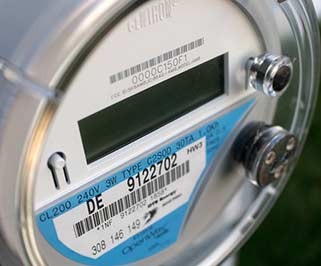
Download Presentation

CCST Logo

A trusted, nonpartisan source of expert science and technology advice for California policymakers, powered by a world-class partner network.

Linkedin Icon
BlueSky
Instagram
X
Facebook Icon
Subscribe to News & Events

Explore

  • Publications

  • People

  • Expert Briefings

  • Fellows Program

  • Careers

  • About CCST

Areas

  • Artificial Intelligence

  • Disaster Resilience

  • Energy

  • Federal Laboratories

  • Strategic Plan

Contact

  • 1100 11th St., Sacramento, CA 95814

  • Mailing: 1017 L St., #438, Sacramento, CA 95814

  • (916) 492-0996

  • Contact CCST

Copyright © 2026 | CCST | Privacy | Integrity | Accessibility


CCST Logo

MENU

  • About
    • Our People
    • Partners
    • Annual Report
    • Careers
    • Contact
  • Fellows
    • Program Overview
    • Fellows and Alumni
    • FAQ
    • Application
  • Science Services
    • Expert Briefings
    • S&T Week
    • Science Day
    • Resilience
    • Artificial Intelligence
    • Distinguished Experts
    • Nominate an Expert
  • Publications
  • News
    • Get Email Updates
    • Events
    • Fellows
    • Press Releases
  • Donate

MENU

×
  • About
    • Our People
    • Partners
    • Annual Report
    • Careers
    • Contact
  • Fellows
    • Program Overview
    • Fellows and Alumni
    • FAQ
    • Application
  • Science Services
    • Expert Briefings
    • S&T Week
    • Science Day
    • Resilience
    • Artificial Intelligence
    • Distinguished Experts
    • Nominate an Expert
  • Publications
  • News
    • Get Email Updates
    • Events
    • Fellows
    • Press Releases
  • Donate


CCST Project

Health Impacts of Radio Frequency from Smart Meters

COMPLETED: March 2011

MENU

  • Overview
  • Publications
  • Comments

Report Comments

Below can be found comments with specific responses to the smart meter report, including citations and/or edits.

Institutions & Organizations

California Department of Public Health

Download

Coalition of California Utilities Employees

Download

Division of Ratepayer Advocates, California Public Utilities Commission

Download

Electric Power Research Institute (EPRI)

Download

The EMR Policy Institute

Download

Federal Communications Commission (FCC)

Download

Pacific Gas & Electric (PG&E)

Download

San Diego Gas & Electric

Download

Southern California Edison

Download

Individuals

William J. Bruno, Ph.D., Los Alamos National Laboratory

Download Edits to Report | Download Separate Comments

David O. Carpenter, M.D., Director, Institute for Health and the Environment, University at Albany

Download

Soula Culver

Download

Joshua Hart, Director, StartSmartMeters.org

Download

Daniel Hirsch

Download

Olle Johansson, Associate Prof., Department of Neuroscience, Karolinska Institute

Download

Yasuko Kato, Journalist, VOC-EMF Measures Research Association, Director

Download

Henry Lai, Ph.D., Department of Bioengineering, University of Washington

Download

Karl Maret, MD, M.Eng., Dove Health Alliance

Download

Samuel Milham MD, MPH, www.sammilham.co

Download

L. Lloyd Morgan, Senior Research Fellow, Environmental Health Trust

Download Article | Download Letter

Raymond Richard Neutra, M.D.

Download

Garril Page

Download

Cindy Sage, MA, Sage Associates

Download First Letter | Download Second Letter

Kellie Smith, Chief Consultant, Senate Committee on Energy, Utilities & Communications

Download

Judy Vick, M.S.

Download

David L. Wilner, Wilner & Associates

Download

General Comments

Susan Foster, MSW

Download

De-Kun Li, MD, PhD, Senior Research Scientist, Kaiser Foundation Research Institute

Download

Lukas Margaritis, Professor, Faculty of Biology, University of Athens

Download

Jeff and Paula Pearce

Download

Mikiko Tokiya, Research Student, Faculty of Medicine, Oita University

Download

Personal Accounts

Ed Eduardo

Download

An Excel file with comments submitted by the following individuals can be downloaded here.

Alan Horn
Alfonso Balmori
Amy O'Hair
Anca Gaston
Andrea Boland
Angela Flynn
Ann Camel
Antonio Gagliardi
Barbara Schnier
Beverly Filip
Carl Casale
Catherine Kleiber Kleiber
Charyl Zehfus
Cheryl Clayton
Christine Hoch
Clark D. Hinderleider, MD, PhD
Cynthia Perkins
D. Wellam
Dave Hubert
David Collling
David Wilner
Diane Matthew
Donna Avent
Dudley Lewis
Electra DM
Elizabeth Barris
Ellen Lesli
Gary Passmore
Glen Chase
J.M. Bock
Jana May
Jeff Klompus
Jim May
Jim Schutz
Jim Warner
Jo Trotter
Joe Odom
John Klay
John Skirzynski
John Sullivan
Jonathan Kramer
Judy Shutes
June Wood
K.T. Eckardt
Karl Maret
Kathleen and Paul Sundmark
Krishnamurthy Raghunandan
  1. Lloyd Morgan
Laurie Birdsall
Laurie Steese
Lawrence Plumlee
Lisa Brown
Lisa Stiefelmaier Leong
Lonna Richmond
Ludwig Moser
Magda Havas
Marleen Luckman
Mary Maio
Maryann Simpson
Matthew Hutcheson
Michael Barnes
Michael Herz
Michael Justice
Nancy Evans
Patty Overton
Phoebe Sorgen
Rachael Koss
Rachel Massaro
Rafael Reyes
Raymond Neutra
Rina Nehdar
Robert Hines
Robert Kavet
Sandi Aders
Sandi Maurer
Sandra Chianfoni
Sandra Ross
Sergio Fierro
Sonya Sakaske
Stephanie Thomas
Steven Golden
Steven Halpern
Sudi Scull
Sue Bozzo
Susan Brinchman
Susan Foster
Susan Parsons
Terry Siemens
Thea Vaughan
Tim Loncarich
Tobie & Ellen Cecil
Troy Alexander
Wayne Palmrose
William Robinson
Wolf Bostedt
Xandra Manns


CCST Logo

A trusted, nonpartisan source of expert science and technology advice for California policymakers, powered by a world-class partner network.

Linkedin Icon

BlueSky

Instagram

X

Facebook Icon


Subscribe to News & Events

Explore

  • Publications

  • People

  • Expert Briefings

  • Fellows Program

  • Careers

  • About CCST

Areas

  • Artificial Intelligence

  • Disaster Resilience

  • Energy

  • Federal Laboratories

  • Strategic Plan


Contact

  • 1100 11th St., Sacramento, CA 95814

  • Mailing: 1017 L St., #438, Sacramento, CA 95814

  • (916) 492-0996

  • Contact CCST

Copyright © 2026 | CCST | Privacy | Integrity | Accessibility


CCST Logo

MENU

  • About
    • Our People
    • Partners
    • Annual Report
    • Careers
    • Contact
  • Fellows
    • Program Overview
    • Fellows and Alumni
    • FAQ
    • Application
  • Science Services
    • Expert Briefings
    • S&T Week
    • Science Day
    • Resilience
    • Artificial Intelligence
    • Distinguished Experts
    • Nominate an Expert
  • Publications
  • News
    • Get Email Updates
    • Events
    • Fellows
    • Press Releases
  • Donate

MENU

×
  • About
    • Our People
    • Partners
    • Annual Report
    • Careers
    • Contact
  • Fellows
    • Program Overview
    • Fellows and Alumni
    • FAQ
    • Application
  • Science Services
    • Expert Briefings
    • S&T Week
    • Science Day
    • Resilience
    • Artificial Intelligence
    • Distinguished Experts
    • Nominate an Expert
  • Publications
  • News
    • Get Email Updates
    • Events
    • Fellows
    • Press Releases
  • Donate


CCST Project

Health Impacts of Radio Frequency from Smart Meters

COMPLETED: March 2011

MENU

  • Overview
  • Publications
  • Comments

Publications

Health Impacts of Radio Frequency from Smart Meters
Full Report:

Download

American Academy of Pediatrics

The Sensitivity of Children to Electromagnetic Fields  – August 3, 2005

Download

Australian Radiation Protection and Nuclear Safety Agency (ARPANSA)

Radiation Protection – Mobile Telephones and Health Effects – June 25, 2010

View External Page

Documents from the California Department of Public Health (CDPH)

Correspondence Provided by Rick Kreutzer, California Department of Health – March 10, 2011

Download

Mixed Signals About Cellphones’ Health Risks Hang Up Research – The Chronicle – September 26, 2010

Download

Summary of the Literature: What do we Know About Cell Phones and Health? – July 20, 2010

Download

Brain Tumor Risk in Relation to Mobile Telephone Use: Results of the INTERPHONE International Case, Oxford University Press – March 8, 2010

Download

Mobile Phones and Health, U.K. Department of Health

Download

Late Lessons from Early Warnings: Towards Realism and Precaution with EMF, David Gee, European Environment Agency – January 30, 2009

Download

Statement of Finnish Radiation and Nuclear Safety Authority (STUK) Concerning Mobile Phones and Health – January 7, 2009

Download

Fact Sheet: Children and Safe Cell Phone Use, Toronto Public Health – July 2008

Download

Children and Mobile phones: The Health of the Following Generations in Danger, Russian National Committee on Non-Ionizing Radiation Protection – April 14, 2008

Download

AFSSE Statement on Mobile Phones and Health, French Environmental Health and Safety Agency – AFSSE – April 16, 2003

Download

Committee on Man and Radiation (COMAR)

IEEE Engineering in Medicine and Biology Society Committee on Man and Radiation (COMAR)

View External Page

COMAR Technical Information Statement the IEEE Exposure Limits for Radiofrequency and Microwave Energy

Download

Commonwealth Club of California

The Health Effects of Electromagnetic Fields (Video) – November 18, 2010

View External Page

Electric Power Research Institute (EPRI)

EMF/RF Program at EPRI

View External Page

Radio-Frequency Exposure Levels from Smart Meters: A Case Study of One Model – February 2011

Download

Environmental Protection Agency

EPA’s Response to Janet Newton – March 8, 2002

Download

EPA’s Response to Jo-Anne Basile – September 16, 2002

Download

Epidemiology

Prenatal and Postnatal Exposure to Cell Phone Use and Behavioral Problems in Children – July 2008 – Volume 19 – Issue 4 – pp 523-529

View External Page

European Journal of Oncology – Ramazzini Institute

Non-Thermal Effects and Mechanisms of Interaction between Electromagnetic Fields and Living Matter – 2010

Download

Federal Communications Commission

Radio Frequency Safety FAQs

View External Page

RF Safety Page

View External Page

Statement Provided by Robert Weller, Chief, Technical Analysis Branch, Office of Engineering and Technology, Federal Communications Commission, Regarding FCC Regulations – February 3, 2011

Download

Federal Communications Commission Response to Cindy Sage – August 6, 2010

Download

FFC Certifications for the Silver Spring Networks Devices

Download – September 28, 2009 – 1st Approval

Download – September 28, 2009 – 2nd Approval

Download – July 6, 2009

Download – September 4, 2007

Questions and Answers about Biological Effects and Potential Hazards of Radiofrequency Electromagnetic Fields – August 1999

Download from External Site

Evaluating Compliance with FCC Guidelines for Human Exposure to Radiofrequency Electromagnetic Fields – August 1997

Download from External Site

Food and Drug Administration

No Evidence Linking Cell Phone Use to Risk of Brain Tumors – May 2010

Download

U.K. Health Protection Agency

Wi-Fi – Last Reviewed October 26, 2009

View External Page

International Commission on Non-Ionizing Radiation Protection (ICNIRP)

ICNIRP Statement on the “Guidelines for Limiting Exposure to Time-Varying Electric, Magnetic, and Electromagnetic Fields (up to 300 GHz)” – September 2009

Download

Epidemiologic Evidence on Mobile Phones and Tumor Risk – September 2009

Download

Exposure to High Frequency Electromagnetic Fields, Biological Effects and Health Consequences (100 kHz – 300 GHz) – 2009

Download

National Academies Press

Identification of Research Needs Relating to Potential Biological or Adverse Health Effects of Wireless Communication – 2008

Download

An Assessment of Potential Health Effects from Exposure to PAVE PAWS Low-Level Phased-Array Radiofrequency Energy – 2005

Download

National Cancer Institute

Cell Phones and Cancer Risk (Fact Sheet)

View External Page

Cell Phones and Brain Cancer: What We Know (and Don’t Know) – September 23, 2008

Download

National Institute of Environmental Health Sciences

Electric & Magnetic Fields

View External Page

PG&E

Understanding Radio Frequency (RF)

View External Page

Smart Grid: Utility Challenges in the 21st Century – Andrew Tang, Smart Energy Web – September 18, 2009

Download

Supplemental Report on An Analysis of Radiofrequency Fields Associated with Operation of PG&E SmartMeter Program Upgrade System  – October 27, 2008

Download from External Site

Summary Discussion of RF Fields and the PG&E SmartMeter System (2005 Report and 2008 Supplemental Report)

Download from External Site

Analysis of RF Fields Associated with Operation of PG&E Automatic Meter Reading Systems – April 5, 2005

Download from External Site

Provided by Jerrold Bushberg

Background on the Thermal vs. Non-thermal Exposure and Health Issue – March 2011

Download

Provided by Raymond Neutra

Should the World Health Organization (W.H.O.) Apply the Precautionary Principal to Low and High Frequency Electromagnetic Fields? – October 2010

Download

Society for Risk Analysis

Risk Governance for Mobile Phones, Power Lines and Other EMF Technologies – 2010

Download

University of Ottawa

Wireless Communication and Health – Electromagnetic Energy and Radiofrequency Radiation FAQs

View External Page

World Health Organization

Electromagnetic Fields (EMF)

View External Page

Electromagnetic Fields and Public Health – Mobile Phones

View External Page

Electromagnetic fields (EMF) – Fact sheets and Backgrounders

View External Page

Unsolicited Submission – Alexander Blink, Executive Director of the DE-Toxics Institute, Fairfax CA

Points and Sources Submitted for Consideration by Alexander Blink 1

Download

Points and Sources Submitted for Consideration by Alexander Blink 2

Download

Public Health Implications of Wireless Technologies, Cindy Sage

Download

Memory and Behavior, By Henry Lai, Bioelectromagnetics Research Laboratory, University of Washington

Download

Unsolicited Submission – Sage Consulting

Assessment of Radiofrequency Microwave Radiation Emissions from Smart Meters

View External Page

Cindy Sage Letter to Julius Knapp (FCC) – September 22, 2010

Download

Response Letter to Cindy Sage from Julius Knapp (FCC) – August 6, 2010

Download

Cindy Sage Letter to Edwin D. Mantiply (FCC) – March 15, 2010

Download

Bioinitiative Report: A Rationale for a Biologically-based Public Exposure Standard for Electromagnetic Fields (ELF and RF)

Download

Bioinitiative Report: What is the BioInitiative Report?

Download

Bioinitiative Report: Myocardial Function Improved by Electromagnetic Field Induction of Stress Protein hsp70

Download

Bioinitiative Report: The Interphone Brain Tumor Study – Cindy Sage, Editorial Perspective

Download

Bioinitiative Report: Steps to the Clinic with ELF EM

Download

Mobile Phone Base Stations – Effects on Wellbeing and Health – Pathophysiology  – August 2009

Download

Increased Blood-Brain Barrier Permeability in Mammalian Brain 7 Days after Exposure to the Radiation from a GSM-900 Mobile Phone – Pathophysiology – August 2009

Download

Public Health Implications of Wireless Technologies – Pathophysiology – August 2009

Download

Genotoxic Effects of Radiofrequency Electromagnetic Fields – Pathophysiology – August 2009

Download

Epidemiological Evidence for an Association Between Use of Wireless Phones and Tumor Diseases – Pathophysiology – August 2009

Download

Public Health Risks from Wireless Technologies: The Critical Need for Biologically-based Public Exposure Standards for Electromagnetic Fields – BioInitiative Briefing for President-Elect Obama Transition Team

Download

The BioInitiative Report: A Rationale for A Biologically-based Public Exposure Standard for Electromagnetic Fields (ELF and RF) – Cindy Sage PowerPoint Presentation – November 2007

Download

Unsolicited Submission – Wilner & Associates

SmartMeters and Existing Electromagnetic Pollution – January 2011

(Please note: This study was not commissioned by CCST)

Download

Application for Modification Before the California Public Utilities Commission

Download

Other Documents

Health Canada Safety Code 6 and City of Toronto’s Proposed Prudent Avoidance Policy – 2010

Download

Transmitting Smart Meters Pose A Serious Threat To Public Health – Electricalpollution.com

View External Page

RF Safety and WiMax FAQs: Addressing Concerns About Perceived Health Effects

Download from External Site

Scientific Panel on Electromagnetic Field Health Risks: Consensus Points, Recommendations, and Rationales – NCBI – 2011

View External Page

Mobile Phone Health Hazard: Call for Changes in Radiation Norms – The Hindu – February 2011

View External Page

Relevant Websites

EMF-Portal of the RWTH Aachen University

Visit External Page

EMFacts Consultancy

Visit External Page

EMF Safety Network

Visit External Page

LBA Group

Visit External Page

CDC’s NIOSH Program Portfolio

Visit External Page

Stop Smart Meters

Visit External Page

Press Release

(Jan. 11, 2011)


Joint Press Release from Assembly Members Monning and Huffman

Smart Meter Project

Request Letters

2010


July 30 — From Assemblymember Jared Huffman


September 15 — From Assemblymember William Monning


September 20 — From Mill Valley City Council

Expert Responses

2010


July 10 — Cindy Sage, MA, Research Fellow, Department of Oncology


September 23 — Kenneth Foster, Ph.D., Physicist


October 12 — Asher Sheppard, Ph.D., Consultant in Environmental Science


October 12— Magda Havas, Ph.D., Environmental & Resource Studies


Undated — Rob Kavet, Physiologist/Engineer


Undated — De-Kun Li, MD, Ph.D., Senior Reproductive and Perinatal Epidemiologist

Related Publications


Jan 16, 2026

California’s Federal Labs and Research Centers: 2025 Impact Report


Cover photo of the labs impact report, image by NASA JPL


Read More


Jun 24, 2025

Preparing California’s Energy Grid for Load Sources at Scale


First page of the one pager


Read More


May 28, 2025

Aligning California’s Hydrogen Research and Innovation Agenda: Workshop Proceedings


Front cover of the proceedings with a logo featuring California and H2, witht hte workshop title and a large image of a hydrogen gas stations fuel dispenser on cloudy sky. 3d illustration


Read More


Nov 18, 2024

Aligning California’s Hydrogen Research & Innovation Agenda: Workshop Read-Ahead Materials


Front cover of the report with a logo featuring California and H2, witht hte workshop title and a large image of a hydrogen gas stations fuel dispenser on cloudy sky. 3d illustration


Read More


CCST Logo

A trusted, nonpartisan source of expert science and technology advice for California policymakers, powered by a world-class partner network.

Linkedin Icon

BlueSky

Instagram

X

Facebook Icon


Subscribe to News & Events

Explore

  • Publications

  • People

  • Expert Briefings

  • Fellows Program

  • Careers

  • About CCST

Areas

  • Artificial Intelligence

  • Disaster Resilience

  • Energy

  • Federal Laboratories

  • Strategic Plan


Contact

  • 1100 11th St., Sacramento, CA 95814

  • Mailing: 1017 L St., #438, Sacramento, CA 95814

  • (916) 492-0996

  • Contact CCST

Copyright © 2026 | CCST | Privacy | Integrity | Accessibility

CCST Logo
MENU
  • About
    • Our People
    • Partners
    • Annual Report
    • Careers
    • Contact
  • Fellows
    • Program Overview
    • Fellows and Alumni
    • FAQ
    • Application
  • Science Services
    • Expert Briefings
    • S&T Week
    • Science Day
    • Resilience
    • Artificial Intelligence
    • Distinguished Experts
    • Nominate an Expert
  • Publications
  • News
    • Get Email Updates
    • Events
    • Fellows
    • Press Releases
  • Donate
MENU
×
  • About
    • Our People
    • Partners
    • Annual Report
    • Careers
    • Contact
  • Fellows
    • Program Overview
    • Fellows and Alumni
    • FAQ
    • Application
  • Science Services
    • Expert Briefings
    • S&T Week
    • Science Day
    • Resilience
    • Artificial Intelligence
    • Distinguished Experts
    • Nominate an Expert
  • Publications
  • News
    • Get Email Updates
    • Events
    • Fellows
    • Press Releases
  • Donate

CCST Project

Critical Path Analysis of California's S&T Education System

COMPLETED: April 2002

MENU
  • Overview
  • Publications

Publications

Critical Path Analysis of California’s S&T Education System
Full Report:

Download

1: California’s Demand for a Science and Technology Workforce

Download

2: California’s K-12 Sector

Download

3: Universities and Colleges in California

Download

4: Issues Impacting Baccalaureate Degrees

Download

5: Alternative Paths to Competency through Continuing Education and Lifelong Learning

Download

6: Bridging the Digital Divide

Download

Related Publications

Apr 21, 2021

CCST Partner Institutions in Action Against COVID-19
Cover with title and image of gloved hands stretching out a California state flag mask.
Read More

Dec 20, 2017

The Maker Movement and K-12 Education: Current Status and Opportunities for Engagement in California
The Maker Movement is rapidly growing at educational institutions around the world and across age and employment levels, from kindergarten to mid- and late-career.
Read More

Nov 1, 2017

CCC Maker Symposium Proceedings
This paper includes proceedings, interviews, and photos from the InnovationMaker3 Symposium Series.
Read More

Aug 29, 2016

InnovationMaker3 Symposium Series Summary
The Maker Movement is growing at educational institutions around the world, across age and employment levels, from kindergarten to mid- and late-career.
Read More
CCST Logo

A trusted, nonpartisan source of expert science and technology advice for California policymakers, powered by a world-class partner network.

Linkedin Icon
BlueSky
Instagram
X
Facebook Icon
Subscribe to News & Events

Explore

  • Publications

  • People

  • Expert Briefings

  • Fellows Program

  • Careers

  • About CCST

Areas

  • Artificial Intelligence

  • Disaster Resilience

  • Energy

  • Federal Laboratories

  • Strategic Plan

Contact

  • 1100 11th St., Sacramento, CA 95814

  • Mailing: 1017 L St., #438, Sacramento, CA 95814

  • (916) 492-0996

  • Contact CCST

Copyright © 2026 | CCST | Privacy | Integrity | Accessibility

CCST Logo
MENU
  • About
    • Our People
    • Partners
    • Annual Report
    • Careers
    • Contact
  • Fellows
    • Program Overview
    • Fellows and Alumni
    • FAQ
    • Application
  • Science Services
    • Expert Briefings
    • S&T Week
    • Science Day
    • Resilience
    • Artificial Intelligence
    • Distinguished Experts
    • Nominate an Expert
  • Publications
  • News
    • Get Email Updates
    • Events
    • Fellows
    • Press Releases
  • Donate
MENU
×
  • About
    • Our People
    • Partners
    • Annual Report
    • Careers
    • Contact
  • Fellows
    • Program Overview
    • Fellows and Alumni
    • FAQ
    • Application
  • Science Services
    • Expert Briefings
    • S&T Week
    • Science Day
    • Resilience
    • Artificial Intelligence
    • Distinguished Experts
    • Nominate an Expert
  • Publications
  • News
    • Get Email Updates
    • Events
    • Fellows
    • Press Releases
  • Donate

CCST Project

California's Energy Future - The View to 2050

COMPLETED: January 2015

MENU
  • Overview
  • Publications

Publications

California’s Energy Future: The View to 2050
Full Report:

Download

California’s Energy Future – Powering California with Nuclear Energy
Full Report:

Download

California’s Energy Future – Transportation Energy Use in California
Full Report:

Download

California’s Energy Future – Electricity from Renewable Energy and Fossil Fuels with CCS
Full Report:

Download

California’s Energy Future – Portraits of Energy Systems for Meeting Greenhouse Gas Reduction Requirements
Full Report:

Download

California’s Energy Future: Building and Industrial Efficiency
Full Report:

Download

California’s Energy Future: The Potential for Biofuels
Full Report:

Download

Policies for California’s Energy Future – Electricity Pricing and Electrification for Efficient Greenhouse Gas Reductions
Full Report:

Download

Policies for California’s Energy Future – Scaling Up Advanced Biofuels
Full Report:

Download

Policies for California’s Energy Future – How to Choose a Climate Friendly Electricity System for the Future
Full Report:

Download

Policies for California’s Energy Future – Electricity from Natural Gas with CO2 Capture for Enhanced Oil Recovery
Full Report:

Download

Related Publications

Jan 16, 2026

California’s Federal Labs and Research Centers: 2025 Impact Report
Cover photo of the labs impact report, image by NASA JPL
Read More

Jun 24, 2025

Preparing California’s Energy Grid for Load Sources at Scale
First page of the one pager
Read More

May 28, 2025

Aligning California’s Hydrogen Research and Innovation Agenda: Workshop Proceedings
Front cover of the proceedings with a logo featuring California and H2, witht hte workshop title and a large image of a hydrogen gas stations fuel dispenser on cloudy sky. 3d illustration
Read More

Nov 18, 2024

Aligning California’s Hydrogen Research & Innovation Agenda: Workshop Read-Ahead Materials
Front cover of the report with a logo featuring California and H2, witht hte workshop title and a large image of a hydrogen gas stations fuel dispenser on cloudy sky. 3d illustration
Read More
CCST Logo

A trusted, nonpartisan source of expert science and technology advice for California policymakers, powered by a world-class partner network.

Linkedin Icon
BlueSky
Instagram
X
Facebook Icon
Subscribe to News & Events

Explore

  • Publications

  • People

  • Expert Briefings

  • Fellows Program

  • Careers

  • About CCST

Areas

  • Artificial Intelligence

  • Disaster Resilience

  • Energy

  • Federal Laboratories

  • Strategic Plan

Contact

  • 1100 11th St., Sacramento, CA 95814

  • Mailing: 1017 L St., #438, Sacramento, CA 95814

  • (916) 492-0996

  • Contact CCST

Copyright © 2026 | CCST | Privacy | Integrity | Accessibility


CCST Logo

MENU

  • About
    • Our People
    • Partners
    • Annual Report
    • Careers
    • Contact
  • Fellows
    • Program Overview
    • Fellows and Alumni
    • FAQ
    • Application
  • Science Services
    • Expert Briefings
    • S&T Week
    • Science Day
    • Resilience
    • Artificial Intelligence
    • Distinguished Experts
    • Nominate an Expert
  • Publications
  • News
    • Get Email Updates
    • Events
    • Fellows
    • Press Releases
  • Donate

MENU

×
  • About
    • Our People
    • Partners
    • Annual Report
    • Careers
    • Contact
  • Fellows
    • Program Overview
    • Fellows and Alumni
    • FAQ
    • Application
  • Science Services
    • Expert Briefings
    • S&T Week
    • Science Day
    • Resilience
    • Artificial Intelligence
    • Distinguished Experts
    • Nominate an Expert
  • Publications
  • News
    • Get Email Updates
    • Events
    • Fellows
    • Press Releases
  • Donate


CCST Project

California Report on the Environment for Science and Technology (CREST)

COMPLETED: November 1999

MENU

  • Overview
  • Publications

Publications

California Report on the Environment for Science and Technology (CREST)
Full Report:

Download

Executive Summary

Download

CREST 1: California Science and Technology Indicators

Download

CREST 2: The Role of the State in Research and Development Funding

Download

CREST 3: Analysis of California R&D Funding from 1994-1995 to 1996-1997

Download

CREST 4: Effectiveness of the California R&D Tax Credit

Download

CREST 5: California Venture Capital Infrastructure Study

Download

CREST 6: Private Foundation Support for Science and Technology in California

Download

CREST 7: Industry Sector Analysis of the Supply and Demand of Skilled Labor in California

Download

CREST 8: California’s Inventive Activity: Patent Indicators of Quantity, Quality, and Organizational Origins

Download

CREST 9: California’s Science Base: Size, Quality, and Productivity

Download

CREST 10: Science and Technology Skilled Workforce and Related Educational Issues

Download

CREST 11: An Analysis of Major Federal Laboratories in California Vol. I: Overview

Download

CREST 12: An Analysis of Major Federal Laboratories in California Vol. II: Policy Options and Background Information

Download

Related Publications


Jul 21, 2026

Fumigant Use in California and an Assessment of Available Alternatives: Phase II Report on Methyl Bromide and the MITC Generators


Report cover with an image of rows of farmland in California from Adobe Stock and CCST's logo


Read More


May 6, 2026

Post-Harvest Commodity Fumigation in California


Post-Harvest Commodity Fumigants in Califonria round table proceedings cover image.


Read More


Feb 3, 2026

Fumigant Use in California and an Assessment of Available Alternatives: Phase II Report on Structural Fumigation with Sulfuryl Fluoride


Report cover with an image of a window with termite damage from Adobe Stock and CCST's logo


Read More


Aug 18, 2025

Wildland Fire Smoke and Public Health


Report cover with title and CCST logo on a white background and a large image of a firefighter amid grass fire smoke.


Read More


CCST Logo

A trusted, nonpartisan source of expert science and technology advice for California policymakers, powered by a world-class partner network.

Linkedin Icon

BlueSky

Instagram

X

Facebook Icon


Subscribe to News & Events

Explore

  • Publications

  • People

  • Expert Briefings

  • Fellows Program

  • Careers

  • About CCST

Areas

  • Artificial Intelligence

  • Disaster Resilience

  • Energy

  • Federal Laboratories

  • Strategic Plan


Contact

  • 1100 11th St., Sacramento, CA 95814

  • Mailing: 1017 L St., #438, Sacramento, CA 95814

  • (916) 492-0996

  • Contact CCST

Copyright © 2026 | CCST | Privacy | Integrity | Accessibility

CCST Logo
MENU
  • About
    • Our People
    • Partners
    • Annual Report
    • Careers
    • Contact
  • Fellows
    • Program Overview
    • Fellows and Alumni
    • FAQ
    • Application
  • Science Services
    • Expert Briefings
    • S&T Week
    • Science Day
    • Resilience
    • Artificial Intelligence
    • Distinguished Experts
    • Nominate an Expert
  • Publications
  • News
    • Get Email Updates
    • Events
    • Fellows
    • Press Releases
  • Donate
MENU
×
  • About
    • Our People
    • Partners
    • Annual Report
    • Careers
    • Contact
  • Fellows
    • Program Overview
    • Fellows and Alumni
    • FAQ
    • Application
  • Science Services
    • Expert Briefings
    • S&T Week
    • Science Day
    • Resilience
    • Artificial Intelligence
    • Distinguished Experts
    • Nominate an Expert
  • Publications
  • News
    • Get Email Updates
    • Events
    • Fellows
    • Press Releases
  • Donate

CCST Project

California Public Interest Energy Research (PIER)

COMPLETED: June 2005

MENU
  • Overview
  • Publications
  • Process

Publications

California Public Interest Energy Research (PIER) Independent PIER Review Panel Interim Report
Full Report:

Download

California Public Interest Energy Research (PIER) Independent PIER Review Panel Report
Full Report:

Download

Executive Summary with Addendum

Download

2004 PIER Interim Report

Download

2001 PIER Final Report

Download

2000 Pier Interim Report

Download

California Public Interest Energy Research (PIER) Independent Review Panel Final Report
Full Report:

Download

California Public Interest Energy Research (PIER) Independent Review Panel Interim Report
Full Report:

Download

Related Publications

Jan 16, 2026

California’s Federal Labs and Research Centers: 2025 Impact Report
Cover photo of the labs impact report, image by NASA JPL
Read More

Jun 24, 2025

Preparing California’s Energy Grid for Load Sources at Scale
First page of the one pager
Read More

May 28, 2025

Aligning California’s Hydrogen Research and Innovation Agenda: Workshop Proceedings
Front cover of the proceedings with a logo featuring California and H2, witht hte workshop title and a large image of a hydrogen gas stations fuel dispenser on cloudy sky. 3d illustration
Read More

Nov 18, 2024

Aligning California’s Hydrogen Research & Innovation Agenda: Workshop Read-Ahead Materials
Front cover of the report with a logo featuring California and H2, witht hte workshop title and a large image of a hydrogen gas stations fuel dispenser on cloudy sky. 3d illustration
Read More
CCST Logo

A trusted, nonpartisan source of expert science and technology advice for California policymakers, powered by a world-class partner network.

Linkedin Icon
BlueSky
Instagram
X
Facebook Icon
Subscribe to News & Events

Explore

  • Publications

  • People

  • Expert Briefings

  • Fellows Program

  • Careers

  • About CCST

Areas

  • Artificial Intelligence

  • Disaster Resilience

  • Energy

  • Federal Laboratories

  • Strategic Plan

Contact

  • 1100 11th St., Sacramento, CA 95814

  • Mailing: 1017 L St., #438, Sacramento, CA 95814

  • (916) 492-0996

  • Contact CCST

Copyright © 2026 | CCST | Privacy | Integrity | Accessibility

CCST Logo
MENU
  • About
    • Our People
    • Partners
    • Annual Report
    • Careers
    • Contact
  • Fellows
    • Program Overview
    • Fellows and Alumni
    • FAQ
    • Application
  • Science Services
    • Expert Briefings
    • S&T Week
    • Science Day
    • Resilience
    • Artificial Intelligence
    • Distinguished Experts
    • Nominate an Expert
  • Publications
  • News
    • Get Email Updates
    • Events
    • Fellows
    • Press Releases
  • Donate
MENU
×
  • About
    • Our People
    • Partners
    • Annual Report
    • Careers
    • Contact
  • Fellows
    • Program Overview
    • Fellows and Alumni
    • FAQ
    • Application
  • Science Services
    • Expert Briefings
    • S&T Week
    • Science Day
    • Resilience
    • Artificial Intelligence
    • Distinguished Experts
    • Nominate an Expert
  • Publications
  • News
    • Get Email Updates
    • Events
    • Fellows
    • Press Releases
  • Donate

CCST Project

California Public Interest Energy Research (PIER)

COMPLETED: June 2005

MENU
  • Overview
  • Publications
  • Process

Process

1st Public Interest Energy Research (PIER) Independent Review (1999-2001)Expand

The PIER IRP completed two reports, a preliminary report in March 2000 and a final report in March 2001. The evaluation included a review of the public value of the PIER program, including monetary and non-monetary benefits to public health and the environment of its programs in providing funds for technology development that would otherwise not be adequately funded. The preliminary and final PIER Independent Review Panel reports including recommendations provided guidance.

2nd Public Interest Energy Research (PIER) Independent Review (2003-2005)Expand

In 2002, Senate Bill 1038 required that the CEC convene a new independent review and critique of the PIER program. A collaborative effort between the CEC, PIER management and CCST created a new review team comprised of some members of the first review together with new members. The second PIER IRP examined PIER program planning and management practices, the context of California's state energy policies, administrative and organizational issues, research review processes and advisory committee functions. The final report was released in March 2005 and submitted to the Legislature and Governor. Included in the final report were recommendations for strengthening the PIER program and fulfilling its potential for being California's world class RD&D organization.

Panel Members

  • Carl J. Wienberg, Chair

  • Linda R. Cohen, Vice-Chair

  • Robert P. (Chris) Caren

  • T. Kenneth Fowler

  • Harold M. (Hub) Hubbard

  • Alan C. Lloyd

  • Johnetta MacCalla

  • William J. McLean

  • Peter M. Miller

  • Maxine L. Savitz

  • Jananne Sharpless

  • Esteban Soriano

  • Arnold M. Sowell, Jr.

  • James L. Sweeney

  • Irwin L. (Jack) White

Committee Members' Bios

  • Miriam John Ph.D

  • Richard E. Balzhiser Ph.D

  • Michael R. Anastasio Ph.D

  • Lawrence B. Coleman Ph.D

  • Susan Hackwood Ph.D

  • G. Scott Hubbard Ph.D

  • John P. McTague Ph.D

  • Anneila Sargent Ph.D

Miriam John Ph.D

Vice President, California Division

Sandia National Laboratories

Miriam John is currently vice president of Sandia’s California Division. Prior to her current position, John served as the director of the Center for Exploratory Systems and Development and in a number of managerial and technical roles for the laboratory, including nuclear weapons development, systems analysis, and thermal analysis/fluid mechanics R&D. John received a B.S. in chemistry from Rice University, an M.S. in chemical engineering from Tulane University, and a Ph.D. in chemical engineering from Princeton University. Concurrent with her Sandia assignments, John has been recruited for a number of defense community efforts. She is a member of the Department of Defense’s Threat Reduction Advisory Committee (for which she chairs the Nuclear Deterrent Transformation Panel), the National Research Council’s Naval Studies Board and Board on Army Science and Technology. She is a recent past member of the Air Force Scientific Advisory Board and DOE’s National Commission on Science and Security. She is a National Associate of the National Academies of Science and Engineering.

Richard E. Balzhiser Ph.D

President & CEO (Retired), President Emeritus

Electric Power Research Institute

Richard E. Balzhiser retired as president and chief executive officer of the Electric Power Research Institute (EPRI) in August 1996. He remains active in a president emeritus role at EPRI in addition to serving on the boards of Reliant Energy, Aerospace, Electrosource, and Nexant. Balzhiser joined EPRI in 1973 at the time of its founding as director of the Fossil Fuel and Advanced Systems Division. He became vice president of Research and Development in 1979 and executive vice president in 1987 before assuming the presidency in 1988. Prior to joining EPRI, he served in the White House Office of Science and Technology as assistant director for Energy, Environment and National Resources, 1971-1973. He was professor of Chemical Engineering from 1960-70, except for 1967-68 when he served as a White House Fellow in the Office of the Secretary of Defense. He was twice elected to serve on the Ann Arbor City Council. Balzhiser received his B.S. and Ph.D. degrees in chemical engineering and his M.S. in nuclear engineering from the University of Michigan and was an Academic All American on Michigan’s 1953 football team.

Michael R. Anastasio Ph.D

Director

Lawrence Livermore National Laboratory

Michael R. Anastasio is the ninth director to lead Lawrence Livermore National Laboratory (LLNL) since it was founded in 1952. Anastasio received a bachelor’s degree in physics from Johns Hopkins University and his M.A. and Ph.D. in theoretical nuclear physics from the State University of New York at Stony Brook. His career at Lawrence Livermore began in 1980 as a physicist in B- Division, one of the two nuclear weapons design physics divisions. Most recently, as deputy director for Strategic Operations, Anastasio played a key role in relationships with the University of California and the National Nuclear Security Administration. He is the recipient of the 1990 DOE Weapons Recognition of Excellence Award for technical leadership in nuclear design.

Lawrence B. Coleman Ph.D

Vice Provost for Research, Professor of Physics

University of California, Davis

Lawrence B. Coleman is the University of California vice provost for Research and professor of Physics at the University of California, Davis. He served as chair of the University-wide Academic Senate in the 1999-2000 academic year following a year as vice chair of the University of California Senate. Arriving at Davis in 1976, he was promoted to associate professor in 1982. While at the University of California, Davis he has held the positions of chair, Davis Division of the Academic Senate, 1995-1997; director, The Internship and Career Center, 1988-1994; acting vice provost, Academic Programs and dean, Undergraduate Studies, 1991-1992; and acting associate vice chancellor, Academic Programs, 1990-1991. Lawrence Coleman received a Ph.D. from the University of Pennsylvania in 1975 in experimental condensed matter physics. He received a B.A. in physics from The Johns Hopkins University in 1970.

Susan Hackwood Ph.D

Executive Director

California Council on Science and Technology

Susan Hackwood is currently professor of Electrical Engineering at the University of California, Riverside and executive director of the California Council on Science and Technology. Hackwood received a Ph.D. in solid state ionics in 1979 from DeMontfort University, UK. Before joining academia, she was department head of Device Robotics Technology Research at AT&T Bell Labs. In 1984, she joined the University of California, Santa Barbara as professor of electrical and computer engineering and was founder and director of the National Science Foundation Engineering Research Center for Robotic Systems in Microelectronics. In 1990, Hackwood became the founding dean of the Bourns College of Engineering at the University of California, Riverside.

G. Scott Hubbard Ph.D

Director

NASA Ames Research Center

Scott Hubbard serves as director of the NASA’s Ames Research Center in the heart of California’s Silicon Valley. Prior to his appointment, Hubbard was the deputy director for Research at Ames. In March of 2000, Hubbard was called to NASA Headquarters, where he served as the first Mars program director and successfully restructured the entire Mars program in the wake of mission failures. Some of Hubbard’s previous key roles include Ames associate director for Astrobiology and Space Programs; first director of NASA’s Astrobiology Institute, and manager of the Lunar Prospector Mission. He is also credited with creating the Mars Pathfinder Mission. Prior to coming to Ames in 1987, Hubbard was vice president and general manager of Canberra Semiconductor and a staff scientist at Lawrence Berkeley National Laboratory. Hubbard received a B.A. in physics and astronomy from Vanderbilt University and his graduate education in solid state and semiconductor physics at the University of California, Berkeley. He was awarded NASA’s highest honor, the Distinguished Service Medal, for his contributions to the Columbia accident investigation.

John P. McTague Ph.D

Professor of materials

University of California, Santa Barbara

John P. McTague is currently professor of Materials for the University of California, Santa Barbara. He is the past vice president, Laboratory Management at the University of California, Office of the President. A physical chemist, McTague received his undergraduate degree with honors in chemistry from Georgetown University in 1960 and his Ph.D. from Brown University in 1965. Brown also bestowed on him an honorary Sc.D. in 1997. McTague was founding co-chair of the Department of Energy National Laboratory Operations Board and a member of the Secretary of Energy Advisory Board from its inception in 1990 through 2000. In January 1999, he retired from Ford Motor Company, where he served more than 12 years, first as vice president of Research and then as vice president of Technical Affairs. Prior to 1986 McTague served as deputy director and acting director of the White House Office of Science and Technology Policy, and was acting science advisor to President Reagan. During the Bush administration he was a member of the President’s Council of Advisors on Science and Technology and U.S. Chair of the U.S.-Japan High Level Advisory Panel on Science and Technology.

Anneila Sargent Ph.D

Director

Owens Valley Radio Observatory & Combined Array for Research in Millimeter-wave Astronomy

Anneila Sargent is professor of astronomy at the California Institute of Technology (Caltech), director of Caltech’s Owens Valley Radio Observatory, and director of the Combined Array for Research in Millimeter-wave Astronomy (CARMA). She received her B.Sc. with honors in physics from the University of Edinburgh, and her Ph.D. in astronomy from Caltech. Her career has been spent at Caltech where, following her Ph.D., she moved through the research faculty ranks to become a senior research associate in astronomy in 1990. She was named associate director of Owens Valley Radio Observatory in 1992 and director in 1996. She has been a professor of astronomy since 1998 and is now the first director of CARMA.

Professor Sargent was the California Institute of Technology’s 1988 “Woman of the Year.” She was awarded the NASA Public Service Medal in 1998 and named an associate of the Royal Astronomical Society in 2001. In 2002, she was University of Edinburgh Alumna of the Year, and was awarded the George Darwin Lectureship of the Royal Astronomical Society in 2003.

Sargent has served on a wide variety of national advisory committees, including the National Research Council (NRC) Committee on Astronomy & Astrophysics and the NSF’s Mathematical and Physical Sciences Advisory Committee.


CCST Logo

A trusted, nonpartisan source of expert science and technology advice for California policymakers, powered by a world-class partner network.

Linkedin Icon
BlueSky
Instagram
X
Facebook Icon
Subscribe to News & Events

Explore

  • Publications

  • People

  • Expert Briefings

  • Fellows Program

  • Careers

  • About CCST

Areas

  • Artificial Intelligence

  • Disaster Resilience

  • Energy

  • Federal Laboratories

  • Strategic Plan

Contact

  • 1100 11th St., Sacramento, CA 95814

  • Mailing: 1017 L St., #438, Sacramento, CA 95814

  • (916) 492-0996

  • Contact CCST

Copyright © 2026 | CCST | Privacy | Integrity | Accessibility

CCST Logo
MENU
  • About
    • Our People
    • Partners
    • Annual Report
    • Careers
    • Contact
  • Fellows
    • Program Overview
    • Fellows and Alumni
    • FAQ
    • Application
  • Science Services
    • Expert Briefings
    • S&T Week
    • Science Day
    • Resilience
    • Artificial Intelligence
    • Distinguished Experts
    • Nominate an Expert
  • Publications
  • News
    • Get Email Updates
    • Events
    • Fellows
    • Press Releases
  • Donate
MENU
×
  • About
    • Our People
    • Partners
    • Annual Report
    • Careers
    • Contact
  • Fellows
    • Program Overview
    • Fellows and Alumni
    • FAQ
    • Application
  • Science Services
    • Expert Briefings
    • S&T Week
    • Science Day
    • Resilience
    • Artificial Intelligence
    • Distinguished Experts
    • Nominate an Expert
  • Publications
  • News
    • Get Email Updates
    • Events
    • Fellows
    • Press Releases
  • Donate

CCST Project

Biomethane

COMPLETED: June 2018

MENU
  • Overview
  • Publications
  • Process
  • Authors & Staff

Publications

Biomethane in California Common Carrier Pipelines: Assessing Heating Value and Maximum Siloxane Specifications
Full Report:

Download

Summary Report

Download

Press Release – June 7, 2018

Download

CCST One Pager: Biomethane in California Common Carrier Pipelines

Download

Frequently Asked Questions: CCST Report on Biomethane in California Common Carrier Pipelines

Download

Briefing PowerPoint presentation

Download

CCST Facilitated Expert Opinion on Siloxanes Concentration

Download

Related Publications

Nov 12, 2021

An Assessment of Oil and Gas Water Cycle Reporting in California
An image of the cover of the report, which has a blue stripe down the left side, and the title with details on a white background and a photo of an oil field.
Executive Summary Download Cover Letter Download One Pager Download Phase I Report Download
Read More

Jan 23, 2020

Orphan Wells in California
CCST Orphan Wells Cover
An initial assessment of the state of California's potential liability to plug and decommission oil and gas wells.
Read More

Oct 10, 2018

Orphan Wells in California
Orphan Wells Project Website
CCST has been asked by the Division of Oil, Gas, and Geothermal Resources to assess the scope of the liability posed by abandoned oil wells in California, and potential mitigation options.
Read More

Aug 7, 2018

SB 1281 – Oil and Gas Water Cycle Reporting
SB 1281 Project Website
CCST has been asked to evaluate the water data the Division of Oil, Gas, and Geothermal Resources collects in accordance with SB 1281.
Read More
CCST Logo

A trusted, nonpartisan source of expert science and technology advice for California policymakers, powered by a world-class partner network.

Linkedin Icon
BlueSky
Instagram
X
Facebook Icon
Subscribe to News & Events

Explore

  • Publications

  • People

  • Expert Briefings

  • Fellows Program

  • Careers

  • About CCST

Areas

  • Artificial Intelligence

  • Disaster Resilience

  • Energy

  • Federal Laboratories

  • Strategic Plan

Contact

  • 1100 11th St., Sacramento, CA 95814

  • Mailing: 1017 L St., #438, Sacramento, CA 95814

  • (916) 492-0996

  • Contact CCST

Copyright © 2026 | CCST | Privacy | Integrity | Accessibility

CCST Logo
MENU
  • About
    • Our People
    • Partners
    • Annual Report
    • Careers
    • Contact
  • Fellows
    • Program Overview
    • Fellows and Alumni
    • FAQ
    • Application
  • Science Services
    • Expert Briefings
    • S&T Week
    • Science Day
    • Resilience
    • Artificial Intelligence
    • Distinguished Experts
    • Nominate an Expert
  • Publications
  • News
    • Get Email Updates
    • Events
    • Fellows
    • Press Releases
  • Donate
MENU
×
  • About
    • Our People
    • Partners
    • Annual Report
    • Careers
    • Contact
  • Fellows
    • Program Overview
    • Fellows and Alumni
    • FAQ
    • Application
  • Science Services
    • Expert Briefings
    • S&T Week
    • Science Day
    • Resilience
    • Artificial Intelligence
    • Distinguished Experts
    • Nominate an Expert
  • Publications
  • News
    • Get Email Updates
    • Events
    • Fellows
    • Press Releases
  • Donate

CCST Project

Biomethane

COMPLETED: June 2018

MENU
  • Overview
  • Publications
  • Process
  • Authors & Staff

Process

CCST studies follow a process modeled after the National Academies study process with checks and balances at each stage. The report is a collaborative effort by a large number of experts serving in various capacities.

  • Defining the Study

  • Study Authors and Steering Committee (SC) Selection and Approval

  • Author and Steering Committee Meetings, Information Gathering, Deliberations, and Drafting the Study

  • Report Review

The report is a collaborative effort by a large number of experts serving in various capacities.

Learn More

Authors

Professor Adam Brandt, the report's lead author, and Gregory Von Wald at Stanford University primarily researched and wrote the body of the report. In addition, professor Deepak Rajagopal and Austin Stanion at UCLA assisted in writing the economics sections of the report.

  • Adam Brandt, Stanford University - Lead Author

  • Gregory Von Wald, Stanford University

  • Deepak Rajagopal, UCLA

  • Austin Stanion, UCLA

The following institutions are subcontractors and are not responsible for the final content of the report, which rests with CCST and the Steering Committee:

  • Stanford University

  • University of California, Los Angeles (UCLA)

Click below to see a complete list of the authors who contributed to this project.

See Extended List of Authors & Staff

Steering Committee Members

The steering committee oversees the report authors, reaches conclusions based on the findings of the authors and writes an executive summary.

Committee Selection and Approval

Selection of appropriate committee members, individually and collectively, is essential for the success of a study. All committee members serve as individual experts, not as representatives of organizations or interest groups. Each member is expected to contribute to the project on the basis of his or her own expertise and good judgment. A committee is not finally approved until a thorough balance and conflict-of-interest discussion is held, and any issues raised in that discussion are investigated and addressed. Members of a committee are anonymous until this process is completed.

Careful steps are taken to convene committees that meet the following criteria:

  • Expertise

  • Perspectives

  • Screening

  • Point of View

  • Considerations

Expertise

Expertise

The committee must include experts with the specific expertise and experience needed to address the study's statement of task. A major strength of CCST is the ability to bring together recognized experts from diverse disciplines and backgrounds who might not otherwise collaborate. These diverse groups are encouraged to conceive new ways of thinking about a problem.

Perspectives

Perspectives

Having the right expertise is not sufficient for success. It is also essential to evaluate the overall composition of the committee in terms of different experiences and perspectives. The goal is to ensure that the relevant points of view are, in CCST's judgment, reasonably balanced so that the committee can carry out its charge objectively and credibly.

Screening

Screening

All provisional committee members are screened in writing and in a confidential group discussion about possible conflicts of interest. For this purpose, a "conflict of interest" means any financial or other interest which conflicts with the service of the individual because it could significantly impair the individual's objectivity or could create an unfair competitive advantage for any person or organization. The term "conflict of interest" means something more than individual bias. There must be an interest, ordinarily financial, that could be directly affected by the work of the committee. Except for those rare situations in which CCST determines that a conflict of interest is unavoidable and promptly and publicly discloses the conflict of interest, no individual can be appointed to serve (or continue to serve) on a committee used in the development of reports if the individual has a conflict of interest that is relevant to the functions to be performed.

Point of View

Point of View

A point of view or bias is not necessarily a conflict of interest. Committee members are expected to have points of view, and CCST attempts to balance these points of view in a way deemed appropriate for the task. Committee members are asked to consider respectfully the viewpoints of other members, to reflect their own views rather than be a representative of any organization, and to base their scientific findings and conclusions on the evidence. Each committee member has the right to issue a dissenting opinion to the report if he or she disagrees with the consensus of the other members.

Considerations

Considerations

Membership in CCST and previous involvement in CCST studies are taken into account in committee selection. The inclusion of women, minorities, and young professionals are additional considerations.

Committee Selection

Specific steps in the committee selection and approval process are as follows:

Step 1: Nominees

Staff solicit an extensive number of suggestions for potential committee members from a wide range of sources, then recommend a slate of nominees. Nominees are reviewed and approved at several levels within CCST.

Step 2: Provisional Committee

A provisional slate is then approved by CCST's Board. The provisional committee members complete background information and conflict-of-interest disclosure forms. The committee balance and conflict-of-interest discussion is held at the first committee meeting. Any conflicts of interest or issues of committee balance and expertise are investigated; changes to the committee are proposed and finalized.

Step 3: Board Approval

CCST's Board formally approves the committee. Committee members continue to be screened for conflict of interest throughout the life of the committee.

Committee Members' Bios

  • James L. Sweeney Ph.D

  • Adam Brandt Ph.D

  • Charles Benson

  • Fokion Egolfopoulos Ph.D.

  • Charles D. Kolstad Ph.D

  • Diane Saber Ph.D.

  • Jessica Westbrook Ph.D

James L. Sweeney Ph.D

Steering Committee Chair

Director

Precourt Energy Efficiency Center

Professor of Management Science & Engineering, Senior Fellow at Precourt Institute for Energy and at the Stanford Institute For Economic Policy Research and, by courtesy, at The Hoover Institution
CCST Council Chair

Dr. Sweeney is the CCST Council Chair, the director and founder of Stanford's Precourt Energy Efficiency Center, and professor of Management Science and Engineering. He is a senior fellow of the U.S. Association for Energy Economics, CCST, Hoover Institution, Precourt Institute for Energy, and Stanford Institute for Economic Policy Research. At Stanford he has served as Director of the Energy Modeling Forum, Chairman of the Institute for Energy Studies, and Director of the Center for Economic Policy Research (now Stanford Institute for Economic Policy Research). He is a member of the external Council Chair advisory council of the National Renewable Energy Laboratory and of the California Energy Commission's Petroleum Market Advisory Committee. He was a founding member of the International Association for Energy Economics and has been a member of numerous National Research Council committees. Dr. Sweeney earned his bachelor's degree from MIT in electrical engineering and his Ph.D. from Stanford in engineering-economic systems.

Adam Brandt Ph.D

Assistant Professor, Energy Resources Engineering and Center Fellow, By Courtesy

Precourt Institute for Energy

Dr. Brandt holds a Ph.D. and M.S. in energy and resources from the University of California, Berkeley. He is interested in reducing the environmental impacts of energy systems and, more specifically, in understanding, measuring, and reducing greenhouse gas (GHG) emissions from fossil energy sources. His research uses the tools of life cycle assessment (LCA) and process optimization to measure and estimate impacts from technologies at broad scales (LCA) and to help reduce these impacts (optimization). More specifically, his research focuses on the environmental impacts of oil shale and other substitutes for conventional petroleum; mathematical modeling of petroleum depletion and the transition to oil substitutes; and capture and storage systems. He serves on the Science Advisory Panel, Methane Reconciliation Project, National Renewable Energy Laboratory and was a technical steering committee member for an Independent Review of Well Stimulation by the California Council on Science and Technology. Dr. Brandt earned a B.S. in environmental studies with an emphasis on physics from UC Santa Barbara.

Dr. Brandt is an Ex Officio Steering Committee member due to his role as the lead author for the report. Serving as an ex officio member ensures regular interaction with the rest of the Steering Committee and improves the quality of the final report.

Charles Benson

Managing Partner

etaPartners LLC

Charles Benson is the Managing Partner of etaPartners LLC. He has 35 years of experience in the development, design, and optimization of energy systems. His work has focused on applications in the industrial, power generation, commercial, and residential sectors. These include industrial furnaces, boilers, gas turbines, and appliances. Of note is his work on low- NO x burner technologies and on the utilization of new fuels. He has worked with natural gas producers, pipeline companies, and local distribution companies to address interchangeability issues associated with the distribution of shale gas, coal bed methane, liquefied natural gas, propane-air peak shaving gas, and bio-derived gas. Prior positions that he has held include engineering roles at Pratt & Whitney and Exxon Research & Engineering Co., Vice President at Arthur D. Little Inc., Energy & Transportation Technology Sector Leader at TIAX LLC, and Principal at ENVIRON International Corp. Mr. Benson is an officer of the American Flame Research Committee. He also serves on the Executive Committee and Council of the International Flame Research Foundation.

Fokion Egolfopoulos Ph.D.

William E. Leonhard Professor in Engineering

Department of Aerospace and Mechanical Engineering, University of Southern California

Professor Egolfopoulos is the founder of the Combustion and Fuels Research Laboratory at the University of Southern California. He has been actively involved in research for more than 25 years on the fundamentals that control a variety of phenomena encountered in high- temperature, high-activation energy reacting flows. Examples of such phenomena include physical and chemical processes in flames, high-speed air-breathing propulsion, turbulent combustion, plasma-assisted combustion, conventional and alternative fuels, and mechanisms of combustion-generated oxides of nitrogen, to name a few. Dr. Egolfopoulos is the Editor in Chief of Combustion and Flame since 2009 and a member of the Editorial Board of Progress in Energy and Combustion Science. He is a Fellow of the American Society of Mechanical Engineers (ASME) Fellow, an Associate Fellow of the American Institute of Aeronautics and Astronautics (AIAA), and an elected member of to the Board of Directors of the Combustion Institute. He received his Ph.D. in mechanical engineering from the University of California, Davis, his master's degree in mechanical engineering from San Jose State University, and his Diploma degree in mechanical engineering from National Technical University of Athens, Greece.

Charles D. Kolstad Ph.D

Senior Fellow

Stanford Institute for Economic Policy Research and the Precourt Institute for Energy

Dr. Kolstad is an energy and environmental economist with a research focus on regulation. Much of his applied work is in the area of climate change and energy markets. He has been a Convening Lead Author for the Intergovernmental Panel on Climate Change (co-recipient of the 2007 Nobel Peace Prize), is a founding Co-Editor of the Oxford University Press journal Review of Environmental Economics & Policy and has served on many advisory boards. He is currently a Council Member for the California Council on Science and Technology (CCST) and a former president of the Association of Environmental and Resource Economists (AERE). At Stanford, in addition to his affiliation with the Department of Economics, Dr. Kolstad holds senior fellow appointments in the Precourt Institute for Energy (PIE), the Stanford Institute for Economic Policy Research (SIEPR) and the Woods Institute for the Environment. Prior to joining Stanford in 2012, Dr. Kolstad was on the faculty of the University of California, Santa Barbara, where he was a Bren Distinguished Professor of Environmental Economics, Chair of the Department of Economics and co-director of the system-wide University of California Center for Energy and Environmental Economics (UCE3). Dr. Kolstad holds a Ph.D. in engineering-economic systems and economics from Stanford University, a M.A. in mathematics from the University of Rochester, and a B.S. in mathematics from Bates College in Maine.

Diane Saber Ph.D.

President

REEthink

Diane Saber, Ph.D., is a nationally recognized expert in the area of production and characterization of biomethane, having conducted the largest collaborative research projects in this area to date. In 2008, the industry-funded (22 natural gas companies world-wide) report, Pipeline Quality Biomethane: North American Guidance Document for Dairy Waste Conversion was produced; this served as a template for the further study funded by DOT/PHMSA, Pipeline Quality Biogas: Guidance Document for Dairy Waste, Wastewater Treatment Sludge and Landfill Conversion (2009). Dr. Saber also served as contributor and sole non-utility author of the Canadian Gas Association's Report, Biomethane Guidelines for the Introduction of Biomethane into Existing Natural Gas Distribution & Transmission Systems (2011). These reports serve as seminal works in the development of pipeline quality biomethane in North America, with particular insights into trace constituents in biogas/biomethane and natural gas, including biologicals. She was also responsible for the creation and management of a wide variety of projects associated with biomethane, including analytical techniques, database construction and company-specific specifications. She was previously a Director at the Gas Technology Institute in Des Plaines, IL, responsible for a multi-million dollar portfolio of projects and research specific to the Natural Gas industry in the areas of renewable natural gas, environmental science and forensic chemistry. Dr. Saber holds a Ph.D. in microbiology from the University of Minnesota.

Jessica Westbrook Ph.D

Principal Member of Technical Staff

Sandia National Laboratories

Dr. Westbrook is a Principal Member of Technical Staff at Sandia National Laboratories. She is a Council Member for the California Council on Science and Technology (CCST) and was a CCST Science and Technology Policy Fellow, placed as a consultant on the State Assembly Natural Resources Committee. While working for the Committee, she published numerous Senate and Assembly bill analyses relating to advanced energy storage, California Air Resources Board member qualifications, electricity, air pollution, and the economic impacts of climate change, to name a few. Dr. Westbrook earned a Ph.D. from the Department of Horticulture at Cornell University and received her B.S. in plant biology from the University of California, Davis.

Peer Review

Peer review is the process of the evaluation of the scientific and technical merit (and likelihood of success) of the proposed research project/program by a panel of reviewers with direct expertise in the area of research to be evaluated who have no personal stake or interest in the outcome of the evaluation process. The salient features of the peer review process are the evaluation of the research program by "peer" experts in relevant fields who are deemed qualified to evaluate the product based solely on the scientific and technical merit of the content. It is standard practice to keep the identity of peer reviewers confidential as well as all of the comments and deliberations.

All CCST reports are peer reviewed using guidelines and processes established by CCST to assure the highest scientific and technical standards. Guidelines are similar to those of the National Academy of Science, adapted to be appropriate for California. It is standard practice to keep the identity of peer reviewers confidential as well as all of the comments and deliberations.

Learn More

Meetings

Expert Briefing — California Biomethane Specifications

Thursday, June 7th, 2018, 12:30pm-1:30pm, Capitol Room 437

This briefing was held by the authors of the newly released CCST report, "Biomethane in California Common Carrier Pipelines: Assessing Heating Value and Maximum Siloxane Specifications," commissioned by the California Public Utilities Commission (CPUC) pursuant to SB 840 (2016). Panelists discussed the findings and recommendations from their independent assessment of California's standards for pipeline injection of biomethane.

Webinar Presentation

CPUC Public Workshop — CCST Biomethane Report

Monday, June 11th, 2018 - 9am - 1pm

Location: CPUC Headquarters, San Francisco, Golden Gate Room

This workshop covered each chapter of the CCST report, "Biomethane in California Common Carrier Pipelines: Assessing Heating Value and Maximum Siloxane Specifications," in technical detail. The authors and chair of the Steering Committee discussed the data, analysis, and conclusions underlying the recommendations from their independent assessment. Contact: Jamie Ormond, [email protected], 415-703-1193.

Download the CPUC Workshop PowerPoint presentation (PDF)

CCST Logo

A trusted, nonpartisan source of expert science and technology advice for California policymakers, powered by a world-class partner network.

Linkedin Icon
BlueSky
Instagram
X
Facebook Icon
Subscribe to News & Events

Explore

  • Publications

  • People

  • Expert Briefings

  • Fellows Program

  • Careers

  • About CCST

Areas

  • Artificial Intelligence

  • Disaster Resilience

  • Energy

  • Federal Laboratories

  • Strategic Plan

Contact

  • 1100 11th St., Sacramento, CA 95814

  • Mailing: 1017 L St., #438, Sacramento, CA 95814

  • (916) 492-0996

  • Contact CCST

Copyright © 2026 | CCST | Privacy | Integrity | Accessibility

CCST Logo
MENU
  • About
    • Our People
    • Partners
    • Annual Report
    • Careers
    • Contact
  • Fellows
    • Program Overview
    • Fellows and Alumni
    • FAQ
    • Application
  • Science Services
    • Expert Briefings
    • S&T Week
    • Science Day
    • Resilience
    • Artificial Intelligence
    • Distinguished Experts
    • Nominate an Expert
  • Publications
  • News
    • Get Email Updates
    • Events
    • Fellows
    • Press Releases
  • Donate
MENU
×
  • About
    • Our People
    • Partners
    • Annual Report
    • Careers
    • Contact
  • Fellows
    • Program Overview
    • Fellows and Alumni
    • FAQ
    • Application
  • Science Services
    • Expert Briefings
    • S&T Week
    • Science Day
    • Resilience
    • Artificial Intelligence
    • Distinguished Experts
    • Nominate an Expert
  • Publications
  • News
    • Get Email Updates
    • Events
    • Fellows
    • Press Releases
  • Donate

CCST Project

Biomethane

COMPLETED: June 2018

MENU
  • Overview
  • Publications
  • Process
  • Authors & Staff

Authors

Adam Brandt, Ph.D., Lead Author — Assistant Professor of Energy Resources Engineering and Center Fellow, by courtesy, at the Precourt Institute for Energy

Dr. Brandt holds a Ph.D. and M.S. in energy and resources from the University of California, Berkeley. He is interested in reducing the environmental impacts of energy systems and, more specifically, in understanding, measuring, and reducing greenhouse gas (GHG) emissions from fossil energy sources. His research uses the tools of life cycle assessment (LCA) and process optimization to measure and estimate impacts from technologies at broad scales (LCA) and to help reduce these impacts (optimization). More specifically, his research focuses on the environmental impacts of oil shale and other substitutes for conventional petroleum; mathematical modeling of petroleum depletion and the transition to oil substitutes; and capture and storage systems. He serves on the Science Advisory Panel, Methane Reconciliation Project, National Renewable Energy Laboratory and was a technical steering committee member for an Independent Review of Well Stimulation by the California Council on Science and Technology. Dr. Brandt earned a B.S. in environmental studies with an emphasis on physics from UC Santa Barbara.

Gregory Von Wald — Graduate Research Assistant, Environmental Assessment and Optimization Group, Stanford University

Mr. Von Wald holds a B.S. in Integrated Science and Technology from James Madison University in Harrisonburg, Virginia. He is currently working toward his M.S. in Energy Resources Engineering at Stanford University, expected June 2018. Toward that effort, he is on a Graduate Research Assistantship with the Environmental Assessment and Optimization Group at Stanford University, where he is working as an author on this study. He has spent time studying abroad at the University of Malta, where he worked with the University to conduct a feasibility analysis of electromobility in Malta and has previously held internships with Accenture Federal Services in Arlington, Virginia and the Department of Energy, Office of Energy Efficiency and Renewable Energy in Washington, D.C. Upon graduation in June 2018, he will begin pursuing his Ph.D. in Energy Resources Engineering at Stanford University, planning to continue research in the natural gas and electric power sectors.

Deepak Rajagopal, Ph.D. — Assistant Professor, Institute of the Environment and Sustainability, and Dept. of Urban Planning, University of California, Los Angeles

Dr. Rajagopal's research focuses on the areas of lifecycle assessment, energy economics and policy, agricultural economics and policy, and climate policy - areas in which he has numerous peer-reviewed publications. Dr. Rajagopal earned his Ph.D. in energy and resources from the University of California, Berkeley, his M.S. in agricultural and resource economics from the University of California, Berkeley, an M.S. in mechanical engineering from the University of Maryland, and a Bachelor of Technology in mechanical engineering from the Indian Institute of Technology, Madras.

Austin Jude Stanion — Urban and Regional Planning, UCLA

Austin Jude Stanion is a master's student in Urban and Regional Planning at the UCLA Luskin School of Public Affairs where he studies Transportation Policy and Planning. Austin is interested in how emerging technologies can shape public transportation and reduce environmental impact. Austin earned a B.A. in Anthropology from the University of North Carolina at Chapel Hill.

Staff

Amber Mace, Ph.D., Project Director — CCST Deputy Director

Amber Mace, Ph.D. is the Deputy Director of the California Council on Science and Technology (CCST) and is a Policy Fellow with the UC Davis Policy Institute for Energy, Environment and the Economy. Mace devotes her time to building new and revitalizing existing programs and organizations that are dedicated to increasing the impact and value of science-informed decision-making.Prior to this, Mace served as the Associate Director of the UC Davis Policy Institute for Energy, Environment and the Economy. She also served as the Executive Director of the California Ocean Protection Council (OPC) and Assistant Secretary for Coastal Matters at the California Natural Resources Agency. In this role she applied her background in ocean policy and marine ecology and collaborative leadership skills to guide the state in developing policies that promote the sustainable use of California's ocean ecosystem. Prior to that, she served in the dual roles of science advisor to the OPC and executive director of the California Ocean Science Trust, a non-profit whose mission is to provide objective, high-quality science to decision makers.

She learned firsthand about the challenges of public policy-making at the federal level as a Knauss Fellow in the U.S. Senate Commerce, Science and Transportation Committee, and at the state level as a California Sea Grant state fellow at the California Natural Resources Agency. Amber was recognized as a Coastal Hero by Sunset magazine in 2011 and her California coastal research experience includes piloting a submersible with the Sustainable Seas Expedition. She earned a Bachelor of Arts in geography from UC Berkeley and a doctorate in ecology from UC Davis and the Bodega Marine Laboratory.

Sarah Brady, Ph.D., Project Manager — CCST Director of Policy Engagementt

Sarah Brady, Ph.D. is the Director of Policy Engagement for CCST and the Co-Chair of the CCST Science Fellows Alumni Network. Sarah most recently served as Legislative Director in Assemblywoman Susan Bonilla's office where she was hired after her placement as a CCST Science and Technology Policy Fellow in 2014. Sarah initiated policy work to retain women in STEM careers by preventing pregnancy discrimination in graduate programs. The law requires all California colleges to establish a family leave policy for their graduate students. Sarah also spearheaded legislation to increase the use of biomethane, reduce the cost of college textbooks, and improve access to computer science education. In addition, she conducted bill analysis and provided vote recommendations to Assemblywoman Bonilla on all bills related to utilities and commerce, energy, water, natural resources, and environmental toxicity. Prior to the Fellowship, Sarah earned bachelor's degrees in chemistry and French from North Central College and a doctorate in chemistry at the University of Oregon researching the degradation of plastics. She was also a GK-12 Fellow and an NSF-IGERT Fellow where she worked at the Hong Kong Baptist University.

Puneet Bhullar, Project Assistant — CCST Program Assistant

Puneet Bhullar is the Program Assistant for the CCST team. She provides high-level administrative support on various CCST projects. Prior to joining CCST, Puneet worked in numerous non-profit offices where she provided support for our states most disenfranchised communities. During this time, she worked with homeless veterans across the Central Valley and displaced refugees in Sacramento. Puneet graduated with a B.A. in political science from the University of California, Davis.

Mikel Shybut, Ph.D., Project Assistant — CCST Program Associate

Mikel Shybut, Ph.D. is a Program Associate for CCST. Most recently, Mikel was placed as a CCST Science and Technology Policy Fellow on the California State Senate Transportation and Housing Committee. On the Committee, Mikel published publicly available analyses of Senate and Assembly bills on a range of topics, including autonomous vehicles, bus seat belt requirements, broken parking meters, drug use in vehicles, and balcony safety requirements, to name a few. He also staffed legislation for the Committee and co-staffed a bill for the Chair relating to a major effort to address congestion in the Bay Area. Mikel received a doctorate in plant biology from the University of California, Berkeley and has a Bachelor of Arts degree in biological chemistry and Russian from Grinnell College in Iowa.

CCST Logo

A trusted, nonpartisan source of expert science and technology advice for California policymakers, powered by a world-class partner network.

Linkedin Icon
BlueSky
Instagram
X
Facebook Icon
Subscribe to News & Events

Explore

  • Publications

  • People

  • Expert Briefings

  • Fellows Program

  • Careers

  • About CCST

Areas

  • Artificial Intelligence

  • Disaster Resilience

  • Energy

  • Federal Laboratories

  • Strategic Plan

Contact

  • 1100 11th St., Sacramento, CA 95814

  • Mailing: 1017 L St., #438, Sacramento, CA 95814

  • (916) 492-0996

  • Contact CCST

Copyright © 2026 | CCST | Privacy | Integrity | Accessibility

CCST Logo
MENU
  • About
    • Our People
    • Partners
    • Annual Report
    • Careers
    • Contact
  • Fellows
    • Program Overview
    • Fellows and Alumni
    • FAQ
    • Application
  • Science Services
    • Expert Briefings
    • S&T Week
    • Science Day
    • Resilience
    • Artificial Intelligence
    • Distinguished Experts
    • Nominate an Expert
  • Publications
  • News
    • Get Email Updates
    • Events
    • Fellows
    • Press Releases
  • Donate
MENU
×
  • About
    • Our People
    • Partners
    • Annual Report
    • Careers
    • Contact
  • Fellows
    • Program Overview
    • Fellows and Alumni
    • FAQ
    • Application
  • Science Services
    • Expert Briefings
    • S&T Week
    • Science Day
    • Resilience
    • Artificial Intelligence
    • Distinguished Experts
    • Nominate an Expert
  • Publications
  • News
    • Get Email Updates
    • Events
    • Fellows
    • Press Releases
  • Donate

CCST Project

Advanced Well Stimulation Technologies in California

COMPLETED: July 2016

MENU
  • Overview
  • Publications
  • Process

Publications

Advanced Well Stimulation Technologies in California (BLM)
Full Report:

Download

Executive Summary

Download

By chapter

Introductory & Chapter 1

Download

Ch. 2: Advanced Well Stimulation Technologies

Download

Ch. 3: Historic and Current Application of WST

Download

Ch. 4: Prospective Application of WST

Download

Ch. 5: Potential Direct Environmental Effects

Download

Ch. 6: Steering Committee Summary

Download

Appendices A-H

Download

Webinar – January 2014

Download

Webinar – September 2014

Download

Related Publications

Sorry, we couldn't find any posts. Please try a different search.

CCST Logo

A trusted, nonpartisan source of expert science and technology advice for California policymakers, powered by a world-class partner network.

Linkedin Icon
BlueSky
Instagram
X
Facebook Icon
Subscribe to News & Events

Explore

  • Publications

  • People

  • Expert Briefings

  • Fellows Program

  • Careers

  • About CCST

Areas

  • Artificial Intelligence

  • Disaster Resilience

  • Energy

  • Federal Laboratories

  • Strategic Plan

Contact

  • 1100 11th St., Sacramento, CA 95814

  • Mailing: 1017 L St., #438, Sacramento, CA 95814

  • (916) 492-0996

  • Contact CCST

Copyright © 2026 | CCST | Privacy | Integrity | Accessibility

CCST Logo
MENU
  • About
    • Our People
    • Partners
    • Annual Report
    • Careers
    • Contact
  • Fellows
    • Program Overview
    • Fellows and Alumni
    • FAQ
    • Application
  • Science Services
    • Expert Briefings
    • S&T Week
    • Science Day
    • Resilience
    • Artificial Intelligence
    • Distinguished Experts
    • Nominate an Expert
  • Publications
  • News
    • Get Email Updates
    • Events
    • Fellows
    • Press Releases
  • Donate
MENU
×
  • About
    • Our People
    • Partners
    • Annual Report
    • Careers
    • Contact
  • Fellows
    • Program Overview
    • Fellows and Alumni
    • FAQ
    • Application
  • Science Services
    • Expert Briefings
    • S&T Week
    • Science Day
    • Resilience
    • Artificial Intelligence
    • Distinguished Experts
    • Nominate an Expert
  • Publications
  • News
    • Get Email Updates
    • Events
    • Fellows
    • Press Releases
  • Donate

CCST Project

Advanced Well Stimulation Technologies in California

COMPLETED: July 2016

MENU
  • Overview
  • Publications
  • Process

Process

CCST studies follow a process modeled after the National Academies study process with checks and balances at each stage.

  • Defining the Study

  • Study Authors and Steering Committee (SC) Selection and Approval

  • Author and Steering Committee Meetings, Information Gathering, Deliberations, and Drafting the Study

  • Report Review

The report is a collaborative effort by a large number of experts serving in various capacities.

Learn More

Authors

Staff of the Lawrence Berkeley National Laboratory, the Pacific Institute, and California Council on Science and Technology researched and wrote the body of the report.

  • Heather Cooley, M.S., B.S.

  • Patrick F. Dobson, Ph.D.

  • Kristina Donnelly, M.S., B.S.

  • Laura C. Feinstein, Ph.D.

  • Marc L. Fischer, Ph.D.

  • Bill Foxall, Ph.D.

  • Matthew G. Heberger, M.S., B.S.

  • James E. Houseworth, Ph.D.

  • Preston D. Jordan, M.S., B.A.

  • Nathaniel J. Lindsey, M.Sc., B.S.

  • Dev E. Millstein, Ph.D.

  • Matthew T. Reagan, Ph.D.

  • Ruth M. Tinnacher, Ph.D.

  • William T. Stringfellow, Ph.D.

  • Charuleka Varadharajan, Ph.D.

Report Development Process

Specific steps in the committee selection and approval process are as follows:

Steering Committee

The steering committee oversaw the report authors, reached conclusions based on the findings of the authors, and wrote the executive summary.

Peer Review

Peer review is the process of the evaluation of the scientific and technical merit (and likelihood of success) of the proposed research project/program by a panel of reviewers with direct expertise in the area of research to be evaluated who have no personal stake or interest in the outcome of the evaluation process. The salient features of the peer review process are the evaluation of the research program by "peer" experts in relevant fields who are deemed qualified to evaluate the product based solely on the scientific and technical merit of the content. It is standard practice to keep the identity of peer reviewers confidential as well as all of the comments and deliberations.

All CCST reports are peer reviewed using guidelines and processes established by CCST to assure the highest scientific and technical standards. Guidelines are similar to those of the National Academy of Science, adapted to be appropriate for California. Peer reviewers for this report included:

  • David Allen, PhD, Gertz Regents Professor in Chemical Engineering, and Director, Center for Energy and Environmental Resources, University of Texas at Austin
  • James Boyd, Senior Advisor, Clean Tech Advocates
  • Brian Clark, PhD, Schlumberger Fellow, Schlumberger Technology Corporation
  • Ziyad Duron, PhD, Jude and Eileen Laspa Professor of Engineering, Department of Engineering, Harvey Mudd College
  • Iraj Ershaghi, PhD, University of Southern California, Director of the Petroleum Engineering Program, USC Executive Director of the Center for Smart Oilfield Technologies
  • Donald L Paul, PhD, University of Southern California, Executive Director of the USC Energy Institute, Professor of Engineering, and William M. Keck Chair of Energy Resources
  • Four anonymous reviewers at the United States Geological Survey
Review Monitors

The review monitors verify that the authors and steering committee respond adequately to peer review comments.

  • Robert F. Sawyer, Professor of Energy Emeritus, at the University of California at Berkeley Mechanical Engineering Department
  • Yannis C. Yortsos, Dean, University of Southern California Viterbi School of Engineering

Committee Members' Bios

  • Jane Long Ph.D

  • Jens Birkholzer Ph.D

  • Adam Brandt Ph.D

  • Donald L. Gautier Ph.D

  • Peter H. Gleick Ph.D

  • Robert Harriss Ph.D

  • A. Daniel Hill Ph.D

  • Amy Myers Jaffe

  • Preston Jordan P.G., C.E.G., C.HG.

  • Larry Lake Ph.D

  • Seth B. Shonkoff Ph.D, MPH

  • Sam Traina Ph.D

Jane Long Ph.D

Steering Committee Chair

Principal Associate Director at Large, Retired

Lawrence Livermore National Laboratory

Dr. Long recently retired from Lawrence Livermore National Laboratory, where she was the Principal Associate Director at Large, Fellow in the LLNL Center for Global Strategic Research and the Associate Director for Energy and Environment. She is currently a senior contributing scientist for the Environmental Defense Fund, Visiting Researcher at UC Berkeley, Co-chair of the Task Force on Geoengineering for the Bipartisan Policy Center and chairman of the California Council on Science and Technology's California's Energy Future committee. Her current work involves strategies for dealing with climate change including reinvention of the energy system, geoengineering and adaptation. Dr. Long was the Dean of the Mackay School of Mines, University of Nevada, Reno and Department Chair for the Energy Resources Technology and the Environmental Research Departments at Lawrence Berkeley National Lab. She holds a bachelor's degree in engineering from Brown University and Masters and PhD from U. C. Berkeley. Dr. Long is a fellow of the American Association for the Advancement of Science and was named Alum of the Year in 2012 by the Brown University School of Engineering. Dr. Long is an Associate of the National Academies of Science (NAS) and a Senior Fellow and council member of the California Council on Science and Technology (CCST) and the Breakthrough Institute. She serves on the board of directors for the Clean Air Task Force and the Center for Sustainable Shale Development.

Jens Birkholzer Ph.D

Deputy Director, Earth Sciences Division

Lawrence Livermore National Laboratory

Dr. Birkholzer joined Lawrence Berkeley National Laboratory in 1994 as a post-doctoral fellow and has since been promoted to the second-highest scientist rank at this research facility. He currently serves as the deputy director of the Earth Sciences Division and as the program lead for the nuclear waste program, and also leads a research group working on environmental impacts related to geologic carbon sequestration and other subsurface activities. His area of expertise is subsurface hydrology with emphasis on understanding and modeling coupled fluid, gas, solute and heat transport in complex subsurface systems, such as heterogeneous sediments or fractured rock. His recent research was mostly in the context of risk/performance assessment, e.g., for geologic disposal of radioactive wastes and for geologic CO2 storage. Dr. Birkholzer has authored about 90 peer-reviewed journal articles and book chapters, and has over 230 conference publications and abstracts.

Adam Brandt Ph.D

Assistant Professor

Department of Energy Resources Engineering, Stanford University

Dr. Brandt is an Assistant Professor in the Department of Energy Resources Engineering, Stanford University. His research focuses on reducing the greenhouse gas impacts of energy production and consumption, with a focus on fossil energy systems. Research interests include life cycle assessment of transportation fuels, and the energy efficiency of energy extraction and refining systems. A particular interest is in unconventional fossil fuel resources such as oil shale, oil sands, and tight oil. He also leads research into computational optimization techniques as applied to the design and operation of CO2 capture and storage systems for mitigating greenhouse gas emissions from fossil energy consumption. Dr. Brandt received his PhD and MS degrees from the Energy and Resources Group, UC Berkeley.

Donald L. Gautier Ph.D

Consulting Petroleum Geologist

DonGautier L.L.C.

With a career spanning almost four decades, Dr. Donald L. Gautier is an internationally recognized leader and author in the theory and practice of petroleum resource analysis. As a principal architect of modern USGS assessment methodology, Gautier's accomplishments include leadership of the first comprehensive evaluation of undiscovered oil and gas resources north of the Arctic Circle, the first national assessment of United States petroleum resources to be fully documented in a digital environment, and the first development of performance-based methodology for assessment of unconventional petroleum resources such as shale gas or light, tight oil. He was lead scientist for the San Joaquin Basin and Los Angeles Basin Resource Assessment projects. His recent work has focused on the analysis of growth of reserves in existing fields and on the development of probabilistic resource/cost functions. Gautier is the author of more than 200 technical publications, most of which concern the evaluation of undiscovered and undeveloped petroleum resources. He holds a Ph.D. in geology from the University of Colorado.

Peter H. Gleick Ph.D

President

Pacific Institute

Dr. Peter H. Gleick is an internationally recognized environmental scientist and co-founder of the Pacific Institute in Oakland, California. His research addresses the critical connections between water and human health, the hydrologic impacts of climate change, sustainable water use, privatization and globalization, and international security and conflicts over water resources. Dr. Gleick was named a MacArthur "genius" Fellow in October 2003 for his work on water, climate, and security. In 2006 Dr. Gleick was elected to the U.S. National Academy of Sciences, Washington, D.C. Dr. Gleick's work has redefined water from the realm of engineers to the world of social justice, sustainability, human rights, and integrated thinking. His influence on the field of water has been long and deep: he developed one of the earliest assessments of the impacts of climate change on water resources, defined and explored the links between water and international security and local conflict, and developed a comprehensive argument in favor of basic human needs for water and the human right to water - work that has been used by the UN and in human rights court cases. He pioneered the concept of the "soft path for water," developed the idea of "peak water," and has written about the need for a "local water movement." Dr. Gleick received a B.S. in Engineering and Applied Science from Yale University and an M.S. and Ph.D. from the Energy and Resources Group of the University of California, Berkeley. He serves on the boards of numerous journals and organizations, and is the author of many scientific papers and ten books, including Bottled & Sold: The Story Behind Our Obsession with Bottled Water and the biennial water report, The World's Water, published by Island Press (Washington, D.C.).

Robert Harriss Ph.D

Senior Scientist, Lead Senior Scientist

Environmental Defense Fund

Robert Harriss is a Lead Senior Scientist at the Environmental Defense Fund, with a primary focus on characterizing and mitigating fugitive methane leakage from the United States natural gas system. He is also a Distinguished Fellow at the Houston Advanced Research Center and holds adjunct professorships at Texas A&M–Galveston and the Department of Earth & Atmospheric Sciences at the University of Houston. Other career positions have included Senior/Project Scientist at NASA Langley Research Center, Director of Earth Sciences at NASA Headquarters, Senior Scientist at the National Center for Atmospheric Research (NCAR), and senior faculty positions at Florida State University, University of New Hampshire, and Texas A&M. Dr. Harriss currently serves on a variety of volunteer scientific activities including the current NASA Science Definition Team for the Arctic-Boreal Vulnerability Experiment, CCST Independent Review of Scientific and Technical Information on Advanced Well Stimulation Technologies in California, and as a Contributing Editor of Environment Magazine.

A. Daniel Hill Ph.D

Department Head, Professor and holder of the Noble Chair, Petroleum Engineering Department

Texas A&M University

Dr. A. D. Hill is Professor, holder of the Noble Endowed Chair, and Department Head of Petroleum Engineering at Texas A&M University. Previously, he taught for 22 years at The University of Texas at Austin after spending five years in industry. He holds a B. S. degree from Texas A&M University and M. S. and Ph. D. degrees from The University of Texas at Austin, all in chemical engineering. He is the author of the Society of Petroleum Engineering (SPE) monograph, Production Logging: Theoretical and Interpretive Elements, co-author of the textbook, Petroleum Production Systems (1st and 2nd editions), co-author of an SPE book, Multilateral Wells, and author of over 170 technical papers and five patents. He has been a Society of Petroleum Engineers (SPE) Distinguished Lecturer, has served on numerous SPE committees and was founding chairman of the Austin SPE Section. He was named a Distinguished Member of SPE in 1999 and received the SPE Production and Operations Award in 2008. In 2012, he was one of the two inaugural winners of the SPE Pipeline Award, which recognizes faculty, who have fostered petroleum engineering Ph.Ds. to enter academia. He currently serves on the SPE Editorial Review Committee, the SPE Global Training Committee, and the SPE Hydraulic Fracturing Technology Conference Program Committee. Professor Hill is an expert in the areas of production engineering, well completions, well stimulation, production logging, and complex well performance (horizontal and multilateral wells), and has presented lectures and courses and consulted on these topics throughout the world.

Disclosure of Conflict of Interest: Prof. Dan Hill

In accordance with the practice of the California Council on Science and Technology (CCST), CCST makes best efforts to ensure that no individual appointed to serve on a committee has a conflict of interest that is relevant to the functions to be performed, unless such conflict is promptly and publicly disclosed and CCST determines that the conflict is unavoidable. A conflict of interest refers to an interest, ordinarily financial, of an individual that could be directly affected by the work of the committee. An objective determination is made for each provisionally appointed committee member whether or not a conflict of interest exists given the facts of the individual's financial and other interests, and the task being undertaken by the committee. A determination of a conflict of interest for an individual is not an assessment of that individual's actual behavior or character or ability to act objectively despite the conflicting interest.

We have concluded that for this committee to accomplish the tasks for which it was established its membership must include among others, individuals with research and expertise in the area of acid treatments for petroleum wells who have studied oil and gas industry operations in the United States and are internationally recognized for this expertise. Acid treatment is of particular public concern in California and is the subject of regulation under SB4.

To meet the need for this expertise and experience, Dr. Dan Hill is proposed for appointment to the committee even though we have concluded that he has a conflict of interest because of investments he holds and research services provided by his employer.

As his biographical summary makes clear, Dr. Hill is a recognized expert in petroleum reservoir engineering with many publications to wit. He is also known as one of the world's key experts in acid treatment.

After an extensive search, we have been unable to find another individual with the equivalent combination of expertise in acid treatment as Dr. Hill, who does not have a similar conflict of interest. Therefore, we have concluded that this potential conflict is unavoidable.

Amy Myers Jaffe

Executive Director, Energy and Sustainability

UC Davis

Amy Myers Jaffe is a leading expert on global energy policy, geopolitical risk, and energy and sustainability. Jaffe serves as executive director for Energy and Sustainability at University of California, Davis with a joint appointment to the Graduate School of Management and Institute of Transportation Studies (ITS). At ITS-Davis, Jaffe heads the fossil fuel component of Next STEPS (Sustainable Transportation Energy Pathways). She is associate editor (North America) for the academic journal Energy Strategy Reviews. Prior to joining UC Davis, Jaffe served as director of the Energy Forum and Wallace S. Wilson Fellow in Energy Studies at Rice University's James A. Baker III Institute for Public Policy. Jaffe's research focuses on oil and natural gas geopolitics, strategic energy policy, corporate investment strategies in the energy sector, and energy economics. She was formerly senior editor and Middle East analyst for Petroleum Intelligence Weekly. Jaffe is widely published, including as co-author of Oil, Dollars, Debt and Crises: The Global Curse of Black Gold (Cambridge University Press, January 2010 with Mahmoud El-Gamal). She served as co-editor of Energy in the Caspian Region: Present and Future (Palgrave, 2002) and Natural Gas and Geopolitics: From 1970 to 2040 (Cambridge University Press, 2006). Jaffe was the honoree for Esquire's annual 100 Best and Brightest in the contribution to society category (2005) and Elle Magazine's Women for the Environment (2006) and holds the excellence in writing prize from the International Association for Energy Economics (1994).

Preston Jordan P.G., C.E.G., C.HG.

Geologist

Earth Science Division, Lawrence Berkeley National Laboratory

Preston Jordan is a Staff Research Associate in the Earth Sciences Division at Lawrence Berkeley National Laboratory (LBNL). He received his B.A. in Geology in 1988 and M.S. Eng.Sci. in Geotechnical Engineering in 1997, both from the University of California, Berkeley. He is a California Professional Geologist, Certified Hydrogeologist and Certified Engineering Geologist. Prior to joining LBNL, Jordan worked at a geotechnical engineering consultancy. Since joining LBNL, he has performed paleoseismic research, characterized the geology and hydrogeology of the lab for environmental remediation and conducted contaminant remediation pilot tests. Over the last decade his research focus has been geologic carbon storage with a particular emphasis on risk assessment. He has published on worker safety and well blowout and fault leakage risk, and participated in risk reviews of geologic carbon storage projects. His risk review of one of the world’s few industrial- scale geologic carbon storage projects led to reduction of injection pressures. He recently was the PI for a multi-year research project for the California Energy Commission regarding wide-scale pressure changes in response to historic oil and gas production in Kern County for the purpose of gaining insight into pressure changes in response to prospective geologic carbon storage. This involved dataset assembly and database construction using results of searches of California Department of Oil, Gas and Geothermal Resources records.

Larry Lake Ph.D

Professor, Department of Petroleum and Geosystems Engineering

University of Texas, Austin

Larry W. Lake is a professor of the Department of Petroleum and Geosystems Engineering at The University of Texas at Austin and director of the Center for Petroleum Asset Risk Management. He holds B.S.E and Ph.D. degrees in Chemical Engineering from Arizona State University and Rice University. Dr. Lake has published widely; he is the author or co-author of more than 100 technical papers, the editor of 3 bound volumes and author or co-author of four textbooks. He has been teaching at UT for 34 years before which he worked for Shell Development Company in Houston, Texas. He was chairman of the PGE department twice, from 1989 to 1997 and from 2008 to 2010. He formerly held the Shell Distinguished Chair and the W.A. (Tex) Moncrief, Jr. Centennial Endowed Chair in Petroleum Engineering. He currently holds the W.A. (Monty) Moncrief Centennial Chair in Petroleum Engineering. Dr. Lake has served on the Board of Directors for the Society of Petroleum Engineers (SPE) as well as on several of its committees; he has twice been an SPE distinguished lecturer. Dr. Lake is a member of the US National Academy of Engineers and won the 1996 Anthony F. Lucas Gold Medal of the SPE. He won the 1999 Dad's Award for excellence in teaching undergraduates at The University of Texas and the 1999 Hocott Award in the College of Engineering for excellence in research. He also is a member of the 2001 Engineering Dream Team awarded by the Texas Society of Professional Engineers. He is an SPE Honorary Member.

Seth B. Shonkoff Ph.D, MPH

Executive Director

Physicians Scientists & Engineers for Healthy Energy

Dr. Shonkoff is the executive director of the energy science and policy institute, PSE Healthy Energy. Dr. Shonkoff is also a visiting scholar in the Department of Environmental Science, Policy and Management at UC Berkeley, and an affiliate in the Environment Energy Technology Division at Lawrence Berkeley National Laboratory in Berkeley California. An environmental and public health scientist by training, he has more than 15 years of experience in water, air, climate, and population health research. Dr. Shonkoff completed his PhD in the Department of Environmental Science, Policy, and Management and his MPH in epidemiology in the School of Public Health from the University of California, Berkeley. He is a contributing author to the Human Health chapter of The Intergovernmental Panel on Climate Change (IPCC) Fifth Assessment Report (AR5). He has worked and published on topics related to the intersection of energy, air pollution, water quality, climate, and human health from scientific and policy perspectives. Dr. Shonkoff's research also focuses on the development of the effectiveness of anthropogenic climate change mitigation policies that generate socioeconomic and health co-benefits. Dr. Shonkoff's current work focuses on the human health, environmental and climate dimensions of oil and gas development in the United States and abroad.

Sam Traina Ph.D

Vice Chancellor of Research

University of California, Merced

Dr. Traina is the Vice Chancellor for Research and Economic Development at the University of California, Merced, where he holds the Falasco Chair in Earth Sciences and Geology. He serves as a Board Member of the California Council of Science and Technology. Prior to joining UC Merced in 2002 as a Founding Faculty member and the Founding Director of the Sierra Nevada Research Institute, Dr. Traina was a faculty member for 17 years at The Ohio State University, with concomitant appointments in the School of Natural Resources and the Environment, the Department of Earth Science and Geology, Civil and Environmental Engineering, Microbiology and Chemistry. He has served on the National Research Council's Standing Committee on Earth Resources. In 1997 - 1998, he held the Cox Visiting Professorship in the School of Earth Sciences at Stanford University. Dr. Traina's past and current research has dealt with the fate, transformation, and transport of contaminants in soils and natural waters, with an emphasis on radionuclides, heavy metals, and mining wastes. Dr. Traina holds a B.S. in soil resource management and a Ph.D. in soil chemistry. He is a fellow of the Soil Science Society of American and of the American Association for the Advancement of Science, as well as a recipient of the Clay Scientist Award of the Clay Minerals Society.

CCST Logo

A trusted, nonpartisan source of expert science and technology advice for California policymakers, powered by a world-class partner network.

Linkedin Icon
BlueSky
Instagram
X
Facebook Icon
Subscribe to News & Events

Explore

  • Publications

  • People

  • Expert Briefings

  • Fellows Program

  • Careers

  • About CCST

Areas

  • Artificial Intelligence

  • Disaster Resilience

  • Energy

  • Federal Laboratories

  • Strategic Plan

Contact

  • 1100 11th St., Sacramento, CA 95814

  • Mailing: 1017 L St., #438, Sacramento, CA 95814

  • (916) 492-0996

  • Contact CCST

Copyright © 2026 | CCST | Privacy | Integrity | Accessibility

  • « Go to Previous Page
  • Page 1
  • Page 2
  • Page 3
  • Page 4
  • Page 5
  • Page 6
  • Interim pages omitted …
  • Page 10
  • Go to Next Page »